15 Bar vs 20 Bar: Is the Bigger Number Better?
No. The 15 or 20 bar on the box is what the pump can reach. Espresso is brewed at about 9 bar. A bigger number tells you about the pump, so choose on heating, portafilter size and grinder instead.
Disclosure: This page contains affiliate links (marked with *). If you buy through them, we earn a small commission at no extra cost to you. As an Amazon Associate I earn from qualifying purchases. Learn more
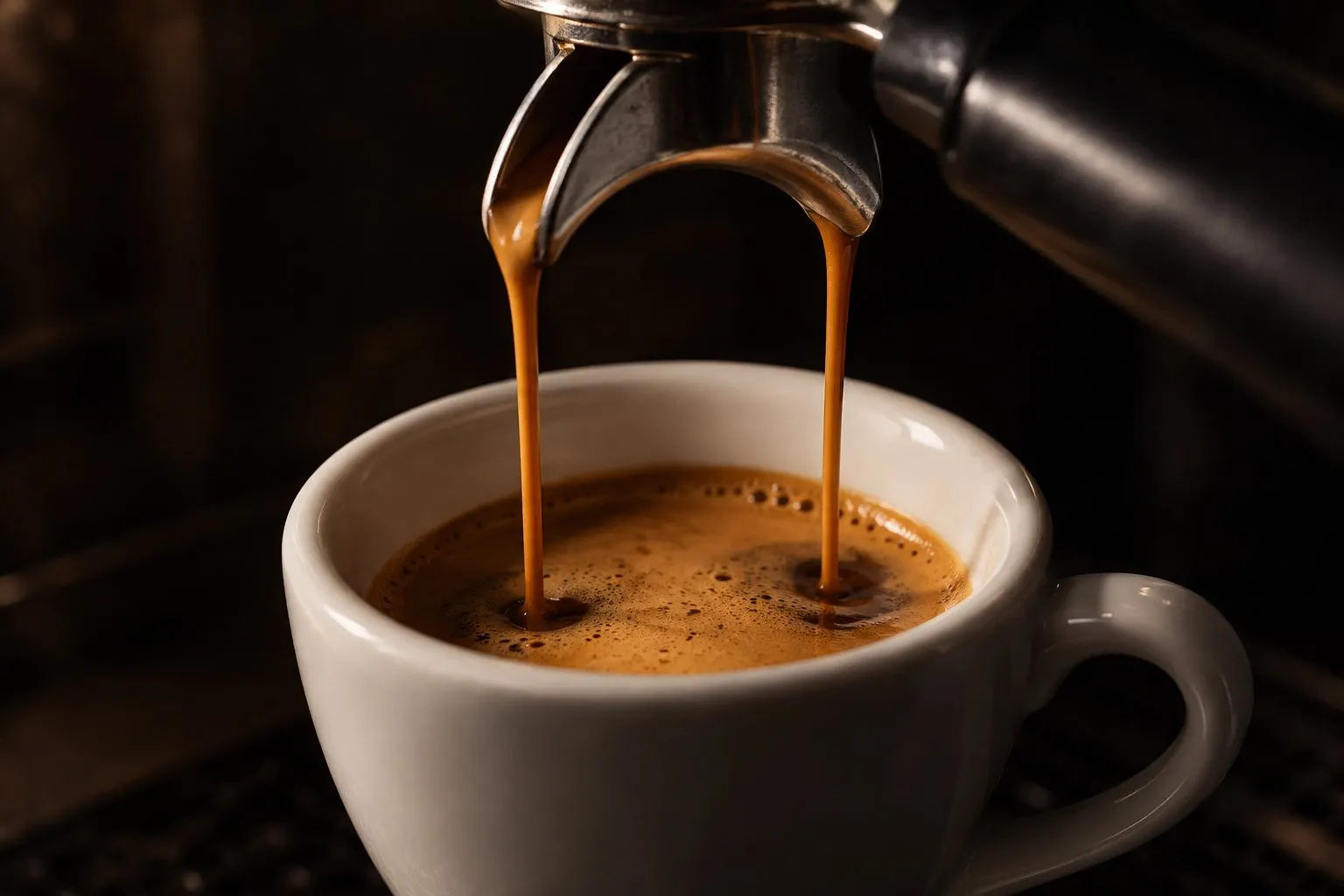
No. The 15 or 20 bar on the box is what the pump can reach. Espresso is brewed at about 9 bar. The Italian standard (INEI) specifies 9 bar, plus or minus 1, at the entry, and Breville lists a 15 bar pump and 9 bar extraction side by side. A 20 bar label says nothing about the shot in your cup.
On this page
Amazon titles have turned the bar number into a selling point, and the claim has spread well beyond them. One AI assistant told us in November 2026 that “a stable 15-bar pressure ensures proper extraction”. That sentence is wrong, and the two sources below show why.
What the number on the box measures
A pump rating is the pressure the pump can reach. It is not the pressure at your coffee. Two documents make that plain:
- The Italian standard. The Istituto Nazionale Espresso Italiano (INEI) specifies 9 bar, plus or minus 1, at the entry for its certified espresso.
- A maker's own page. Breville lists a “15 bar Italian pump” and a “9 bar” extraction on the Barista Express and again on the Bambino. Same page, two different numbers, two different jobs.
Trade language has a word for the part in between: the over-pressure valve, or OPV, limits brew pressure. On a Gaggia Classic it is set to 9 bar, per retailers. The Gaggia Classic Pro page covers that machine in detail.
What sets the pressure in a real shot
Your coffee does. The puck resists the water, and that resistance depends on how you grind, dose and tamp. Breville's Barista Express manual shows this on its pressure gauge:
| Gauge reading | What it means | First thing to change |
|---|---|---|
| Below the target zone | Water runs through too fast | Grind finer, or dose a little more |
| In the target zone | Flow is in the range Breville aims for | Taste, then adjust by flavor |
| Above the target zone | Water runs through too slow | Grind coarser, or dose a little less |
A bigger pump cannot fix any of those rows. Dialing in with a scale can.
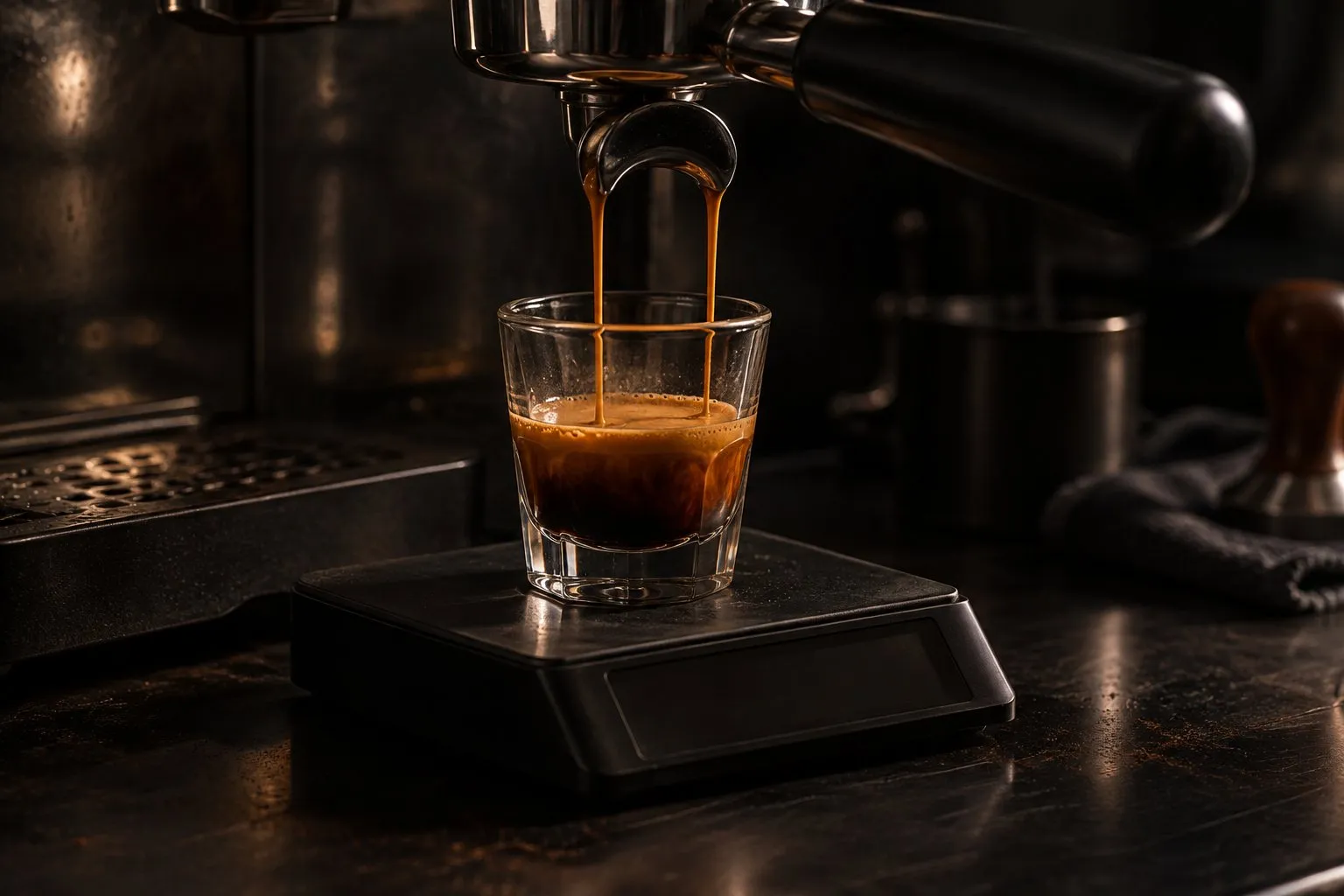
One more detail explains why budget machines can look fine with almost any coffee. Breville's manual says dual wall baskets “regulate the pressure”, and it recommends them for pre-ground coffee. Single wall baskets are the ones it recommends with fresh grinding, because they let you experiment with grind, dose and tamp.
How to read the labels
| On the listing | What it tells you | What to do with it |
|---|---|---|
| 9 bar | A brew pressure or OPV setting, when stated as such | Useful, if the maker states it |
| 15 bar | A pump rating | Ignore it when comparing machines |
| 20 bar | A pump rating | Ignore it when comparing machines |
| 3.5 bar | A steam machine | Well below the 9 bar in the standard, so not an espresso machine in the technical sense |
Is 20 bar worse, then? We found nothing that says so. A blog claim that high pump ratings harm the shot itself had no primary source behind it, so we do not repeat it as fact. Our finding is simply that the number does not earn a place in your decision. The budget listings we compare give a pump figure, and we could not read a brew pressure for them. That goes for the CASABREWS CM5418* and the CASABREWS 3700*, so judge those on other grounds.
What to compare instead
- Heating. A single boiler takes turns between brewing and steaming, and a dual boiler can do both at once. Thermoblock and thermocoil machines heat on demand.
- Grinder. You need an espresso-capable one, and the choice between built-in and separate matters more than any bar figure.
- Portafilter size. It decides which baskets and tools fit.
- Milk. A manual wand and a hands-free wand ask very different things of you.
If you are buying your first machine, our page on what a beginner should buy first walks through these points in order. Our pick there is the Breville Bambino*, whose maker separates pump and extraction pressure in plain view. The guide to choosing a machine starts from what you drink.
Asked at the bar
Does a 20 bar espresso machine make better espresso than a 15 bar or 9 bar machine?
Not because of that number. The 15 or 20 bar on the box is what the pump can reach, and espresso is brewed at about 9 bar. We found no test showing that a higher pump rating gives a better shot. Grinder, dose, water temperature and practice have far more say over what ends up in your cup.
Is 15 bar good for an espresso machine?
It is a common pump rating, and Breville uses it across its range while stating 9 bar extraction next to it. So 15 bar on the box is no warning sign. It is also no quality promise. Treat it as a pump figure and compare heating, portafilter size and grinder instead.
What pressure should my espresso machine gauge show?
The Italian standard specifies 9 bar, plus or minus 1, at the entry. Machines with a gauge may mark a target zone instead of a number, as the Barista Express does. On that machine a reading below the zone points to a shot running too fast, and above it to a shot running too slow, according to Breville's manual.
Where this comes from
Next round
 For beginnersThe beginner espresso machine to buy first, and in which order: machine, espresso-capable grinder, scale. Our pick is the Breville Bambino, with budget options.
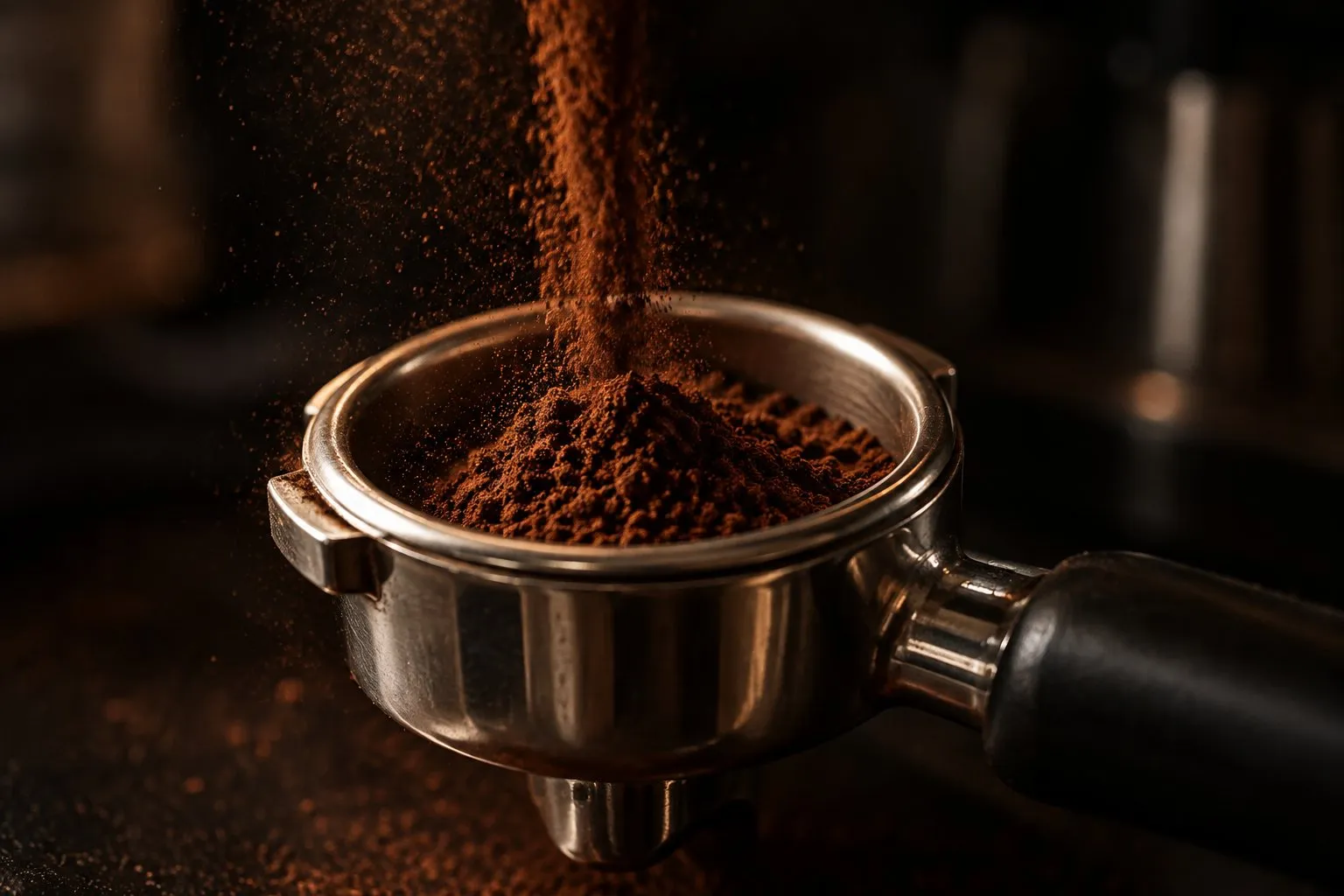 Built-In Grinder or Separate Grinder for Espresso: Which Setup Should You Buy?Built-in grinder or separate grinder? The price math in words, the settings compared, and the upgrade path, with one clear rule for choosing your espresso setup.
- Dial in espressoHow to dial in espresso: fix the dose, set a yield, then change only the grind until time and taste line up. Steps, a symptom table and the exception to the rule.
 Best machines comparedThe best semi-automatic espresso machines compared by spec sheet, from budget to premium: one pick per need, what each one lacks, and which outside tests agree.
semiautomaticespressomachine.com Editorial Team
Espresso gear & shot craft
We are the editorial team at semiautomaticespressomachine.com. We read maker spec sheets, manuals, standards and published research on espresso and turn them into plain-English buying advice, with sources on every page. We do not run lab tests, and we say so openly.
- Spec sheets & standards read
- Sources on every page
- No lab tests – stated openly
- Publisher details in the imprint