Coffee Beans for Espresso: Roast Date First, Then Blend
The best beans for espresso are the ones with a roast date you can read and a flavor you like. Espresso on a bag is a suggestion from the roaster. Any roasted bean can be brewed as espresso. Breville suggests using beans 5 to 20 days after roasting, so a date on the bag tells you more than the name.
Disclosure: This page contains affiliate links (marked with *). If you buy through them, we earn a small commission at no extra cost to you. As an Amazon Associate I earn from qualifying purchases. Learn more
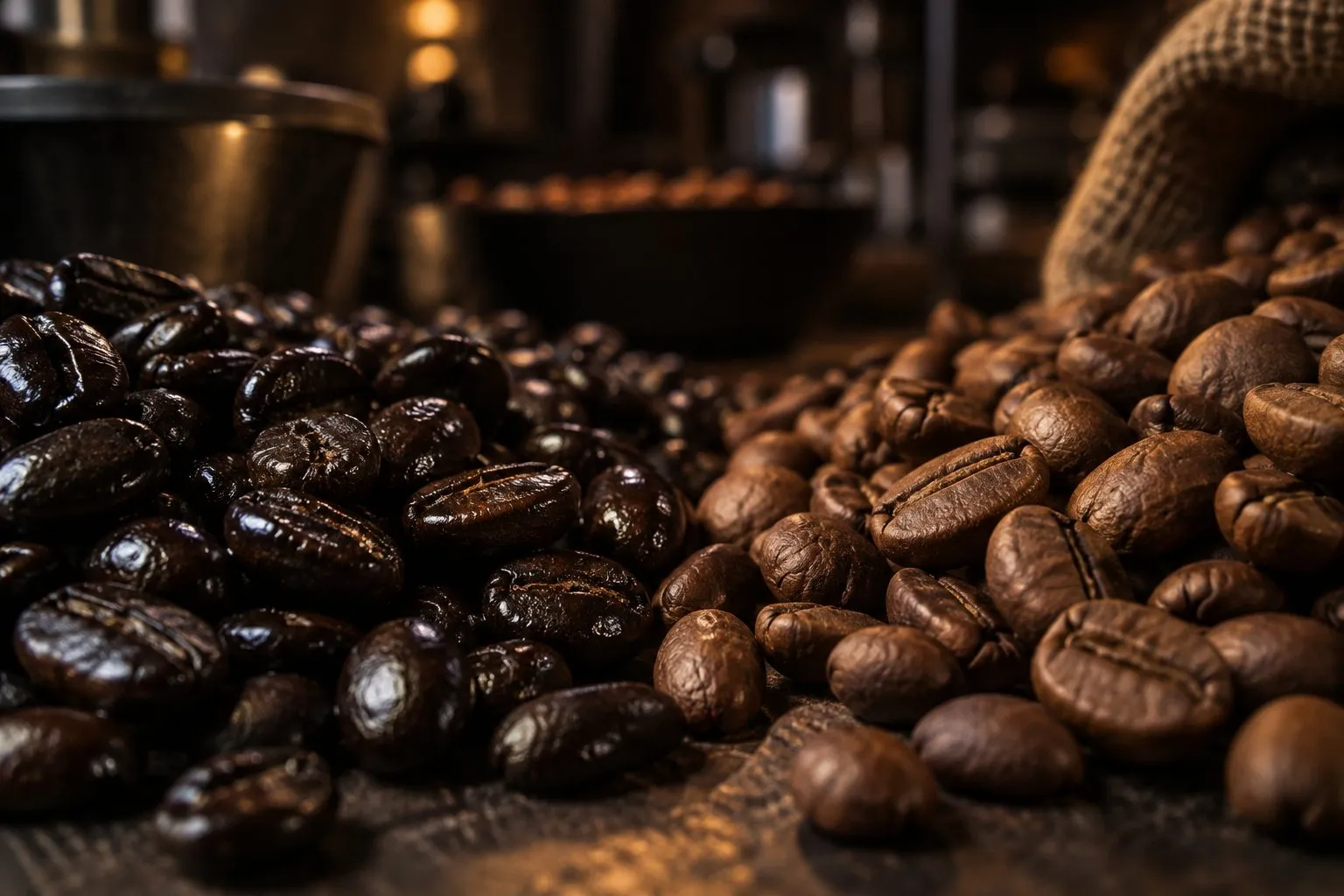
Buy whole beans with a “Roasted On” date, and use them within about 5 to 20 days of that date, as Breville suggests. Choose a roast you enjoy, because espresso on a bag is a suggestion from the roaster. If you just want an easy bag to reorder while you learn, Lavazza Super Crema is a fine start. Check its date first.
On this page
Once you weigh your shots, a new bag can move them as much as a new tool. So this page puts the buying rules first and the brands second. We don't taste-test coffees, so there's no ranking here. We read what roasters and makers publish, and say where it runs out.
Lavazza Super Crema
A medium roast arabica and robusta blend, with notes of roasted hazelnut and brown sugar per Lavazza.
Why here: Lavazza's page lists a medium roast arabica and robusta blend. It's a fine starting point, though Lavazza's page gives no roast date, so read the bag.
Best for: An easy bag to reorder while you learn to dial in
- Medium roast, arabica and robusta (Lavazza)
- Sold in 10.5 oz, 22 oz and 2.2 lb bags (Lavazza)
- Lavazza's page gives no roast date, so check the bag
- A 2.2 lb bag takes a while to finish
- Type
- Whole bean, medium roast
- Price class
- Budget
Which bag fits you?
If you have a good local roaster
If you want an easy bag to reorder while you learn → Lavazza Super Crema
View(paid link to Amazon, opens in a new tab)Ad · paid link · check price & delivery on AmazonIf you want a second blend to compare → Lavazza Gran Crema
View(paid link to Amazon, opens in a new tab)Ad · paid link · check price & delivery on AmazonIf you are unsure about the word espresso on the bag
The two Lavazza bags, side by side
| Lavazza Super Crema | Lavazza Gran Crema | |
|---|---|---|
| Type | Whole bean, medium roast | Whole bean, roast level differs by source |
| Price class | Budget | – |
| Best for | An easy bag to reorder while you learn to dial in | Comparing a second blend once your routine is steady |
| On Amazon(paid link to Amazon, opens in a new tab)Ad · paid link · check price & delivery on Amazon | On Amazon(paid link to Amazon, opens in a new tab)Ad · paid link · check price & delivery on Amazon |
| Value | Super Crema | Espresso Barista Gran Crema |
|---|---|---|
| Blend | Arabica and robusta (Lavazza) | Arabica and robusta (Lavazza) |
| Roast | Medium (Lavazza; the Amazon title says medium espresso roast) | Light on Lavazza's page; medium espresso roast in the Amazon title |
| Flavor notes, per Lavazza | Roasted hazelnut, brown sugar | Baked biscotti, honey, roasted cereal |
| Origin, per Lavazza | Asia, South America | Africa, Central America, South America, Southeast Asia |
| Roast date on the maker's page | Not stated | Not stated |
Both are sold in large bags, and Lavazza's page lists 2.2 lb for each. That's a lot of coffee to finish inside a freshness window, so buy the size you can use. The roast level disagreement on the Gran Crema is worth noting, because the label on your bag is the one to believe. Packaging may vary, as the listing itself says.
Lavazza Super Crema
The Super Crema* is the bag we'd suggest if you want something you can reorder and compare against. It won't tell you much about single origins, and it isn't trying to. Treat its taste as a baseline: if a shot from a new dated bag runs differently, you'll know what changed.
Lavazza Espresso Barista Gran Crema
The Gran Crema* is the one Lavazza itself calls “Ideal for espresso”, with an intensity of 7 of 10. Pick it up as a second bag, once your routine is steady enough that you can taste the difference between the two.
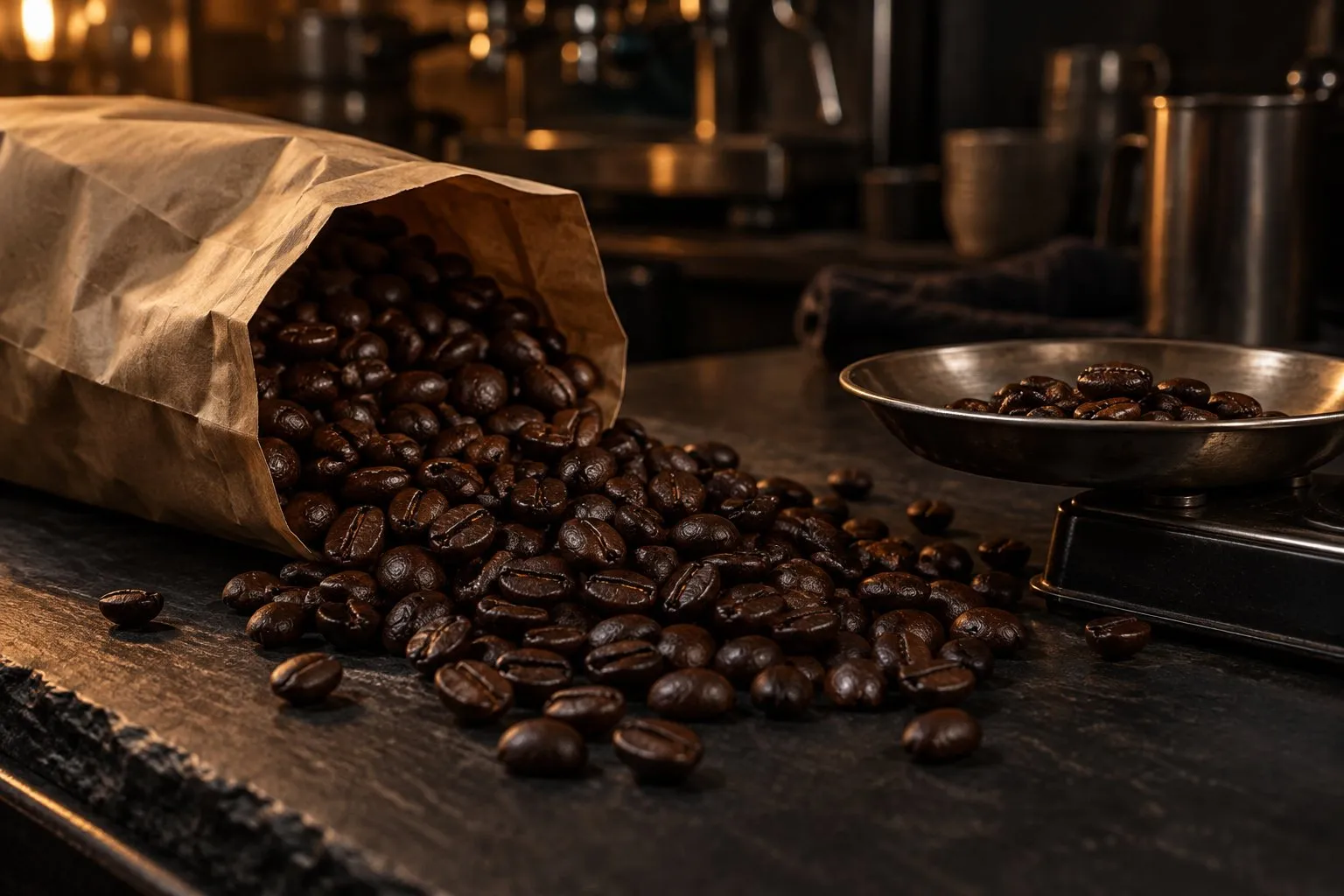
Read the date on the bag before the word on the front.
What to look for
A roast date. This is the rule we'd keep if we could only keep one. Breville asks for beans with a “Roasted On” date stamped on the bag, and not a “Best Before” or “Use By” date, and it suggests 5 to 20 days after roasting. It adds that stale coffee may pour too quickly from the spouts and taste bitter and watery. That's why a shelf bag with only a use-by date can run fast at a grind that worked last month: you can't tell how old it is. Treat the window as one maker's guide and not a rule.
A roast you like. Espresso on a bag is a suggestion from the roaster. Any roasted bean can be brewed as espresso. We found no standard that defines an espresso roast, so a light or a dark bag can both work. Roast does change the job, though. Breville's Dual Boiler manual says the best temperature depends on origin, freshness and degree of roast, and its dial-in guide lists roast date and age among the things that move your dose and grind.
Blend or single origin. That's a matter of taste. Blends and single origins can both make good espresso, and we found no evidence that either is better. If you want to learn, a stable blend keeps one variable fixed. If you want to explore, buy small bags.
Arabica or robusta. Breville's manual recommends quality 100% arabica. Lavazza's two bags here are blends with robusta. That's a difference in taste and style, and neither side has a document that settles it.
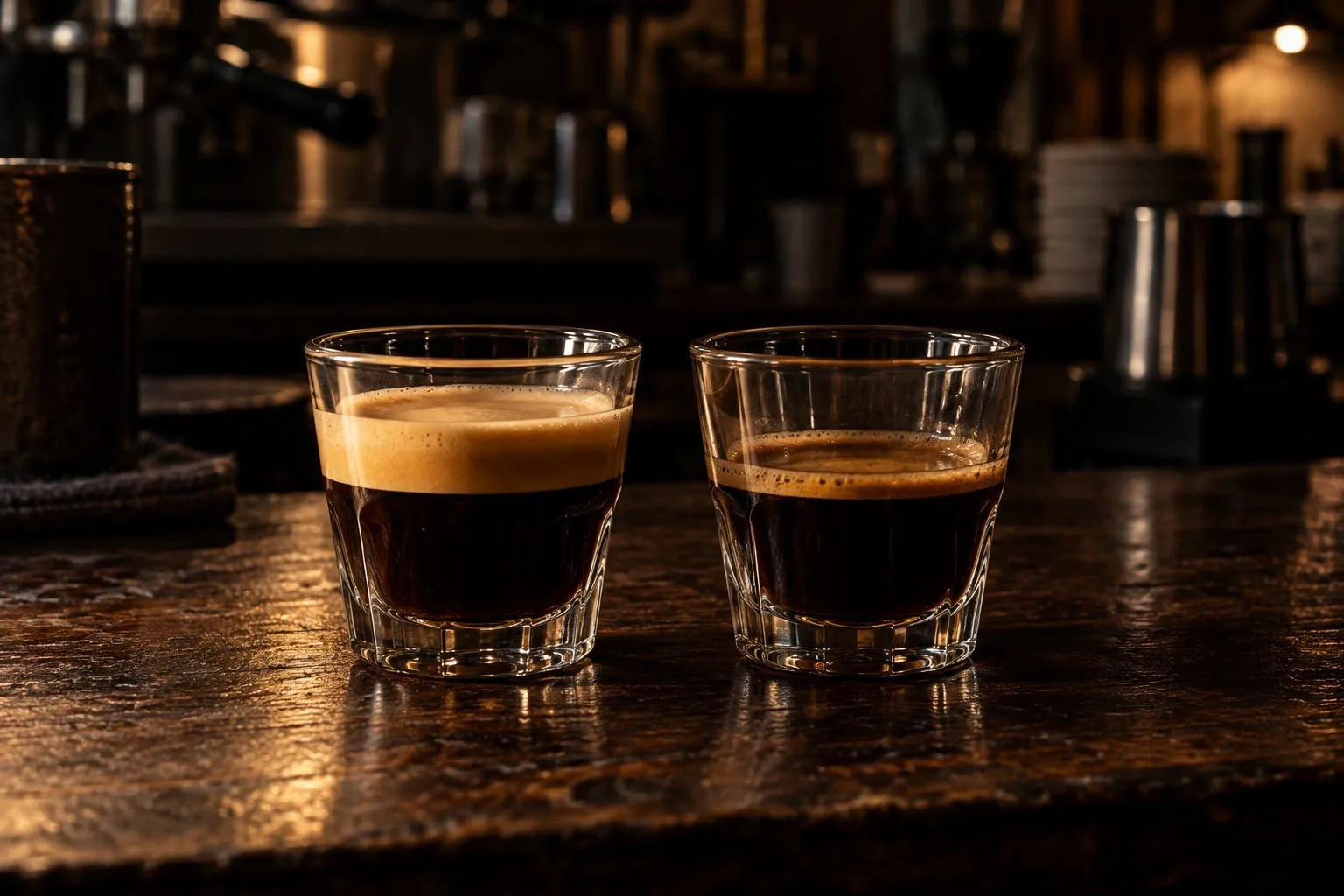
Don't buy for crema alone
Crema shows CO2, so freshness and roast. It says little about flavor. You'll see retail copy claim that robusta gives more crema, but the Illy and Navarini review from 2011 calls robusta's supposed role substantially contradicted by more recent data. So a thick top layer tells you more about how fresh the coffee is than how good it tastes. Our crema page has the sources.
Whole beans, ground on the day. A separate or built-in grinder gives you the control a single wall basket needs. Pre-ground coffee belongs in a dual wall basket, which Breville says regulates the pressure whatever the grind, dose, tamp or freshness.
Storage. Perfect Daily Grind points out that hoppers aren't airtight, and that keeping beans in their original packaging until you dose them means fewer go stale. If you buy a big bag, leave most of it sealed in its own packaging.
Common mistakes
- Trusting the word espresso. It's a suggestion. Check the date and the flavor notes.
- Judging a bag on its first shot. A new coffee needs a new grind setting. Follow our dial-in steps before you decide you don't like it.
- Blaming the bean for a sour shot. Sour espresso usually calls for a finer grind first. If you are already very fine and it stays sour, go coarser.
- Changing bean and dose together. Keep your dose fixed, so you can taste the coffee.
- Buying too much. A big bag only saves you something if you finish it while it still tastes good.
Still choosing the machine?
Beans matter on any machine, but a single wall basket will show you more of them. The start page begins with what you drink, and these questions end in one machine:
Our recommendation
Buy a bag with a roast date from a roaster you trust, and use it within Breville's suggested window. If nothing like that is close by, the Lavazza Super Crema* is a sensible bag to learn on, with the caveat that you should read the bag before you judge the coffee. We compare by what roasters and makers publish, and don't taste-test coffees ourselves. How we compare explains our method, and espresso beans vs coffee beans explains the word on the bag.
Asked at the bar
What is the difference between espresso beans and regular coffee beans?
There's no special plant behind the word. Espresso on a bag is a suggestion from the roaster. Any roasted bean can be brewed as espresso. Some coffees will suit the method better than others, so treat the label as a hint about the roast and the taste the roaster intended, and let your cup decide.
How fresh should espresso beans be?
Breville's Bambino manual says coffee beans are best consumed between 5 and 20 days after the Roasted On date, and asks for that date and not a Best Before or Use By date. It also warns that stale coffee may pour too quickly and taste bitter and watery. Treat that as one maker's guide, then taste.
Do I need robusta for good crema?
No. Crema shows CO2, so freshness and roast. It says little about flavor. A 2011 scientific review by Illy and Navarini calls the supposed role of robusta substantially contradicted by more recent data. Buy a robusta blend if you like how it tastes, not for a thicker top layer.
Should I use a light, medium or dark roast for espresso?
Whichever you enjoy, as long as you can dial it in. Breville's Dual Boiler manual says the best brew temperature depends on the coffee's origin, freshness and degree of roast, so a new roast may also need a change of settings. Change one thing at a time, and keep your dose fixed while you do.
Can I use pre-ground coffee for espresso?
You can, with a dual wall basket. Breville says dual wall baskets are meant for pre-ground coffee and regulate the pressure regardless of grind, dose, tamp or freshness. If you grind fresh into a single wall basket, you get far more control over the shot, along with more ways to get it wrong.
Where this comes from
- Lavazza USA: Super Crema whole bean
- Lavazza USA: Espresso Barista Gran Crema whole bean
- Breville: Bambino BES450 instruction book (US, Canada, Mexico)
- Breville: How to dial in espresso
- Breville: BES920 Dual Boiler instruction book (US, Canada, Mexico)
- Perfect Daily Grind: What is single dose coffee grinding?
Next round
- Espresso vs coffee beansEspresso beans vs coffee beans: no separate plant, no set roast level. What the word on the bag actually means, what the roast changes, and what to check instead.
- What is cremaWhat crema is: foam made mostly of CO2 from roasting. What changes it, what it tells you about a shot, and why more crema or added robusta doesn't mean better.
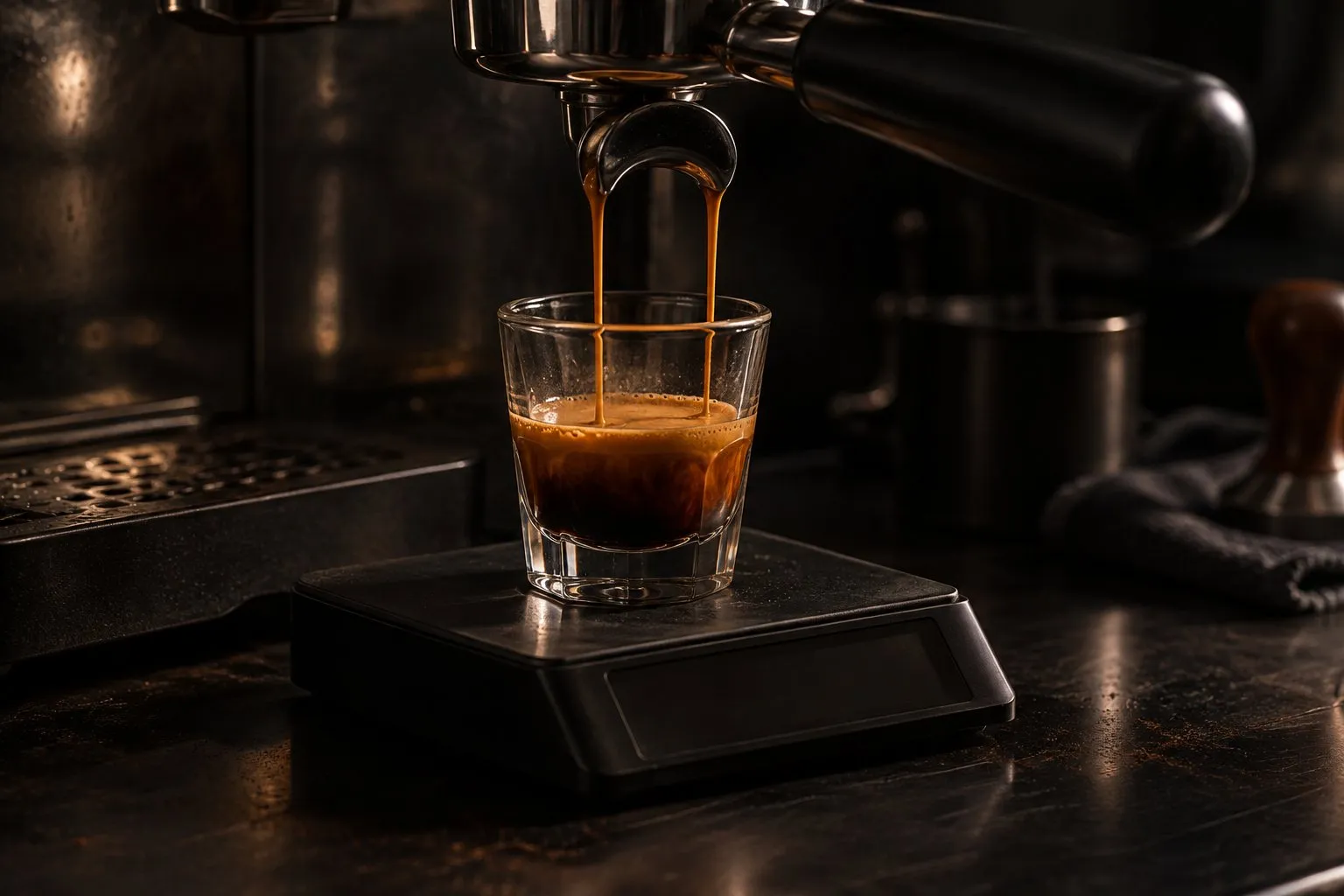 Dial in espressoHow to dial in espresso: fix the dose, set a yield, then change only the grind until time and taste line up. Steps, a symptom table and the exception to the rule.
- Espresso doseHow many grams of coffee for espresso: dose by basket. Breville's 8 to 11 g and 16 to 19 g baskets, its 18 to 22 g start, and why Italy's standard says 7 g.
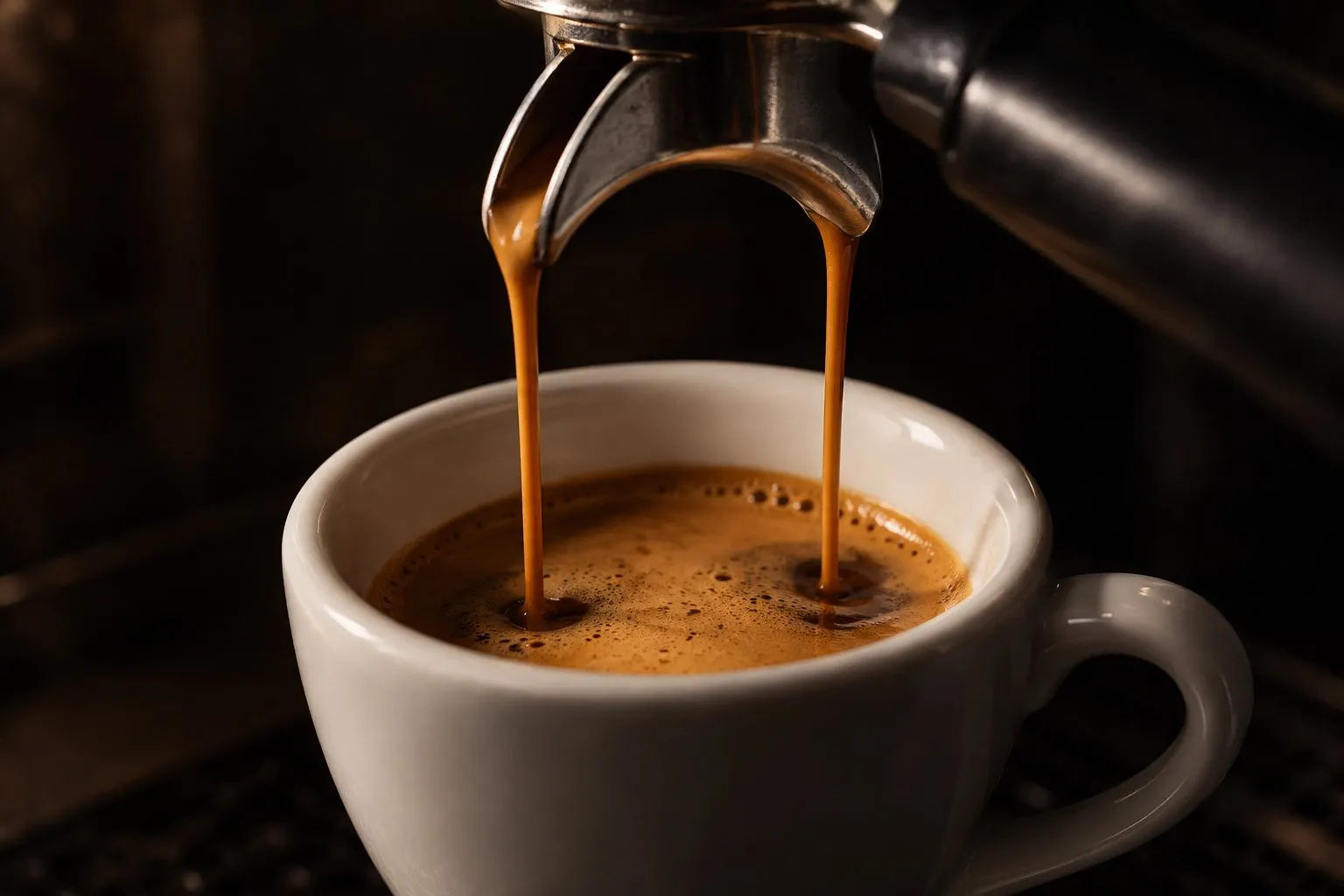 Sour espressoSour espresso usually means under-extraction. What to change first, when grinding finer stops helping, and where roast, water and temperature fit in.
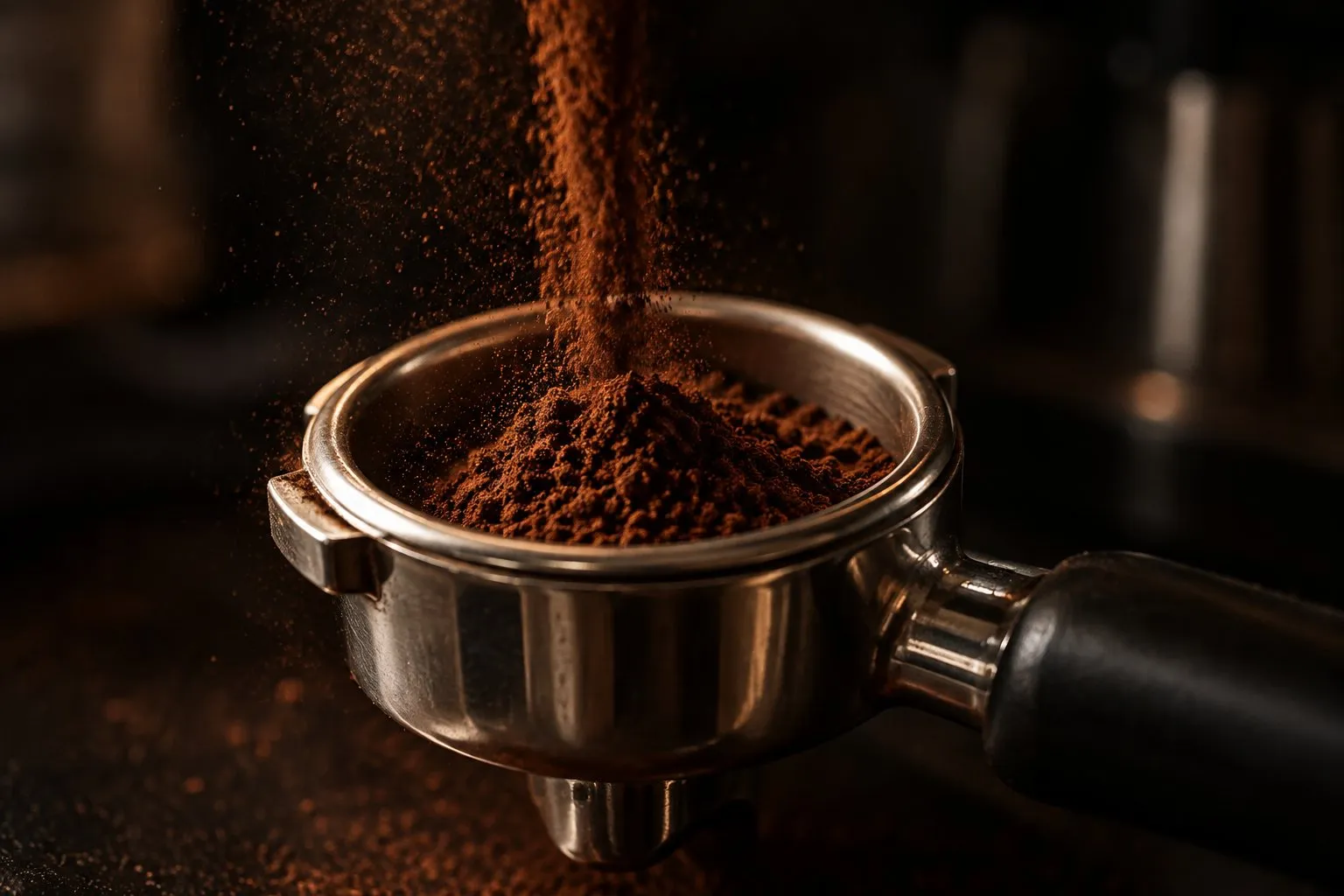 Espresso grindersWhat makes a grinder suitable for espresso: burrs, small steps and clean dosing. One clear pick, the alternatives sorted by routine, and honest notes on the data.
semiautomaticespressomachine.com Editorial Team
Espresso gear & shot craft
We are the editorial team at semiautomaticespressomachine.com. We read maker spec sheets, manuals, standards and published research on espresso and turn them into plain-English buying advice, with sources on every page. We do not run lab tests, and we say so openly.
- Spec sheets & standards read
- Sources on every page
- No lab tests – stated openly
- Publisher details in the imprint