Dual Boiler Espresso Machines: Real Boilers vs Listing Titles
A dual boiler heats brew water and steam separately, so you can pull a shot and steam milk at the same time. Our pick is the Breville Dual Boiler, because Breville documents the two boilers and PID on its own page. Budget listings also use the words, and we could not confirm what they mean.
Disclosure: This page contains affiliate links (marked with *). If you buy through them, we earn a small commission at no extra cost to you. As an Amazon Associate I earn from qualifying purchases. Learn more
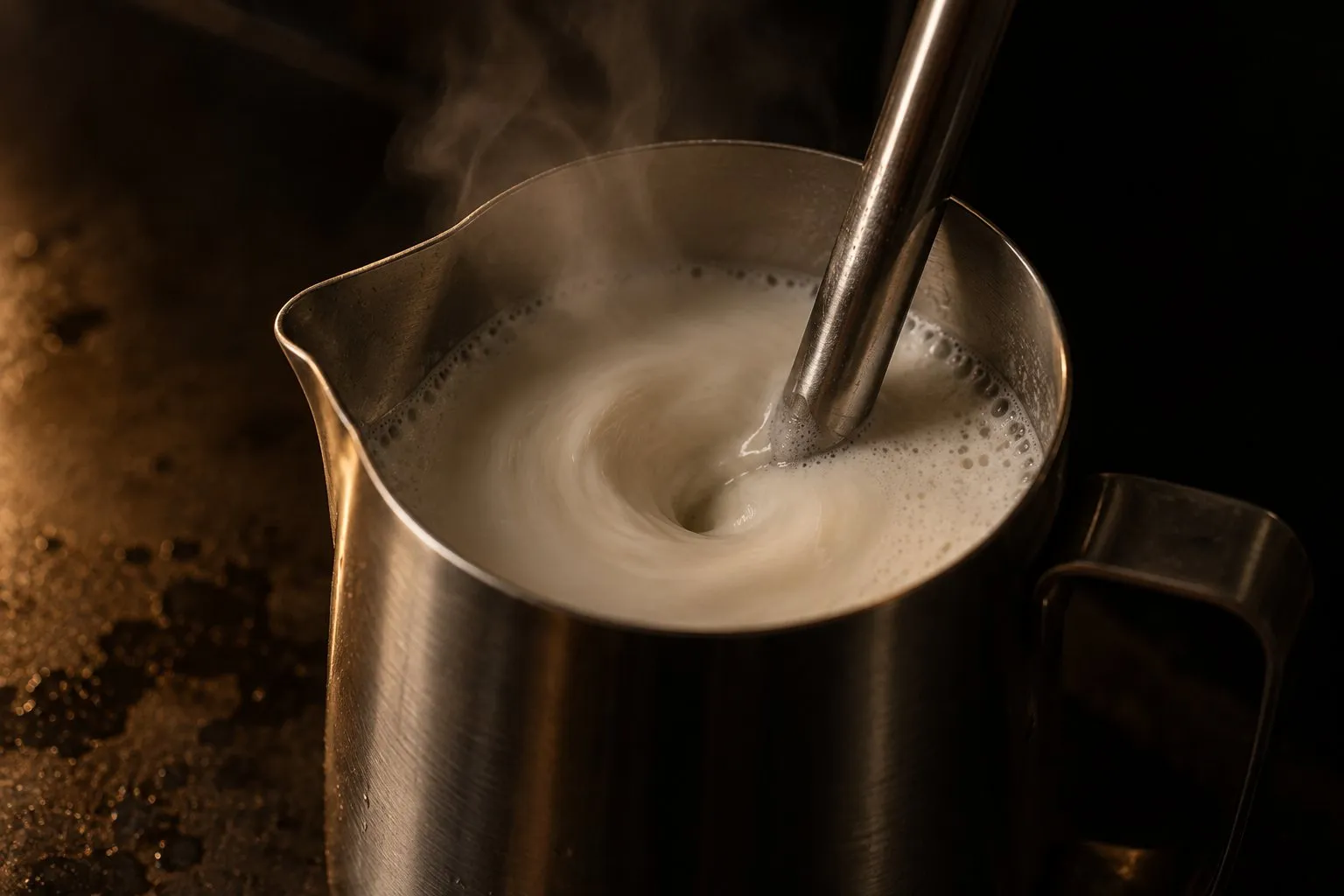
Buy a dual boiler if you make several milk drinks in a row. For one morning latte, a single boiler or thermocoil is enough. The Breville Dual Boiler is our pick: two boilers, PID on the espresso boiler and a 58 mm portafilter, per Breville. Treat “dual boiler” in a budget title as unverified until the manual confirms it.
On this page
Whether you came for the Breville or for the question of whether you need two boilers at all, the short answer is above. The longer answer is mostly about reading listings carefully, because on Amazon this term covers very different machines. For every other heating type, our comparison by spec sheet has the picks.
Breville Dual Boiler
Two stainless steel boilers, PID and a 58 mm portafilter: brew and steam at the same time.
Why here: The only machine here whose two boilers and PID we could read on the maker's own page, and it can brew and steam at the same time.
Best for: Upgraders who make several milk drinks in a row
- Separate brew and steam boilers (Breville)
- PID on the espresso boiler, heated group head (Breville)
- 58 mm portafilter, 22 g dose (Breville)
- Premium price class
- No grinder included
- One morning latte does not need two boilers
- Heating
- Dual boiler
- Pump, as stated
- 15 bar
- Brew pressure, as stated
- 9 bar
- Portafilter
- 58 mm
- PID
- Yes
- Built-in grinder
- No
- Milk
- Steam wand
- Price class
- Premium
Who should buy which?
If you make several milk drinks in a row → Breville Dual Boiler
View(paid link to Amazon, opens in a new tab)Ad · paid link · check price & delivery on AmazonIf you are comparing above the Breville and will read the maker's manual first → Rancilio Silvia Pro X
View(paid link to Amazon, opens in a new tab)Ad · paid link · check price & delivery on AmazonIf you make one or two milk drinks a day
If you drink espresso straight
The machines side by side
| Our pick: dual boilerBreville Dual Boiler | Prosumer optionRancilio Silvia Pro X | Seller data onlyDiletta Alto | Seller data onlyGevi "Dual Boiler" | Seller data onlyChefman Crema Deluxe | |
|---|---|---|---|---|---|
| Heating | Dual boiler | Dual boiler, 1 L steam and 0.3 L coffee | Dual boiler, per listing | "Dual boiler" per listing, not verified | "Double boiler" per listing, not verified |
| Pump, as stated | 15 bar | 2 vibration pumps | – | – | – |
| Brew pressure, as stated | 9 bar | – | – | – | – |
| Portafilter | 58 mm | 58 mm (Rancilio Group North America) | – | – | – |
| PID | Yes | Yes, one per boiler | Yes, per listing | – | – |
| Built-in grinder | No | No | No | Yes, per listing | No |
| Milk | Steam wand | – | – | – | – |
| Price class | Premium | Premium | Premium | Mid-range | Mid-range |
| Best for | Upgraders who make several milk drinks in a row | Prosumer buyers who want two boilers in a narrow body and can plan around the warm-up | Prosumer buyers comparing above the Breville Dual Boiler | Nobody who needs two real boilers, until the spec sheet confirms them | Budget buyers who care about brewing and frothing at once, after checking the manual |
| On Amazon(paid link to Amazon, opens in a new tab)Ad · paid link · check price & delivery on Amazon | On Amazon(paid link to Amazon, opens in a new tab)Ad · paid link · check price & delivery on Amazon | On Amazon(paid link to Amazon, opens in a new tab)Ad · paid link · check price & delivery on Amazon | On Amazon(paid link to Amazon, opens in a new tab)Ad · paid link · check price & delivery on Amazon | On Amazon(paid link to Amazon, opens in a new tab)Ad · paid link · check price & delivery on Amazon |
Only the first column comes from a maker's page we read. The rest is listing data, and it says so. How we compare explains the labels.
What a dual boiler actually does
Brewing wants about 200 °F and steaming about 266 °F. A single boiler can only be at one of those at a time, so you take turns. A dual boiler keeps one boiler at each, so you can steam while the shot runs. Serious Eats also credits dual boilers with precise temperature control and more steam power, at the cost of size and price.
Don't overrate the wait, though. The popular “30 to 60 seconds” has no source behind it that we could find, and wait times differ by machine. To give you one documented case, Gaggia's manual for the Classic Evo says about 15 to 20 seconds until the steam light comes on, then you run water through to cool the boiler before the next shot. That cooling step is part of what makes a run of drinks slow on a single boiler.
| Heating type | Brew and steam at once? | How it works |
|---|---|---|
| Single boiler | No | One boiler switches between brewing and steam temperature |
| Dual boiler | Yes | One boiler for each |
| Heat exchanger | Yes | Brew water runs through a pipe inside a steam boiler |
| Thermoblock, thermocoil | Check the model | Heats water on demand in a metal block |
Several milk drinks in a row: that's the case for two boilers.
The machines, one by one
Breville Dual Boiler (BES920): our pick
Breville's page lists a dual boiler system with a PID-controlled espresso boiler and a separate steam boiler, a heated group head, a 58 mm portafilter with a 22 g dose, and low-pressure pre-infusion followed by 9 bar extraction. It has a pressure gauge, an LCD, and programmable or manual shots. It also comes with a dosing tool, an integrated tamper and a 16 oz milk jug, so much of the starter kit is taken care of, but not the grinder.
It's not perfect. Serious Eats, in a copy dated May 2, 2023, wished for stronger steam and a less plastic build, and it says it hadn't formally tested this model. It's in the premium class, and you will still need a grinder. PID keeps the boiler closer to the set point. Measured stability at the puck depends on the machine. And one morning latte does not need two boilers.
Rancilio Silvia Pro X: if you want the Silvia name
The Silvia Pro X*, also listed in black*, carries the Silvia name up to a dual boiler. Serious Eats describes two boilers, PID and a sturdy stainless body, and praises its steam wand for microfoam, in the same 2023 copy. We have not checked those values with Rancilio, so read the maker's manual before you buy. It's in the premium class, above the Breville on Amazon when we looked.
Diletta Alto: above the Breville
The Diletta Alto* lists a dual boiler, PID, a shot timer and an adjustable OPV in its title. That's all we have: no maker's page read and no outside test found. It's for prosumer buyers who already know this class and are comparing specific details.
The Gevi and the Chefman: read before you buy
The Gevi “Dual Boiler”* has a built-in burr grinder per its title, and the Chefman Crema Deluxe* advertises a “double boiler” and simultaneous brewing and frothing. Both sit well below the machines we could confirm. Whether two boilers sit inside either of them, we have not checked. The word may mean two heating units, which could still let you brew and froth at once, but that's a different machine from the one this page is about.
We don't write these off. We just don't vouch for them. If brewing and frothing at once is all you want, one of them may do the job, once the manual confirms how it heats.
How to check a “dual boiler” listing
- Look for two named boilers. Breville names an espresso boiler and a steam boiler separately. A title alone tells you little.
- Look for the heating word in the manual. “Thermoblock” or “thermocoil” points to heaters that work on demand, whatever the title says.
- Watch for softer wording. One budget listing in our data says “dual heating”, which is at least more candid.
- Ask for the specs before you pay for the word. If the seller can't tell you, treat it as unconfirmed.
- Keep the pump number out of it. The 15 or 20 bar on the box is what the pump can reach. Espresso is brewed at about 9 bar.
Do you need one at all?
Count the drinks you really make. One or two lattes or flat whites in a morning don't need this class, and the beginner page has a cheaper route. Several in a row, or guests on the weekend, is where a second boiler starts to pay. If you only drink it straight, the steam boiler sits idle most of the time.
Mistakes to avoid
- Paying for the title. “Dual boiler” in a budget listing is a claim to check, not a spec.
- Skipping the grinder budget. None of the confirmed machines here includes a grinder.
- Buying for the rare party. Buy for your normal morning.
- Expecting a better shot by default. Two boilers solve a workflow problem. We found no neutral evidence that they make better espresso on their own.
Find your machine
If you are still deciding whether this is your class at all, these four questions will tell you.
Our recommendation
If several milk drinks in a row are your normal morning, buy the Breville Dual Boiler*. It's the machine here with the fullest maker documentation, and our page on it has the details. If you are looking at the premium class for other reasons, read the values for the Silvia Pro X or Diletta's manual first. And if it's one latte a day, our full comparison has a machine for you that costs a price class less. The start page sorts every pick by drink.
Asked at the bar
What is a dual boiler espresso machine?
It has one boiler for brew water and a second one for steam. Brewing wants about 200 °F and steaming about 266 °F, so separate boilers let each hold its own temperature, and you can pull a shot and steam milk at the same moment. A single boiler has to switch between the two.
Do I need a dual boiler at home?
Probably not for one or two milk drinks in a morning, where the wait matters little. It starts to matter when you make several in a row, or when guests are waiting. If you mostly drink espresso straight, the second boiler has little to do. Decide by your usual morning, not by the top of the range.
Do budget dual boiler machines have two real boilers?
We don't know, and we have not checked model by model. Titles at much lower price classes say “dual boiler” or “double boiler”, and the words may mean two heating units instead of two tanks. One listing in our data even says “dual heating”. Ask for the manual or the seller's specs before you pay for the word.
What is the difference between a dual boiler and a heat exchanger?
A dual boiler has two separate boilers. A heat exchanger has one steam boiler, and runs brew water through a pipe inside it, so it can also brew and steam at once. A thermoblock or thermocoil is different again: it heats water on demand as it flows through a metal block.
Where this comes from
Next round
- Best machines comparedThe best semi-automatic espresso machines compared by spec sheet, from budget to premium: one pick per need, what each one lacks, and which outside tests agree.
 For beginnersThe beginner espresso machine to buy first, and in which order: machine, espresso-capable grinder, scale. Our pick is the Breville Bambino, with budget options.
 Espresso grindersWhat makes a grinder suitable for espresso: burrs, small steps and clean dosing. One clear pick, the alternatives sorted by routine, and honest notes on the data.
 Flat white vs latteFlat white vs latte: less milk and a thin layer of microfoam against a larger, milkier drink. What sources agree on, where they differ, and how to steam for each.
 How we compareHow our espresso machine picks come about: spec sheets, standards and published research, what we cannot verify, which outside tests exist, and how we are funded.
semiautomaticespressomachine.com Editorial Team
Espresso gear & shot craft
We are the editorial team at semiautomaticespressomachine.com. We read maker spec sheets, manuals, standards and published research on espresso and turn them into plain-English buying advice, with sources on every page. We do not run lab tests, and we say so openly.
- Spec sheets & standards read
- Sources on every page
- No lab tests – stated openly
- Publisher details in the imprint