Semi-Automatic vs Super-Automatic Espresso Machines: Control, Cost, Cleaning and Cup
A semi-automatic leaves the grinding, dosing, tamping and shot timing to you. A super-automatic does all of it after one button press. Take the semi-automatic if you want to steer the taste and enjoy the routine, and the super-automatic if you want coffee without the steps and accept less say over the cup.
Disclosure: This page contains affiliate links (marked with *). If you buy through them, we earn a small commission at no extra cost to you. As an Amazon Associate I earn from qualifying purchases. Learn more
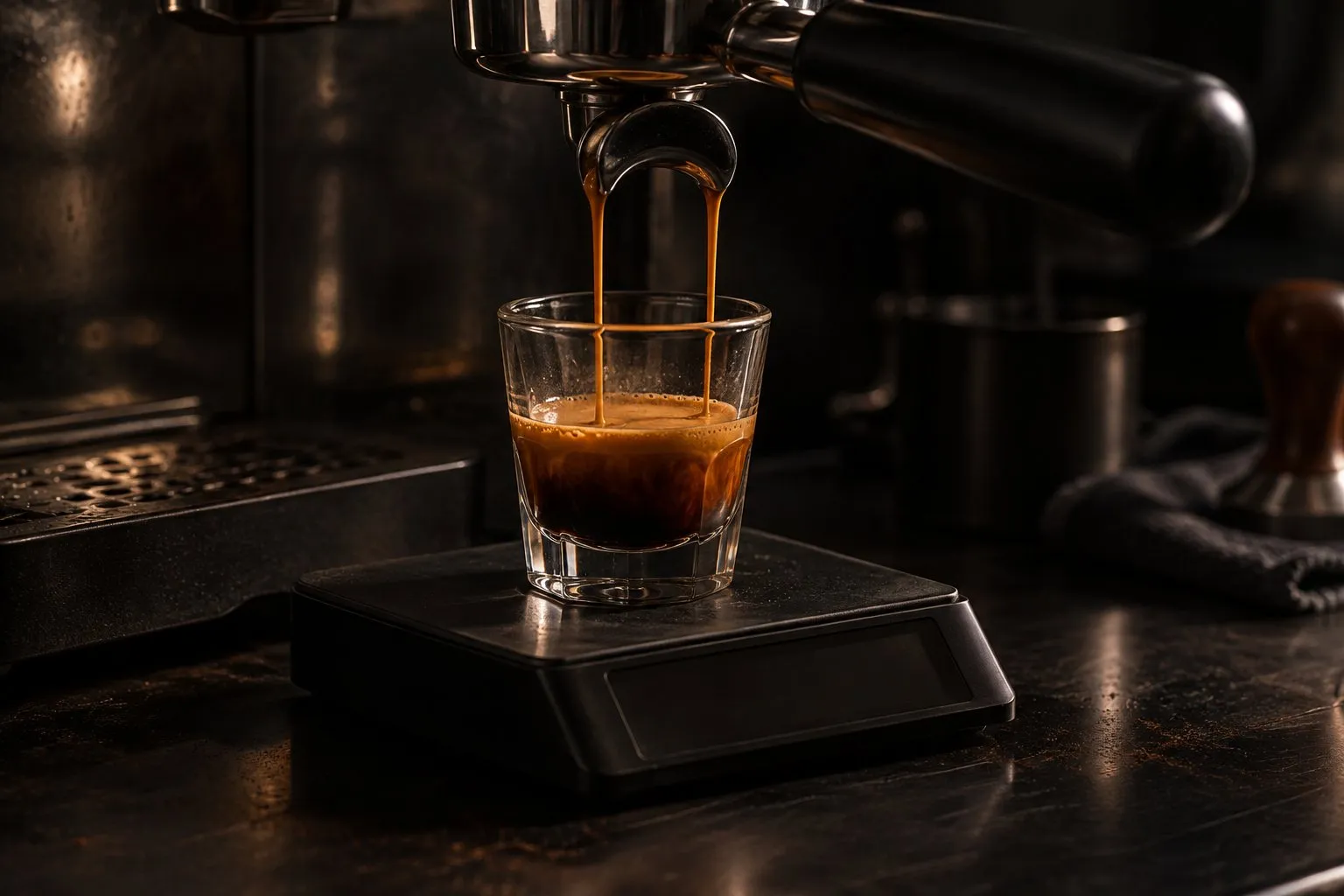
A semi-automatic espresso machine is a pump-driven espresso machine in which you grind, dose and tamp the coffee yourself and start and stop the shot, while the machine supplies the water pressure and temperature. A super-automatic also grinds, doses and tamps without your hands. You trade control for convenience, and we found no neutral taste test that settles which cup is better.
On this page
The short verdict
One question decides most of this: do you want to be the person who decides how the shot tastes? On a semi-automatic you weigh, taste, change one thing, and the next shot moves. A super-automatic swaps all of that for a menu and a button.
Neither route is better in general. Choose the one you will still follow on a busy Tuesday. If that is the semi-automatic, our pick for one box is the Breville Barista Express. If you would rather choose your own grinder, look at the Breville Bambino*. All our machine picks sit in the full comparison by spec sheet.
Watch the wording while you shop. Sage and De'Longhi say “automatic” where the trade says super-automatic, and America's Test Kitchen says “fully automatic”. Serious Eats uses “automatic” for a machine that stops the shot by itself. Check what the machine does, not what the title calls it.
Both routes side by side
| Semi-automatic | Super-automatic | |
|---|---|---|
| Grinding | You, on a separate or built-in grinder | The machine |
| Dose | You weigh it or set it | The machine |
| Tamp | You, or assisted on some models | The machine |
| Shot | You start and stop it, or use programmed buttons | You pick a drink |
| Grinder upgrade | Possible if the grinder is separate | Not possible |
| Learning | Takes practice | Little to learn |
| Price class | Budget to premium | Mid-range in our list; Sage says typically higher |
| Fits | People who like the routine | People short on time, busy households |
Here are four machines from our list, two on each route. The two De'Longhi machines are shown for comparison and carry only seller data, so read their spec sheets before you decide.
| Our pick: built-in grinderBreville Barista Express | Our pick: with a separate grinderBreville Bambino | Seller data onlyDe'Longhi Magnifica Evo | Seller data onlyDe'Longhi Magnifica Start | |
|---|---|---|---|---|
| Type | – | – | Super-automatic | Super-automatic |
| Heating | Thermocoil | ThermoJet | – | – |
| Pump, as stated | 15 bar | 15 bar | – | – |
| Brew pressure, as stated | 9 bar | 9 bar | – | – |
| Portafilter | 54 mm | 54 mm | – | – |
| PID | Yes | Yes, per the instruction book | – | – |
| Built-in grinder | Yes, 16 settings | No | Yes | Yes |
| Milk | Manual wand | Manual wand | – | – |
| Price class | Mid-range | Mid-range | Mid-range | Mid-range |
| Best for | First-time buyers who want one box and no separate grinder to choose | Beginners who want to pick their grinder and upgrade it later | Readers who decide they do not want to do the steps themselves | Readers comparing the super-automatic route |
| On Amazon(paid link to Amazon, opens in a new tab)Ad · paid link · check price & delivery on Amazon | On Amazon(paid link to Amazon, opens in a new tab)Ad · paid link · check price & delivery on Amazon | On Amazon(paid link to Amazon, opens in a new tab)Ad · paid link · check price & delivery on Amazon | On Amazon(paid link to Amazon, opens in a new tab)Ad · paid link · check price & delivery on Amazon |
The differences, point by point
Control
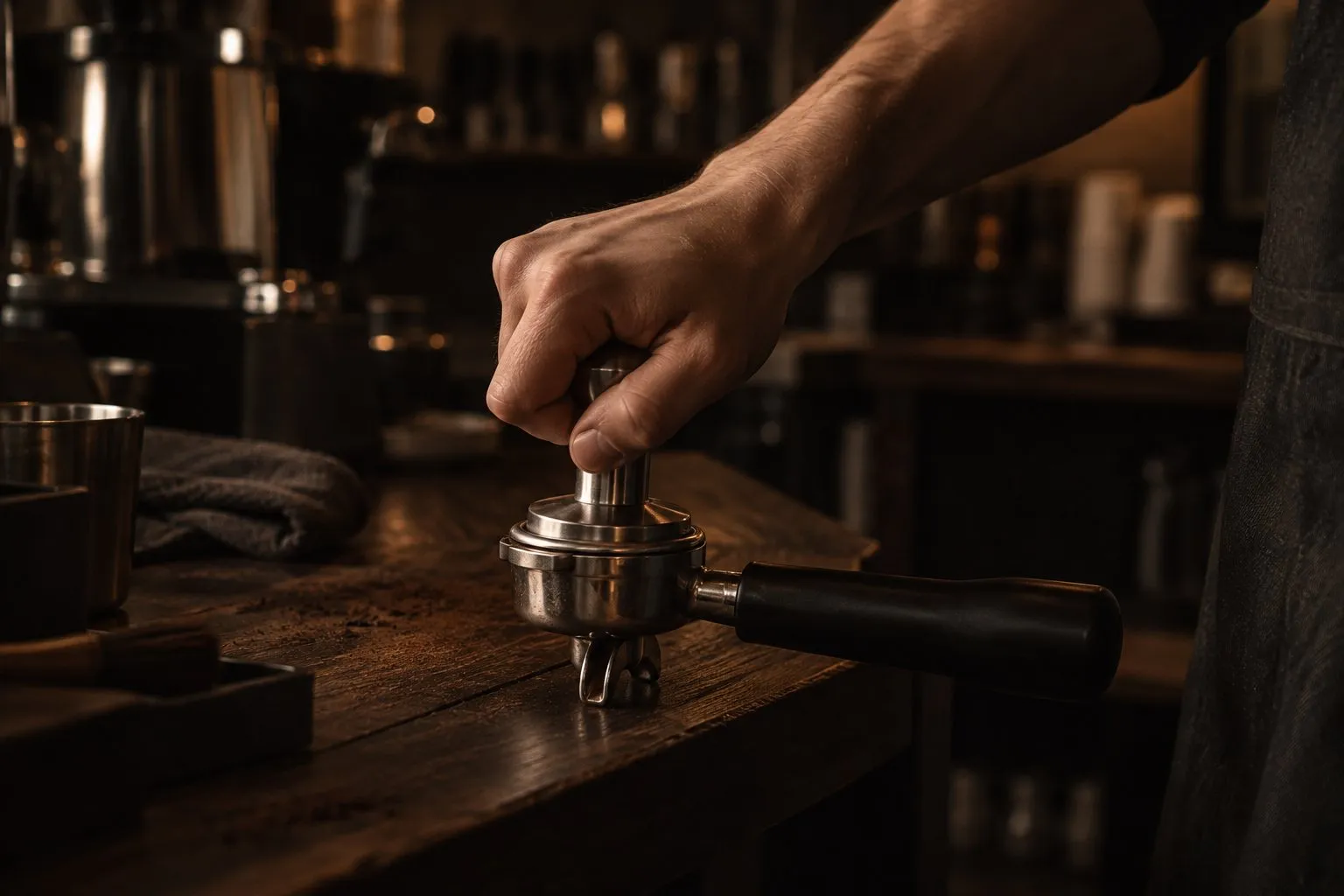
This is the real dividing line. Grind, dose and yield are all yours on a semi-automatic. That is also why dialing in espresso is a skill you learn, and why Sage says these machines “require skill and small adjustments”. A super-automatic gives you drink settings instead. America's Test Kitchen sums it up the same way: semiautomatics give more control and take more time and effort, while fully automatic machines are quicker and easier and can be customized less.
Cost, in words
Do not assume the semi-automatic is always the cheaper route. It does reach lower: our list runs from budget to premium. But a budget semi-automatic still needs an espresso-capable grinder and, sensibly, a scale. Sage says automatic machines are typically priced higher, yet the two Magnifica models in our list share the mid-range class with the Barista Express. So compare the whole setup on the day you buy. We print no figures, because prices move too quickly.
Cleaning
Both routes need regular care, in different places. On a Barista Express, Breville's manual asks you to rinse the baskets and portafilter after use and wipe and purge the steam wand after milk. A light tells you when a cleaning cycle or descaling is due, and the burrs need brushing out from time to time.
On a super-automatic, more of the work happens inside a closed machine. De'Longhi's Magnifica Evo FAQ says the machine signals descaling by a light, the cycle takes about 30 minutes, it cannot be interrupted once started, and De'Longhi wants its own descaler used. We read that FAQ, not the whole manual, so we cannot list every step for that model. Sage adds that some super-automatic machines are more difficult to clean, but keep in mind that this comes from a maker's own marketing article.
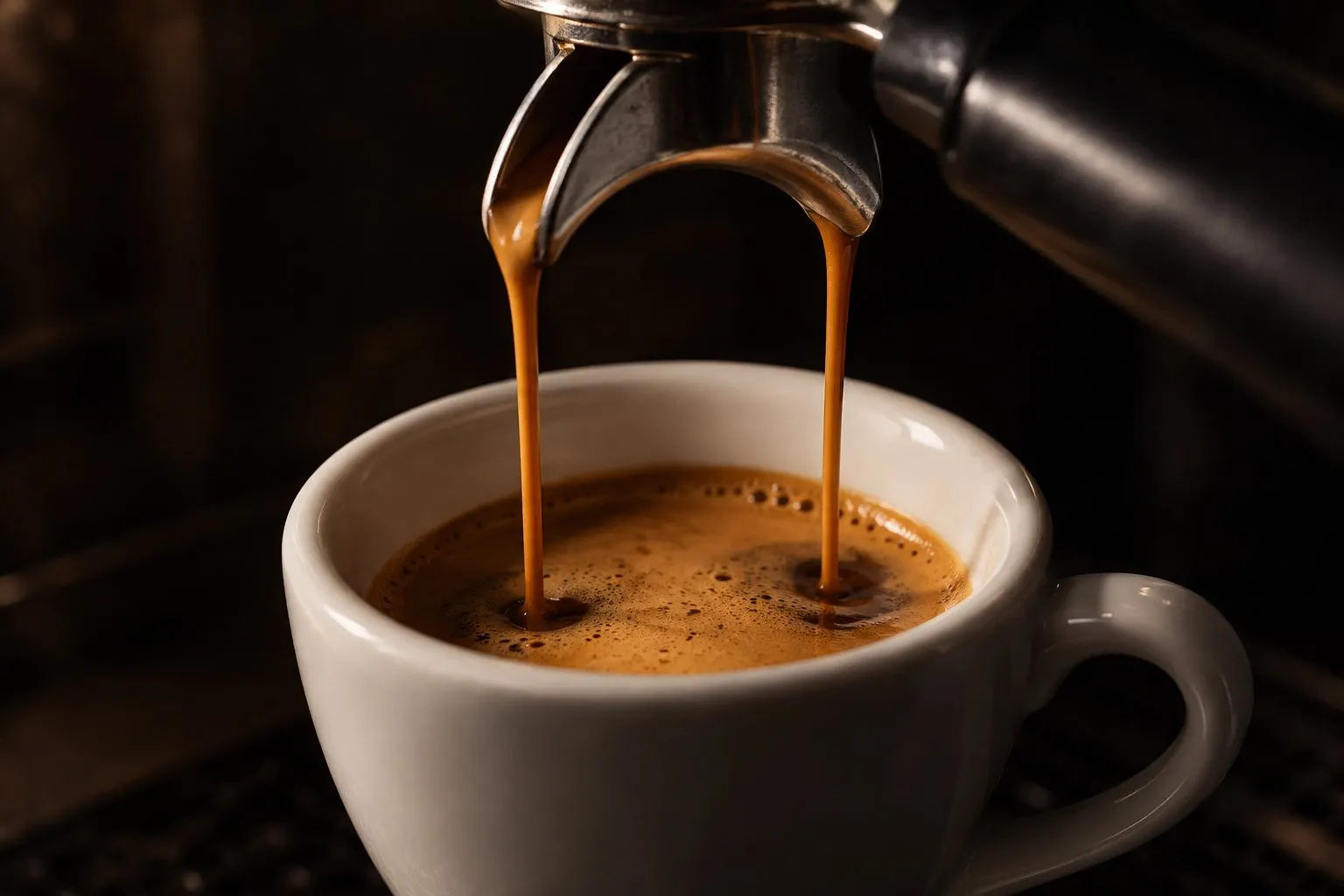
On a semi-automatic, you decide when this stops.
The cup
Here the honest answer is short: we found no neutral taste test that settles it, and we do not run tests ourselves. What exists is published opinion. Serious Eats' roundup, in a copy dated 2 May 2023, calls super-automatics costly and hard to maintain and rates their espresso poorly. America's Test Kitchen names the Gaggia Magenta Prestige as its fully automatic pick and notes that it takes no skill, though its grinder has only five espresso settings. The Barista Express, by comparison, lists 16 settings.
The sensible reading: a semi-automatic gives you more ways to improve a shot, and more ways to ruin one. The result depends on your grinder and your practice, so a machine with more settings does not guarantee a better cup.
Machines in between
Some models blur the line. The Barista Express Impress assists the tamp with a constant 22 lb and a 7° twist, according to Breville, and the Ninja Luxe Café guides you through its steps. Programmed shot buttons do not change the category either: these machines are still sold as semi-automatic. Our page on machines with a built-in grinder sets out which ones do how much.
Take a semi-automatic if, take a super-automatic if
If you want one box and still want to control the shot → Breville Barista Express
View(paid link to Amazon, opens in a new tab)Ad · paid link · check price & delivery on AmazonIf you want to choose your grinder and replace it later → Breville Bambino
View(paid link to Amazon, opens in a new tab)Ad · paid link · check price & delivery on AmazonIf you want a drink at the press of a button and no tamping → De'Longhi Magnifica Evo · Seller data only
View(paid link to Amazon, opens in a new tab)Ad · paid link · check price & delivery on AmazonIf you are new to all of this and want an order to buy in
Whichever way you lean, remember that we compare by spec sheet and published sources. How we compare explains what that means and names who has tested these machines. Would capsules do? Espresso machine vs Nespresso covers that.
Asked at the bar
What is the difference between a semi-automatic and a super-automatic espresso machine?
On a semi-automatic you grind, dose and tamp the coffee yourself and start and stop the shot, while the machine supplies pressure and temperature. A super-automatic also grinds, doses and tamps without your hands, so you choose a drink and press a button. Programmed shot buttons alone do not make a machine super-automatic.
Which makes better espresso, a semi-automatic or a super-automatic?
We found no neutral taste test that settles it, and we run no tests ourselves. A semi-automatic gives you more ways to adjust the shot, so the result depends more on your grinder and practice. Serious Eats rates super-automatic espresso poorly, while America's Test Kitchen still names a fully automatic pick for people who want no learning curve.
Are super-automatic machines harder to clean?
They can be. Sage, the name Breville machines carry in Europe, says some super-automatic machines are more difficult to clean, though a maker is not a neutral source here. Both routes need care. On the De'Longhi Magnifica Evo, the descale cycle takes about 30 minutes and cannot be interrupted once started, according to De'Longhi.
Is a machine with a built-in grinder a super-automatic?
No. A built-in grinder only moves the grinder into the same body. On a Breville Barista Express you still dose into the portafilter, tamp, lock it in and control the shot, so it stays semi-automatic. Assisted models such as the Barista Express Impress and the Ninja Luxe Café sit in between.
Where this comes from
- Sage/Breville: semi-automatic vs automatic espresso machines
- America's Test Kitchen: espresso machines, 2 July 2025
- Serious Eats roundup, read through a Yahoo copy dated 2 May 2023
- De'Longhi: Magnifica Evo descaling and cleaning FAQ
- Breville: BES870 Barista Express product page
- Breville: Barista Express instruction book (copy hosted by Williams-Sonoma)
Next round
 Best machines comparedThe best semi-automatic espresso machines compared by spec sheet, from budget to premium: one pick per need, what each one lacks, and which outside tests agree.
 With grinderEspresso machines with a built-in grinder compared by spec sheet: Barista Express, Impress, Pro and Touch, plus Ninja, De'Longhi, KitchenAid, Gevi and CASABREWS.
 For beginnersThe beginner espresso machine to buy first, and in which order: machine, espresso-capable grinder, scale. Our pick is the Breville Bambino, with budget options.
- Dial in espressoHow to dial in espresso: fix the dose, set a yield, then change only the grind until time and taste line up. Steps, a symptom table and the exception to the rule.
- How we compareHow our espresso machine picks come about: spec sheets, standards and published research, what we cannot verify, which outside tests exist, and how we are funded.
semiautomaticespressomachine.com Editorial Team
Espresso gear & shot craft
We are the editorial team at semiautomaticespressomachine.com. We read maker spec sheets, manuals, standards and published research on espresso and turn them into plain-English buying advice, with sources on every page. We do not run lab tests, and we say so openly.
- Spec sheets & standards read
- Sources on every page
- No lab tests – stated openly
- Publisher details in the imprint