Espresso Machine vs Nespresso: Control, Cost per Cup and Waste
Choose a semi-automatic if you want to pick the beans, weigh the dose and change the shot. Choose Nespresso if you want coffee at the press of a button and nothing to dial in. America's Test Kitchen found nothing easier or faster than a Nespresso for a quick shot, and also rated the espresso itself as subpar, so you're trading quality and control for speed.
Disclosure: This page contains affiliate links (marked with *). If you buy through them, we earn a small commission at no extra cost to you. As an Amazon Associate I earn from qualifying purchases. Learn more
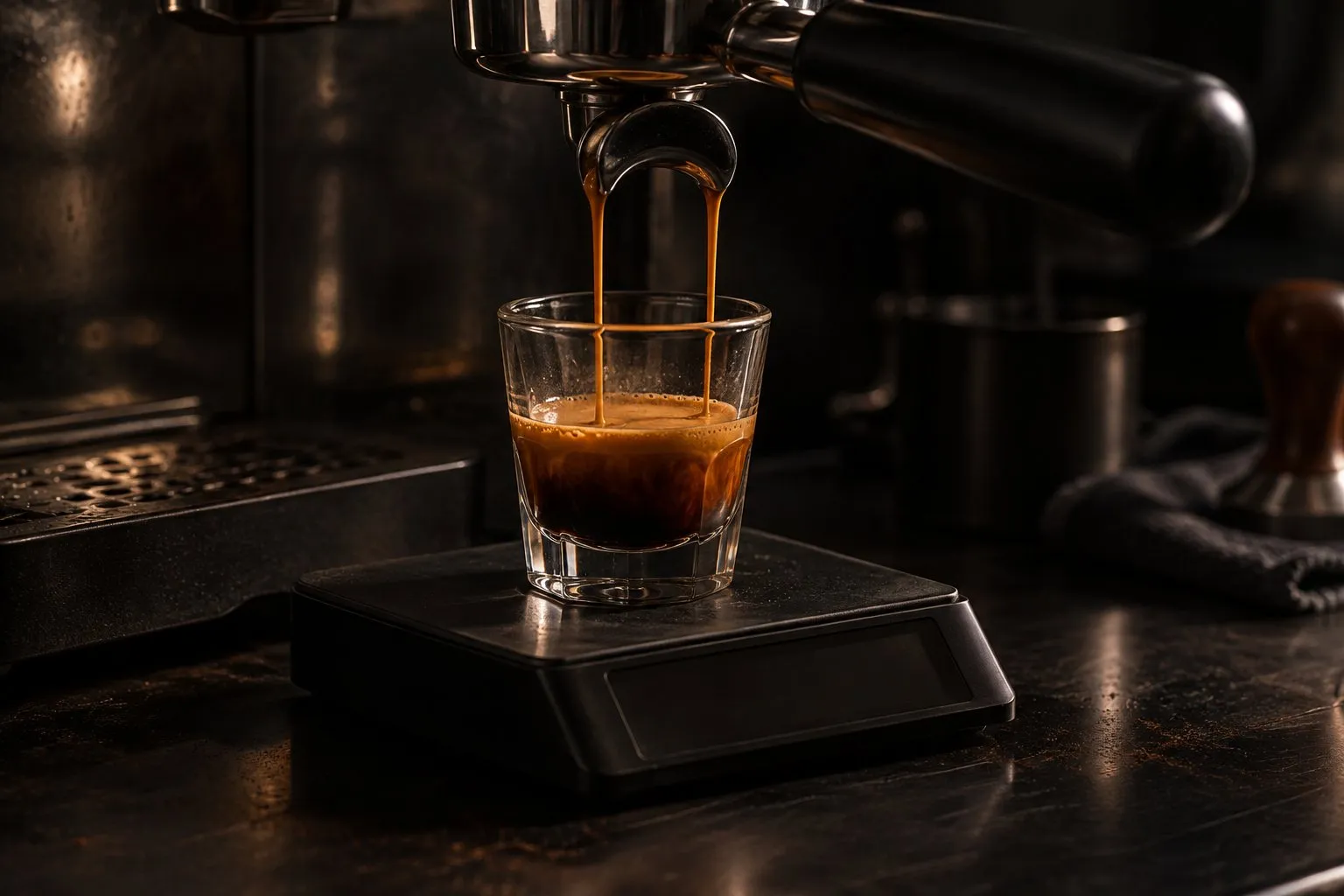
A semi-automatic gives you control of beans, grind, dose and ratio, and it needs a grinder, a scale and a routine. Nespresso gives you one button and a fixed capsule, with no adjusting. America's Test Kitchen called its Nespresso the fast option and rated the espresso as subpar. Choose by how much you enjoy the process, then run your own cost numbers.
On this page
If you're reading this site, you probably already suspect which way we lean. That's fine, but a capsule machine isn't a mistake. It does a different job. So the honest comparison isn't about which one is better. It's about how many decisions you want to make before your first coffee.
Side by side
| Semi-automatic espresso machine | Nespresso | |
|---|---|---|
| Your coffee | Any roasted bean | Capsules for that system |
| Grind and dose | You choose and can weigh both | Fixed in the capsule |
| Drink size | Whatever your ratio gives | Button settings: 40 and 110 ml on the Essenza Mini |
| Pressure, as stated | 15 bar pump, 9 bar extraction on Breville's machines | Up to 19 bar on the Original line; a spinning capsule on Vertuo |
| Extra gear | Grinder, scale, tamper | None needed |
| Milk | Steam wand on most machines | No wand listed on the Essenza Mini |
| Leftovers | A spent puck | A used capsule |
| Upkeep | Backflush, descale, clean the wand | Empty the container, descale |
Control: the main difference
On a semi-automatic you can change the bean, the grind, the dose and the yield. Breville's guide suggests a first recipe of 18 to 22 g at a 1:2 ratio in 25 to 30 seconds. That's a good first recipe, not a standard. Italy's certified espresso is 7 g to 25 ml. The point is that you can move those numbers until the cup tastes right, and dialing in is how you do it.
On a Nespresso the coffee and the dose come sealed. You pick a capsule and a button. The Essenza Mini's factory settings are 40 ml for espresso and 110 ml for lungo, and you can reprogram the volume. That's the extent of it.
If you enjoy adjusting, that's the whole case for a semi-automatic. If adjusting sounds like a chore on a weekday morning, believe that feeling, and is an espresso machine worth it? helps you think it through.
What 19 bar means, and how Vertuo differs
Nespresso's Essenza Mini manual says the system reaches up to 19 bar. Read “up to” as you would on any espresso machine box. The 15 or 20 bar on the box is what the pump can reach. Espresso is brewed at about 9 bar, and INEI specifies 9 bar ± 1 at the entry. We found no Nespresso figure for the pressure at the capsule, so don't use 19 as a reason to pick one over the other. Our bar number page has the longer version.
Vertuo works differently. Nespresso says the machine reads a barcode on the capsule rim, then spins the capsule while injecting water, a process it calls Centrifusion. Its regional pages give up to 4,000 and up to 7,000 rotations per minute, and the page we read gives no bar figure for it. So it isn't a pump shot in the usual sense. Vertuo's range also runs to large mug sizes, which takes it further from espresso and closer to a coffee maker.
What the cup is like
America's Test Kitchen is the only neutral source we read that puts a Nespresso beside pump machines, in its roundup of July 2, 2025. It says there's no easier or faster way to get a quick shot than its capsule pick, the Pixie. It also rates the espresso itself as subpar and reports that it couldn't adjust the machine to reach its target strength. A semi-automatic can miss too, of course, when the grind or dose is off. The difference is that you can fix it.
We run no tests, so we have no taste verdict of our own. How we compare explains how we work.
Speed: closer than you'd think, until the routine starts
America's Test Kitchen recorded ready times of 34 seconds for the Pixie, 3 seconds for the Breville Bambino Plus and 48 seconds for the Barista Express. So heat-up isn't the gap people expect. The gap is what comes after: grinding, weighing, tamping and wiping down. Capsule in, lever down, button pressed is a very short list by comparison.
The routine is the price. For some people it's also the point.
Cost per cup, without printing prices
We print no prices on this site, so here's the method instead.
- Setup. A semi-automatic means a machine, a grinder and a scale. A Nespresso means a machine. Add yours up on the day.
- Each drink. A capsule has a fixed price per drink. With beans, multiply your dose in grams by the price per gram of your bag.
- Extras. Milk counts for both if you drink it. Machine care counts for both too.
Divide the setup by how many drinks you make in a year, then add the cost per drink. Run it over a few years if you like. How often you'd otherwise buy from a café changes this far more than either machine does.
Waste: two different leftovers
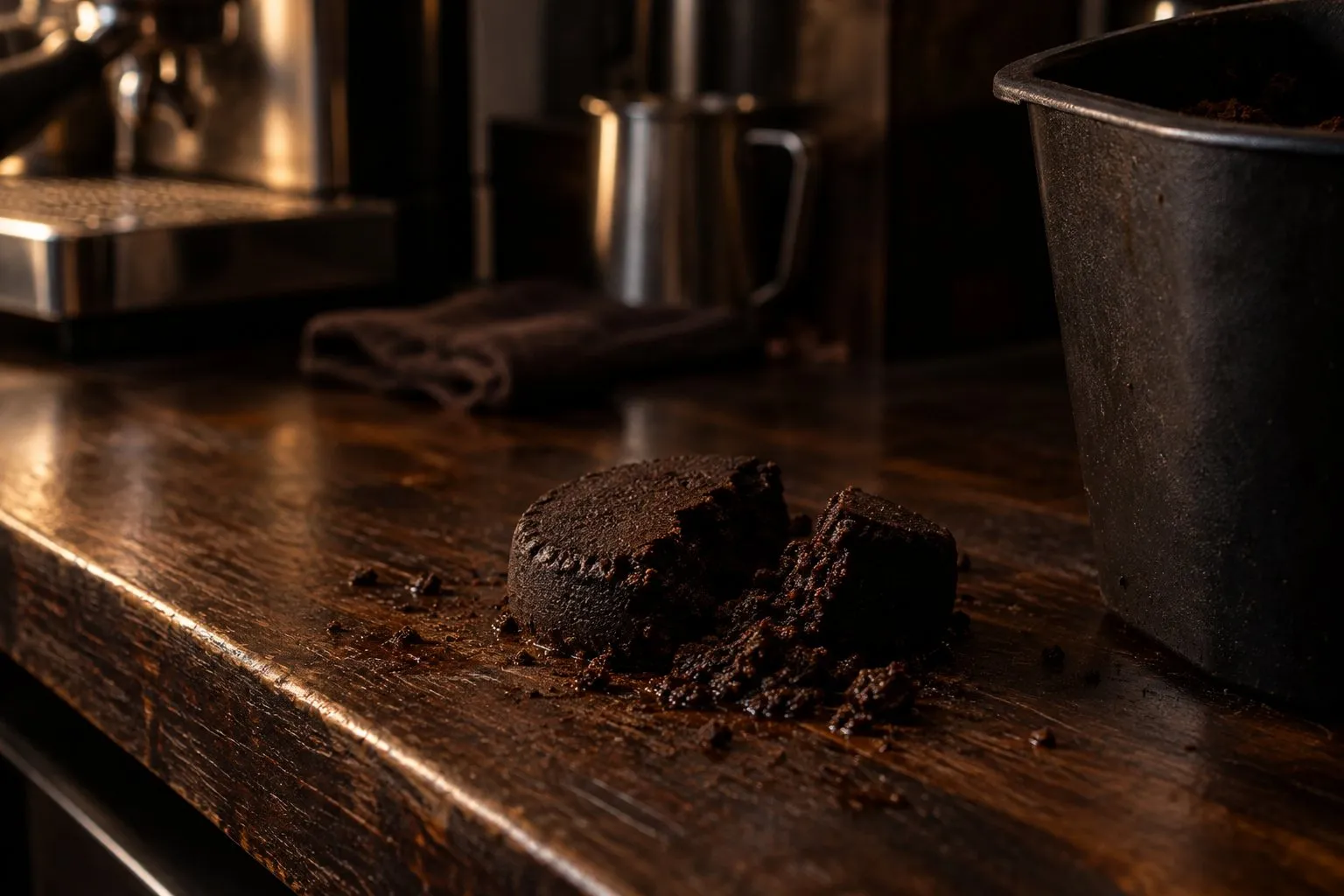
A puck or a capsule
A semi-automatic leaves you a spent puck, which needs a bin or a knock box. A Nespresso leaves an aluminum capsule, per Nespresso. You also use cleaning tablets and descaler on most pump machines, so neither side is free of consumables. The picture is a generated scene.
Nespresso runs a US return program: its bag holds up to 200 Original or 100 Vertuo capsules, and it goes back free through a UPS drop-off, except in Hawaii, Alaska and US territories. Its recycling only counts if you use it, so be honest about whether you will. We didn't read a life-cycle study, so we make no claim about which has the smaller footprint.
If you're switching from capsules
The gentlest step we can point to is a compact machine that handles the milk for you.
Breville Bambino Plus
The small machine that textures milk by itself: 3 temperatures and 3 texture levels, or by hand.
Why here: Ready to start in 3 seconds and textures milk automatically, per Breville, so the morning stays short while you learn the shot.
Best for: Latte and flat white drinkers who do not want to learn the wand first
- Hands-free steam wand with 3 milk temperatures and 3 textures (Breville)
- Ready to start in 3 seconds (Breville)
- America's Test Kitchen's compact pick of 2 July 2025
- Needs a separate espresso-capable grinder
- Breville's product page does not mention PID, though its BES500 instruction book does
- Heating
- ThermoJet
- Pump, as stated
- 15 bar
- Brew pressure, as stated
- 9 bar
- Portafilter
- 54 mm
- PID
- Yes, per the instruction book
- Built-in grinder
- No
- Milk
- Hands-free or manual
- Price class
- Mid-range
You'll also need a grinder* and a scale*, and a first-machine plan covers the order to buy them in.
Take a semi-automatic if, take Nespresso if
If you want to choose beans and adjust the shot → Breville Bambino Plus
View(paid link to Amazon, opens in a new tab)Ad · paid link · check price & delivery on AmazonIf you want real beans but no steps
If you want to decide whether the setup pays off
If you want coffee at the press of a button and nothing to adjust, stay with capsules. That's a perfectly good answer. And if you ever change your mind, the start page sorts every machine by what you drink.
Asked at the bar
Is Nespresso real espresso?
It depends on whose definition you use. Italy's INEI defines espresso as hot pressurized water forced through coffee powder, and certifies 7 g to 25 ml. Nespresso's Original line uses a pump and a capsule, with a 40 ml espresso setting on the Essenza Mini. Vertuo spins the capsule instead. Both can be coffee you enjoy, and neither is that certified recipe.
Is Nespresso 19 bar better than an espresso machine at 15 bar?
No, that number doesn't decide it. Nespresso's Essenza Mini manual says up to 19 bar, so it's a ceiling. The 15 or 20 bar on the box is what the pump can reach. Espresso is brewed at about 9 bar. We found no Nespresso figure for pressure at the capsule, so compare by the cup.
Is a Nespresso cheaper than an espresso machine?
That depends on your own numbers, and we print no prices. Add the machine, grinder and scale on one side and the capsule machine on the other, then divide each by your drinks per year. Then add the capsule price on one side and your dose in beans on the other. Run it on the day you buy.
Are Nespresso capsules recyclable?
Nespresso says its capsules are aluminum and runs a US mail-back program. Its recycling bag holds up to 200 Original or 100 Vertuo capsules and goes back through a UPS drop-off, except in Hawaii, Alaska and US territories. That only helps if you actually send the bag back. Check Nespresso's current terms, as this page may be dated.
Can I make a latte with Nespresso?
Not with the machine alone in the case of the Essenza Mini: its manual's parts list shows no steam wand, so you'd add a separate frother. A semi-automatic with a wand lets you texture milk yourself, and a machine like the Breville Bambino Plus can do it automatically, with 3 temperatures and 3 texture levels per Breville.
Where this comes from
- America's Test Kitchen: espresso machines, July 2, 2025
- Nespresso: Essenza Mini user manual, 2017 international edition
- Nespresso: Vertuo or Original (Portugal site, in English)
- Nespresso: customer FAQ (Hungary site, in English)
- Nespresso: US recycling bag page
- INEI: Certified Italian Espresso and Cappuccino leaflet (copy on a third-party server)
Next round
- Is a Semi-Automatic Espresso Machine Worth It? What Decides It for Your Coffee HabitIs an espresso machine worth it? It comes down to how often you buy coffee, whether you like the routine, and the full setup. How to run your own numbers.
- Semi vs super-automaticSemi-automatic or super-automatic? What each machine leaves to you, how price class and cleaning differ, what is known about the cup, and who should pick which.
- For beginnersThe beginner espresso machine to buy first, and in which order: machine, espresso-capable grinder, scale. Our pick is the Breville Bambino, with budget options.
 15 Bar vs 20 Bar: Is the Bigger Number Better?Is a 20 bar espresso machine better than 15 bar? No: the box shows what the pump can reach, and espresso is brewed at about 9 bar. What to compare instead.
- Dial in espressoHow to dial in espresso: fix the dose, set a yield, then change only the grind until time and taste line up. Steps, a symptom table and the exception to the rule.
semiautomaticespressomachine.com Editorial Team
Espresso gear & shot craft
We are the editorial team at semiautomaticespressomachine.com. We read maker spec sheets, manuals, standards and published research on espresso and turn them into plain-English buying advice, with sources on every page. We do not run lab tests, and we say so openly.
- Spec sheets & standards read
- Sources on every page
- No lab tests – stated openly
- Publisher details in the imprint