Is a Semi-Automatic Espresso Machine Worth It? What Decides It for Your Coffee Habit
Yes, if you drink espresso or milk drinks most days, you like a small daily routine, and you budget for a grinder and a scale along with the machine. No, if you drink one coffee a week or want a drink without any steps. How often you would otherwise buy coffee decides the money. Whether you enjoy the routine decides the rest.
Disclosure: This page contains affiliate links (marked with *). If you buy through them, we earn a small commission at no extra cost to you. As an Amazon Associate I earn from qualifying purchases. Learn more
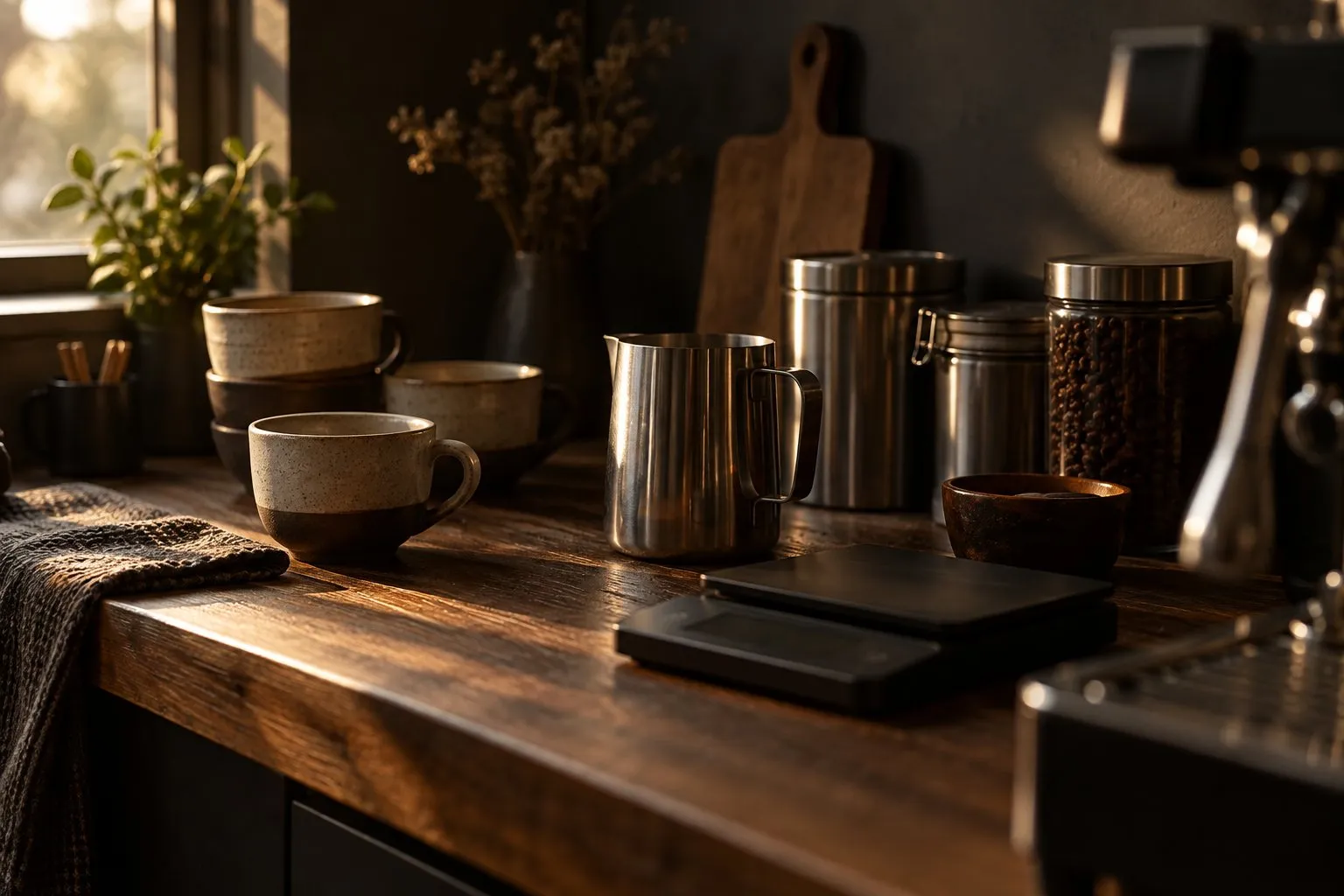
Yes, if you drink espresso or milk drinks most days, enjoy a small daily routine, and budget for the grinder and scale as well as the machine. America's Test Kitchen says a very nice setup can pay for itself in the first year of a daily café habit. For an occasional coffee, or if you want no steps at all, it usually is not.
On this page
The money question and the routine question have different answers, so check both. A semi-automatic machine leaves you the grinding, the weighing and the cleanup. That's the appeal for some people and the deal-breaker for others.
Who it pays off for
| Your habit | Our read |
|---|---|
| A bought espresso or latte most days | Likely worth it, on money alone |
| Coffee at home already, and you like weighing things | Worth it for the hobby, whatever the money says |
| A few drinks a week | Depends on the routine: the payback takes much longer |
| You want a drink at one button press | Look at a super-automatic instead |
| One coffee a week, or mostly filter | Probably not |
Run the numbers with your own prices
We print no prices, because they move too quickly and yours are the ones that count. America's Test Kitchen (July 2, 2025) says you can recoup a very nice machine and grinder in the first year, set against a daily café espresso. It leaves out beans, milk and upkeep, so here's a fuller version:
- Setup cost. Add the machine, a grinder and a scale.
- Saving per drink. Take what you pay at the café, then subtract your cost per home drink. Beans plus milk covers most of it.
- Payback. Divide the setup cost by the saving per drink. That's how many bought drinks you need to replace.
- Reality check. Divide by the drinks you truly replace each week, and not by what you hope to make.
These figures are our arithmetic at an 18 g dose, using 12 oz (340 g) bags:
| Doubles per week | Beans per year | Bags per year |
|---|---|---|
| 3 | about 6 lb (2.8 kg) | about 8 |
| 7 | about 14.5 lb (6.6 kg) | about 19 |
| 14 | about 29 lb (13.1 kg) | about 39 |
Add a few shots per bag if you change coffees often, because dialing in a new one takes some of them.
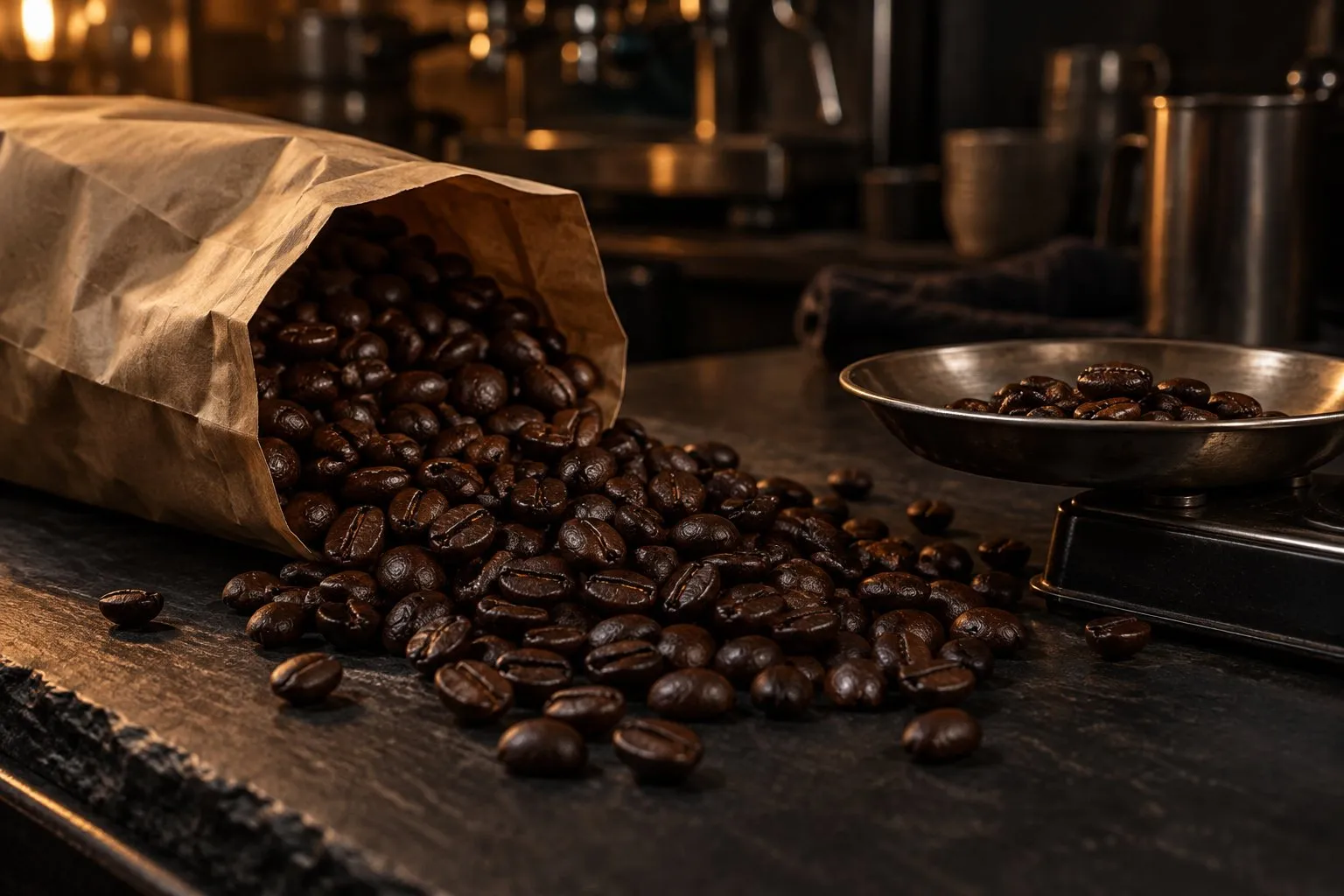
Beans are the running cost you can steer
An 18 g dose gets about 18 shots out of a 12 oz bag, so the price of one bag divided by 18 gives you your coffee cost per double.
The real price is the whole setup
You need an espresso-capable grinder, built in or separate, and a scale. At full price the separate pair is cheaper; on sale they cost the same. Check both on the day. Our built-in vs separate page walks through that choice.
For most people who decide it's worth it, we recommend starting small:
Breville Bambino
A compact machine with a 54 mm portafilter, ready in 3 seconds. The grinder is yours to choose.
Why here: A small machine from a maker that publishes its specs, ready in 3 seconds. It leaves the grinder decision open, which keeps a later upgrade cheap.
Best for: Beginners who want to pick their grinder and upgrade it later
- Ready to start in 3 seconds (Breville)
- 54 mm portafilter, 18 g dose (Breville)
- Manual steam wand for hand-textured milk (Breville)
- Needs a separate espresso-capable grinder
- Breville's product page does not mention PID, though its BES450 instruction book does
- Heating
- ThermoJet
- Pump, as stated
- 15 bar
- Brew pressure, as stated
- 9 bar
- Portafilter
- 54 mm
- PID
- Yes, per the instruction book
- Built-in grinder
- No
- Milk
- Manual wand
- Price class
- Mid-range
Add the Breville Smart Grinder Pro* and a scale such as the Maestri House S2*, which is listed with a timer and 0.1 g steps. Mostly milk drinks? The Bambino Plus* takes the wand practice out of it. Straight espresso and enjoy tinkering? Look at the Gaggia Classic*.
Testing the idea on a tight budget? The De'Longhi Stilosa*, CASABREWS CM5418* and CASABREWS 3700* sit in the budget class, and our budget page sorts them. America's Test Kitchen did not review the cheapest class, so independent data is thin, and some very cheap “espresso machines” on Amazon are 3.5 bar steam machines. Check that yours is pump-driven. The mid-range page goes one step up.
What the routine asks of you
America's Test Kitchen lists the usual chores: weighing, grinding and cleanup. Breville says the Bambino is ready to start in 3 seconds, while America's Test Kitchen gives the Gaggia Classic Pro a ready time of 1 minute 19 seconds.
Breville's Bambino manual also tells you what stays with you after the shot. You rinse the basket and portafilter, wipe the group, wipe and purge the steam wand after milk, empty the drip tray, and run a descale cycle when the machine flags it.
How long do espresso machines last?
We found no lifetime figure in years from a maker or an independent source. What we can say:
- Maintenance matters. De'Longhi says regular maintenance prolongs a machine's life and gives no number. It suggests descaling about every three months in general, and it ties the interval to your water hardness.
- Water matters. America's Test Kitchen warns that hard water can leave mineral deposits that clog a machine over time. Our water page covers what to use.
- Warranties are short. Serious Eats lists one to two years across its picks (copy dated May 2, 2023), and De'Longhi lists one year on the Stilosa plus a year with registration.
- Simple machines have less to go wrong. Serious Eats calls semi-automatics very reliable because they have fewer complex parts, and it calls super-automatics hard to maintain. That's opinion, not a failure statistic.
When to skip it
Skip it if the steps sound like a chore today, or if you don't want a grinder on the counter. Wait if you're mainly hoping for lower coffee costs but only buy a couple of drinks a week.
If you're in, our guide for beginners sets out what to buy first. Want a verdict on one specific machine? Is the Barista Express still worth it goes through that one. Make several milk drinks in a row? See whether you need a dual boiler. Would capsules do? Espresso machine vs Nespresso compares them.
Asked at the bar
Are espresso machines worth it?
They are if the machine replaces drinks you would otherwise buy, or if you enjoy making them. America's Test Kitchen says a very nice machine and grinder can pay for itself in the first year of a daily café habit. That sum leaves out beans, milk and your time, so run it with your own numbers before you decide.
How long do espresso machines last?
We found no figure in years from a maker or an independent source. De'Longhi says regular maintenance prolongs a machine's life but gives no number. Warranties are a weak proxy: Serious Eats lists one to two years across its picks, in a copy dated May 2, 2023. Water, descaling and regular cleaning are the parts you control.
Is a budget espresso machine worth it, or should I spend more?
A budget pump machine is a fair way to find out whether you like the routine, but it still needs an espresso-capable grinder and a scale. Makers of this class publish less, and America's Test Kitchen did not review the cheapest class. Check that the machine is pump-driven, because some very cheap machines are 3.5 bar steam machines.
Is it cheaper to make espresso at home?
Per drink, usually, because you pay for beans and milk and not for a café's rent and staff. The setup comes first, though, and it only pays back if you actually replace bought drinks. We print no prices. Divide your setup cost by what you save per drink, then see how many drinks that takes.
Where this comes from
- America's Test Kitchen: espresso machines, July 2, 2025
- Serious Eats roundup, read through a Yahoo copy dated May 2, 2023
- De'Longhi: why caring for your espresso machine matters
- Breville: BES450 Bambino product page
- Breville: Bambino instruction book (US, Canada, Mexico)
- De'Longhi: Stilosa EC260BK product page
Next round
- For beginnersThe beginner espresso machine to buy first, and in which order: machine, espresso-capable grinder, scale. Our pick is the Breville Bambino, with budget options.
 Semi vs super-automaticSemi-automatic or super-automatic? What each machine leaves to you, how price class and cleaning differ, what is known about the cup, and who should pick which.
 Built-In Grinder or Separate Grinder for Espresso: Which Setup Should You Buy?Built-in grinder or separate grinder? The price math in words, the settings compared, and the upgrade path, with one clear rule for choosing your espresso setup.
 Is the Breville Barista Express Still Worth It? Specs and Newer RivalsIs the Breville Barista Express still worth it? What holds up, what its newer rivals add, who has actually tested it, and when a separate grinder is the better buy.
- How we compareHow our espresso machine picks come about: spec sheets, standards and published research, what we cannot verify, which outside tests exist, and how we are funded.
semiautomaticespressomachine.com Editorial Team
Espresso gear & shot craft
We are the editorial team at semiautomaticespressomachine.com. We read maker spec sheets, manuals, standards and published research on espresso and turn them into plain-English buying advice, with sources on every page. We do not run lab tests, and we say so openly.
- Spec sheets & standards read
- Sources on every page
- No lab tests – stated openly
- Publisher details in the imprint