Flat White vs Latte: Milk, Shots and Why No Standard Exists
A flat white has less milk than a latte and a thin layer of microfoam, so the coffee tastes more concentrated. A latte is milkier, with a deeper layer of foam. We found no standard for either, and shot type and size differ by café.
Disclosure: This page contains affiliate links (marked with *). If you buy through them, we earn a small commission at no extra cost to you. As an Amazon Associate I earn from qualifying purchases. Learn more

A flat white has less milk than a latte and a thin layer of microfoam. Shot type and size differ by café. A latte is milkier, and Breville's recipe tops it with about ½ inch of microfoam. We found no standards body that defines a flat white, so treat any exact ratio as one café's recipe.
On this page
Ask three cafés what a flat white is and you may get three answers, all of them reasonable. The shared part is short: less milk than a latte, and a thin layer of microfoam. Microfoam means steamed milk with bubbles too small to see. Everything beyond that is house style, and that is worth knowing before you start copying a ratio from the internet.
Flat white and latte side by side
| Flat white | Latte | |
|---|---|---|
| Milk | Less | More |
| Foam | A thin layer of microfoam | Deeper; about ½ inch on Breville's recipe |
| Coffee taste | More concentrated, says Breville | Milder, because of the extra milk |
| Shots at Breville | One shot from the double basket, split between two cups | The same |
| Shots at Starbucks | Two ristretto shots | One espresso shot |
| Vessel, per Wikipedia | A ceramic cup of about 6 to 7 fl oz (175 to 200 ml) | Often a glass, about 7.6 fl oz (225 ml) in New Zealand |
| Milk temperature | About 140 to 150°F at Breville | About 140 to 150°F at Breville |
| Formal standard | None found | None found |
So the milk and the foam separate the two drinks reliably. The shots do not.

Less milk. Thin foam. The rest is house style.
Why nobody can give you the exact recipe
We looked for a standards body that defines the flat white and found none. The sources that do give numbers disagree with one another:
- Starbucks describes “two ristretto espresso shots finished with steamed milk” on its comparison page. Its home recipe calls for 2 shots of espresso and 1.25 cups of whole milk, and says its cafés use ristretto. Its latte comparison uses one shot and up to 16 oz of milk.
- Breville uses the same espresso for both drinks and changes the milk and the foam. Its recipes give no cup size.
- Wikipedia reports one source with a double espresso of about 1.7 fl oz (50 ml) and about 4.4 fl oz (130 ml) of milk. It also calls the origin contentious, with Australia and New Zealand both claiming the drink.
Any single ounce figure you see quoted as the definition comes from one café or one website. Use it as a starting point if you like it. It does not make other cups wrong.
Temperature varies as well. INEI's cappuccino specification foams 100 ml of milk to about 125 ml at about 55°C, while Breville aims for 140 to 150°F (60 to 65°C). Those are different drinks and different sources, which again shows that no single number rules here.
How to steam for each drink at home
The technique is the same for both. Only the amount of air and the amount of milk change. These steps follow Breville's recipes.
Pull the shot first
On a machine with a single heating element, Breville says to brew first and then texture the milk. A dial-in routine with a scale gets the shot right before you worry about milk.Fill the jug with cold milk
Pour cold milk up to the bottom of the spout. For a flat white, pour less of it into the cup later.Purge the wand and set the tip
Clear the wand over the drip tray. Place the tip about ½ inch into the milk and open the steam.Let in air, then stop
Lower the jug slightly so the wand takes in air. For a latte you want about ½ inch of foam. For a flat white, keep this phase shorter so the layer stays thin. Texture comes first, then temperature.Heat to about 140 to 150°F
Stop when the jug becomes too hot to touch, which is Breville's check without a thermometer. Keep non-dairy milk below about 130°F (55°C) to avoid separation.Swirl, tap and pour
Swirl the jug and tap it on the counter to remove bubbles. Then pour high at first and lower the jug as the cup fills.
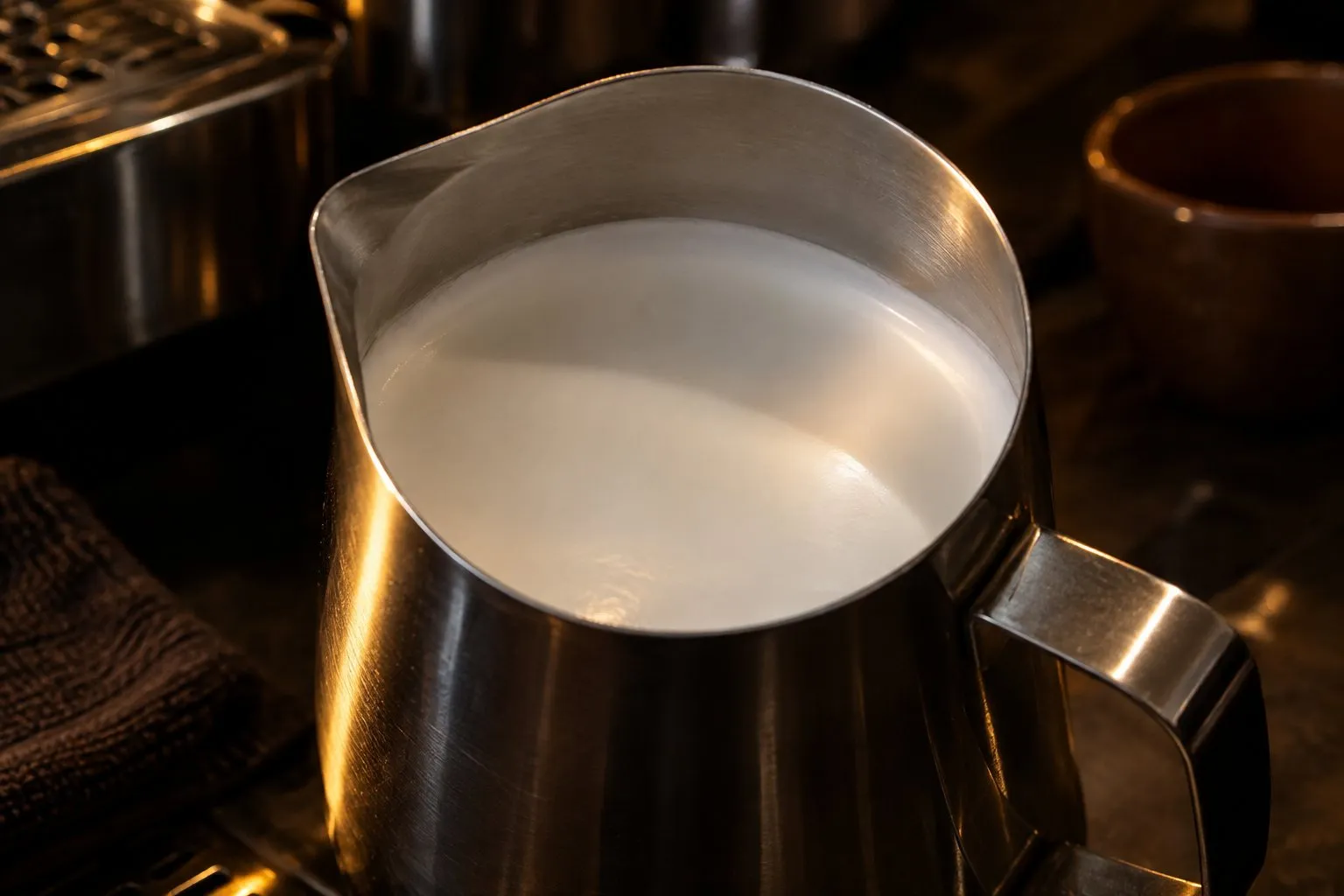
What you are aiming for
Microfoam is steamed milk with bubbles too small to see, so the surface looks glossy, almost like wet paint. A flat white wants a thin layer of this on top of the coffee, and a latte wants more of it.
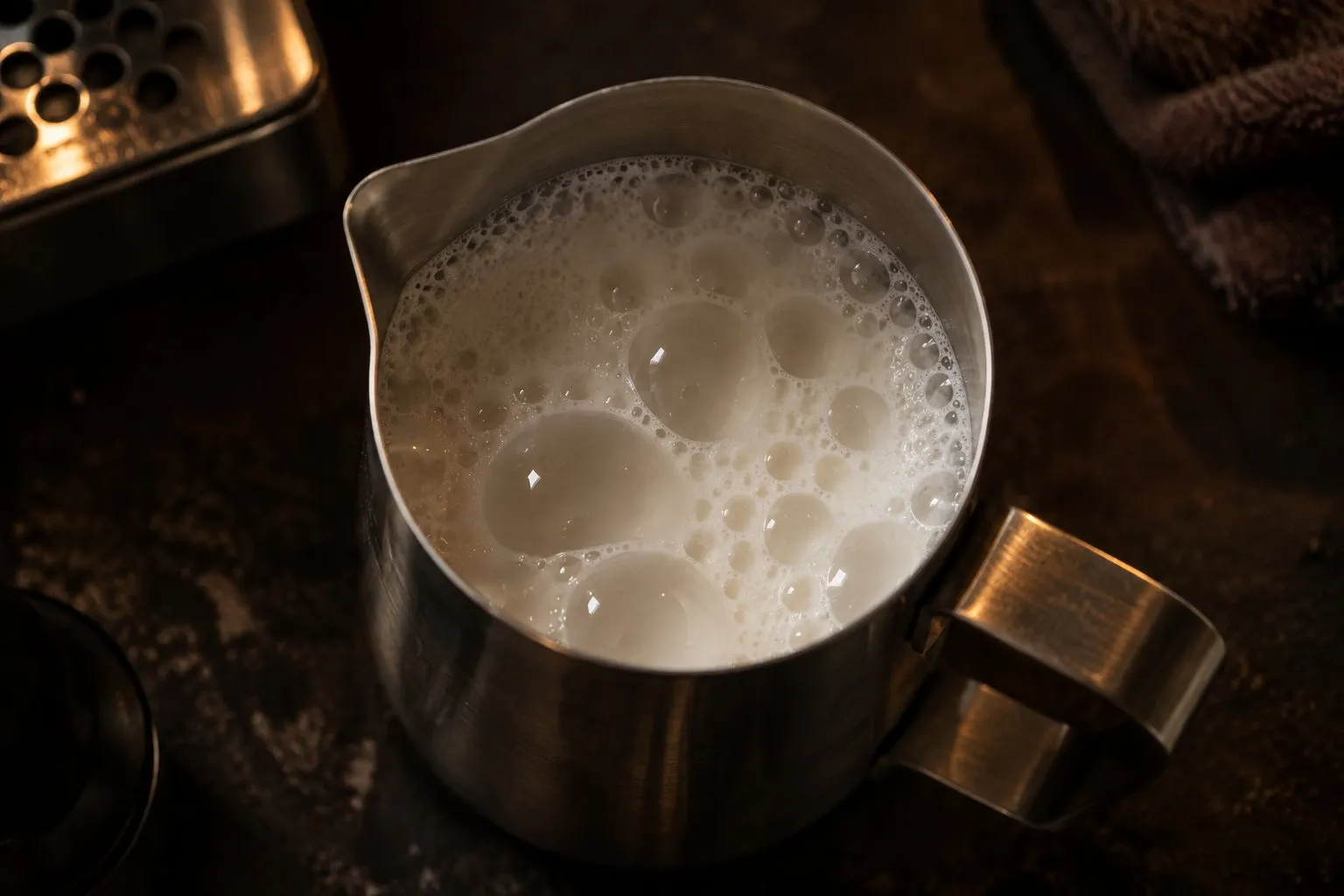
Breville's recipes tap and swirl the jug to remove bubbles. If big soap-like bubbles stay on top anyway, let in less air next time and compare. Steam and hot water can burn, so keep your hands clear of the wand and follow the manual for your machine.
Which machine suits which drink
A flat white and a latte ask the same things of a machine: a shot you can repeat and steam you can control. The difference between them is your milk technique. If you make several drinks in a row, a dual boiler saves the wait between shot and steam. For one or two a morning, it is optional.
Our page on what a beginner should buy first covers this decision in full. If you already know you drink milk and do not want to learn the wand right away, the Breville Bambino Plus* textures milk by itself, with 3 temperatures and 3 texture levels according to Breville, and you can still steam by hand. It needs a separate espresso grinder. For the wand route, the accessories page covers pitchers and sizes.
To make one at home, how to make a flat white has the steps. Want the wider picture first? Machines for lattes and cappuccino compares the milk routes, and the guide to choosing a semi-automatic machine starts from what you drink.
Asked at the bar
Is a flat white just a latte with less milk?
Mostly, with one more difference: the foam. Breville describes a flat white as similar to a latte, with less milk and a thinner layer of microfoam. Shot type and size differ by café, so some flat whites also change the coffee, as at Starbucks, whose cafés use ristretto shots.
Is a flat white stronger than a latte?
It tastes stronger, because the same coffee meets less milk. Breville calls the flavor more concentrated. Whether it holds more coffee depends on the café: Breville's recipes use the same espresso for both drinks, while Starbucks' comparison page lists two ristretto shots for a flat white and one espresso shot for a latte.
What is a flat white?
It is espresso with steamed milk and a thin layer of microfoam, with less milk than a latte. The “flat” refers to that thin foam layer. Both Australia and New Zealand claim the drink, and Wikipedia calls the origin contentious. We found no standards body that defines its size or shot type.
Should I get a flat white or a latte?
Order by how much you want to taste the coffee. Choose a flat white for a smaller drink where the espresso stays clear. Choose a latte for a larger, milkier and gentler one. At home both start from the same shot and the same steaming, so you can try both without new gear.
Can I make a flat white on a single boiler machine?
Yes. Breville's advice for a machine with a single heating element is to brew the shot first and then texture the milk. A dual boiler can do both at the same time, which matters more when you make several milk drinks in a row than when you make one.
Where this comes from
Next round
 For beginnersThe beginner espresso machine to buy first, and in which order: machine, espresso-capable grinder, scale. Our pick is the Breville Bambino, with budget options.
 Dial in espressoHow to dial in espresso: fix the dose, set a yield, then change only the grind until time and taste line up. Steps, a symptom table and the exception to the rule.
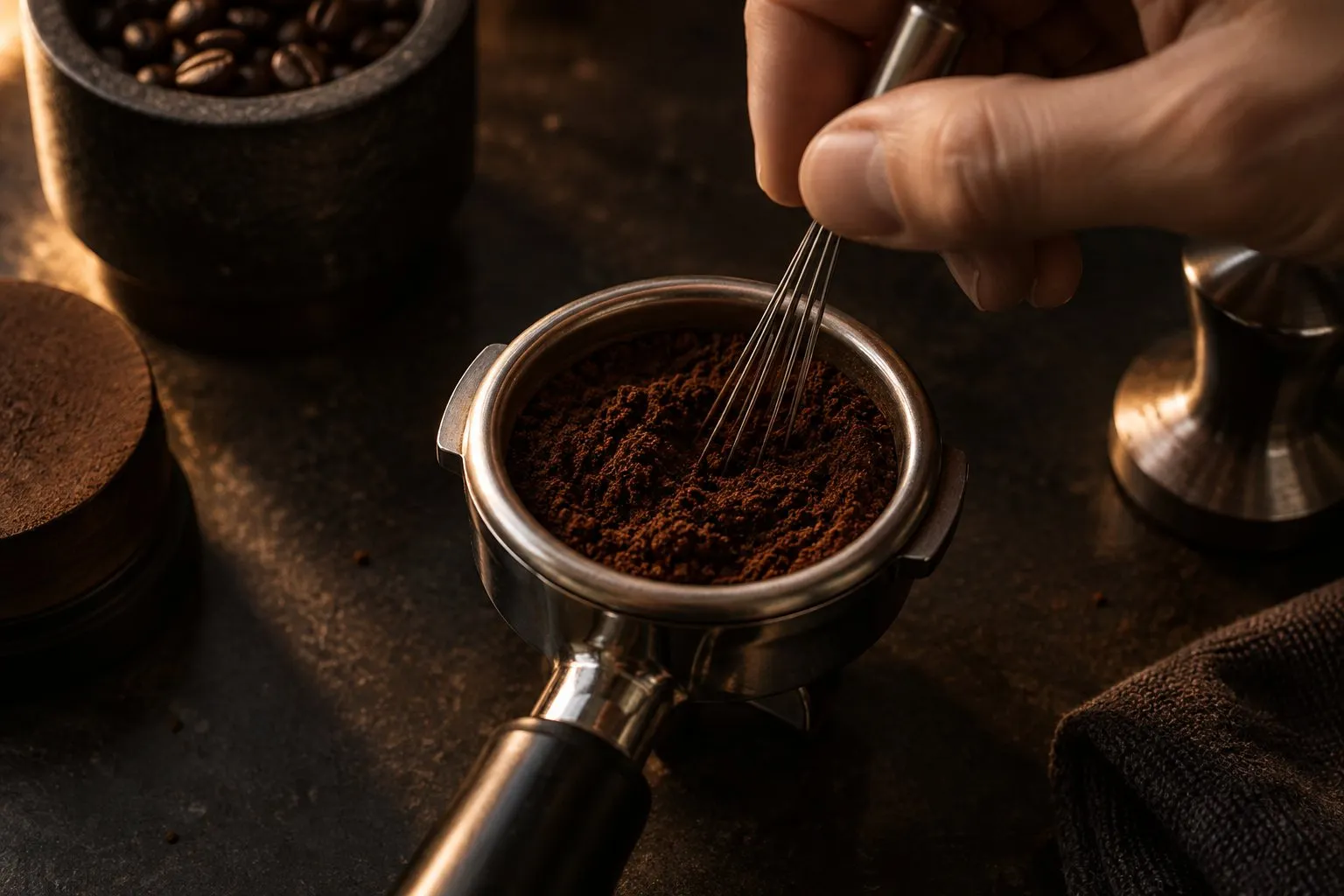 AccessoriesWhich espresso accessories are worth buying first: scale, tamper, pitcher, WDT tool and more, sorted by portafilter size, with what your machine already includes.
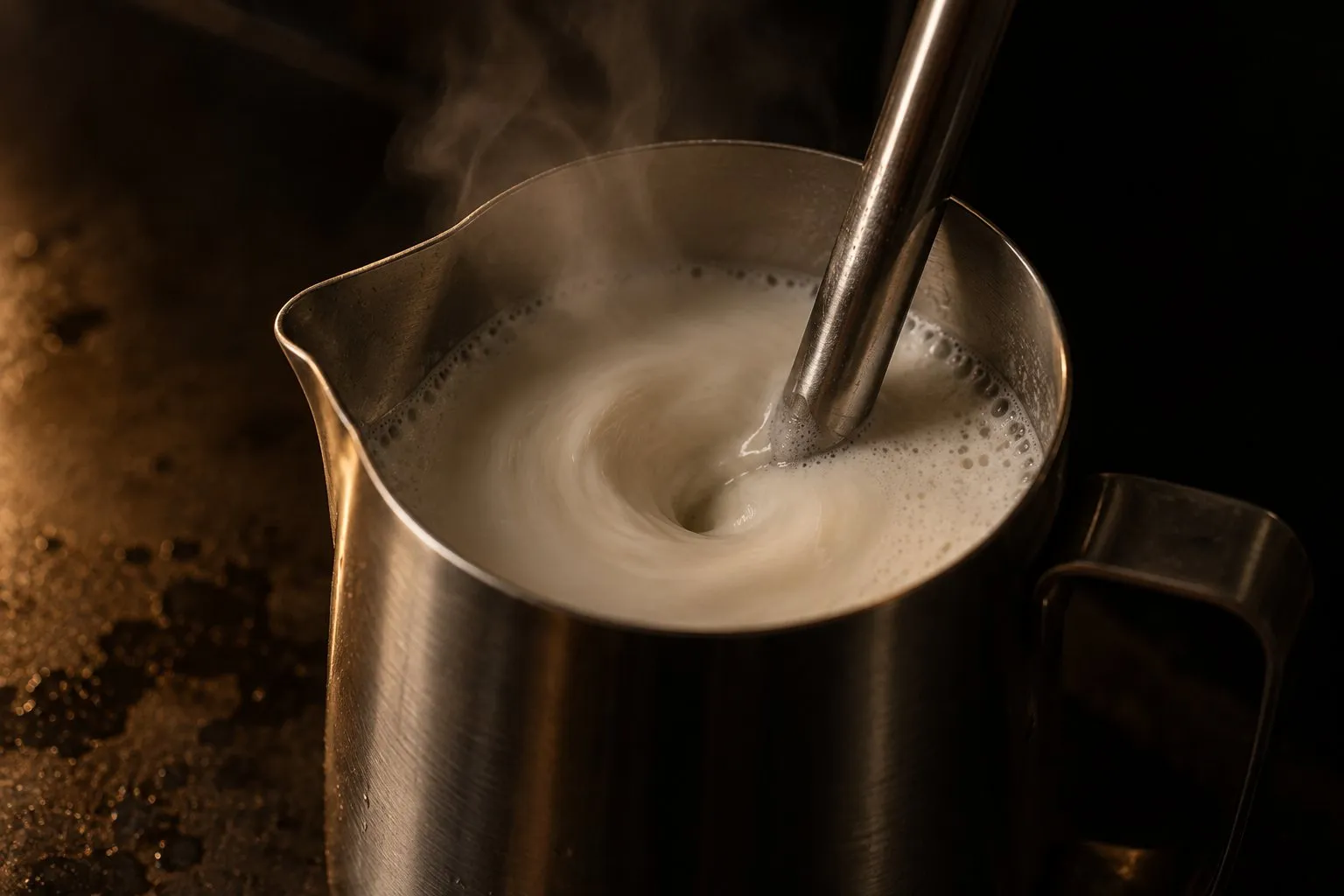 Dual boilerWhat a dual boiler does, when it earns its price, and how to read budget listings that use the word. One confirmed pick, plus what we could not verify.
semiautomaticespressomachine.com Editorial Team
Espresso gear & shot craft
We are the editorial team at semiautomaticespressomachine.com. We read maker spec sheets, manuals, standards and published research on espresso and turn them into plain-English buying advice, with sources on every page. We do not run lab tests, and we say so openly.
- Spec sheets & standards read
- Sources on every page
- No lab tests – stated openly
- Publisher details in the imprint