Ristretto vs Espresso: A Shorter Ratio, Not a Different Bean
A ristretto is an espresso cut short: the same dose of coffee, less water, a smaller and more concentrated cup. Breville's guide puts it at 1:1 by weight against 1:2 for espresso and 1:3 for a lungo. You don't need a different bean, and no standards body fixes those numbers.
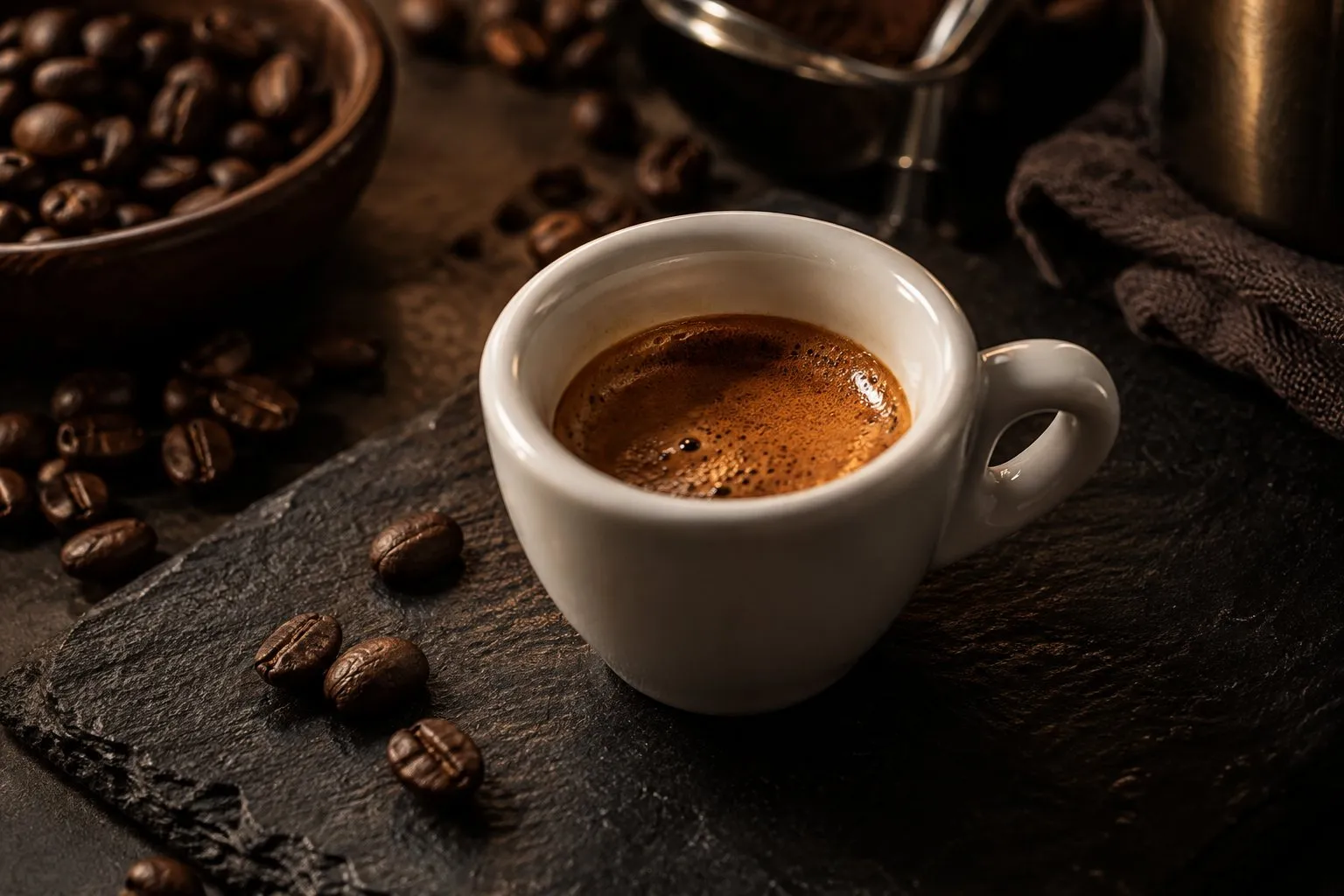
A ristretto uses the same coffee as an espresso with less water, so it ends up smaller and more concentrated. Breville gives 1:1 for ristretto, 1:2 for espresso and 1:3 for lungo. Other recipes differ, and we found no standard. With a scale you can pull all three from the same bag, because only the yield has to change.
On this page
Once you weigh your yield, ristretto stops being a mysterious menu word. It is a decision about when to stop the shot. Our page on espresso ratios covers the system as a whole. This one compares the three shots people actually ask about, and shows how far the published recipes disagree.
The three shots side by side
| Ristretto | Espresso | Lungo | |
|---|---|---|---|
| Ratio, Breville | 1:1 | 1:2 | 1:3 |
| Ratio, 1Zpresso | 1:1 to 1:1.5 | 1:1.5 to 1:2.5 | 1:2.5 to 1:4 |
| Time, Breville | Not given | 25 to 30 s, and 20 to 40 s can taste good | Not given |
| Time, 1Zpresso | 15 to 20 s | 25 to 30 s | 40 to 50 s |
| Grind, 1Zpresso | Finest | Fine | Slightly coarser |
| Breville's words | “Rich, intense” | “Golden standard” | “Delicate but highly-concentrated” |
Two brands, two sets of numbers, and neither is a rule. The only certified recipe we found, from Italy's INEI, doesn't use ratios at all. It specifies 7 g of coffee to 25 ml in the cup, froth included, in 25 seconds give or take 5. Italy's certified espresso is 7 g to 25 ml, so even the middle column of that table has no single definition.
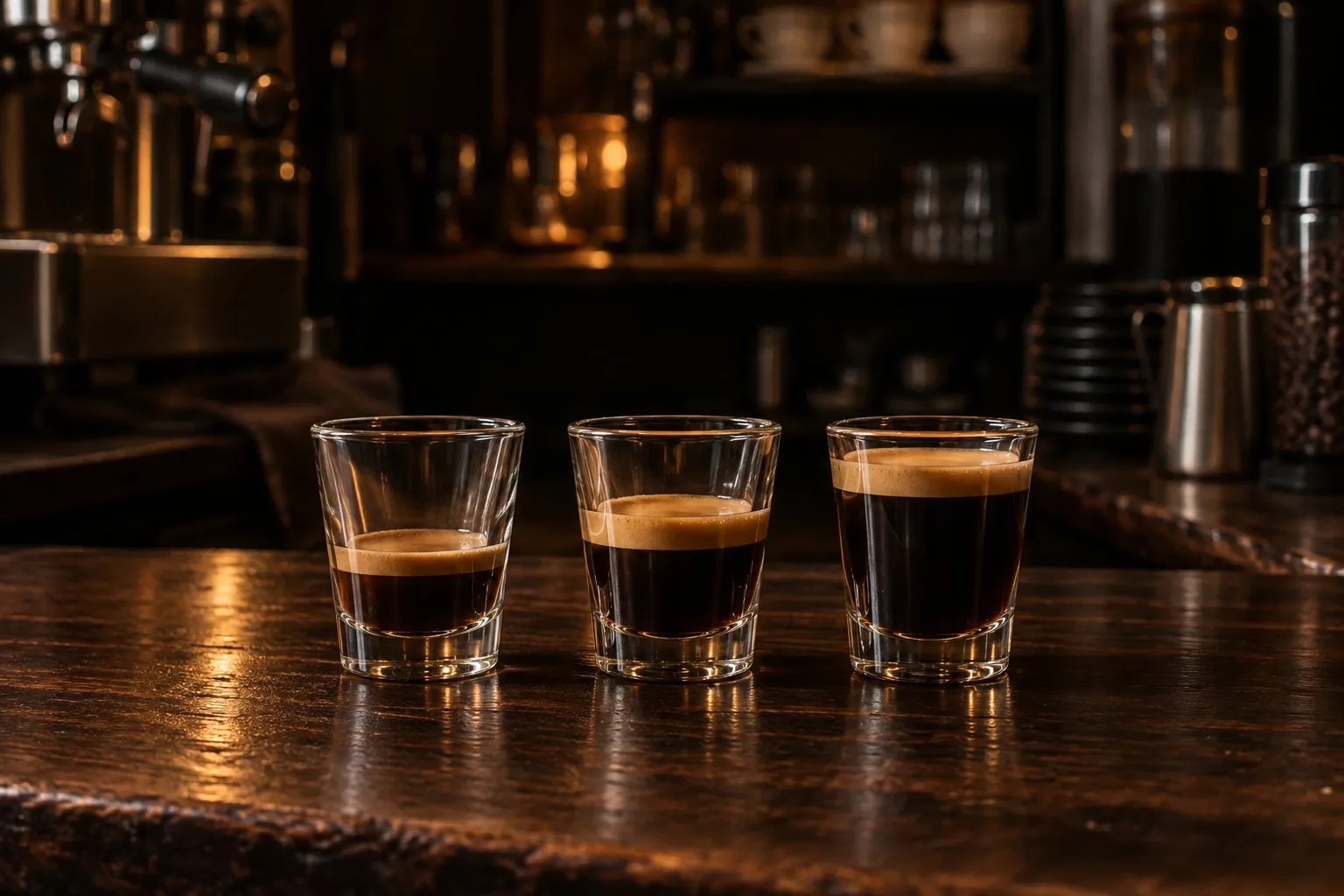
What changes in the cup
Less water through the same coffee gives you a smaller, stronger-tasting drink. Past that, the flavor notes come from the people selling you coffee gear and coffee, so read them as descriptions, not findings:
- Starbucks says a ristretto is smaller, more concentrated, and sweeter and richer in taste.
- 1Zpresso calls it sweeter with significantly less bitterness, and a lungo slightly more bitter, especially when over-extracted.
- Breville calls a ristretto rich and intense, and a lungo delicate but highly concentrated.
We found no measurement behind those words, and we haven't sat down with the three shots ourselves. They do agree in direction, so they make a sensible hypothesis to check with your own bag.
Same bean, or a special one?
The same bean. “Espresso” on a bag is a suggestion from the roaster, and any roasted bean can be brewed as espresso. The same goes for ristretto, which describes how the shot is pulled. If you are curious about bag labels, see espresso beans vs coffee beans.
Try all three from one bag
You need a scale under the cup and a basket you already know. Set your dose below to see the three yields:
Target in the cup
36 g1.3 oz
Plain arithmetic. The ratios are starting points from Breville's guide, not a standard.
Dial in the espresso first
Get a 1:2 shot you like, using our dial-in guide. Write down the dose, grind and time.Pull the ristretto
Keep the dose and grind the same, and stop at 1:1. It is a short target, so expect the scale to climb a little after you stop.Pull the lungo
Same dose and grind again, and stop at 1:3. Note how the taste changes across the shot.Taste them in order, then adjust
If the ristretto tastes sour, go a step finer. First step, yes. If you are already very fine and it stays sour, go coarser. If the lungo turns harsh, bitter espresso goes through the usual causes.
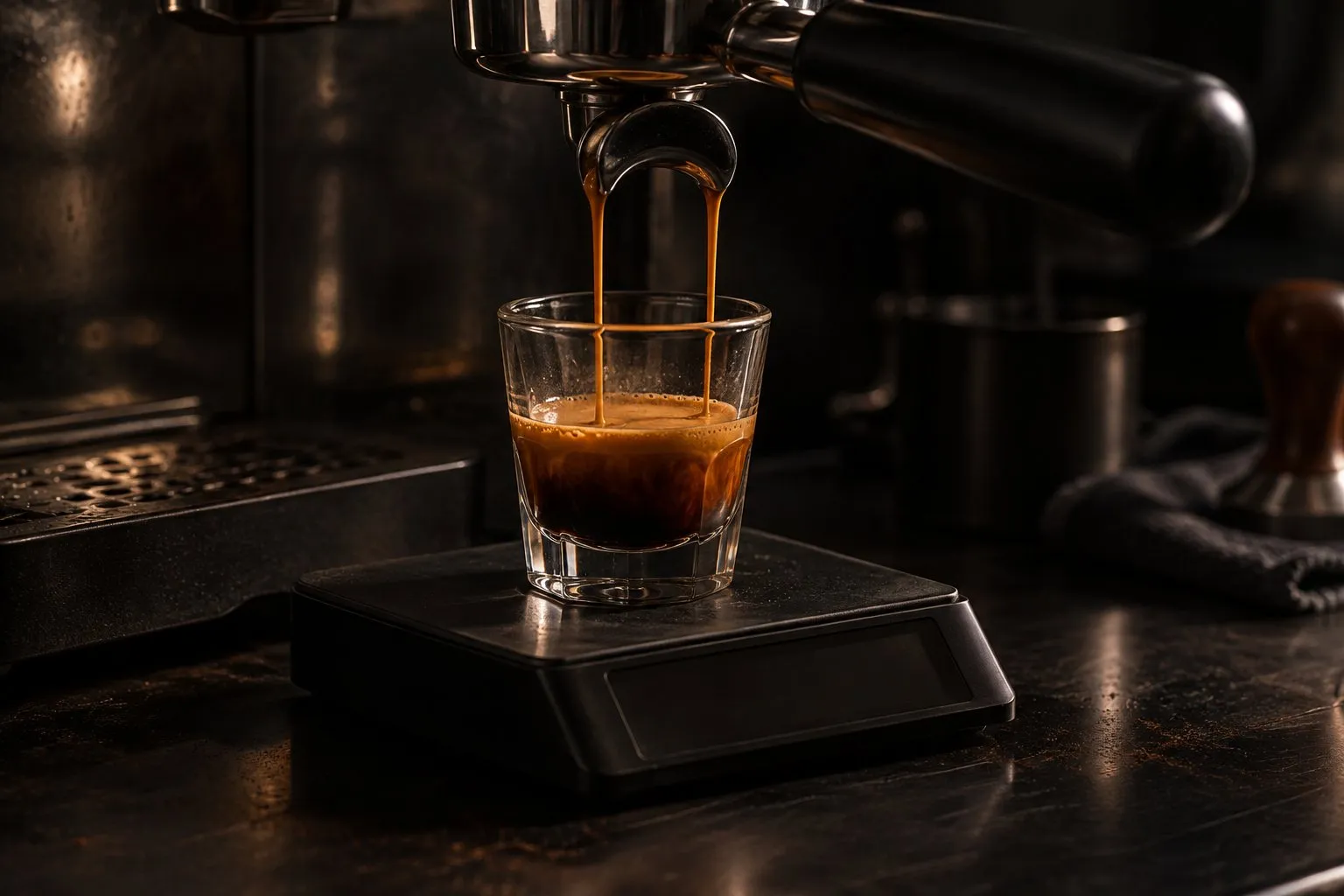
Why this takes a scale
At a 1:1 target, a few grams is a big share of the drink, and shot glasses can't see it because foam takes up room. Stopping by weight also lets you compare one shot with the next. Any scale that reads to 0.1 g and fits under the cup will do the job.
Machine settings can get in the way here. Programmed shot buttons stop by volume, so a short target is easier when you start and stop by hand. On the Barista Express, for example, you can hold a shot button and stop manually without changing the presets.
Ristretto in milk, and lungo vs Americano
Ristretto shows up most often in milk. Starbucks says its cafés build flat whites on ristretto shots, while its own home recipe calls for 2 shots of espresso, so the same brand gives you both answers. On a flat white, shot type and size differ by café, and our flat white and latte page goes through it.
A lungo is not an Americano. In a lungo, all the water passes through the coffee. For an Americano you pull a normal shot and add hot water afterward, and our Americano page covers that drink. For the bigger picture of setting up a machine, start from the home page.
Asked at the bar
What is the difference between ristretto and espresso?
The amount of water. Starbucks describes a ristretto as the same amount of coffee with less water, and Breville gives it a 1:1 ratio against 1:2 for espresso. The result is smaller and more concentrated. The coffee can be the same bag and roast, since any roasted bean can be brewed as espresso.
What does ristretto mean?
Starbucks translates it as “restricted” in Italian, which fits the idea: you restrict how much water runs through the coffee. It describes the way the shot is pulled, and it doesn't name a type of bean or a roast.
What is the difference between a lungo and an espresso?
A lungo runs longer. It uses the same dose as an espresso with significantly more water, as 1Zpresso puts it. Breville gives it 1:3 and calls it delicate but highly concentrated. All the water passes through the coffee, which is where a lungo differs from an Americano.
Do I need to grind finer for a ristretto?
Sources differ. 1Zpresso's guide says ristretto uses the finest grind of the three and lungo a slightly coarser one. Breville's guide gives ratios with no separate grind advice. The simple way to start is to keep your espresso setting, stop at the shorter yield and taste. If it runs sour and thin, try a step finer.
Where this comes from
Next round
- Espresso ratioEspresso ratio explained: 1:2 in 25 to 30 seconds is a good first recipe, not a standard. See the numbers, Italy's 7 g to 25 ml, and a calculator for your own dose.
- Dial in espressoHow to dial in espresso: fix the dose, set a yield, then change only the grind until time and taste line up. Steps, a symptom table and the exception to the rule.
- Espresso scaleWhat an espresso scale needs: 0.1 g steps, a timer and a size that fits your drip tray. Listed options, plus Acaia and Timemore dimensions from their own data.
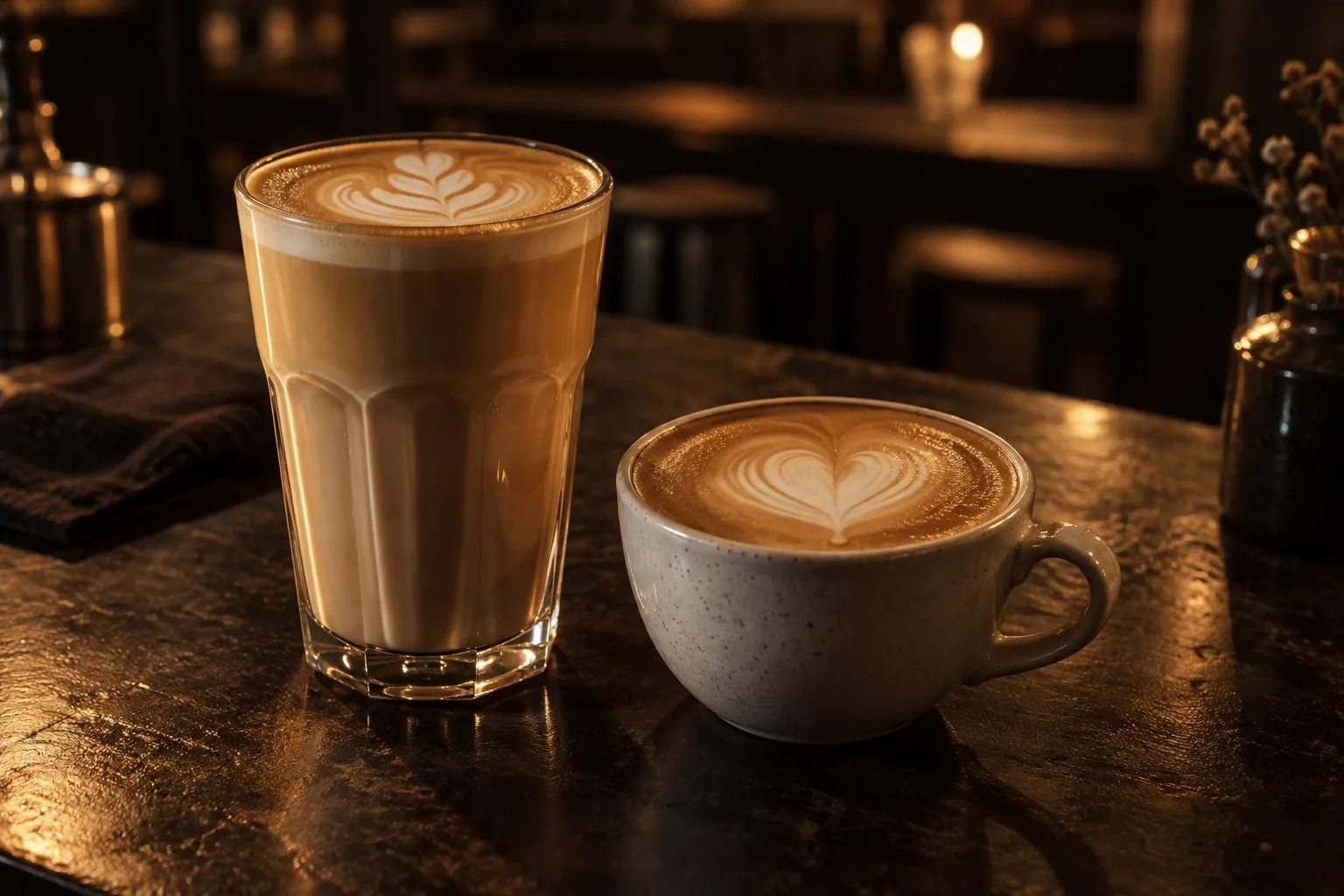 Flat white vs latteFlat white vs latte: less milk and a thin layer of microfoam against a larger, milkier drink. What sources agree on, where they differ, and how to steam for each.
 For AmericanosWhich espresso machine suits an Americano: a hot water outlet, water through the wand, or a plain kettle. What each maker's manual says, plus the recipe.
semiautomaticespressomachine.com Editorial Team
Espresso gear & shot craft
We are the editorial team at semiautomaticespressomachine.com. We read maker spec sheets, manuals, standards and published research on espresso and turn them into plain-English buying advice, with sources on every page. We do not run lab tests, and we say so openly.
- Spec sheets & standards read
- Sources on every page
- No lab tests – stated openly
- Publisher details in the imprint