Bitter Espresso: Over-Extraction, Roast or Dirty Machine?
Bitter espresso usually means a slow shot that over-extracted, so grind coarser as a first step. A fast, watery shot can taste bitter too, and that one needs the opposite fix. If the flow looks right, the roast, a dirty basket or hot brew water are the next suspects.
Disclosure: This page contains affiliate links (marked with *). If you buy through them, we earn a small commission at no extra cost to you. As an Amazon Associate I earn from qualifying purchases. Learn more
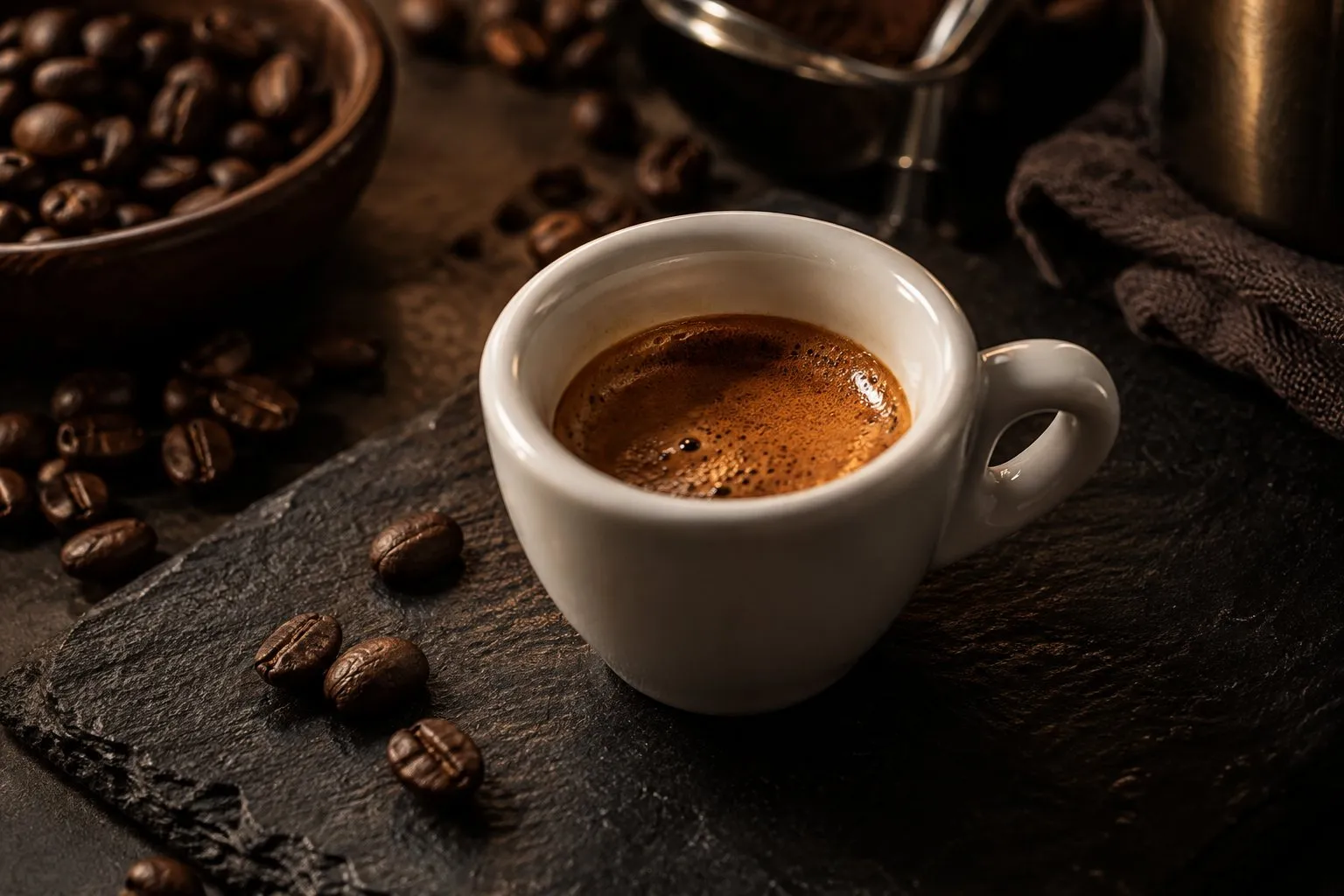
Watch the flow before you touch the grinder. A slow, very dark shot that tastes bitter and burnt is over-extracted: grind coarser, or dose slightly less. A fast, pale, watery shot can also taste bitter, and that one wants a finer grind or fresher beans. If the flow looks right, check the roast, the cleaning and the brew temperature.
On this page
Some bitterness belongs in the cup. Breville describes a good espresso as a balance of sweetness, acidity and bitterness, and Italy's INEI wants sour and bitter in balance, with neither on top. The problem starts when bitter is the only thing you taste. For the whole routine, start with dialing in one change at a time.
Read the shot before you change anything
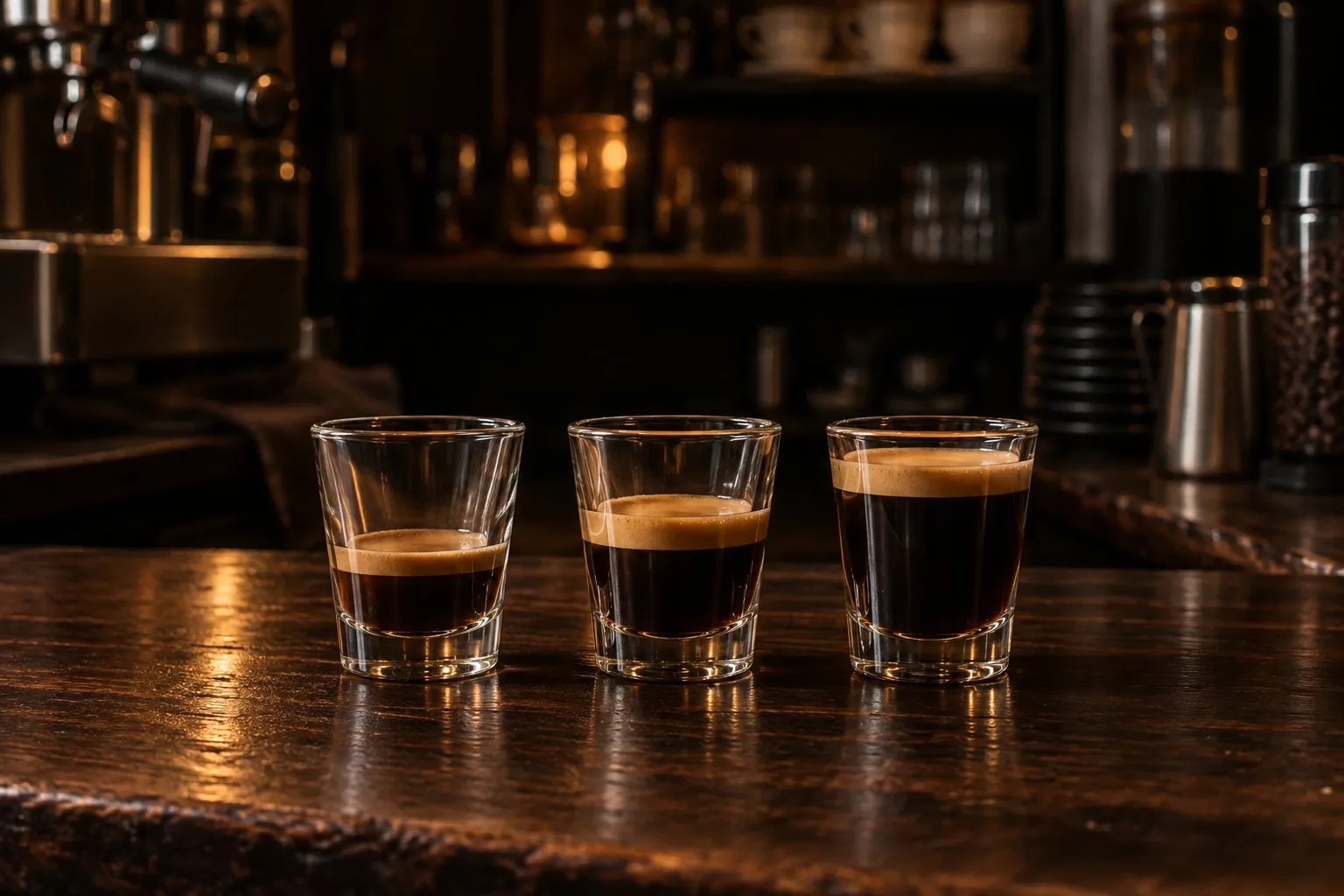
The common shorthand says bitter means coarser. As a first step it works, and it's right for most slow shots. But Breville's instruction book for the Bambino puts the word bitter in two columns, and the two call for opposite moves.
| Slow shot | Fast shot | On-time shot | |
|---|---|---|---|
| Flow starts | After 12 seconds, or only drips | After 1 to 6 seconds | After 8 to 12 seconds |
| Flow looks like | Drips, or nothing | Water | Warm honey |
| Crema | Dark and spotty | Thin and pale | Golden brown, fine mousse |
| Color | Very dark brown | Pale brown | Dark brown |
| Taste, per Breville | Bitter and burnt | Bitter or sharp, weak, watery | Your target |
| Breville calls it | Over-extraction | Under-extraction | Correct |
| First move | Grind coarser | Grind finer | Leave the grind alone |
The flow times are Breville's figures for its own machine, and other machines may start differently. The same book adds that stale coffee can pour too quickly and taste bitter and watery. So a fast, thin, bitter shot is a reason to look at the roast date, not to go coarser. Its opposite number, the fast and sour shot, has its own page.
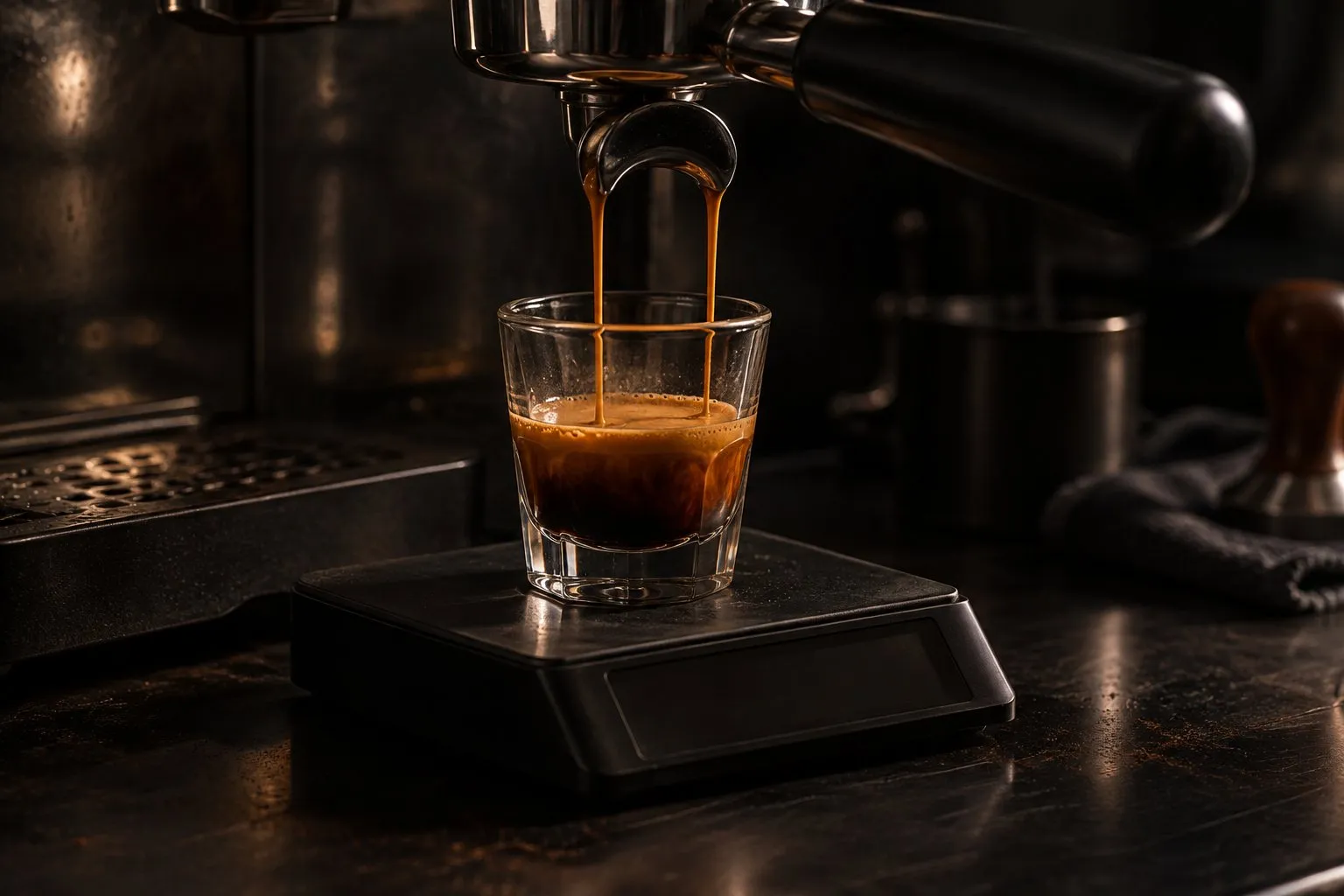
What to do, in order
Get numbers for this shot
Weigh the dose and the yield, and time the shot. A 1:2 ratio in 25 to 30 seconds is a good first recipe, not a standard.If it ran slow, grind coarser
Move one step and keep everything else the same. Breville ties a too-fine grind directly to over-extraction. Our grind size guide covers how far to go.Check the dose
Breville's guide offers a slightly smaller dose as the other fix for a slow shot, and its book tells you to keep the dose under control. If you have been rounding up, come down by a gram or two.If it ran fast, go the other way
Grind finer, check that the basket holds enough coffee, and read the roast date. Breville suggests using beans 5 to 20 days after that date.Clean the parts the coffee touches
Do this before you judge the next shot. The section below lists what Breville names.Change the coffee
If the flow is right and the shot is clean, the bitterness may be the roast. Try a lighter one with the same recipe.
One caution on very fine settings. Cameron and colleagues (Matter, 2020) measured extraction rising as the grind got finer, then falling again, and attributed the fall to uneven flow at fine settings. We read only the abstract, and it doesn't discuss taste. Still, a choked shot isn't simply “more extracted.” Uneven puck preparation is worth ruling out here.
When the roast is the answer
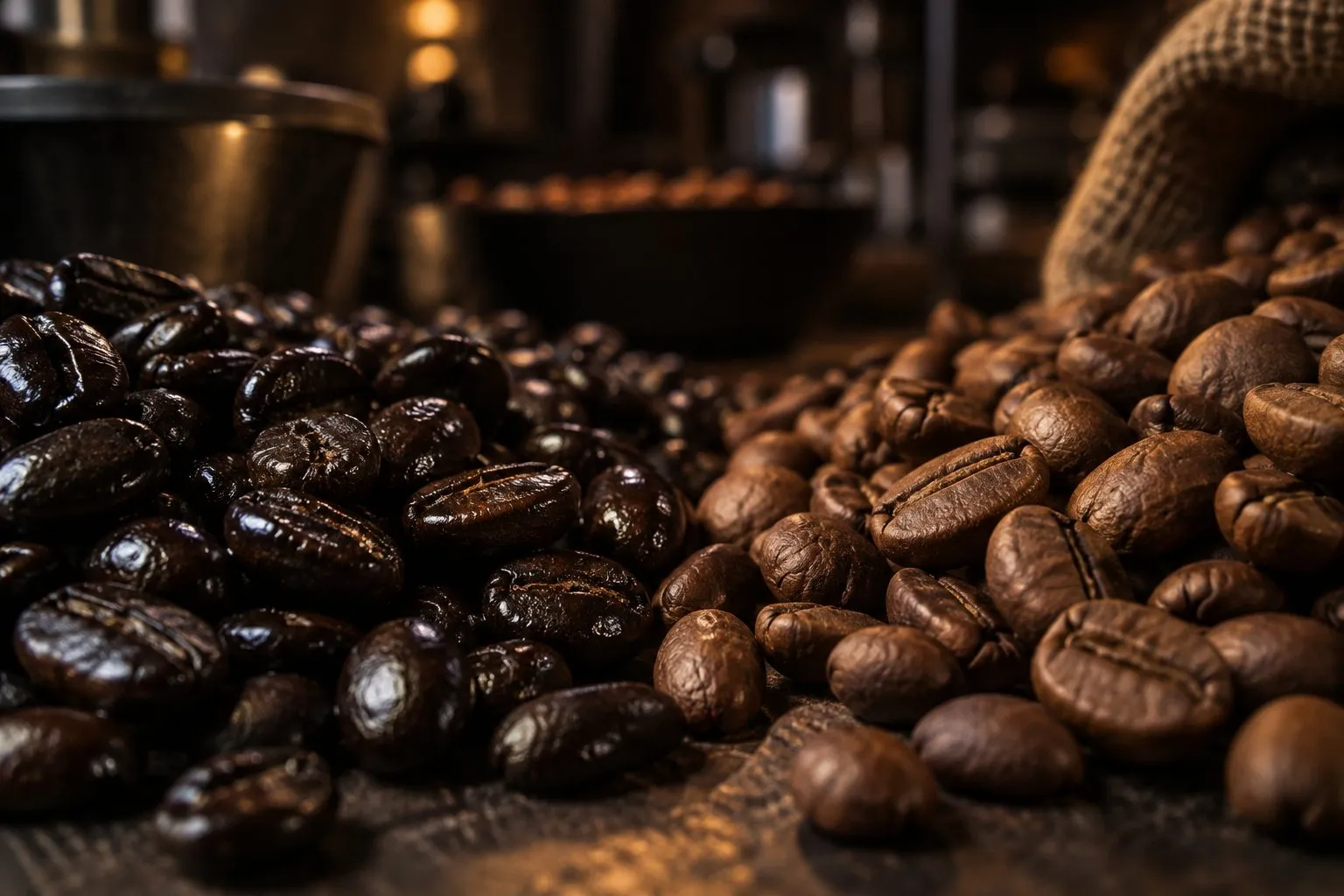
Roast changes which bitter compounds you get
Thomas Hofmann's group at the Technical University of Munich traced coffee bitterness to compounds that form during roasting and are absent from green beans. In the American Chemical Society's 2007 summary, one group dominates light and medium roasts, and its breakdown products build up in dark roasts and taste more lingering and harsh. Espresso brewing produced the most of them. That is a press summary of a conference talk, so read it as the outline.
So a perfectly timed dark roast can still taste bitter, and no grinder setting removes that. Breville's guide also says darker roasts call for a finer setting.
Cleaning and water
Breville's guide asks you to clean the dispersion screen, the inside of the portafilter and the underside of the basket to prevent coffee-oil buildup, and to purge old grounds from the grinder now and then. We found no measurement, so treat this as a cheap check. Cleaning tablets covers the back-flush.
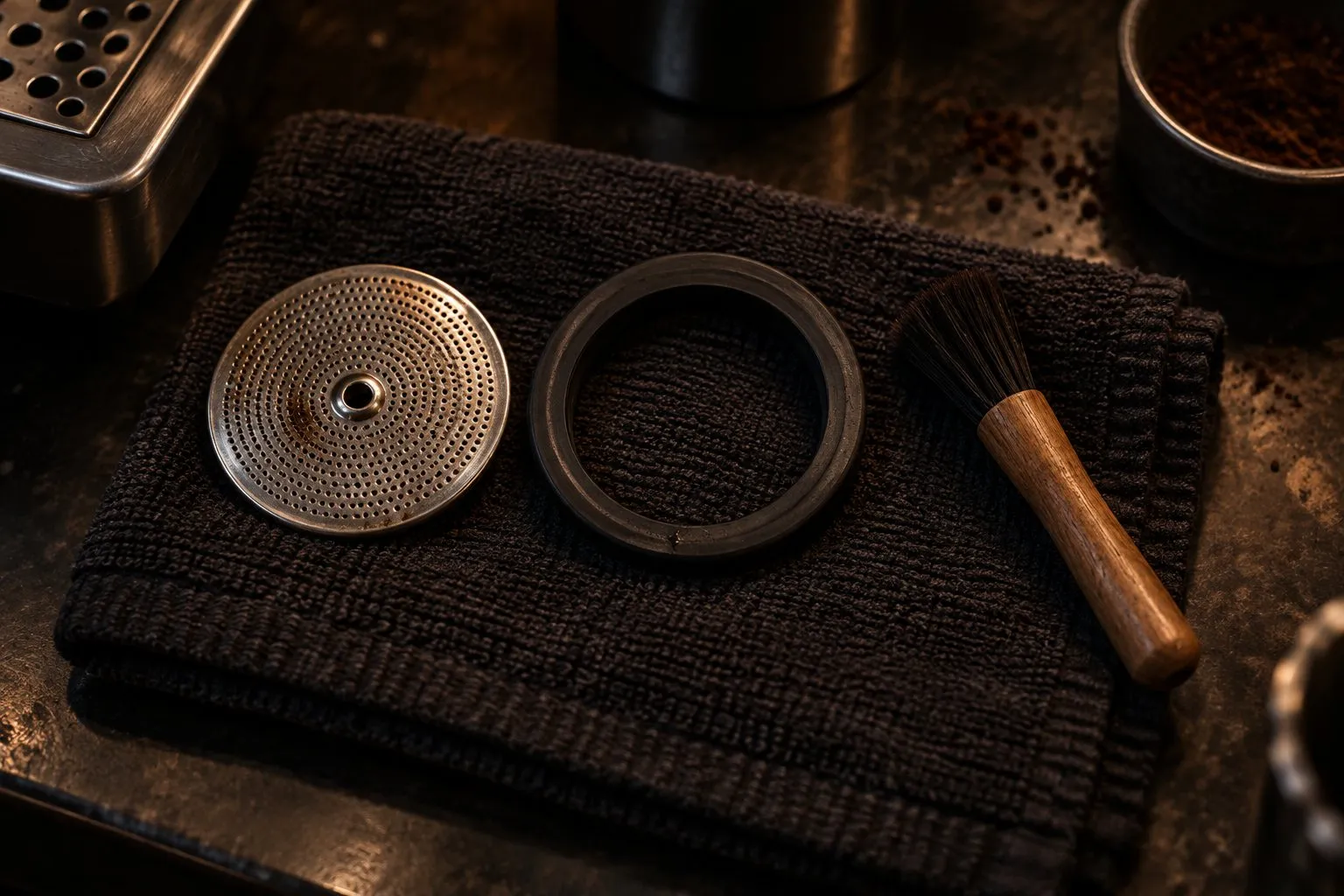
Breville also asks for filtered or mineral water to keep off-tastes out of the cup. Our page on water for espresso goes through the numbers.
Temperature, if you can change it
Serious Eats, in a copy dated May 2, 2023, says high temperatures can bring out bitterness and low ones can taste sour. The published targets differ: Breville states 200 °F for the Barista Express, and INEI specifies about 190 °F (88 °C) leaving the unit. If your machine has a setting, try one step down after you have sorted out the grind. PID keeps the boiler closer to the set point. Measured stability at the puck depends on the machine.
When to call for service
If the shot still chokes after you grind clearly coarser and dose less, the fault may not be the coffee. Breville's troubleshooting lists a blocked filter basket and a descale cycle among its checks. Beyond that, contact the maker's service.
When a new grinder is the real fix
If one step is too fast and the next is too slow, the grinder is your limit, and no recipe will fix that. Our espresso grinder guide compares the options.
Breville Smart Grinder Pro
A programmable conical burr grinder with 60 settings and cradles for 50 to 54 mm and 58 mm portafilters.
Why here: 60 settings and grind time in 0.2 second steps give you room to move between too slow and too fast.
Best for: A first separate grinder, especially beside a Bambino
- 60 grind settings (Breville)
- Grind time in 0.2 second steps (Breville)
- Portafilter cradles for 50 to 54 mm and for 58 mm (Breville)
- Breville's page does not state the burr size
- A hopper grinder, not built for single dosing
- Type
- Electric, hopper
- Burrs
- Stainless steel conical
- Grind settings
- 60
- Fits
- 50–54 mm and 58 mm cradles
- Price class
- Mid-range
Asked at the bar
Why is my espresso bitter?
Most often the shot ran too slowly because the grind is too fine or the basket holds too much coffee. Breville's instruction book describes that shot as over-extracted, very dark and bitter. Stale coffee, a dark roast, coffee oil left in the basket and hot brew water can also play a part, so check the flow first.
Does bitter always mean over-extracted?
No. Breville's Bambino instruction book lists bitter under both faults. A slow shot tastes bitter and burnt. A fast shot that pours like water can taste bitter or sharp, weak and watery. The book says stale coffee can do the same. Grinding coarser would make the second case worse, so read the flow before you adjust.
Do dark roasts always taste more bitter?
Roast matters, even in a well-pulled shot. A 2007 Technical University of Munich study, as summarized in an American Chemical Society release, found that different bitter compounds dominate at different roast levels, with harsher, more lingering ones building up in dark roasts. Dialing in can reduce bitterness, but it can't turn a dark roast into a medium one.
Can a dirty machine make espresso bitter?
It may, but the evidence is thin. Breville asks you to clean the dispersion screen, the portafilter and the underside of the basket regularly to prevent coffee-oil buildup, and it gives no taste figure. We found no measurement either. Cleaning costs little, so run through it before you buy new beans or new gear.
Should I lower the temperature if my espresso is bitter?
Try it after the grind, and only if your machine lets you. Serious Eats, in a copy dated May 2, 2023, says high temperatures can bring out bitterness. Italy's certified espresso specifies water of about 190 °F (88 °C), while Breville states 200 °F for the Barista Express. Change it in small steps and taste each one.
Where this comes from
- Breville: Bambino BES450 instruction book (US and Canada)
- Breville: how to dial in espresso
- American Chemical Society release on the Technical University of Munich bitterness study (2007)
- Cameron et al.: Systematically improving espresso (Matter, 2020), abstract only
- INEI: Certified Italian Espresso leaflet (copy on a third-party server)
- Serious Eats roundup, read through a Yahoo copy dated May 2, 2023
Next round
- Dial in espressoHow to dial in espresso: fix the dose, set a yield, then change only the grind until time and taste line up. Steps, a symptom table and the exception to the rule.
 Sour espressoSour espresso usually means under-extraction. What to change first, when grinding finer stops helping, and where roast, water and temperature fit in.
- Espresso ratioEspresso ratio explained: 1:2 in 25 to 30 seconds is a good first recipe, not a standard. See the numbers, Italy's 7 g to 25 ml, and a calculator for your own dose.
 Espresso grind sizeHow fine to grind for espresso: start near fine table salt, then let the shot decide. Why no setting transfers, where finer stops working, and what coarser can do.
 Espresso grindersWhat makes a grinder suitable for espresso: burrs, small steps and clean dosing. One clear pick, the alternatives sorted by routine, and honest notes on the data.
semiautomaticespressomachine.com Editorial Team
Espresso gear & shot craft
We are the editorial team at semiautomaticespressomachine.com. We read maker spec sheets, manuals, standards and published research on espresso and turn them into plain-English buying advice, with sources on every page. We do not run lab tests, and we say so openly.
- Spec sheets & standards read
- Sources on every page
- No lab tests – stated openly
- Publisher details in the imprint