Best Semi-Automatic Espresso Machines for Beginners: What to Buy First, in Which Order
Decide on your grinder first, then buy the machine, then a scale, and everything else later. Our pick for most beginners is the Breville Bambino with a separate grinder such as the Smart Grinder Pro. Want one box instead? Take the Barista Express. On a tight budget, a CASABREWS or De'Longhi Stilosa gets you started, with less documented data.
Disclosure: This page contains affiliate links (marked with *). If you buy through them, we earn a small commission at no extra cost to you. As an Amazon Associate I earn from qualifying purchases. Learn more
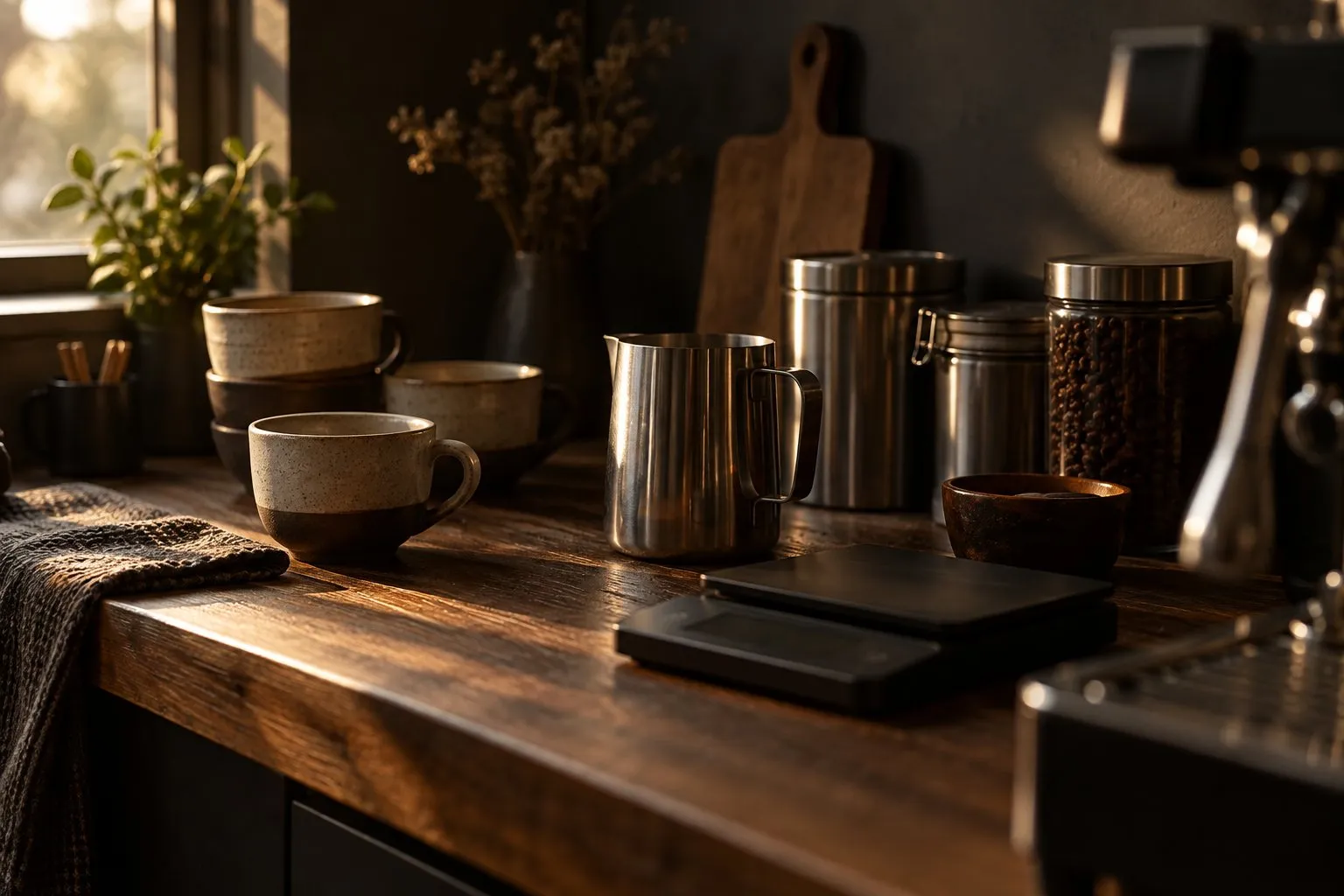
For most beginners we recommend the Breville Bambino with a separate espresso grinder and a scale. It is small and ready in 3 seconds, and Breville documents its 54 mm portafilter. If you drink mostly milk, take the Bambino Plus. If you want one box, take the Barista Express. Budget for the grinder before you pick the machine.
On this page
Beginner guides tend to start with the machine. We start with the grinder, because it is the part most first-time buyers forget to budget for. A machine can only brew what the grinder gives it, and Breville's own guide recommends a burr grinder and a grind around the texture of fine table salt.
So here is the order we recommend:
- Decide on the grinder route. Built in or separate. This decides which machines are even on your list.
- Pick the machine. Choose by what you drink, not by the number on the box.
- Buy a scale. You need it to weigh the coffee going in and the espresso coming out.
- Stop there for a while. Other espresso accessories can wait until you know what your routine needs.
For most people who start that way, we recommend the Breville Bambino*. It is small, ready in 3 seconds, and leaves the grinder decision open for later.
Breville Bambino
A compact machine with a 54 mm portafilter, ready in 3 seconds. The grinder is yours to choose.
Why here: A compact first machine from a maker that documents its specs, with room to upgrade the grinder later without touching the machine.
Best for: Beginners who want to pick their grinder and upgrade it later
- Ready to start in 3 seconds (Breville)
- 54 mm portafilter, 18 g dose (Breville)
- Manual steam wand for hand-textured milk (Breville)
- Needs a separate espresso-capable grinder
- Breville's product page does not mention PID, though its BES450 instruction book does
- Heating
- ThermoJet
- Pump, as stated
- 15 bar
- Brew pressure, as stated
- 9 bar
- Portafilter
- 54 mm
- PID
- Yes, per the instruction book
- Built-in grinder
- No
- Milk
- Manual wand
- Price class
- Mid-range
Which first machine for whom
If you want to choose your grinder and replace it later → Breville Bambino
View(paid link to Amazon, opens in a new tab)Ad · paid link · check price & delivery on AmazonIf you drink lattes and flat whites and do not want to learn the wand first → Breville Bambino Plus
View(paid link to Amazon, opens in a new tab)Ad · paid link · check price & delivery on AmazonIf you want one box and no separate grinder → Breville Barista Express
View(paid link to Amazon, opens in a new tab)Ad · paid link · check price & delivery on AmazonIf you drink straight espresso and enjoy tinkering → Gaggia Classic E24
View(paid link to Amazon, opens in a new tab)Ad · paid link · check price & delivery on AmazonIf a known brand at the lowest price class matters most → De'Longhi Stilosa
View(paid link to Amazon, opens in a new tab)Ad · paid link · check price & delivery on AmazonIf you do not want these steps at all
First machines compared
The first three have data from a maker page or from retailers. The De'Longhi and CASABREWS only have Amazon listings, so most of their rows stay empty. We do not fill those gaps with guesses.
| Our pick: with a separate grinderBreville Bambino | Our pick: milk drinksBreville Bambino Plus | Our pick: straight espressoGaggia Classic E24 | Budget first tryDe'Longhi Stilosa | Seller data onlyCASABREWS CM5418 | |
|---|---|---|---|---|---|
| Type | – | – | – | Pump machine | – |
| Heating | ThermoJet | ThermoJet | Single boiler, per retailers; brass (Gaggia) | Stainless steel boiler | – |
| Pump, as stated | 15 bar | 15 bar | 15 bar nominal (Gaggia) | 15 bar | – |
| Brew pressure, as stated | 9 bar | 9 bar | 9 bar OPV, per retailers | – | – |
| Portafilter | 54 mm | 54 mm | 58 mm (Gaggia) | – | – |
| PID | Yes, per the instruction book | Yes, per the instruction book | No, per retailers | – | – |
| Built-in grinder | No | No | No | No | No |
| Milk | Manual wand | Hands-free or manual | – | Manual frother | Steam wand, per listing |
| Price class | Mid-range | Mid-range | Mid-range | Budget | Budget |
| Best for | Beginners who want to pick their grinder and upgrade it later | Latte and flat white drinkers who do not want to learn the wand first | Straight espresso drinkers who enjoy learning and tinkering | Budget first machines from a brand you already know | A first try at espresso on a tight budget |
| On Amazon(paid link to Amazon, opens in a new tab)Ad · paid link · check price & delivery on Amazon | On Amazon(paid link to Amazon, opens in a new tab)Ad · paid link · check price & delivery on Amazon | On Amazon(paid link to Amazon, opens in a new tab)Ad · paid link · check price & delivery on Amazon | On Amazon(paid link to Amazon, opens in a new tab)Ad · paid link · check price & delivery on Amazon | On Amazon(paid link to Amazon, opens in a new tab)Ad · paid link · check price & delivery on Amazon |
The machines one by one
Breville Bambino: our pick for most beginners
Breville lists a 54 mm portafilter, an 18 g dose, a ThermoJet heating system that is ready to start in 3 seconds, and a manual steam wand. The box holds single wall and dual wall baskets, a tamper and a milk jug, so a grinder and a scale are the only things missing. At 11.9 x 6.1 x 13.5 in, it takes little counter space.
The downsides are plain. You must buy a separate espresso-capable grinder, and you must learn the wand. Breville's product page does not state PID, while its US instruction book does. It suits you if you want a small machine now and a free hand on the grinder later.
Breville Bambino Plus: for milk drinkers
The Bambino Plus* adds a steam wand that textures milk by itself, with 3 temperatures and 3 texture levels, and you can still steam by hand. It has the same 54 mm portafilter, 18 g dose and 3 second start, in a slightly larger body. America's Test Kitchen named it its compact pick on 2 July 2025, and Serious Eats' roundup, in a copy dated 2 May 2023, calls it a strong all-rounder for beginners.
Take it if a flat white or latte is your daily drink and you do not want wand practice standing between you and your first good cup. If you prefer to learn the wand and spend less, the plain Bambino does the rest of the job. It needs the same separate grinder.
Gaggia Classic: for tinkerers
The Gaggia Classic* is sold under Classic, Classic Pro, E24 and Evo Pro listings. Gaggia's page gives a 58 mm filter holder. Per retailers it is a single boiler with a 9 bar OPV and no PID.
Serious Eats calls it a machine for hobbyists. It takes turns between brewing and steaming, needs a separate grinder, and asks more of you than the Bambino. Choose it if you mostly drink straight espresso and like learning how a machine works. Our Gaggia Classic Pro page has the detail.
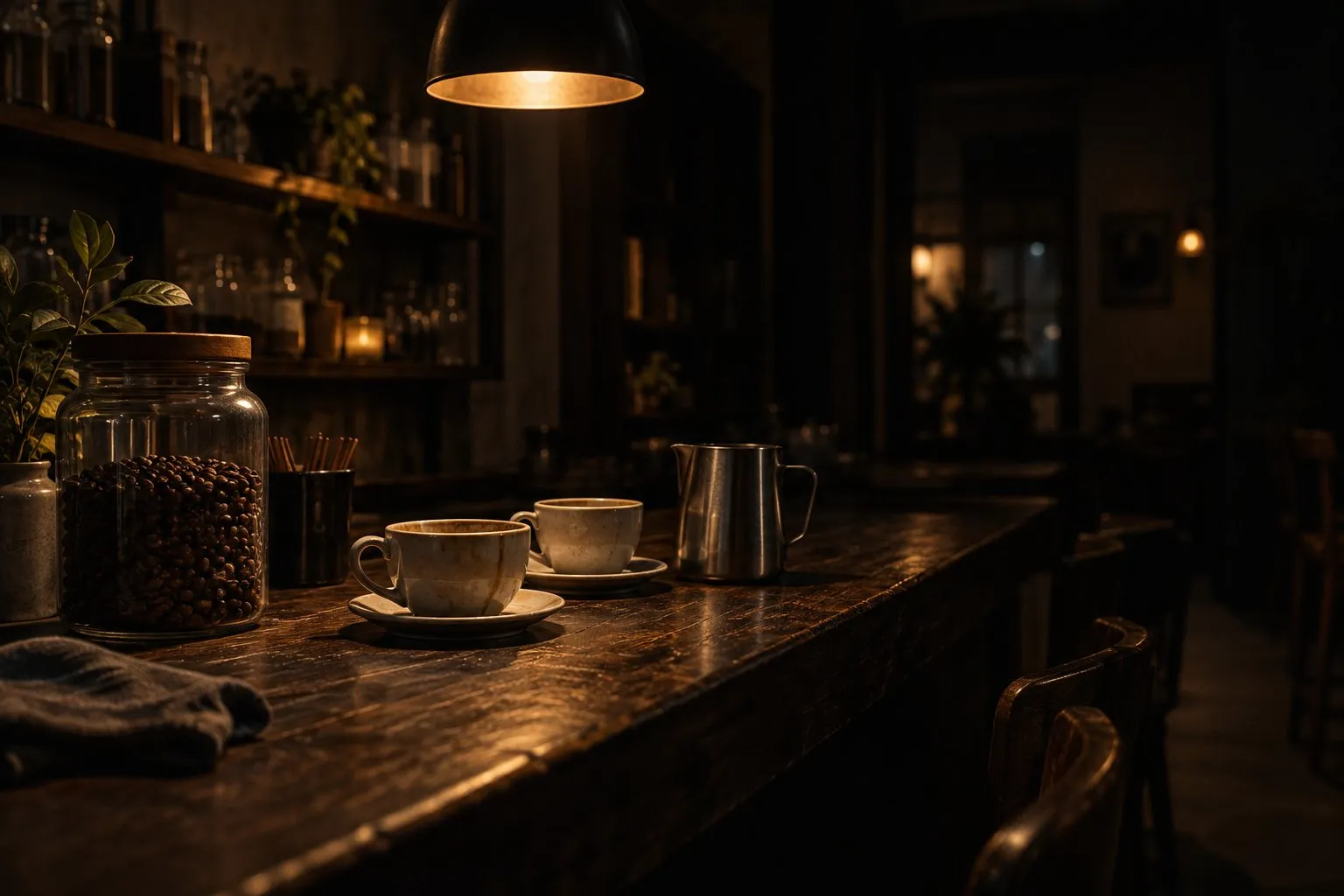
Weigh the shot. Ignore the bar number.
Budget options: De'Longhi Stilosa and CASABREWS
If budget decides, these get you started. For all three we only have the Amazon listing, so they are options and not picks, and values below come from listing titles.
- De'Longhi Stilosa*: a compact machine with a manual milk frother, from a brand you may already know. The title says “manual”, which is misleading: it is a pump machine.
- CASABREWS CM5418*: compact, with a steam wand. It suits a first try at espresso on a tight budget.
- CASABREWS 3700*: stainless steel with a steam wand. It is the lowest step in our list that still buys a pump machine.
Bar numbers in this class are pump ratings. The 15 or 20 bar on the box is what the pump can reach, and espresso is brewed at about 9 bar. So do not choose between these on that figure. Our broader comparison by spec sheet sets them against the other price classes.
The grinder: the purchase that decides the most
You need an espresso-capable grinder, built in or separate. At full price the separate pair is cheaper; on sale they cost the same. Check both on the day. Our built-in vs separate page walks through the trade-off, and machines with a grinder inside lists the one-box route.
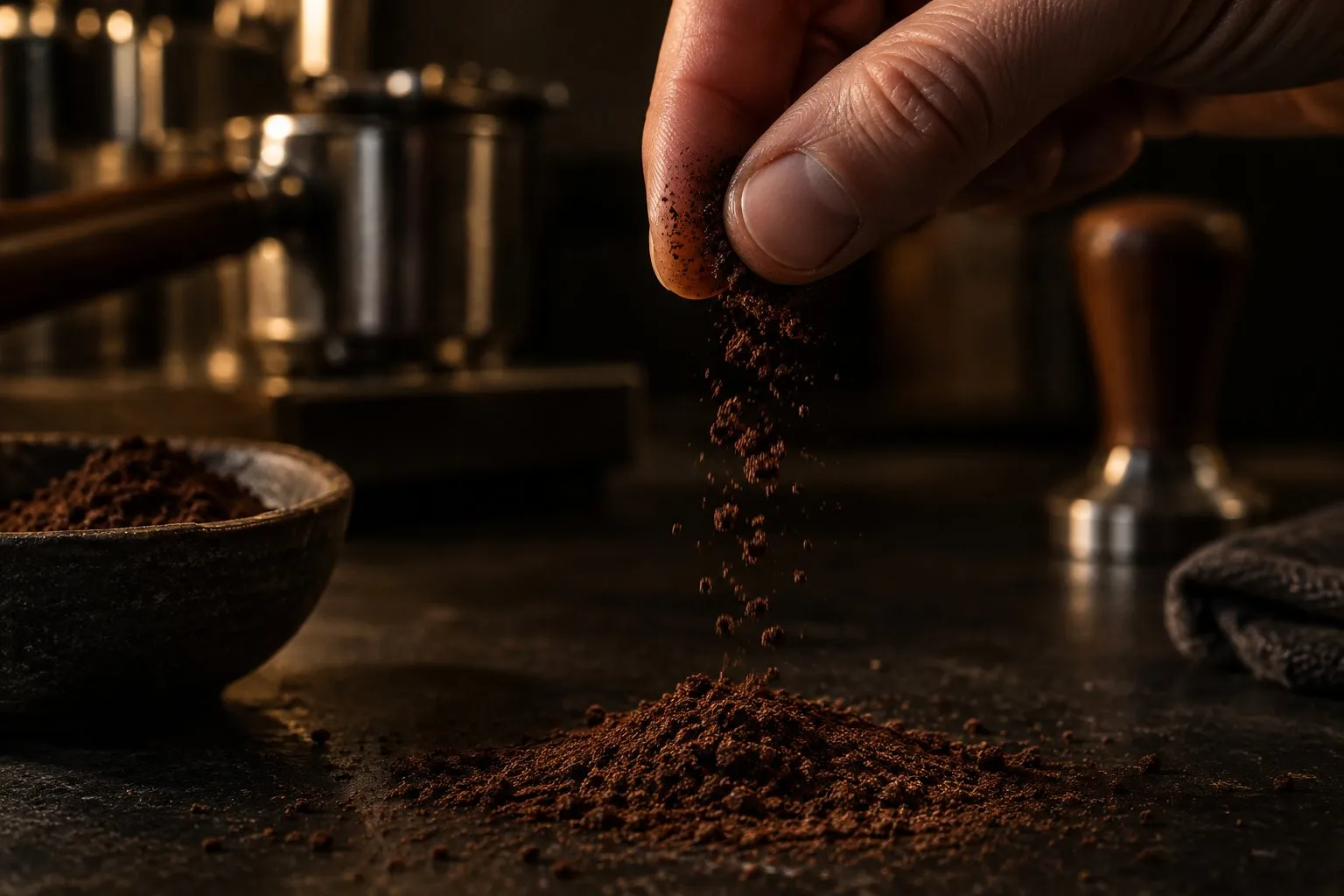
What a good first grind feels like
Breville's guide starts from a texture similar to fine table salt, then adjusts. Fine enough to slow the water, and not so fine that it turns to powder. From there your taste and your scale take over.
For a first separate grinder we recommend the Smart Grinder Pro, especially beside a Bambino. Breville lists 60 settings and cradles for 50 to 54 mm and 58 mm portafilters. It is a hopper grinder and not built for single dosing. More options sit on our espresso grinder page.
Breville Smart Grinder Pro
A programmable conical burr grinder with 60 settings and cradles for 50 to 54 mm and 58 mm portafilters.
Why here: 60 settings and a cradle that holds the Bambino's 54 mm portafilter, and you can replace it later without touching the machine.
Best for: A first separate grinder, especially beside a Bambino
- 60 grind settings (Breville)
- Grind time in 0.2 second steps (Breville)
- Portafilter cradles for 50 to 54 mm and for 58 mm (Breville)
- Breville's page does not state the burr size
- A hopper grinder, not built for single dosing
- Type
- Electric, hopper
- Burrs
- Stainless steel conical
- Grind settings
- 60
- Fits
- 50–54 mm and 58 mm cradles
- Price class
- Mid-range
The scale, and a first recipe
Breville's guide says plainly that you need a scale to weigh both the dry grounds and the brewed espresso. Without one, you are guessing at two of the three numbers that matter. The Maestri House S2* is one option, listed with a timer and 0.1 g steps.
Then start from a known recipe. Breville gives 18 to 22 g of coffee at a 1:2 ratio in 25 to 30 seconds, and says 20 to 40 seconds can taste good. That is a good first recipe, not a standard. Italy's certified espresso is 7 g to 25 ml. Set your dose and read the yield here:
Target in the cup
36 g1.3 oz
Plain arithmetic. The ratios are starting points from Breville's guide, not a standard.
Change one thing at a time. If a shot runs fast and tastes sour, go finer first. If it stays sour once you are already very fine, go coarser. The full routine is in how to dial in espresso.
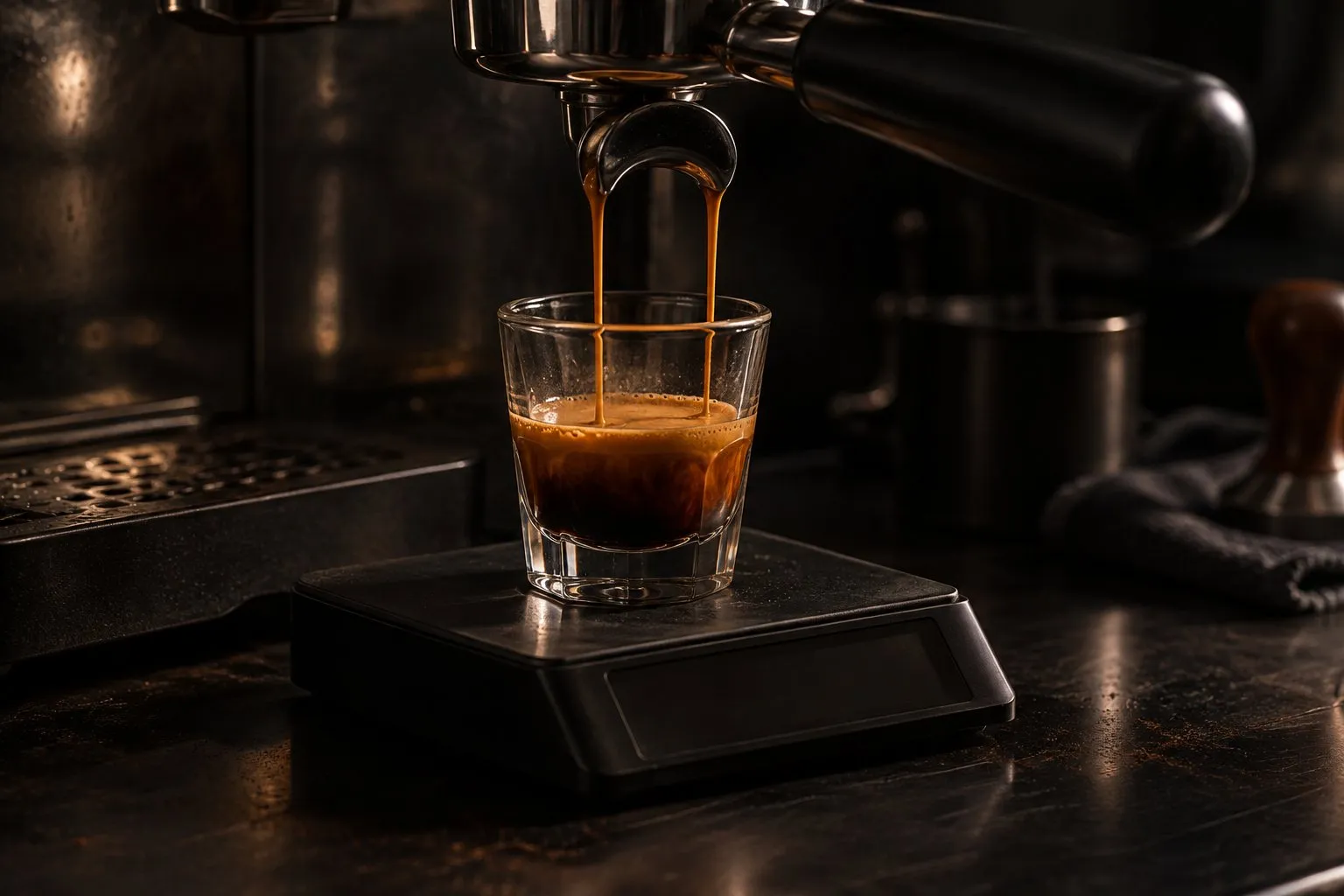
Common beginner mistakes
- Spending everything on the machine. Budget for the grinder first.
- Choosing by bar number. It describes the pump and not the shot.
- Using the wrong basket. Breville's Express manual reserves dual wall baskets for pre-ground coffee and single wall baskets for fresh grinding.
- Changing three things at once. You will not know which change worked.
- Buying every accessory on day one. A scale first, and the rest when you know what you need.
- Paying for two boilers too soon. A dual boiler helps with several milk drinks in a row. One morning latte does not need one.
Let four questions decide
Still between two answers? These questions end in one machine, with the reason next to it.
Our recommendation
Start with the Bambino, a Smart Grinder Pro and a scale. Switch the machine to the Bambino Plus if you mostly drink milk, or take the Barista Express if you want everything in one box. We compare by spec sheet and run no tests of our own. Budget machines and mid-range machines have the wider lists.
Asked at the bar
What should a beginner look for in a semi-automatic espresso machine on a budget?
Look at the whole setup and not only the machine. You need an espresso-capable grinder or a machine with one built in, plus a scale. Check the heating type, the portafilter size and whether the maker publishes its specs. Ignore the 15 or 20 bar on the box, which is what the pump can reach, since espresso is brewed at about 9 bar.
Do I need a separate grinder as a beginner?
You need an espresso-capable grinder, built in or separate. A built-in grinder means one box and one decision. A separate grinder can be upgraded later without touching the machine. At full price the separate pair is cheaper; on sale they cost the same. Check both on the day.
Is a semi-automatic espresso machine hard to learn?
It takes practice, because grind, dose and yield all change the cup. Breville's guide suggests changing one thing at a time and writing down what works. A scale makes that practice much easier to follow. If you already know you do not want those steps, a super-automatic does them for you.
What is a good first espresso recipe?
Breville's guide suggests 18 to 22 g of coffee at a 1:2 ratio in 25 to 30 seconds, and says shots from 20 to 40 seconds can taste good. That is a good first recipe, not a standard. Italy's certified espresso is 7 g to 25 ml. Start there and adjust by taste.
Does a beginner need a dual boiler espresso machine?
Usually not. A dual boiler can brew and steam at once, which matters when you make several milk drinks in a row. One morning latte does not need two boilers. The Breville Dual Boiler also sits in the premium price class, so it makes more sense as a later upgrade for most beginners.
Where this comes from
Next round
- Dial in espressoHow to dial in espresso: fix the dose, set a yield, then change only the grind until time and taste line up. Steps, a symptom table and the exception to the rule.
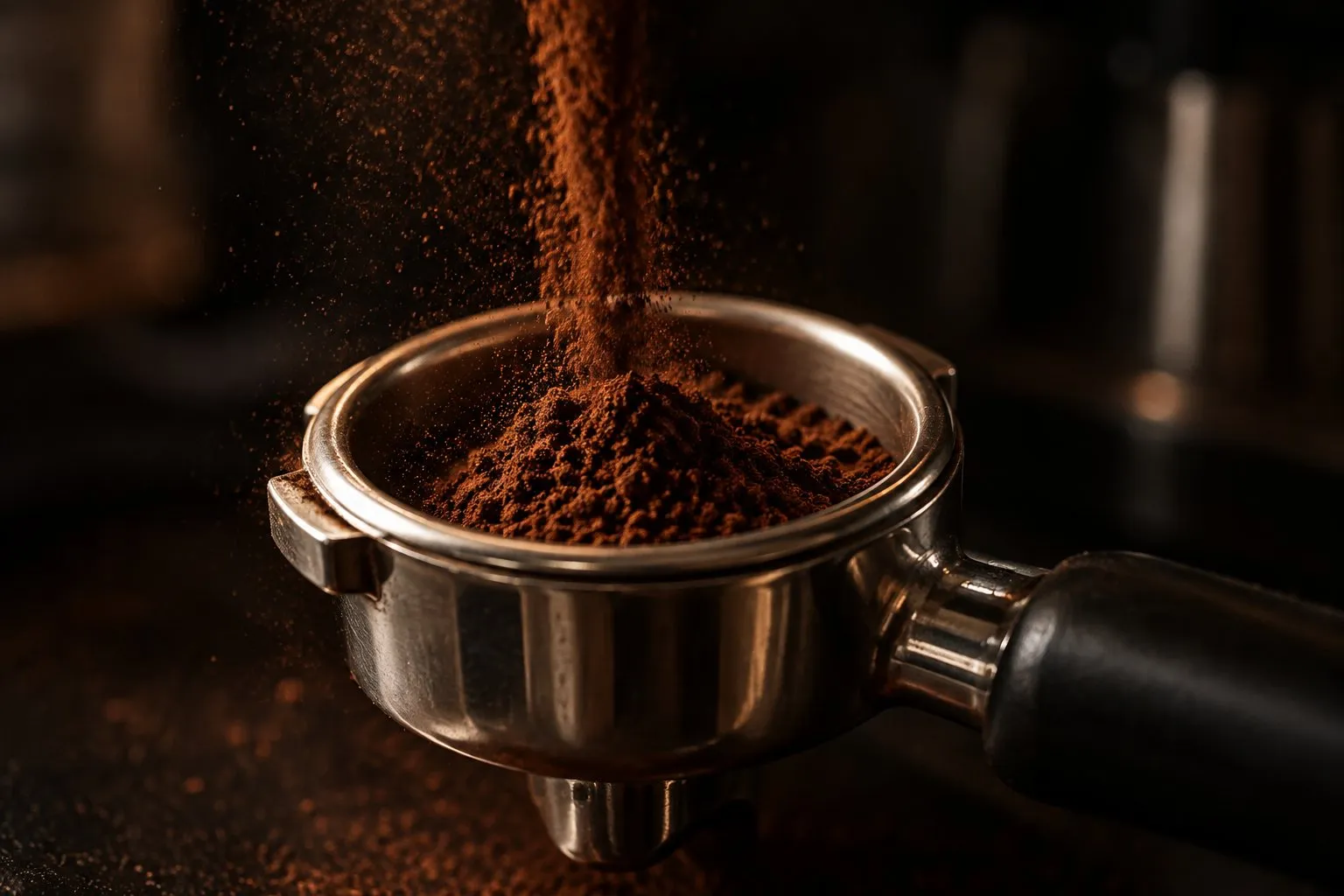 Espresso grindersWhat makes a grinder suitable for espresso: burrs, small steps and clean dosing. One clear pick, the alternatives sorted by routine, and honest notes on the data.
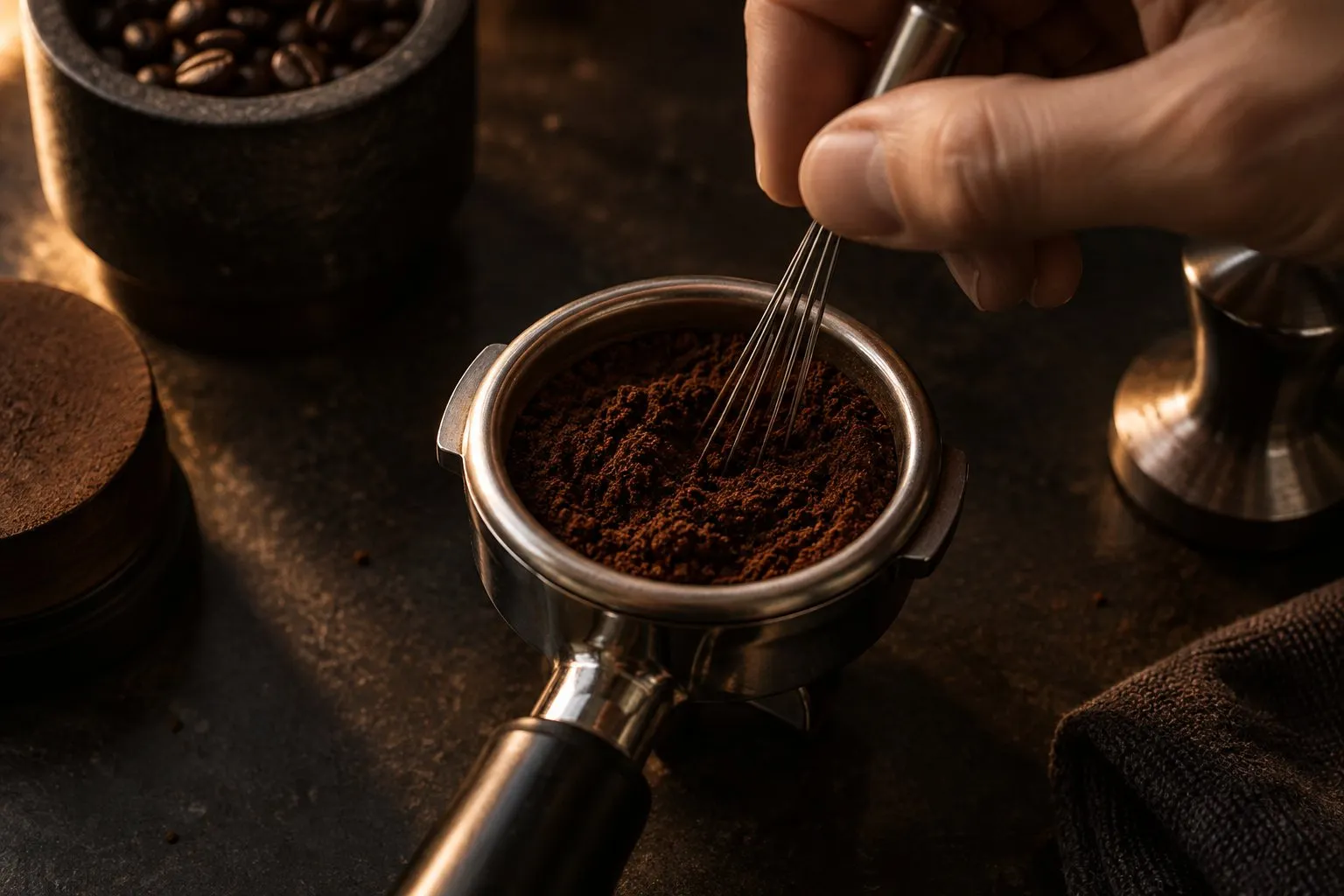 AccessoriesWhich espresso accessories are worth buying first: scale, tamper, pitcher, WDT tool and more, sorted by portafilter size, with what your machine already includes.
- With grinderEspresso machines with a built-in grinder compared by spec sheet: Barista Express, Impress, Pro and Touch, plus Ninja, De'Longhi, KitchenAid, Gevi and CASABREWS.
- Semi vs super-automaticSemi-automatic or super-automatic? What each machine leaves to you, how price class and cleaning differ, what is known about the cup, and who should pick which.
semiautomaticespressomachine.com Editorial Team
Espresso gear & shot craft
We are the editorial team at semiautomaticespressomachine.com. We read maker spec sheets, manuals, standards and published research on espresso and turn them into plain-English buying advice, with sources on every page. We do not run lab tests, and we say so openly.
- Spec sheets & standards read
- Sources on every page
- No lab tests – stated openly
- Publisher details in the imprint