PID on Espresso Machines: What It Controls, and Which Models Have It
PID is a controller that holds a boiler or heater near its set temperature. It's worth having, but it's not a guarantee of stable water at the coffee. Our pick is the Breville Barista Express, because Breville states PID on its own page and you get a grinder in the same body. Many machines simply don't say either way.
Disclosure: This page contains affiliate links (marked with *). If you buy through them, we earn a small commission at no extra cost to you. As an Amazon Associate I earn from qualifying purchases. Learn more
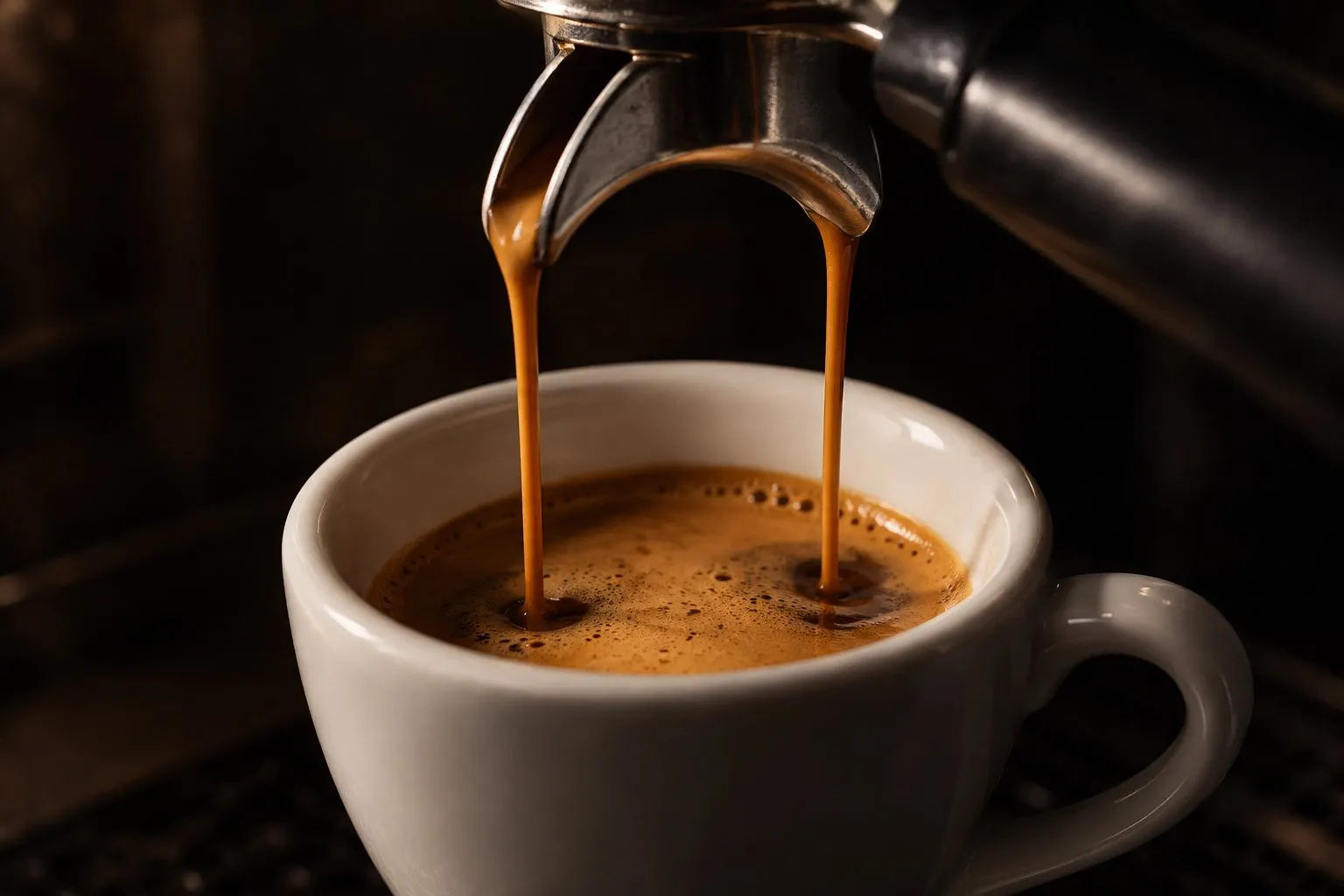
PID keeps the boiler closer to the set point. Measured stability at the puck depends on the machine. Breville's pages state it on the Barista Express, Impress and Dual Boiler, and its US manuals state it on the Bambino, Bambino Plus and Barista Pro. The Touch stays not stated, which isn't the same as no. It's a useful feature, but grind and dose will move your shot further.
On this page
PID has become a shorthand for “serious machine”, and it shows up in plenty of listing titles now. The term itself is a real engineering one. The problem is what people read into it, so we start with what it actually is, then list who states it.
Breville Barista Express
Machine and conical burr grinder in one body, with PID and a 54 mm portafilter.
Why here: PID stated on Breville's own page, plus the grinder in one body. It's the most direct way to get the feature on our list.
Best for: First-time buyers who want one box and no separate grinder to choose
- Integrated conical burr grinder with 16 settings (Breville)
- Thermocoil heating with PID temperature control (Breville)
- Named best overall in America's Test Kitchen's roundup of 2 July 2025
- A better grinder later means buying a separate one
- One thermocoil, not two boilers
- The price swings widely between sale days, so check it on the day
- Heating
- Thermocoil
- Pump, as stated
- 15 bar
- Brew pressure, as stated
- 9 bar
- Portafilter
- 54 mm
- PID
- Yes
- Built-in grinder
- Yes, 16 settings
- Milk
- Manual wand
- Price class
- Mid-range
What PID actually controls
A PID controller compares a target with a measured value and keeps adjusting its output to close the gap, reacting to how far off it is, how long it has been off and how fast the gap is changing. On an espresso machine, the measured value comes from a sensor in the boiler or heater, and the output is the heating element.
Note where that sensor sits. It's in the machine, not in your coffee.
About that 0.1 °F
You'll see the claim that PID holds temperature to a tenth of a degree, while a machine without it swings 20 °F. Those figures appear in Serious Eats' roundup, in a copy dated May 2, 2023, and the page gives no measurement at the coffee bed behind them. As a shot temperature, they're unsupported. Here's what we'd say instead:
PID keeps the boiler closer to the set point. Measured stability at the puck depends on the machine.
America's Test Kitchen makes the milder point: without PID, temperatures can swing too hot and then too cool. That's reasonable, and it doesn't come with a promised number.
Why temperature matters at all
Serious Eats says high temperatures can bring out bitter flavors and low ones can taste sour. That's plausible, and it's the reason to care. But when your shot runs sour or bitter, the first move is the grind: sour means finer first, bitter means coarser first. Your dial-in routine will find that much faster than a new controller.
A controller in the machine, not a thermometer in the cup.
Which models have it
“Not stated” means we haven't found PID in what we read from the maker. That isn't a no.
| Machine | PID | Where that comes from |
|---|---|---|
| Barista Express | Yes | Breville |
| Barista Express Impress | Yes | Breville |
| Breville Dual Boiler | Yes, on the espresso boiler | Breville |
| Bambino, Bambino Plus | Yes | Breville's US manuals M26 and 2020; the product pages don't mention it |
| Barista Pro | Yes | Breville's US manual Q26; the product page doesn't mention it |
| Barista Touch | Not stated | Breville's page; manual not read |
| Ninja Luxe Café Premier | Yes | America's Test Kitchen |
| Rancilio Silvia with PID | Yes, installed | Listing title |
| Diletta Bello+, Diletta Alto | Yes | Listing titles |
| XIXUBX with grinder | Yes | Listing title, unverified |
| Gaggia Classic Pro | No | Retailers, Serious Eats |
Five of them side by side:
| Our pick: built-in grinderBreville Barista Express | Our pick: dual boilerBreville Dual Boiler | Seller data onlyRancilio Silvia with PID | Seller data onlyDiletta Bello+ | Seller data onlyXIXUBX with grinder and PID | |
|---|---|---|---|---|---|
| Type | – | – | – | E61 machine, per listing | – |
| Heating | Thermocoil | Dual boiler | – | – | – |
| Pump, as stated | 15 bar | 15 bar | – | – | – |
| Brew pressure, as stated | 9 bar | 9 bar | – | – | – |
| Portafilter | 54 mm | 58 mm | – | – | – |
| PID | Yes | Yes | Yes, installed, per listing | Yes, per listing | Yes, per listing |
| Built-in grinder | Yes, 16 settings | No | No | No | Yes, per listing |
| Milk | Manual wand | Steam wand | – | – | – |
| Price class | Mid-range | Premium | Premium | Premium | – |
| Best for | First-time buyers who want one box and no separate grinder to choose | Upgraders who make several milk drinks in a row | Silvia buyers who want PID without touching the wiring, after asking who fitted it | Prosumer buyers who want an E61 group and will read the manual first | Buyers who want a grinder and PID in one body, after the manual confirms both |
| On Amazon(paid link to Amazon, opens in a new tab)Ad · paid link · check price & delivery on Amazon | On Amazon(paid link to Amazon, opens in a new tab)Ad · paid link · check price & delivery on Amazon | On Amazon(paid link to Amazon, opens in a new tab)Ad · paid link · check price & delivery on Amazon | On Amazon(paid link to Amazon, opens in a new tab)Ad · paid link · check price & delivery on Amazon | On Amazon(paid link to Amazon, opens in a new tab)Ad · paid link · check price & delivery on Amazon |
Only the first two come from a maker's page we read. The rest is listing data, and it's marked that way.
Who should buy which?
If you want stated PID and a grinder in one box → Breville Barista Express
View(paid link to Amazon, opens in a new tab)Ad · paid link · check price & delivery on AmazonIf you make several milk drinks in a row and want PID on the brew boiler → Breville Dual Boiler
View(paid link to Amazon, opens in a new tab)Ad · paid link · check price & delivery on AmazonIf you want a Silvia and don't want to fit a controller yourself → Rancilio Silvia with PID · Seller data only
View(paid link to Amazon, opens in a new tab)Ad · paid link · check price & delivery on AmazonIf you are shopping the prosumer class and will read the manual first → Diletta Bello+ · Seller data only
View(paid link to Amazon, opens in a new tab)Ad · paid link · check price & delivery on AmazonIf you drink espresso straight and accept no PID → Gaggia Classic E24
View(paid link to Amazon, opens in a new tab)Ad · paid link · check price & delivery on Amazon
The machines, one by one
Breville Barista Express: our pick
Breville lists a thermocoil with PID and a stated water temperature of 200 °F, and the manual lets you shift that by up to 4 °F either way. That covers both control and choice, in a mid-range machine with a built-in grinder. The weak point is that grinder, since you can't upgrade it on its own. The Barista Express Impress* states the same heating and adds an assisted tamp.
Breville Dual Boiler: PID where it counts
Breville says the espresso boiler is PID-controlled and adds a heated group head. Its US instruction book, BES920_USCM_IB_X23, sets the default at 200°F (93°C) and lets you change it from 190°F to 205°F. This is the machine for several milk drinks in a row. On one latte a day it's overkill, and do you need a dual boiler? helps you count.
Rancilio Silvia with PID: read the small print
The Silvia with PID installed* is a listing we can't take further than its title. Retailer pages we saw only as search excerpts describe a third-party controller fitted by the retailer before shipping, so ask the seller who fitted this one and how the warranty treats it. Our Rancilio Silvia page has the machine itself.
Diletta Bello+ and Alto: prosumer listings
The Bello+* lists an E61 group, PID, a shot timer and programmable pre-infusion. The Alto* lists a dual boiler, PID, a shot timer and an adjustable OPV. We have not read Diletta's documents, and a question worth asking on any such machine is which boiler the PID actually governs. Our page on prosumer machines covers this class.
XIXUBX: the word in a title
The XIXUBX with grinder* has PID in its title, and that's the entire evidence. We have not checked its price class or its manual. It's here to make a point: the letters are easy to print, so look for them in a manual and not just a title.
Ninja Luxe Café Premier
America's Test Kitchen says the Ninja Luxe Café* has built-in PID, and that its design is overcomplicated. It's a guided machine and not the natural home for someone who wants to control temperature by hand.
What to check before you pay for it
- Where does the claim come from? A maker's page or manual beats a listing title.
- What does it govern? On a dual boiler, the page should name which boiler. Breville names the espresso boiler.
- Can you set it? Holding a temperature and choosing one are separate features.
- What about the rest of the path? Breville's Dual Boiler page lists a heated group head alongside the PID. Ask what your machine does between boiler and coffee.
- What else would that money buy? If the grinder isn't sorted, start there.
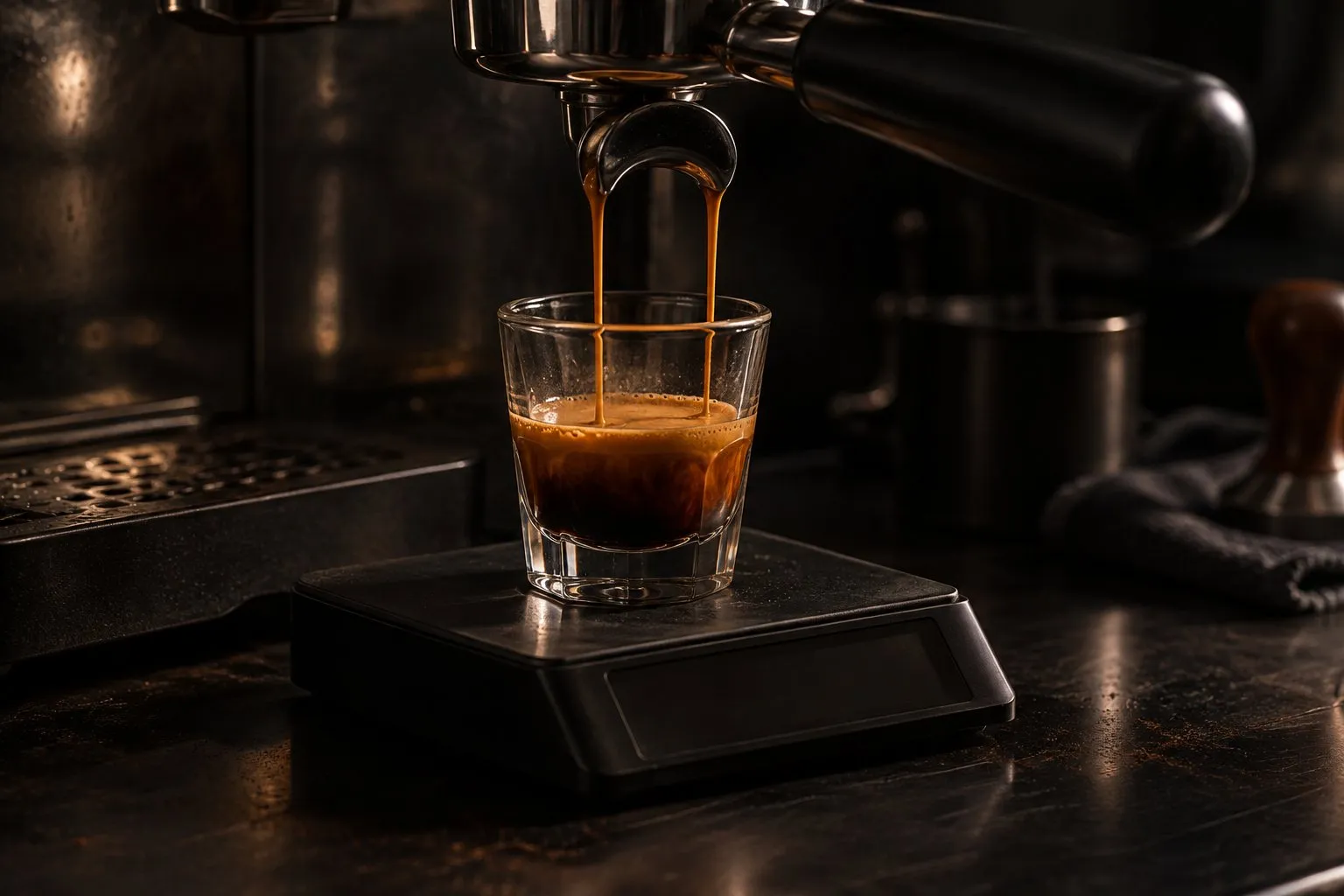
The cheaper fix comes first
A scale sits in the budget class and tells you immediately whether your dose and yield repeat. Fix those first. Then a temperature change is something you can actually taste, and not one more variable in a shot you can't repeat. A first recipe and the order of changes are on our dial-in page.
Mistakes to avoid
- Reading PID as a shot-temperature promise. It governs the boiler, and the rest depends on the machine.
- Reading “not stated” as “no”. It only means the page doesn't say.
- Trusting the letters in a title. Same goes for “dual boiler” on a low-priced listing.
- Rewiring a machine to get one. Mains wiring next to water and steam belongs with a qualified technician, and your warranty may not survive it.
- Skipping the heating type. How the machine heats shapes your morning more; see single boiler, heat exchanger and dual boiler compared and the thermoblock page.
Find your machine
These four questions end in one model, and PID isn't one of the things that decides it.
Our recommendation
If you want PID you can rely on, the Breville Barista Express* is the most direct way to get it. Move up to the Dual Boiler only for milk in quantity. Treat PID as a good feature to have when you compare two otherwise similar machines, not as the reason to buy. Our start page sorts every pick by drink.
Asked at the bar
What does PID stand for on an espresso machine?
Proportional, integral, derivative. It's a feedback controller: it compares the measured temperature with the target and keeps adjusting the heater to close the gap, including how far off it is, how long it has been off, and how fast it's moving. A simple thermostat, by contrast, just switches on and off around a point.
Do I need PID on an espresso machine?
It's not required for good espresso, but it is a sensible feature when you can get it. If you are choosing between two machines, a stated PID is a real plus. Don't pay a class more for it before you have a good grinder and a scale. Those change your shot more directly, and you can check their effect the same morning.
Does the Breville Bambino have PID?
Yes, per its US instruction book, BES450_USCM_IB_M26, which lists “Electronic PID temperature control”. Breville's product page doesn't mention it. The Bambino Plus book, BES500_USCM_IB_2020, says the same, and Serious Eats' 2023 roundup also lists PID for the Plus.
Can I add a PID to my espresso machine?
Kits exist for some machines, but they mean working on mains wiring beside water and steam, and we give no instructions for that. If you want one, have a qualified technician do it. Read your warranty first: Gaggia's manual, for one, says that parts from other makers void it.
Is PID the same as adjustable temperature?
No. PID is how the machine holds a temperature, and adjustment is whether you get to choose it. The Barista Express has both, with up to 4 °F either way in 2 °F steps, per its manual. Breville's Dual Boiler instruction book also lets you set the shot temperature. A machine could hold one fixed setting with PID and give you no say.
Where this comes from
- Breville: BES870 Barista Express product page
- Breville: BES920 Dual Boiler product page
- Breville: Barista Express instruction book BES870_USCM_IB_X26 (US, Canada, Mexico)
- Breville: Barista Pro instruction book BES878_USCM_IB_Q26 (US, Canada, Mexico)
- Breville: Bambino instruction book BES450_USCM_IB_M26 (US, Canada, Mexico)
- Breville: Bambino Plus instruction book BES500_USCM_IB_2020 (US, Canada, Mexico)
- Serious Eats roundup, read through a Yahoo copy dated May 2, 2023
- America's Test Kitchen: espresso machines, July 2, 2025
- Breville: Dual Boiler instruction book BES920_USCM_IB_X23 (US, Canada, Mexico)
Next round
 Barista ExpressBreville Barista Express BES870XL: grinder, PID, 54 mm portafilter and care from Breville's own documents, and who should buy something else.
 Rancilio SilviaRancilio Silvia: Rancilio's 0.3 L boiler and own data, a 58 mm portafilter per retailers, the slow heat-up, PID listings, and what to upgrade first.
- Prosumer machinesProsumer espresso machines on Amazon: what the word means, what E61, PID and rotary pumps do, which high-end machines actually ship, and our pick for most buyers.
 Heating systems comparedHeat exchanger vs dual boiler, single boiler and thermoblock: how each heats, what it does to your morning, and why listing labels can't always be trusted.
- Dial in espressoHow to dial in espresso: fix the dose, set a yield, then change only the grind until time and taste line up. Steps, a symptom table and the exception to the rule.
- Thermoblock machinesThermoblock espresso machines heat on demand, so they start fast and stay small. Where steam falls short, which models use which heater, and our pick.
semiautomaticespressomachine.com Editorial Team
Espresso gear & shot craft
We are the editorial team at semiautomaticespressomachine.com. We read maker spec sheets, manuals, standards and published research on espresso and turn them into plain-English buying advice, with sources on every page. We do not run lab tests, and we say so openly.
- Spec sheets & standards read
- Sources on every page
- No lab tests – stated openly
- Publisher details in the imprint