Espresso Grinders: What Separates Them From Drip Grinders, and How to Choose
An espresso grinder has burrs, goes very fine, and moves in small enough steps to hit a shot time you can taste. Our pick for a first one is the Breville Smart Grinder Pro: 60 settings, grind time in 0.2 second steps and cradles for 50 to 54 mm and 58 mm portafilters.
Disclosure: This page contains affiliate links (marked with *). If you buy through them, we earn a small commission at no extra cost to you. As an Amazon Associate I earn from qualifying purchases. Learn more
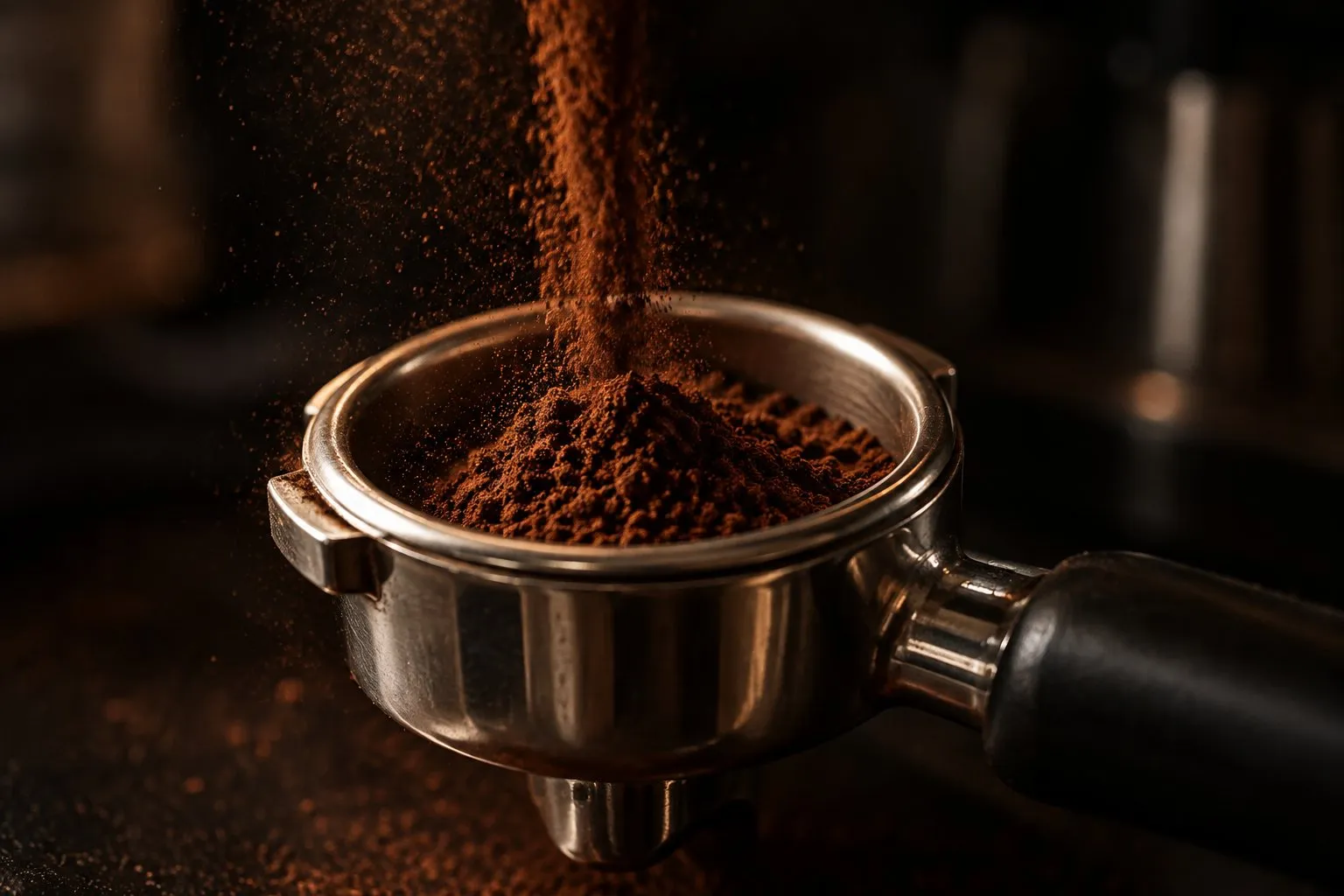
For a first espresso grinder, take the Breville Smart Grinder Pro. Take the Baratza Encore ESP if you also brew filter coffee, a single-dose grinder if you change beans often, and a hand grinder if you pull one or two shots a day on a small budget. Avoid blade grinders for espresso.
On this page
The grinder is half of the decision on a semi-automatic machine. You set the grind, and grind is the first thing to change when a shot runs too fast or too slow. Serious Eats goes further and says a machine isn't much use without a great grinder. Here is what to look for, and which one to buy.
Breville Smart Grinder Pro
A programmable conical burr grinder with 60 settings and cradles for 50 to 54 mm and 58 mm portafilters.
Why here: Programmable, grinds straight into the portafilter, and has cradles for 50 to 54 mm and 58 mm. Easy to pair with a Bambino, a Gaggia or a Breville Dual Boiler.
Best for: A first separate grinder, especially beside a Bambino
- 60 grind settings (Breville)
- Grind time in 0.2 second steps (Breville)
- Portafilter cradles for 50 to 54 mm and for 58 mm (Breville)
- Breville's page does not state the burr size
- A hopper grinder, not built for single dosing
- Type
- Electric, hopper
- Burrs
- Stainless steel conical
- Grind settings
- 60
- Fits
- 50–54 mm and 58 mm cradles
- Price class
- Mid-range
Which grinder fits your routine?
If this is your first separate grinder → Breville Smart Grinder Pro
View(paid link to Amazon, opens in a new tab)Ad · paid link · check price & delivery on AmazonIf you make both espresso and filter coffee → Baratza Encore ESP
View(paid link to Amazon, opens in a new tab)Ad · paid link · check price & delivery on AmazonIf you change beans often and weigh every dose → MiiCoffee DF54 · Seller data only
View(paid link to Amazon, opens in a new tab)Ad · paid link · check price & delivery on AmazonIf you only want espresso from one bean in the hopper → Eureka Mignon Notte · Seller data only
View(paid link to Amazon, opens in a new tab)Ad · paid link · check price & delivery on AmazonIf you pull one or two shots a day on a small budget → KINGrinder K6 · Seller data only
View(paid link to Amazon, opens in a new tab)Ad · paid link · check price & delivery on AmazonIf you would rather have it all in one box
The electric options side by side
| Our pick: first espresso grinderBreville Smart Grinder Pro | Baratza Encore ESP | Seller data onlyMiiCoffee DF54 | Seller data onlyEureka Mignon Notte | Seller data onlyFellow Opus 2 | |
|---|---|---|---|---|---|
| Type | Electric, hopper | Electric, hopper | Electric, single dose | Electric, hopper | Electric |
| Burrs | Stainless steel conical | 40 mm conical M2 (Baratza) | – | – | 48 mm conical, per listing |
| Grind settings | 60 | 40, split 1 to 20 and 21 to 40 (Baratza) | – | – | Stepless, per listing |
| Fits | 50–54 mm and 58 mm cradles | 54 mm dosing cup, 58 mm adapter (Baratza) | – | – | – |
| Price class | Mid-range | Mid-range | Mid-range | Mid-range | Mid-range |
| Best for | A first separate grinder, especially beside a Bambino | Buyers who make both espresso and filter coffee | People who change beans often and weigh every dose | Espresso-only setups that keep one bean in the hopper | One grinder for espresso and every other brew method |
| On Amazon(paid link to Amazon, opens in a new tab)Ad · paid link · check price & delivery on Amazon | On Amazon(paid link to Amazon, opens in a new tab)Ad · paid link · check price & delivery on Amazon | On Amazon(paid link to Amazon, opens in a new tab)Ad · paid link · check price & delivery on Amazon | On Amazon(paid link to Amazon, opens in a new tab)Ad · paid link · check price & delivery on Amazon | On Amazon(paid link to Amazon, opens in a new tab)Ad · paid link · check price & delivery on Amazon |
Products marked “Seller data only” come from the Amazon listing alone. We list them as options, not as picks, and how we compare explains why.
What separates an espresso grinder from a drip grinder
Burrs, not blades. Blades chop, and burrs set a size. Gaggia's Classic Evo manual advises against a blade mill because it makes too much powder and an irregular grind.
It goes fine enough. Breville's starting point for espresso is a texture close to fine table salt. A grinder built for filter may not reach that reliably, so look for one that names espresso.
Small steps at the fine end. This is the real difference, and the one most spec sheets hide. Baratza says so outright on the Encore ESP: settings 1 to 20 are small steps for espresso, and 21 to 40 are large steps for filter. So a total of 40 settings really means 20 where they count. Keep that in mind when you read a big number on any listing.
Why finer isn't always better
Reaching a very fine setting isn't the goal. Cameron and colleagues (Matter, 2020) measured extraction peaking and then falling again at very fine settings, and attributed that to uneven flow. We read only the abstract. The practical point is that you need room to adjust around the setting that tastes good, not just the ability to go as fine as possible.
Clean dosing. The Smart Grinder Pro has cradles for 50 to 54 mm and 58 mm portafilters (Breville). The Encore ESP has a 54 mm dosing cup with a 58 mm adapter (Baratza). Check your portafilter size against this before you buy.
Little coffee left behind. Baratza says the Encore ESP minimizes the grounds left in the grinder and offers a 60 g single-dose hopper as an accessory. Leftover grounds matter most if you change beans often, and that's what single-dose grinders are for.
The grinders, one by one
Breville Smart Grinder Pro: our first pick
Breville lists 60 settings from espresso to French press, stainless steel conical burrs, grind time programmable in 0.2 second steps, an LCD showing setting and time, and two portafilter cradles. It's the easiest fit beside a Bambino*, and that's the pairing we use for our price comparison. Breville's manual gives settings 1 to 30 to espresso, starting at 12. Two limits: the burr size isn't stated, and it's a hopper grinder, not built for single dosing.
Baratza Encore ESP: for espresso and filter
If you also brew pour-over, the split scale is the reason to buy this one: small steps for espresso, large steps for filter. Baratza's sheet lists 40 mm hardened alloy steel conical burrs, a quick-release burr for tool-free cleaning, and a dosing cup. Retailers disagree on burr model and hopper size, so we leave those out. Serious Eats calls it a budget-friendly pairing for a machine.
MiiCoffee DF54 and DF64 II: single dosing
The DF54* and the larger DF64 II* are sold for single dosing: you weigh the beans for each shot, and none sit in a hopper. That suits people who switch coffees often and weigh anyway. Our data is the listing only, so check the specs at the seller. Start with the DF54 unless you already know you want the bigger model.
Eureka Mignon Notte: espresso only
The Mignon Notte* is sold as a dedicated espresso grinder with a hopper, for setups that stay with one coffee. It's also available in a bundle with a Rancilio Silvia*, if you are set on that machine and want the grinder decided in one step. We only have the listings for both.
Fellow Opus 2: one grinder for every method
The Opus 2* lists 48 mm conical burrs and stepless adjustment, and is sold for espresso through cold brew. Stepless means no fixed clicks, so you can stop anywhere, though you lose the easy return to a numbered click. Our data is the listing only.
SHARDOR conical: the tightest electric budget
The SHARDOR* sits in the budget class with a timer and 51 settings, per its title. We have only the listing, and as with any large settings count, it doesn't tell you the step size at the fine end. Treat it as a way to get started.
Hand grinders: KINGrinder, 1Zpresso, TIMEMORE
No motor and more arm. The KINGrinder K6* suits one or two shots a day on a small budget, though KINGrinder calls the K6 versatile and points to the K4 for espresso. The 1Zpresso K-Ultra* costs more and has a foldable handle for small kitchens and travel. The TIMEMORE C3S* is the cheapest way to find out whether grinding fresh matters to you. All three are listing data only, and you will grind by hand for every shot, which is the part to think about honestly.
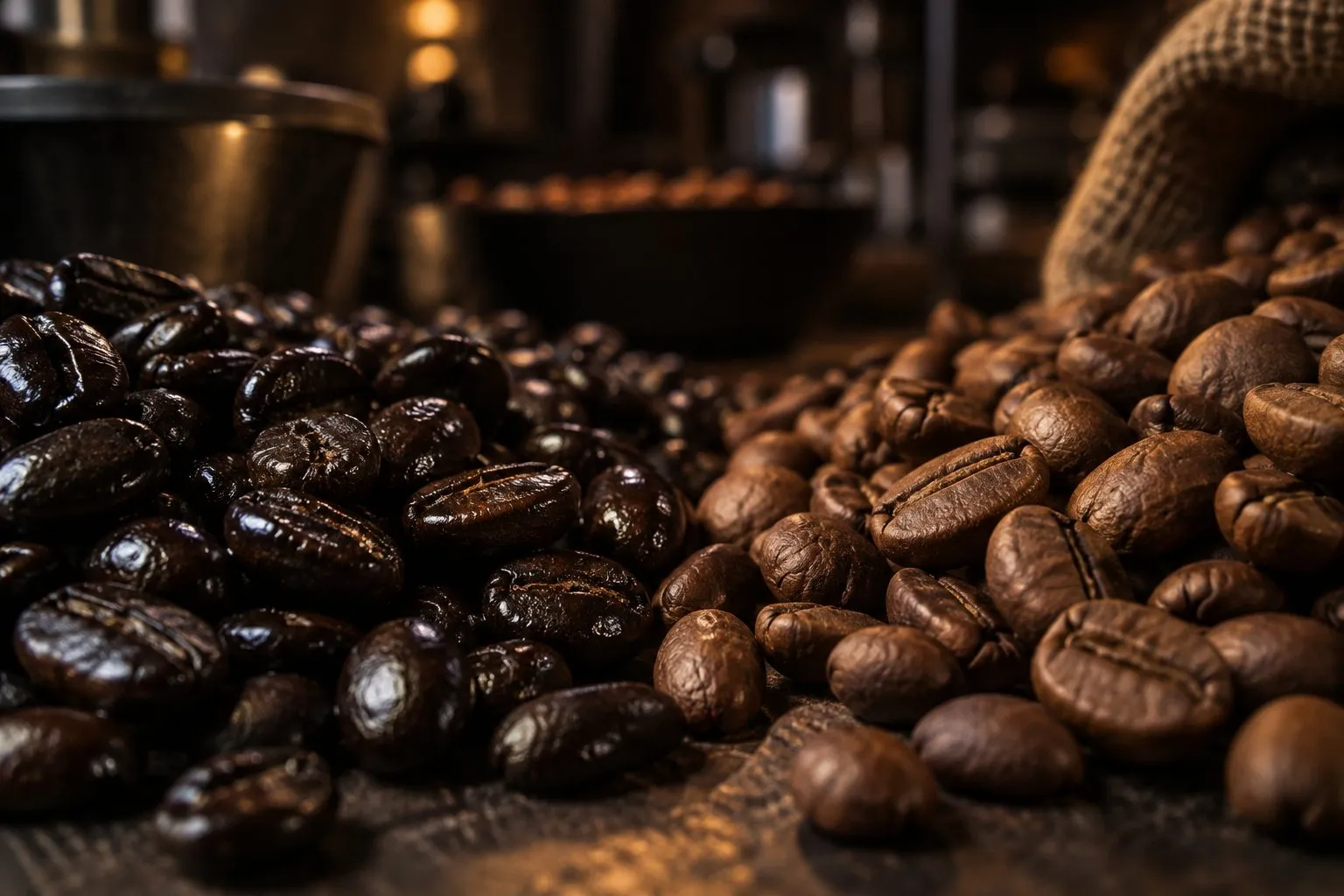
Dark roast, finer grind. Expect to move the dial when you change coffees.
What to check before you buy
| Question | Why it matters |
|---|---|
| Does the maker name espresso, and show how the settings split? | A total count can hide big steps at the fine end |
| Hopper or single dose? | Staying with one coffee favors a hopper; changing coffees favors single dose |
| Does it fit your portafilter? | Cradles and dosing cups are size-specific |
| How often will you grind? | A hand grinder is fine for one or two shots, less so for four |
| Is your machine's grinder built in? | Built-in or separate settles whether you need one yet |
Breville's guide also notes that darker roasts call for a finer grind, so a change of coffee usually means a change of setting.
Mistakes to avoid
- Spending everything on the machine. The grinder decides how finely you can adjust. Budget for both from the start. What to buy first puts the purchases in order.
- Reading settings as quality. A big number says nothing about the step size.
- Buying a grinder for the wrong style. If you weigh and switch beans, a hopper grinder will annoy you. If you want coffee with one hand before work, weighing every dose will annoy you more.
- Assuming built-in is worse. America's Test Kitchen counted 16 espresso settings on the Barista Express, close to the 20 on the standalone grinder it rates highest, though it found as few as five on other built-in models. Check the machine you are looking at.
Find your machine
If the grinder decision depends on the machine, these four questions sort that out first.
Our recommendation
Buy the Breville Smart Grinder Pro* if this is your first separate grinder. Move to the Encore ESP if filter coffee matters too, and to a single-dose model if you already know you weigh and switch. Then learn it properly: our dial-in guide shows how to use small steps, one change at a time. Burr grinders compared sets the specs side by side, and grind size explains the fine end.
Asked at the bar
Can I use a regular coffee grinder for espresso?
Only if it grinds fine enough and adjusts in small steps, and a grinder built for filter may do neither. A blade grinder won't do: Gaggia's manual advises against one because it makes too much powder and an irregular grind. If a grinder only sells itself for filter or French press, look for one that names espresso.
How many settings does an espresso grinder need?
There is no agreed number, because what matters is the size of each step at the fine end, and few makers publish that. A total count can mislead. The Baratza Encore ESP has 40 settings, but only 1 to 20 are its small espresso steps. A useful sign is whether you can move a shot by a few seconds with one step.
What is single dosing?
You weigh the beans for each shot and grind all of them, so no beans sit in a hopper. It makes changing coffees easy, at the price of weighing every time. A hopper grinder holds beans ready, which is quicker if you stay with one coffee.
Is a hand grinder good enough for espresso?
Some hand grinders are sold with espresso in mind, and they suit one or two shots a day, a small kitchen or travel. The trade-off is effort, since you grind by hand for every shot. We only have listings for the hand grinders in our comparison, so check the maker's notes on the espresso range before you buy.
Do I need a separate grinder if my machine has one built in?
No, not to start. A built-in grinder is enough to learn on, and you can add a separate one later if you outgrow it. If you expect to get picky about grind, buying a separate machine and grinder from the start is the cleaner route, and it need not cost more.
Where this comes from
- Breville: BCG820 Smart Grinder Pro product page
- Baratza: Encore ESP product sheet (copy on a third-party server)
- Breville: how to dial in espresso
- Cameron et al.: Systematically improving espresso (Matter, 2020), abstract only
- Gaggia: Classic Evo (RI9481) operating instructions, copy on a third-party server
- America's Test Kitchen: espresso machines, July 2, 2025
Next round
- Built-In Grinder or Separate Grinder for Espresso: Which Setup Should You Buy?Built-in grinder or separate grinder? The price math in words, the settings compared, and the upgrade path, with one clear rule for choosing your espresso setup.
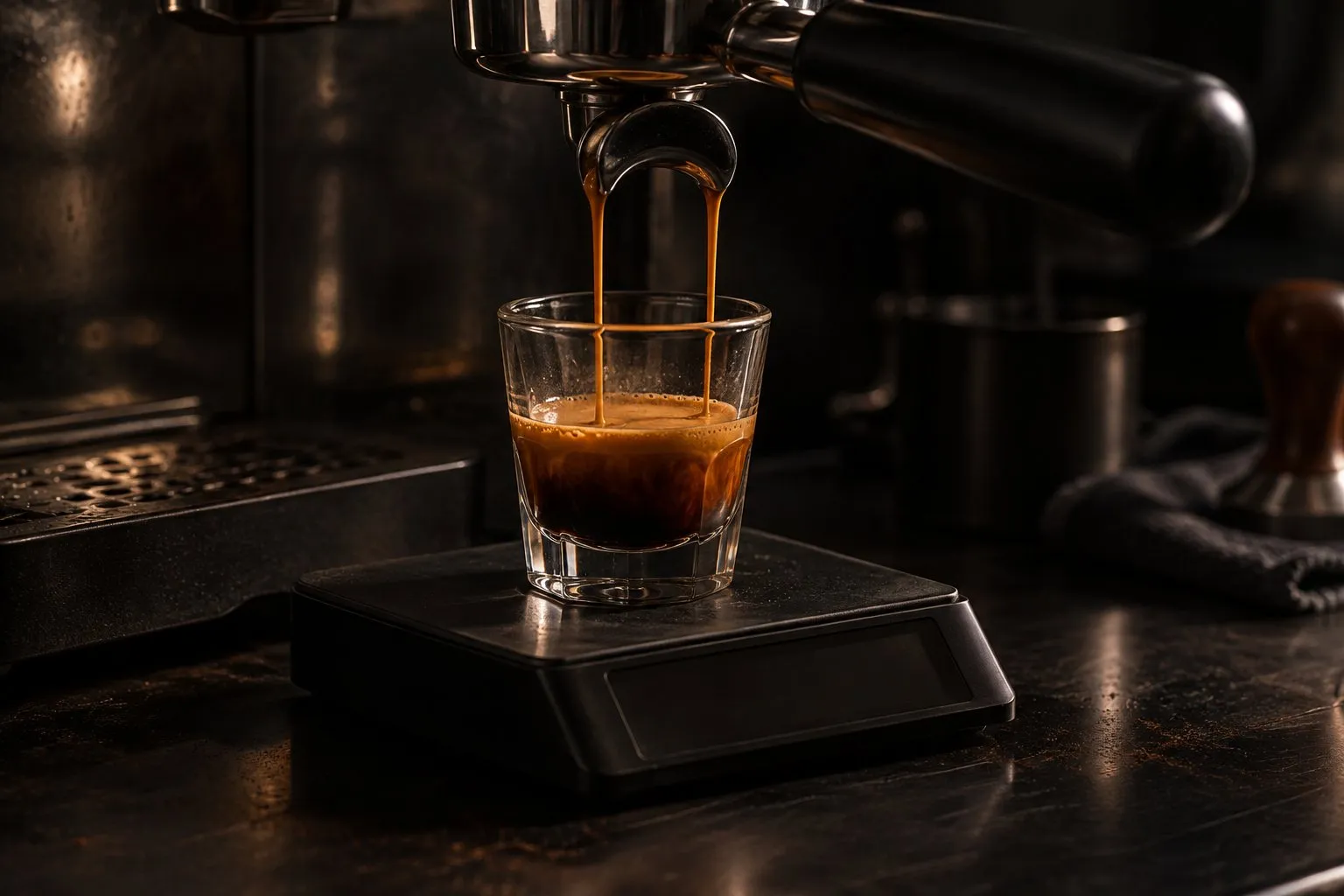 Dial in espressoHow to dial in espresso: fix the dose, set a yield, then change only the grind until time and taste line up. Steps, a symptom table and the exception to the rule.
- With grinderEspresso machines with a built-in grinder compared by spec sheet: Barista Express, Impress, Pro and Touch, plus Ninja, De'Longhi, KitchenAid, Gevi and CASABREWS.
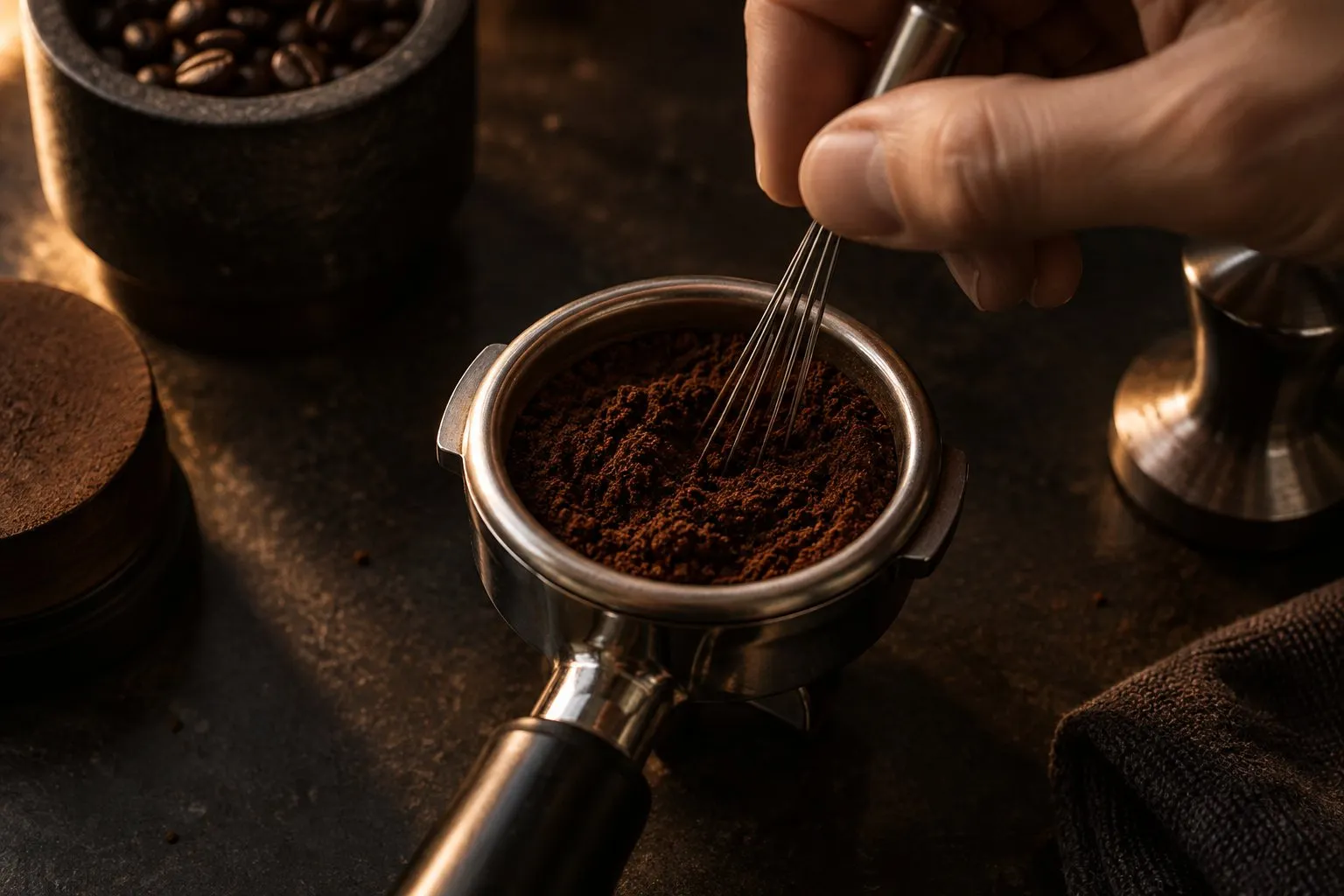 AccessoriesWhich espresso accessories are worth buying first: scale, tamper, pitcher, WDT tool and more, sorted by portafilter size, with what your machine already includes.
 For beginnersThe beginner espresso machine to buy first, and in which order: machine, espresso-capable grinder, scale. Our pick is the Breville Bambino, with budget options.
semiautomaticespressomachine.com Editorial Team
Espresso gear & shot craft
We are the editorial team at semiautomaticespressomachine.com. We read maker spec sheets, manuals, standards and published research on espresso and turn them into plain-English buying advice, with sources on every page. We do not run lab tests, and we say so openly.
- Spec sheets & standards read
- Sources on every page
- No lab tests – stated openly
- Publisher details in the imprint