Single-Dose Espresso Grinders: DF54, DF64 and What Single Dosing Really Gets You
A single-dose grinder is built for weighing the beans for one shot and grinding all of them, with none left sitting in a hopper. It suits people who change coffees often and weigh every dose anyway. If you stay with one coffee and pull several shots in a row, a hopper grinder is less work.
Disclosure: This page contains affiliate links (marked with *). If you buy through them, we earn a small commission at no extra cost to you. As an Amazon Associate I earn from qualifying purchases. Learn more
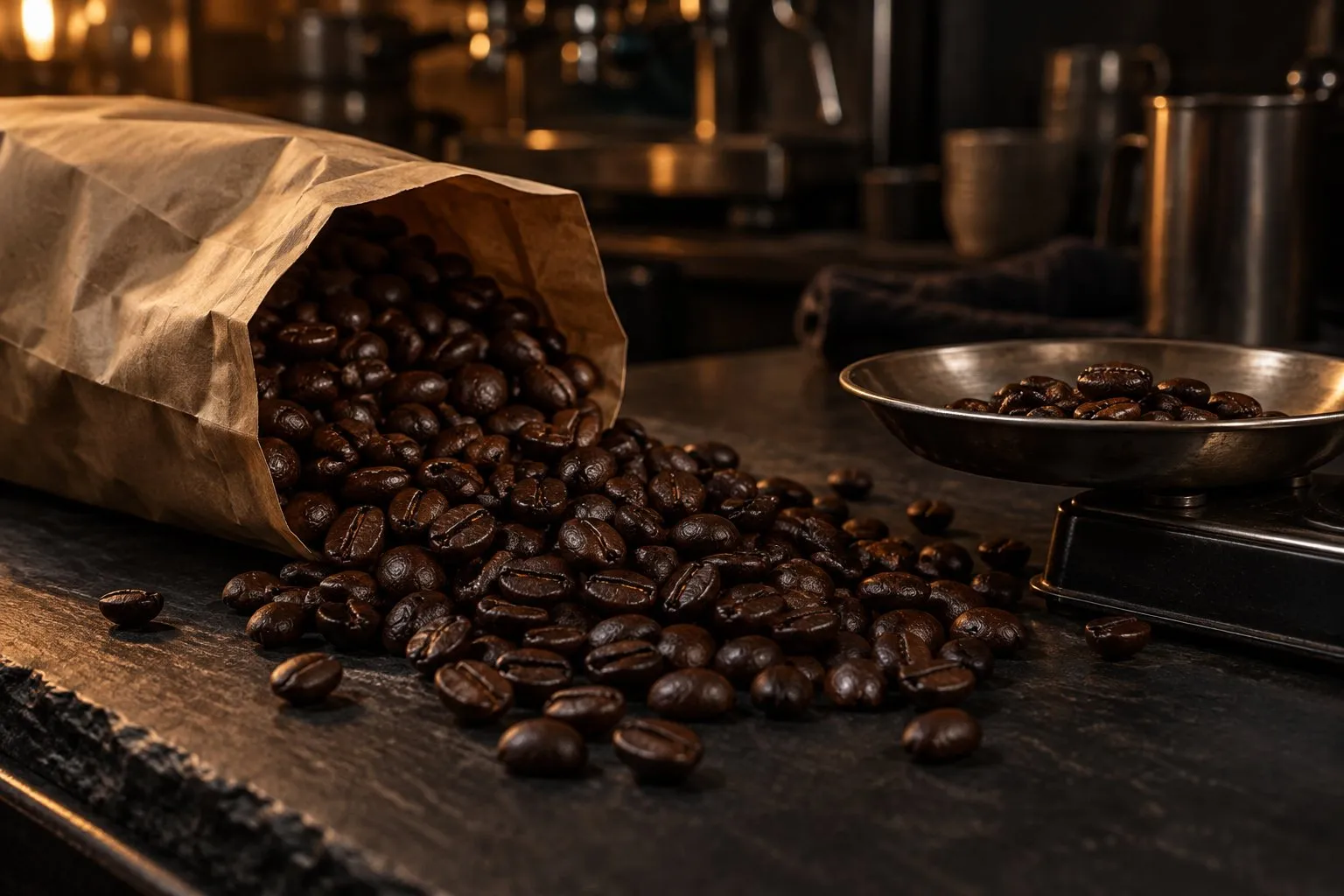
Get a single-dose grinder if you switch coffees often and already weigh your dose. Our data on the MiiCoffee DF54, DF64 II and DF83 Gen 2 is thin, so check the seller's specs. The DF54 has one outside review behind it. Nobody offers true zero retention, so weigh what comes out, too. Stick with a hopper for one coffee.
On this page
If you read this far, you probably own a scale and have opinions about grind steps. Good, because this is a tool for people who already do that.
A word on our evidence first. For the MiiCoffee grinders we have only the Amazon listings, so we name them as options and don't make any of them a pick. Our recommendation here is about how to choose. The values below come from an outside review or from another brand's pages, and we label them that way.
MiiCoffee DF54
A single-dose grinder: you weigh the beans for each shot, and none sit in a hopper.
Seller data only: We only have the Amazon listing for this product. We list it as an option, not as a recommendation.
Why here: Sold for single dosing, and the only one of these with an outside review we could read, which reports about 0.1 to 0.2 g retained after the bellows.
Best for: People who change beans often and weigh every dose
- Single dosing, per listing title
- We only have the listing, so no specs are stated here
- Type
- Electric, single dose
- Price class
- Mid-range
Which one for which setup
If you want single dosing with the most outside evidence → MiiCoffee DF54 · Seller data only
View(paid link to Amazon, opens in a new tab)Ad · paid link · check price & delivery on AmazonIf you already single dose and want larger burrs → MiiCoffee DF64 II · Seller data only
View(paid link to Amazon, opens in a new tab)Ad · paid link · check price & delivery on AmazonIf you want to compare the largest model on our list → MiiCoffee DF83 Gen 2 · Seller data only
View(paid link to Amazon, opens in a new tab)Ad · paid link · check price & delivery on AmazonIf you make filter too and want a maker's spec page → Fellow Opus 2 · Seller data only
View(paid link to Amazon, opens in a new tab)Ad · paid link · check price & delivery on AmazonIf you stay with one coffee and prefer a hopper → Eureka Mignon Notte · Seller data only
View(paid link to Amazon, opens in a new tab)Ad · paid link · check price & delivery on AmazonIf this is your first separate grinder
What single dosing gets you, and what it costs
Perfect Daily Grind's explainer gives the case well. You keep your beans in their own bag, since hoppers aren't airtight, and fewer go stale. You can move between coffees with little carryover. And you already have a weighed dose before you grind, which suits a scale-first routine.
The costs are real, too. Finer espresso grinds leave more fines on the burrs and in the chamber, and the same article warns that retention can mean blockages and stale old coffee in your cup. Every shot means a weigh, a load and usually a puff of the bellows. In a café, the article says, that hurts workflow. At home it mostly costs you a little patience.
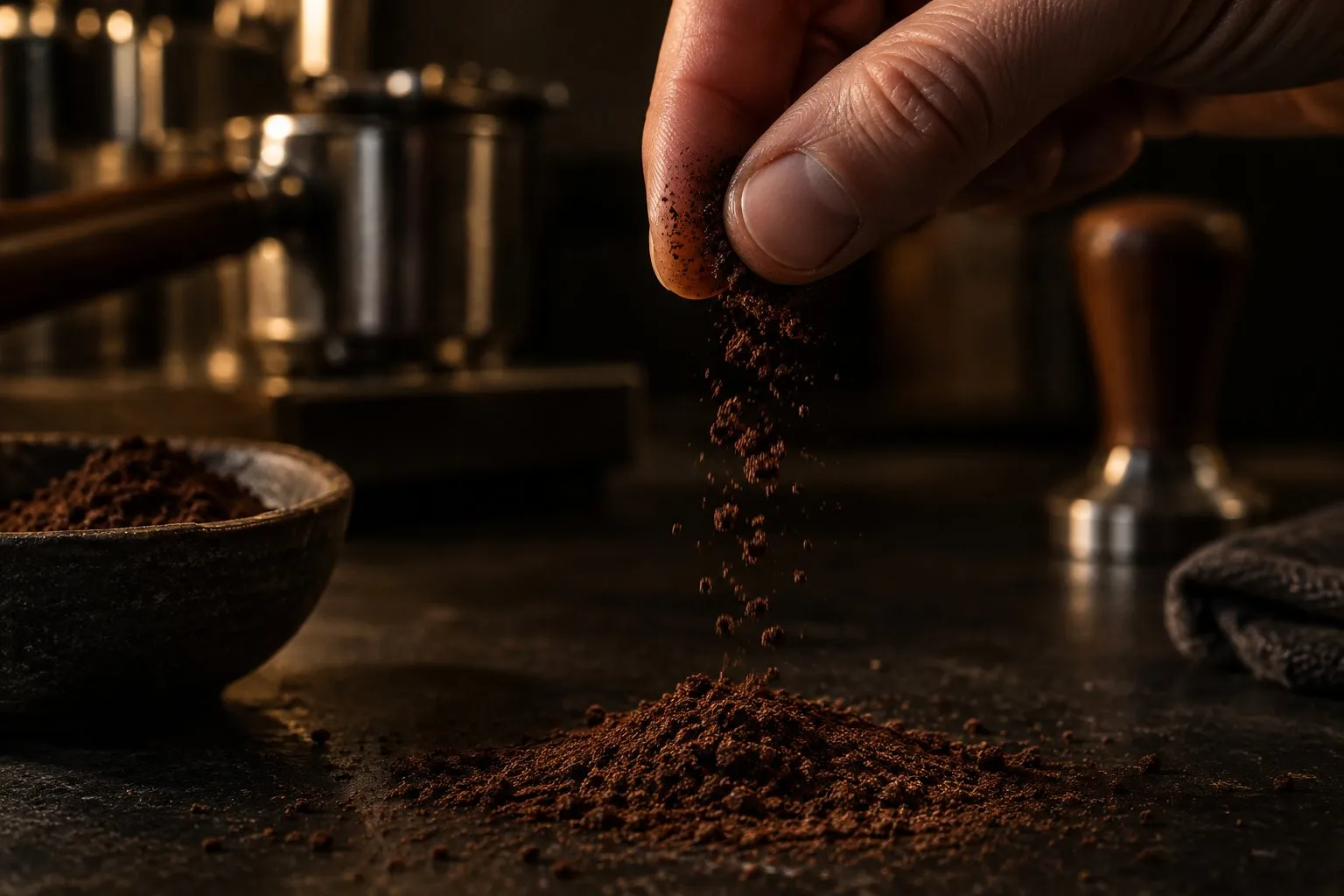
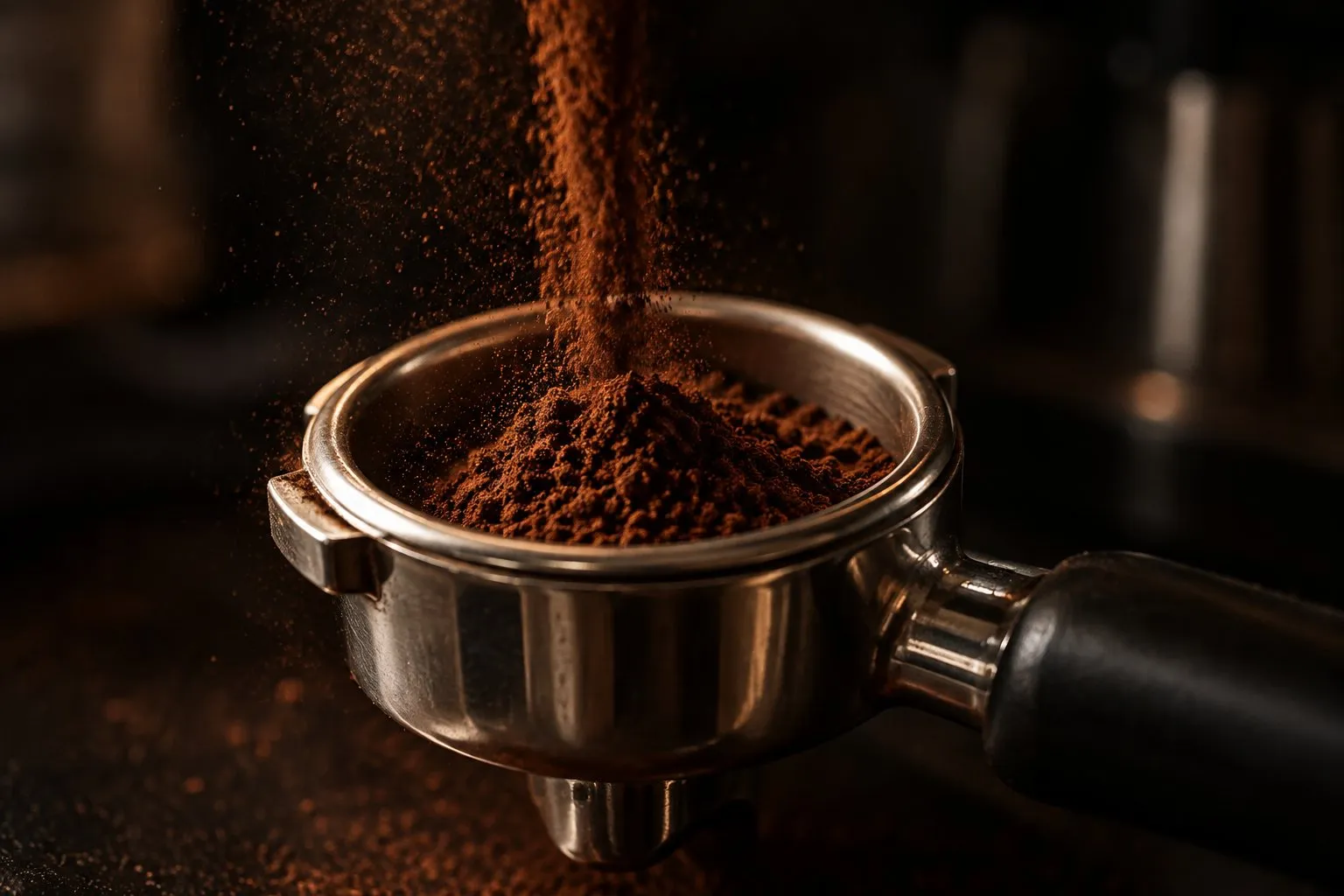
The DF family, as far as we can document it
Tom's Coffee Corner calls the DF54 a white label product whose maker is unclear, and the DF names appear under more than one brand. The table below gives values from Turin's own pages for its DF models, and from one outside review. We have not confirmed that any of them match the MiiCoffee listings.
| Value | DF54 | DF64 |
|---|---|---|
| Source | Turin DF54 v4.1, Tom's Coffee Corner | Turin DF64 Gen 2.7 |
| Burrs | 54 mm flat | 64 mm flat |
| Adjustment | Stepless | Stepless |
| Motor | 150 W | 250 W, fixed speed |
| Bean capacity | About 20 g without bellows, up to 50 g with | About 50 g with bellows |
| Retention stated | No promise of exactly zero; about 0.1 to 0.2 g after the bellows in one review | No figure; low retention “does not mean every dose will have identical input and output weight” |
| Warranty | One year (Turin) | One year (Turin) |
| Seller data onlyMiiCoffee DF54 | Seller data onlyMiiCoffee DF64 II | Seller data onlyMiiCoffee DF83 Gen 2 | Seller data onlyFellow Opus 2 | |
|---|---|---|---|---|
| Type | Electric, single dose | Electric, single dose | Electric, single dose | Electric |
| Burrs | – | – | – | 48 mm conical, per listing |
| Grind settings | – | – | – | Stepless, per listing |
| Price class | Mid-range | Mid-range | – | Mid-range |
| Best for | People who change beans often and weigh every dose | Hobbyists who already know they want single dosing | Hobbyists who already single dose and want to compare a larger model | One grinder for espresso and every other brew method |
| On Amazon(paid link to Amazon, opens in a new tab)Ad · paid link · check price & delivery on Amazon | On Amazon(paid link to Amazon, opens in a new tab)Ad · paid link · check price & delivery on Amazon | On Amazon(paid link to Amazon, opens in a new tab)Ad · paid link · check price & delivery on Amazon | On Amazon(paid link to Amazon, opens in a new tab)Ad · paid link · check price & delivery on Amazon |
MiiCoffee DF54
The DF54* has the best paper trail here, and that's still one review. Tom's Coffee Corner reports about 1 g per second for espresso, which it calls slow, and a dial that goes from 0 to 90 and takes two hands to turn. It also notes a bellows that's prone to falling off when you lift the lid, and few aftermarket 54 mm burrs. It says the grinder fits the bill for many beginning coffee enthusiasts, and performs best for espresso.
MiiCoffee DF64 II
The DF64 II* is the larger step in the family. Its listing says single dosing and not much else. If you want to read numbers first, Turin's page for its own DF64 Gen 2.7 is the nearest document, and it should not be treated as a spec sheet for this listing. Buy it because you already know you want this format, not because bigger burrs promise better shots. We found no measurement that shows that.
MiiCoffee DF83 Gen 2
The DF83 Gen 2* is the largest name in the family on our list, and we only have its listing title. We state no specs for it. It's for hobbyists comparing models, and this is the one to read most carefully at the seller before you commit.
A maker's spec page, or a hopper?
The Fellow Opus 2* is listed with 48 mm burrs and stepless adjustment, and our best grinders page sets it against the others. If you drink one coffee for weeks, a hopper grinder like the Eureka Mignon Notte* skips the whole routine. You will also see the Niche Zero named wherever this topic comes up. It isn't in our Amazon data, and we didn't read its maker's page, so we leave it there.
What to look for
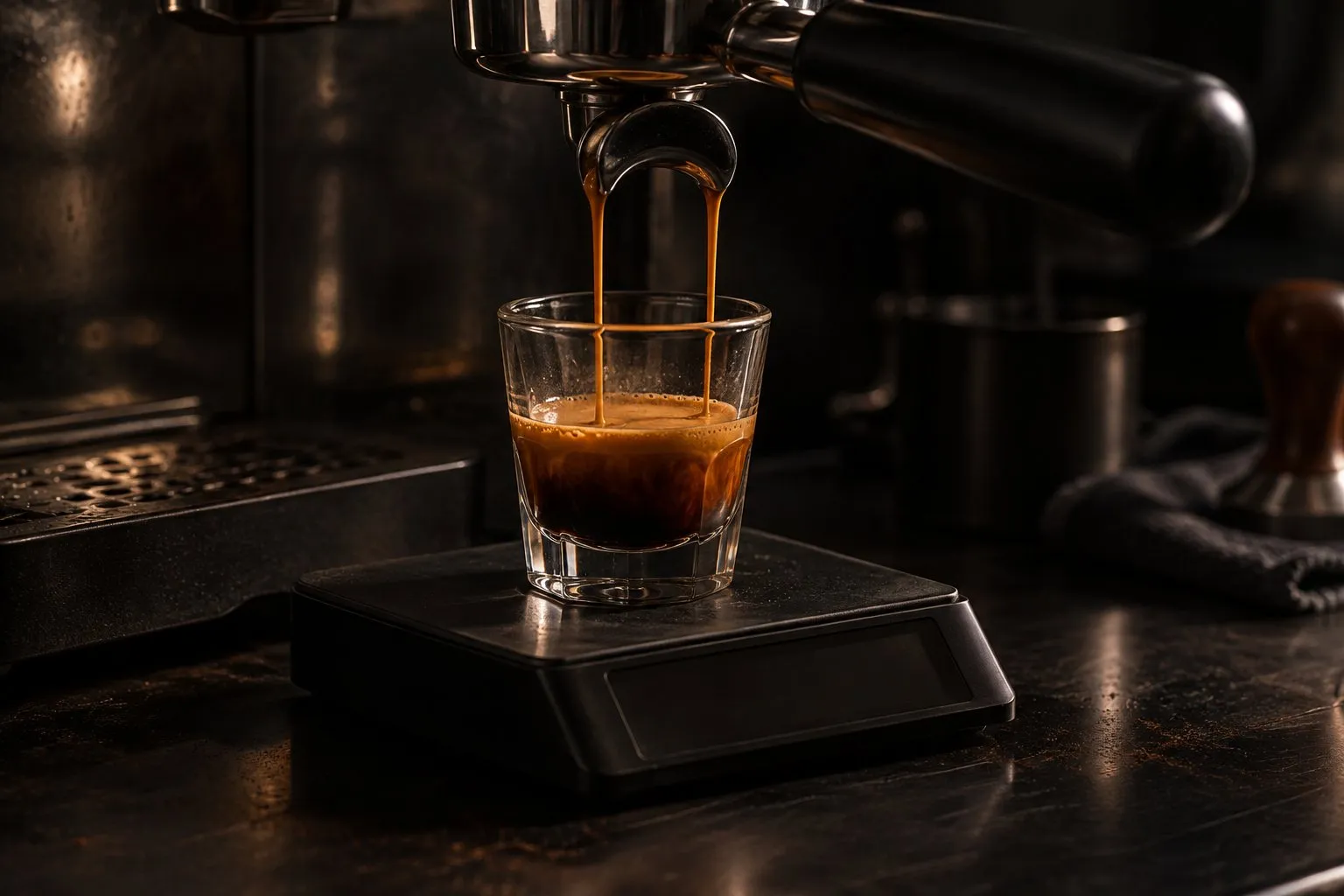
- Your workflow first. Count how often you change beans. If the answer is rarely, this format solves a problem you don't have.
- Espresso adjustment. Stepless dials let you stop anywhere, with no numbered click to go back to. Write your settings down. Our grind size page explains how small a step needs to be.
- Retention you can check. Most makers publish no figure. Weigh in and out a few times on your own machine.
- Parts. Few aftermarket 54 mm burrs exist, per one review. If swapping burrs is why you're here, check first.
- Fit. A dosing cup that suits your portafilter saves a transfer. Turin lists a 58 mm cup for its DF54, so 54 mm Breville owners should check.
- Static. Perfect Daily Grind mentions James Hoffmann's tip of wetting a teaspoon handle under the tap and stirring the beans before grinding, to cut static and retention.
Common mistakes
- Buying the format before the habit. Try weighing a dose on your current grinder for a week. Any capable grinder can be used this way.
- Trusting “zero retention”. Nobody we read could back that up, and Turin's page says so itself.
- Reading a Turin number as a MiiCoffee number. It may be right, but we can't show that.
- Changing grinder and coffee together. You won't know which one moved the shot. Our dial-in guide keeps it to one change at a time.
- Skipping the first grinder question. For a first separate grinder, the Breville Smart Grinder Pro* is our pick, and the grinder guide explains why.
Still choosing the machine for it? These grinders turn up in prosumer setups, but they work with any machine that can use a fine grind. The start page begins with what you drink, and these questions end in one machine:
Our recommendation
Single dose if you already weigh and you change coffees often. Among these three listings, start your reading with the DF54*, because it has an outside review you can check. Move up the family only if you have a reason, and read the seller's specs before you buy. We compare by listings, maker pages and published reviews, and we don't test grinders ourselves. How we compare explains what “Seller data only” means on the cards above.
Asked at the bar
What is single dosing?
Weighing the whole beans for one drink and grinding only those, instead of keeping a hopper full. Perfect Daily Grind describes it as placing a single dose in the grinder and grinding it. The main reasons people give are freshness, consistency and being able to switch coffees without much carryover between them.
Does a single-dose grinder have zero retention?
No. Ryan Felbinger of Prima Coffee told Perfect Daily Grind there's no such thing as zero retention. Turin's own DF54 page says its features don't promise exactly zero retention with every coffee. One reviewer measured about 0.1 to 0.2 g on a DF54 after using the bellows. Weigh your output now and then.
Is the DF54 or the DF64 better for espresso?
We can't say from what we read, because we haven't found a side-by-side measurement that we trust. On Turin's pages, the DF54 has 54 mm flat burrs and a 150 W motor, and the DF64 has 64 mm flat burrs and a 250 W motor. Tom's Coffee Corner says the DF54 performs best for espresso. Bigger burrs are not automatically better in the cup.
Are the MiiCoffee and Turin DF grinders the same?
We don't know, and we found no document that maps the names. Tom's Coffee Corner calls the DF54 a white label product whose manufacturer is unclear, and Turin sells grinders under the same DF model names. Treat Turin's values as Turin's, and check the listing you are actually buying before relying on a number.
Is a single-dose grinder worth it for one coffee a day?
Only if you change beans often. For one coffee, a hopper is less work, though you do leave beans sitting in it, and Perfect Daily Grind points out that hoppers aren't airtight. If you weigh out a daily dose anyway, a single-dose grinder fits how you already work, and any capable grinder can be used that way.
Where this comes from
Next round
- Espresso grindersWhat makes a grinder suitable for espresso: burrs, small steps and clean dosing. One clear pick, the alternatives sorted by routine, and honest notes on the data.
- Best espresso grindersThe best burr grinder for espresso, compared by burrs, steps and retention from makers' pages: our pick, who should take what, and which numbers go unpublished.
 Prosumer machinesProsumer espresso machines on Amazon: what the word means, what E61, PID and rotary pumps do, which high-end machines actually ship, and our pick for most buyers.
- Espresso grind sizeHow fine to grind for espresso: start near fine table salt, then let the shot decide. Why no setting transfers, where finer stops working, and what coarser can do.
- Espresso scaleWhat an espresso scale needs: 0.1 g steps, a timer and a size that fits your drip tray. Listed options, plus Acaia and Timemore dimensions from their own data.
semiautomaticespressomachine.com Editorial Team
Espresso gear & shot craft
We are the editorial team at semiautomaticespressomachine.com. We read maker spec sheets, manuals, standards and published research on espresso and turn them into plain-English buying advice, with sources on every page. We do not run lab tests, and we say so openly.
- Spec sheets & standards read
- Sources on every page
- No lab tests – stated openly
- Publisher details in the imprint