Espresso Grind Size: Why There Is No Universal Number, and What a Coarser Grind Can Do
Espresso grind starts near the texture of fine table salt, and from there only your shot can say what's right. No setting number is universal, because a number means little on another grinder or the next bag. Finer is the usual first fix, but research also found that less coffee, ground coarser, can give steadier shots.
Disclosure: This page contains affiliate links (marked with *). If you buy through them, we earn a small commission at no extra cost to you. As an Amazon Associate I earn from qualifying purchases. Learn more
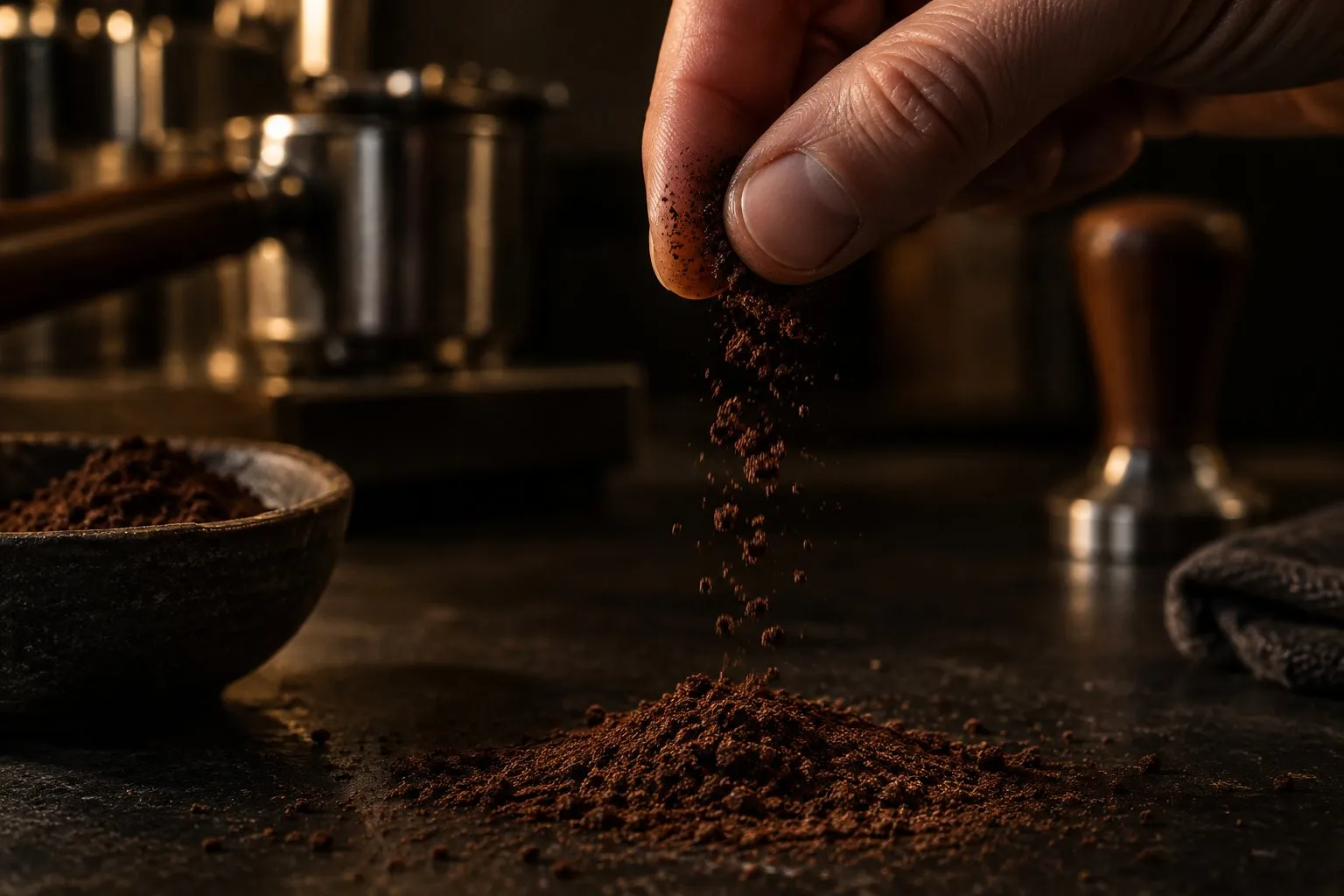
Start close to fine table salt, then set the grind by the shot: for example 18 g in, 36 g out, in about 25 to 30 seconds. Fast and sour means finer. Slow and bitter means coarser. No setting number carries over between grinders or coffees. First step, yes. If you are already very fine and it stays sour, go coarser.
On this page
Search for espresso grind settings and you'll find numbers: “12 clicks,” “setting 8.” They're someone's answer on someone's grinder with someone's coffee. What you can take from them is less than it looks, and the useful version of this topic is what the setting does and how to read it.
How fine, really?
Breville's starting point is grounds with a texture similar to fine table salt. A pinch between your fingers is good enough to get into the right area on a new grinder. Coffee for espresso needs to be that fine because the water is in contact with it for less than a minute, as Breville's extraction guide notes.
After that, feel stops being much use. The shot takes over: same dose, same yield, and the time and taste tell you where you are. Breville aims for 25 to 30 seconds and says a good cup can take anywhere from 20 to 40. How to dial in espresso is the routine for that.
Why no number travels
Look at how differently grinders count:
| Grinder | Its scale | Source |
|---|---|---|
| Baratza Encore ESP | Espresso range 1 to 20 | Baratza |
| Baratza Encore ESP Pro | Espresso range 0 to 40 | Baratza |
| Breville Smart Grinder Pro | 60 settings for all brew methods, espresso on 1 to 30, start at 12 | Breville's manual |
| 1Zpresso K-Ultra | 100 clicks per rotation, burr moves 20 microns per click | 1Zpresso |
| Fellow Opus 2 | Stepless, no fixed clicks | Listing |
Even two espresso grinders from the same maker don't share a scale. So “setting 10” is only a description of where one dial sits on one machine. The burr-gap figure from 1Zpresso is the kind of number that could travel, but few makers publish one, and a gap isn't a particle size.
The number moves with the bag
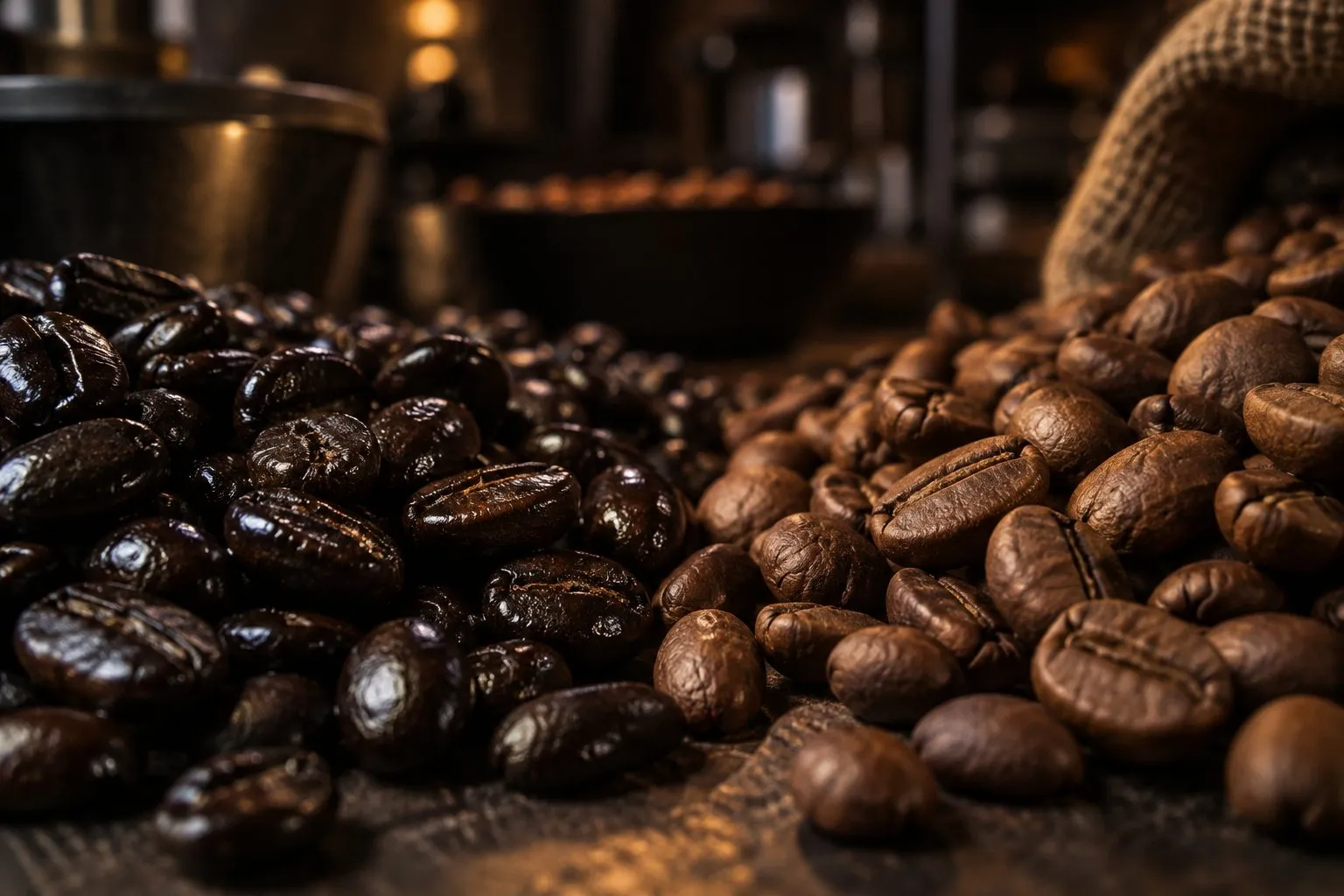
Breville says the darker the roast, the finer the setting should be, and asks you to consider a coffee's origin, roast and age. A Cell Press release on a 2023 study in Matter adds that dark roasts came out much finer than light roasts at the same setting. Those two points don't cancel out so much as show how little a setting number tells you. Write your setting down per coffee, and expect to move it.
Where finer stops working
“Finer means more extraction” is the standard logic, and Cameron and colleagues (Matter, 2020) tested it. Their model assumed water flows evenly and predicted extraction would keep rising as the grind got finer. Their measurements showed a peak instead: extraction fell at very coarse settings and also at very fine ones. They attributed the fall at fine settings to uneven flow, and linked it to poor repeatability from shot to shot.
The University of Portsmouth's release gives the mechanism in simple terms. Very fine particles can clog parts of the bed, water can't reach them, and that coffee goes to waste. We read the abstract and the press releases, not the full paper, so we stay with what those say.
In the cup, the practical rule stays simple. Sour means finer as a first step. First step, yes. If you are already very fine and it stays sour, go coarser. Sour espresso goes through this in order.
What a coarser grind can do
Here is the part that surprises people. The Portsmouth release says that fewer beans, ground more coarsely, gave a drink that was just as strong and more consistent from cup to cup, and cheaper to make. The authors were looking at the reasons shots vary, and using less coffee turned out to be a side benefit. They don't claim to have found the best-tasting recipe, and flavor preference stays yours.
Note what comes with it: a coarser grind at a lower dose runs faster, often outside the 25 to 30 seconds printed in most guides, Breville's included. So this is a different recipe and not a repair for a bad shot. Worth a try if you want to experiment:
Start from a recipe you like
Keep a note of its dose, yield, time and setting, so you can go back.Take a gram or two off the dose
Keep the yield the same, so the ratio gets longer on purpose.Go a few steps coarser
Pull the shot and let it run to the same yield, even if it finishes sooner than you are used to.Taste them side by side
Then pull the same recipe a few times. The claim to check is consistency, as much as flavor.
Static, clumps and the fine end
Fine grinding also comes with static. Méndez Harper and Hendon (Matter, 2023) found that grinding builds up charge that makes particles clump and cling, that darker roasts charged more than lighter ones, and that coarser settings produced less. A small amount of water added just before grinding reduced clumping and made espresso shots more consistent, according to the Cell Press release. Check your grinder's manual before you add water to anything that goes through it, since the release gives no guidance on that.
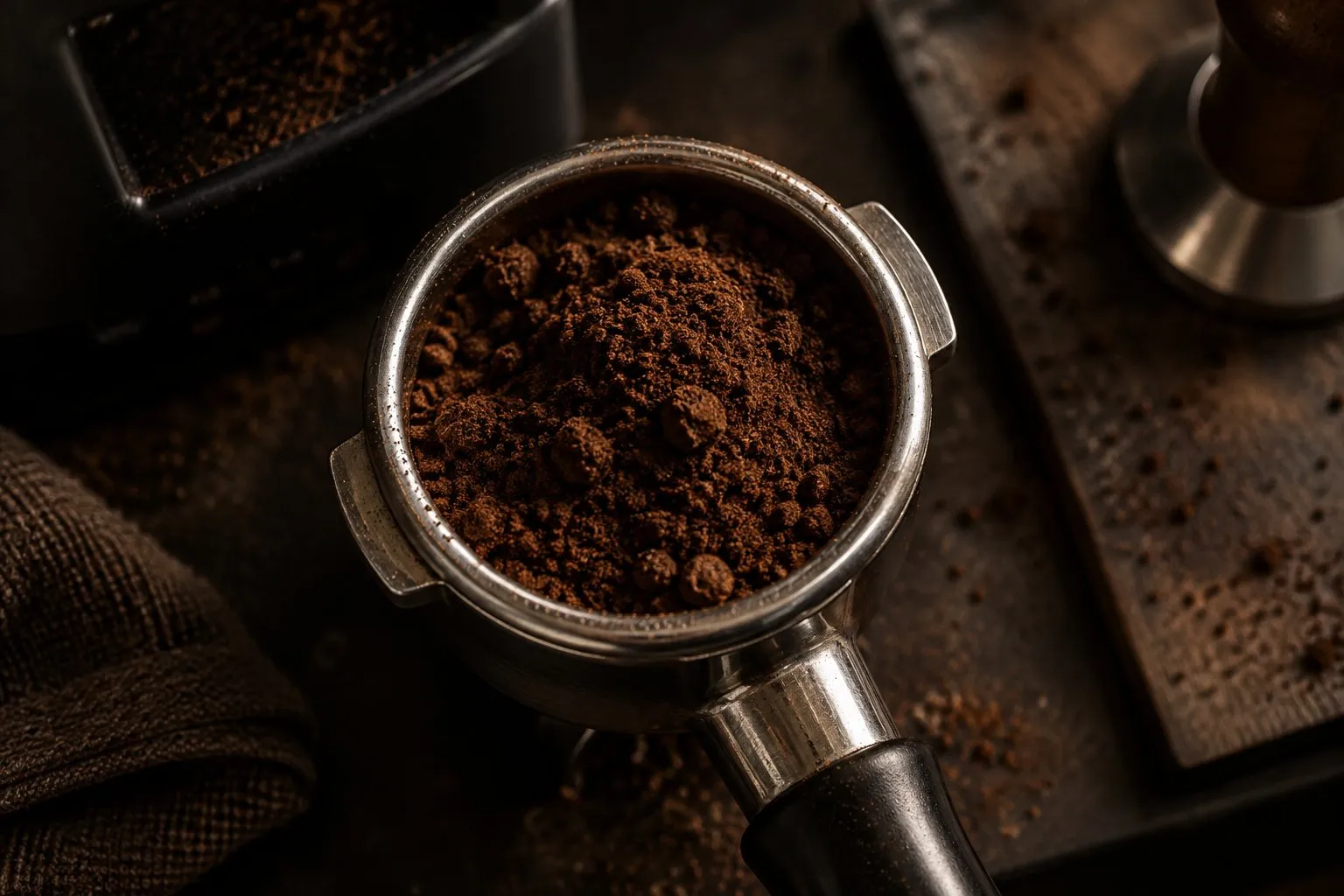
Clumps you can see are a job for preparation, and a WDT tool or better puck prep comes before any grinder change.
Does the burr shape change the answer?
Less than the marketing suggests. Baratza, which sells both, describes conical burrs as round and sweet, slightly more forgiving, and lower in retention, and flat burrs as clean and articulate. On steel against ceramic, it says no burr is better and each just emphasizes different qualities. That's a maker's framing, and we found no neutral study we could read. Our grinder comparison sets burrs, steps and retention side by side.
When the grinder is the limit
What you need from a grinder is steps small enough to land between too fast and too slow. If one click jumps across that gap, the setting you want doesn't exist on your grinder. No amount of tamping fixes that, so a new grinder is the honest answer, and our espresso grinder guide is the place to choose one. It's part of the same decision as your semi-automatic machine. For the bag itself, read espresso beans vs coffee beans.
Breville Smart Grinder Pro
A programmable conical burr grinder with 60 settings and cradles for 50 to 54 mm and 58 mm portafilters.
Why here: 60 settings plus grind time in 0.2 second steps, per Breville, so you can adjust the grind and the dose in small moves.
Best for: A first separate grinder, especially beside a Bambino
- 60 grind settings (Breville)
- Grind time in 0.2 second steps (Breville)
- Portafilter cradles for 50 to 54 mm and for 58 mm (Breville)
- Breville's page does not state the burr size
- A hopper grinder, not built for single dosing
- Type
- Electric, hopper
- Burrs
- Stainless steel conical
- Grind settings
- 60
- Fits
- 50–54 mm and 58 mm cradles
- Price class
- Mid-range
Asked at the bar
What grind size is best for espresso?
Fine, and close to the texture of fine table salt as a starting point, according to Breville. There is no single best size, because the right one depends on the coffee, the dose and your grinder. Set it by the result: a shot that reaches your target yield in about 25 to 30 seconds and tastes good to you.
How fine should I grind for espresso?
Fine enough to slow the water and not so fine that it can't get through evenly. Use the salt comparison to get into the right area on a new grinder, then adjust by the shot. Grind finer if it runs fast and sour, coarser if it runs slow and bitter. Make small moves, one at a time.
Can I use the grind setting someone else recommends?
Only as a rough hint from someone with the same grinder. Numbers aren't comparable across models: Baratza's own Encore ESP uses 1 to 20 as its espresso range, and its Encore ESP Pro uses 0 to 40. Between coffees the number moves too, because roast changes how beans break. Treat any setting as your starting point for that bag.
Can espresso be ground too fine?
Yes. Cameron and colleagues (Matter, 2020) measured extraction rising as the grind got finer, then falling again at very fine settings, and put the fall down to uneven flow. The University of Portsmouth's release says very fine particles can clog parts of the bed. A slow shot isn't automatically a well-extracted one.
Flat or conical burrs for espresso?
Baratza, which sells both, describes conical burrs as round and sweet and a little more forgiving, and flat burrs as clean and articulate. That is a maker's description, and we found no neutral study we could read that settles it. Fine steps at the espresso end matter more to dialing in than the burr shape does.
Where this comes from
- Breville: how to dial in espresso
- Baratza: dialing in espresso
- Cameron et al.: Systematically improving espresso (Matter, 2020), abstract only
- University of Portsmouth press release on that study, via EurekAlert
- Cell Press release on Méndez Harper and Hendon (Matter): static in coffee grinding, via EurekAlert
- 1Zpresso: K-Ultra product page
Next round
 Espresso grindersWhat makes a grinder suitable for espresso: burrs, small steps and clean dosing. One clear pick, the alternatives sorted by routine, and honest notes on the data.
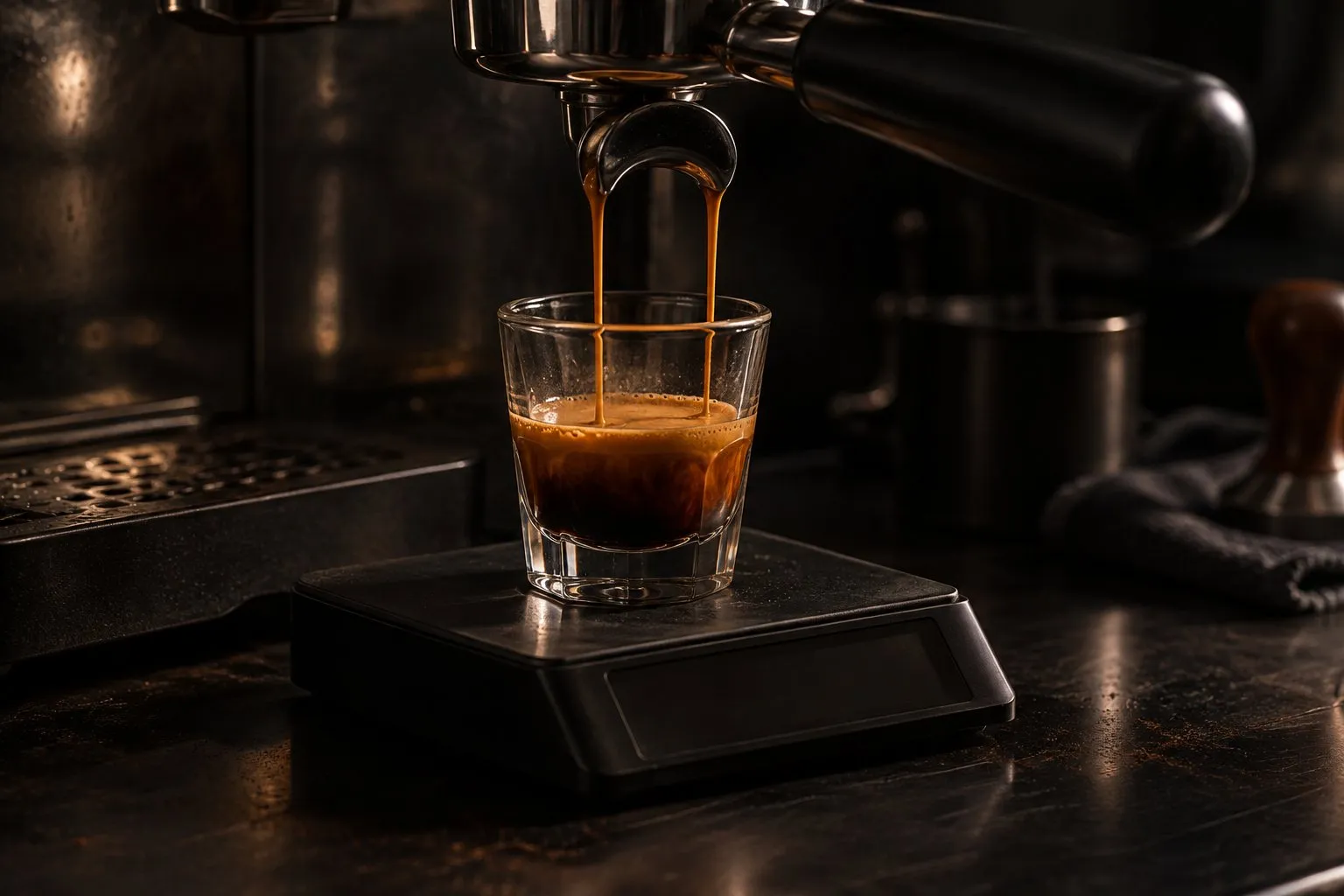 Dial in espressoHow to dial in espresso: fix the dose, set a yield, then change only the grind until time and taste line up. Steps, a symptom table and the exception to the rule.
 Best espresso grindersThe best burr grinder for espresso, compared by burrs, steps and retention from makers' pages: our pick, who should take what, and which numbers go unpublished.
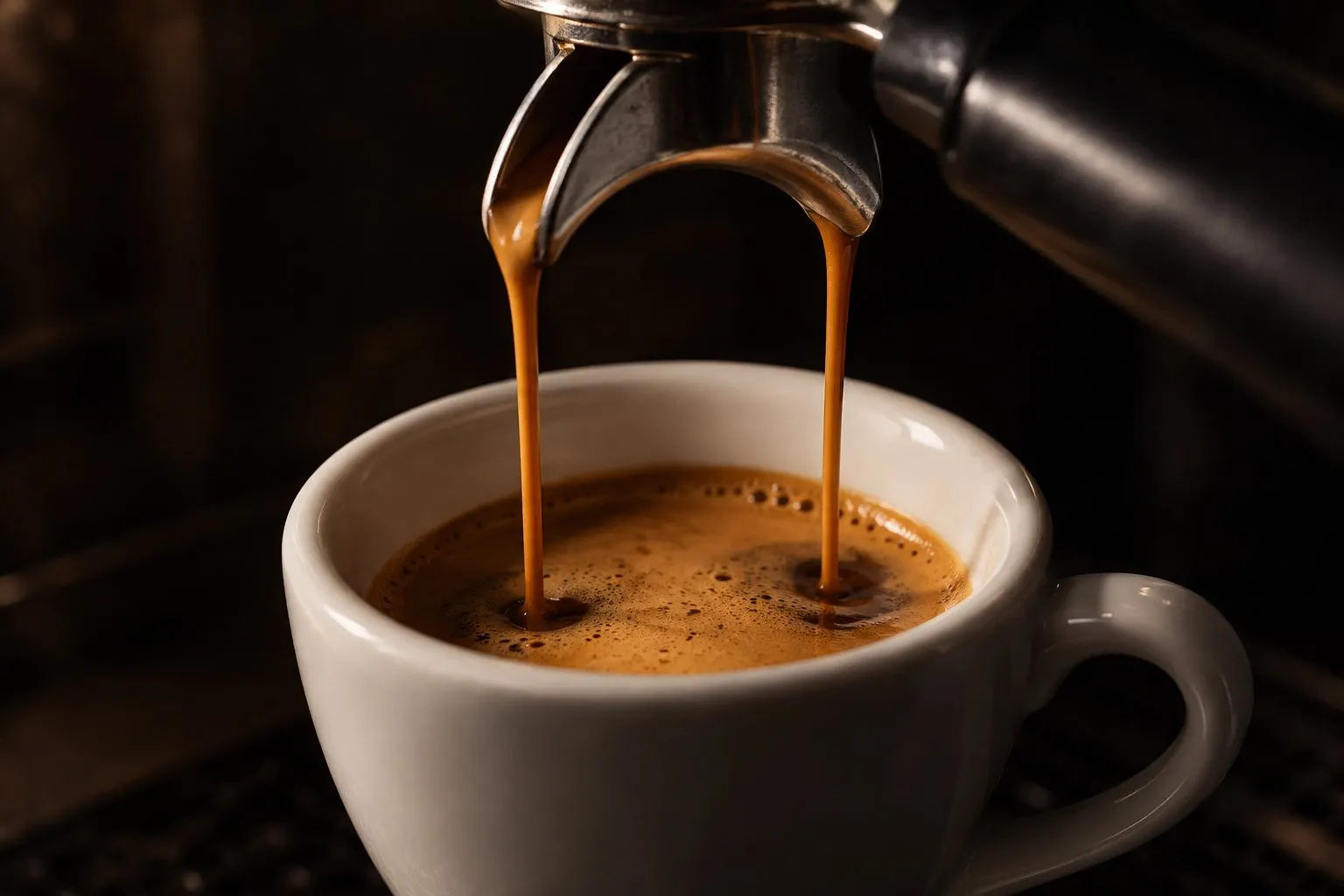 Sour espressoSour espresso usually means under-extraction. What to change first, when grinding finer stops helping, and where roast, water and temperature fit in.
- Puck prepEspresso puck prep in six steps: dry, weigh, stir, settle, tamp level, lock in. What channeling is, which tools have evidence, and what a wet puck means.
semiautomaticespressomachine.com Editorial Team
Espresso gear & shot craft
We are the editorial team at semiautomaticespressomachine.com. We read maker spec sheets, manuals, standards and published research on espresso and turn them into plain-English buying advice, with sources on every page. We do not run lab tests, and we say so openly.
- Spec sheets & standards read
- Sources on every page
- No lab tests – stated openly
- Publisher details in the imprint