Breville Smart Grinder Pro: The Usual Partner for a Bambino, From the Instruction Book
The Breville Smart Grinder Pro is a timed conical burr grinder with 60 settings, and Breville's book puts espresso on settings 1 to 30, starting at 12. It's our pick for a first separate grinder, especially beside a Bambino. Two things to accept: it doses by the clock, so you still weigh, and it's a hopper grinder.
Disclosure: This page contains affiliate links (marked with *). If you buy through them, we earn a small commission at no extra cost to you. As an Amazon Associate I earn from qualifying purchases. Learn more
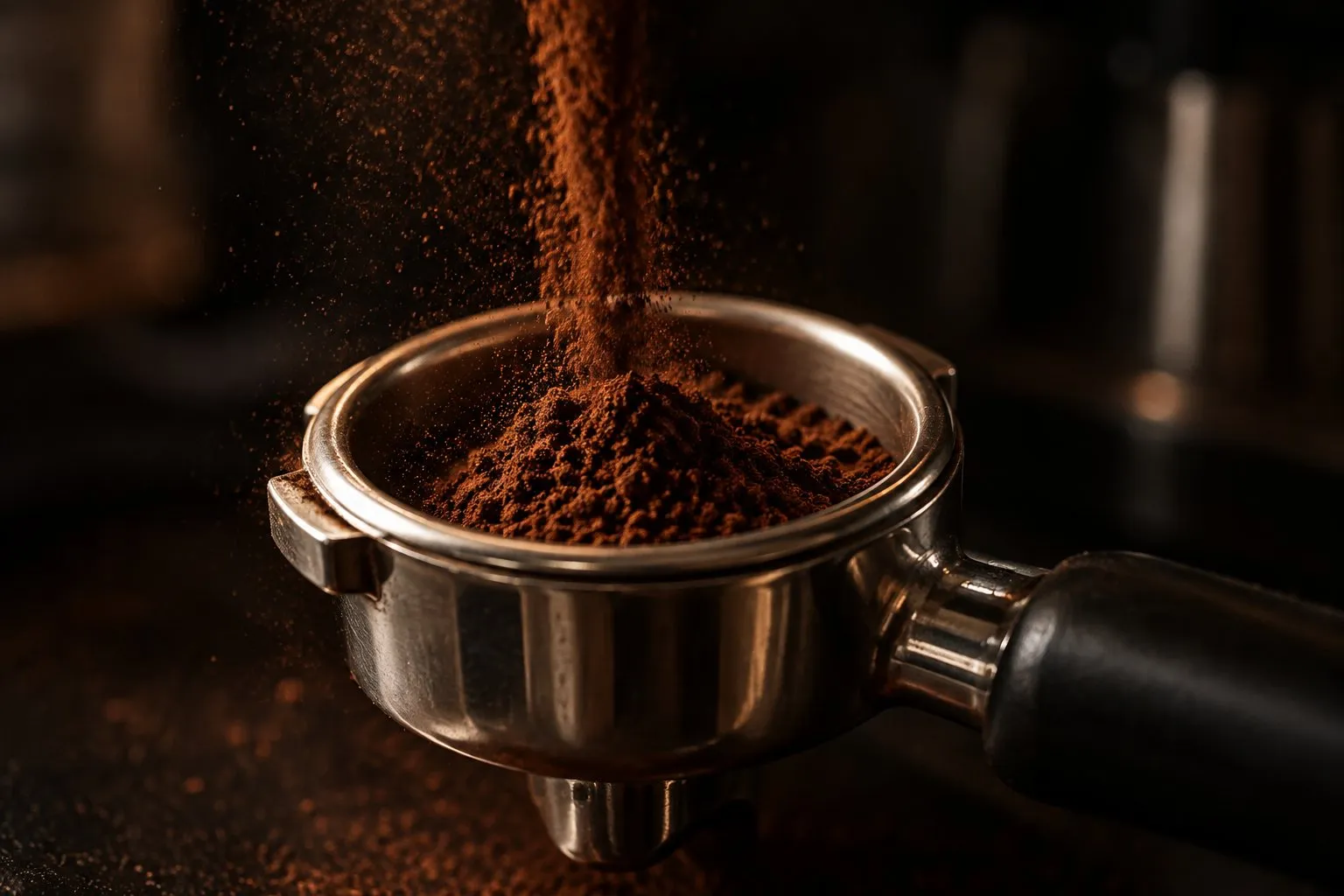
Buy the Smart Grinder Pro if this is your first espresso grinder and you want a maker's manual behind it. Breville lists 60 settings, grind time in 0.2 second steps and cradles for 50 to 54 mm and 58 mm portafilters. Skip it if you change beans daily or want a stated burr size, since Breville doesn't give one.
On this page
If you read our espresso grinder guide, you know this is where we'd start. This page goes deeper, into what Breville's instruction book says about the dial, the dose and the care. We compare on published specs and haven't pulled shots through it ourselves.
Breville Smart Grinder Pro
A programmable conical burr grinder with 60 settings and cradles for 50 to 54 mm and 58 mm portafilters.
Why here: Our first-grinder pick: documented by its maker, programmable in 0.2 second steps, and it holds both 54 mm and 58 mm portafilters.
Best for: A first separate grinder, especially beside a Bambino
- 60 grind settings (Breville)
- Grind time in 0.2 second steps (Breville)
- Portafilter cradles for 50 to 54 mm and for 58 mm (Breville)
- Breville's page does not state the burr size
- A hopper grinder, not built for single dosing
- Type
- Electric, hopper
- Burrs
- Stainless steel conical
- Grind settings
- 60
- Fits
- 50–54 mm and 58 mm cradles
- Price class
- Mid-range
Who it fits, and who it doesn't
- A first separate grinder, especially beside a Breville Bambino
- Owners of 54 mm or 58 mm machines, thanks to two cradles
- Anyone who brews espresso most days and sometimes filter or press
- People who like repeating a programmed dose and checking it on a scale
- Single dosers: it's a hopper grinder, built around keeping beans on top
- Anyone who wants to compare burr sizes, since Breville doesn't state one
- People who want grams on the screen: the dose is set in seconds
The specs that matter
| Item | Value | Where it comes from |
|---|---|---|
| Burrs | Hardened stainless steel, conical; size not stated | Breville book |
| Grind settings | 60 | Breville page |
| Espresso range | Settings 1 to 30, start at 12 | Breville book |
| Dose control | Timed, 0.2 second steps | Breville page |
| Amounts | 1 to 5 shots, or up to 12 cups | Breville book |
| Cradles | 50 to 54 mm and 58 mm | Breville page |
| Hopper | 1 lb, locking, removable | Breville book |
| Power | 120 V, 165 W | Breville book |
| Size | 8.5 x 6.3 x 15.3 in | Breville page |
| In the box | Two cradles, grinds container, burr brush | Breville page |
The Black Truffle finish is the same grinder in another color: Smart Grinder Pro, Black Truffle*.
Getting to a first shot
Half of the 60 settings are for espresso, according to Breville's chart. That's a useful detail, because a bare count of settings tells you little. Fit the right cradle, select your shots, set the dial to 12, and grind.
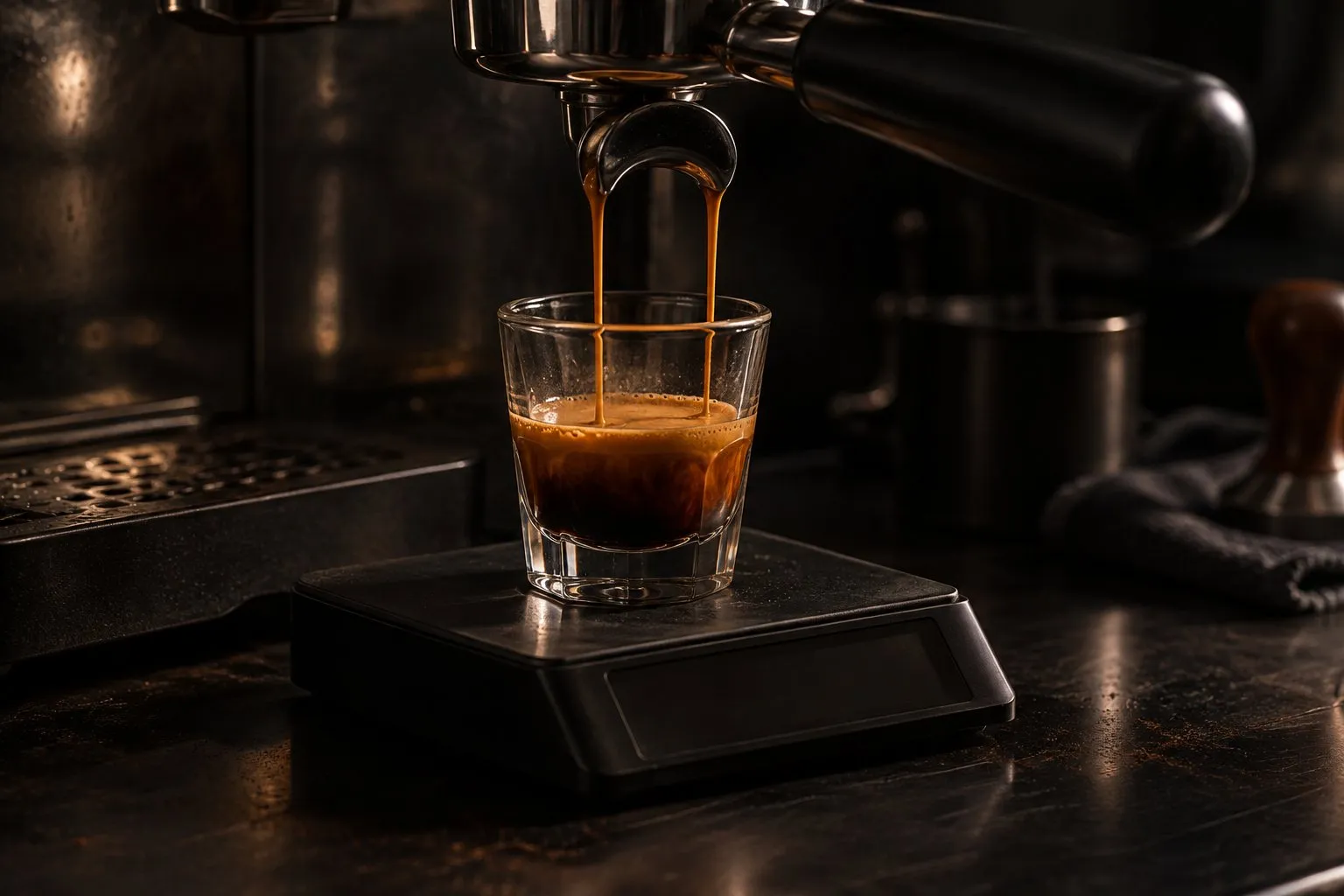
Time gets you close. The scale tells you where you are.
The dial changes seconds, not grams. So grind once, weigh it, nudge the Grind Amount dial, and hold PROGRAM when the weight is right. Only the amount on the screen gets saved. Hold SHOTS|CUPS until the long beep to go back to the default. Then keep the dose fixed and work on the grind.
Breville also warns you that the right amount looks like too much. Untamped coffee takes up about three times the volume of tamped coffee, so a heap in the basket is normal. Judge it by weight and read how much coffee to dose for your basket.
Press the portafilter once to run the programmed amount, or hold it down to grind by hand. A press of START pauses grinding for 10 seconds, so you can settle the coffee and carry on. If the Grind Size dial feels tight, run the grinder while you turn it, which releases grounds stuck between the burrs.
When the range runs out
The upper burr is adjustable. Breville ships it on 6 and lets you move it one number at a time, finer or coarser, to shift the whole range. You empty the hopper, run the grinder empty, lift out the burr, pull the wire handle, move the burr and reassemble. Do this only if the dial alone can't get your coffee to run right, and check your extraction afterward. Grind size for espresso explains how to tell.
Living with it
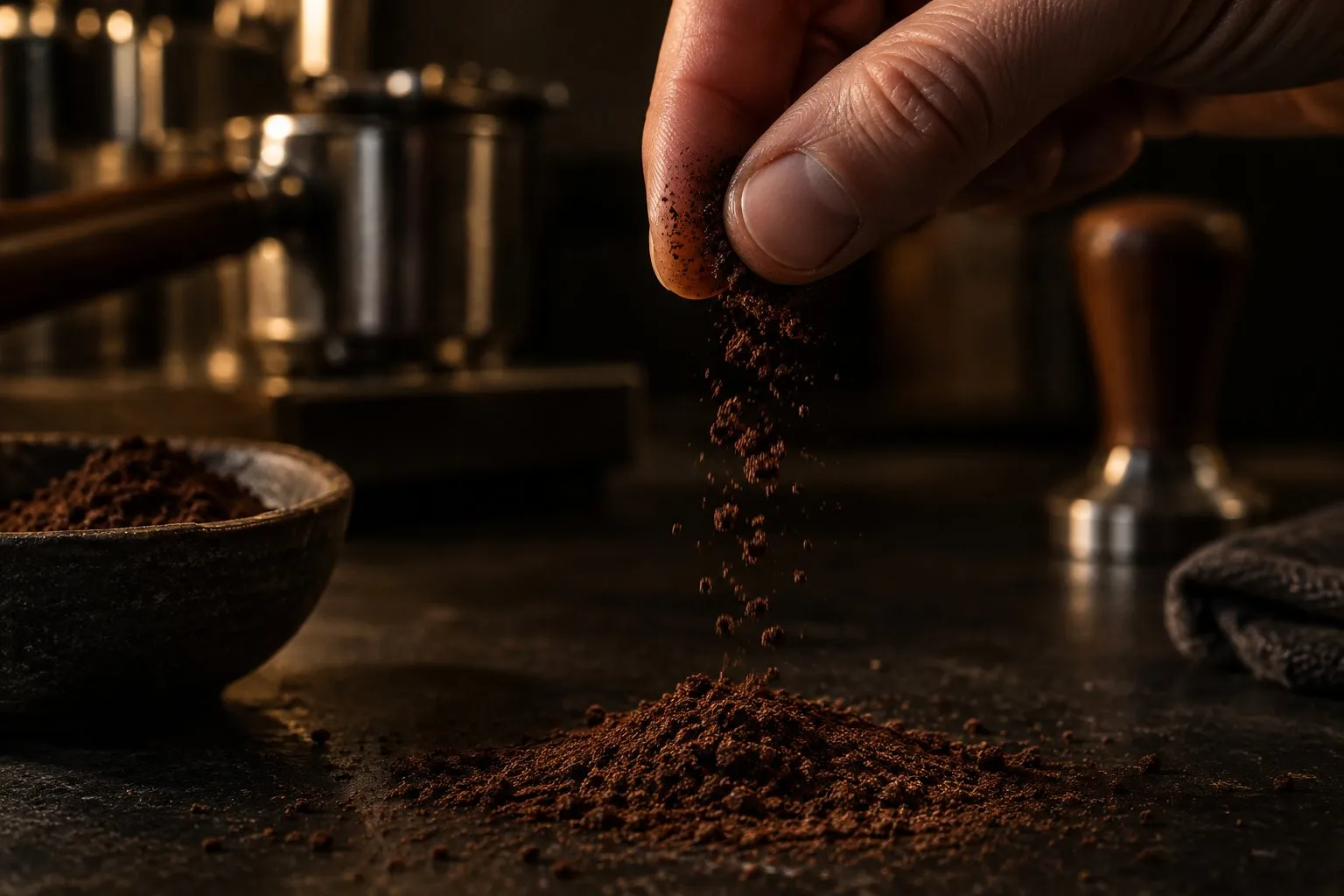
Breville ties regular burr cleaning to consistent grinding, and it matters most for espresso. The job is simple: empty the hopper, run it dry, take out the upper burr, and brush the burrs and outlet. Keep water away from the burrs, because moisture is one of the clogs on Breville's list. If they do get wet, let them dry fully. A hair dryer is allowed for that.
Two lines in the book are worth more attention than they get:
- Don't store beans in the hopper. Breville says to put them back in an airtight container. For a grinder with a 1 lb hopper, that's a surprisingly strict line. In practice, plan to load what you'll use soon.
- Purge before each use. Breville suggests running it for 2 seconds for freshness. Account for that when you weigh.
If the motor stops or won't start, it may have overheated. Unplug it and leave it for 20 minutes. A loud racket means a foreign item or a blocked chute, so remove the hopper and look. Warranty terms sit on Breville's product page and its warranty page.
Beside a Bambino, or instead of a one-box machine
The plan most people have in mind is the Breville Bambino* plus this grinder. The Bambino has a 54 mm portafilter and no grinder, and the small cradle takes it directly. Is the pair better value than the Barista Express? “At full price the separate pair is cheaper; on sale they cost the same. Check both on the day.” The real difference is what happens later, because a separate grinder can be replaced on its own. Built-in or separate grinder goes through it, and the Bambino page covers the other half of the pair.
The grind sets how fast this runs. That is the job you are buying.
Other grinders to weigh it against
If this is your first separate grinder → Breville Smart Grinder Pro
View(paid link to Amazon, opens in a new tab)Ad · paid link · check price & delivery on AmazonIf you brew filter coffee as often as espresso → Baratza Encore ESP
View(paid link to Amazon, opens in a new tab)Ad · paid link · check price & delivery on AmazonIf you change beans often and weigh every dose
If you want everything side by side
For a machine to go with it, the full comparison on the start page sorts them by what you drink.
Asked at the bar
What setting should I use on the Smart Grinder Pro for espresso?
Breville's book recommends grind setting 12 as a starting point on a single wall basket, then moving coarser or finer to adjust the flow. It reserves settings 1 to 30 for espresso. If you use dual wall filters, Breville suggests starting at 30 and going finer if needed. Change the dose along with the grind.
How does the Smart Grinder Pro set the dose?
By time. You pick a number of shots, then the Grind Amount dial changes the grind time in 0.2 second steps, and holding PROGRAM saves it. The book says the amount depends on brew method and grind amount, so it gives no grams. Set it by weighing the result on a scale, and check again when you change beans.
What's the difference between the Smart Grinder Pro and the Dose Control Pro?
Both list 60 settings and the same two cradle sizes. The main difference on Breville's pages is the timer: the Dose Control Pro adjusts in 1 second steps, and the Smart Grinder Pro in 0.2 second steps. Breville lists the Dose Control Pro as discontinued, so the Smart Grinder Pro is the one to look at.
How do I clean the Smart Grinder Pro?
Empty the hopper into a container and run the grinder until empty. Unplug it, lift out the upper burr, and brush both burrs and the grind outlet with the brush in the box. Wash the hopper and container in warm soapy water and dry them. Breville says no grinder part goes in the dishwasher.
Can I use the Smart Grinder Pro with a 58 mm portafilter?
Yes. Breville includes a cradle for 50 to 54 mm portafilters and a second one for 58 mm, so it holds a Bambino's 54 mm portafilter or a Gaggia Classic's, which Gaggia lists at 58 mm. With a cradle in place, the book limits you to a maximum of 2 shots at a time.
Where this comes from
Next round
- Espresso grindersWhat makes a grinder suitable for espresso: burrs, small steps and clean dosing. One clear pick, the alternatives sorted by routine, and honest notes on the data.
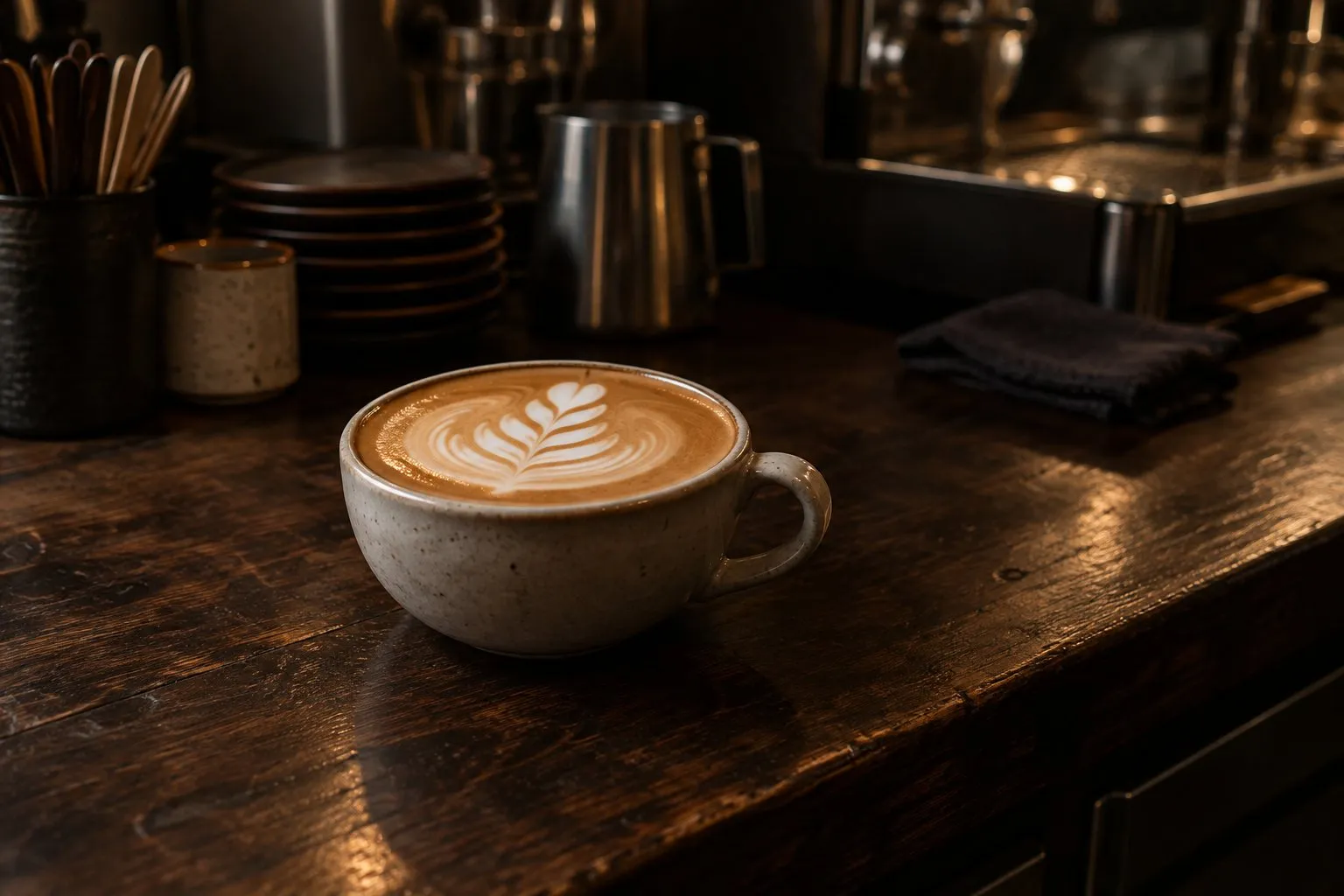 Breville BambinoBreville Bambino BES450: 54 mm portafilter, 3-second ThermoJet, one-touch shots and a manual wand. What the manual asks of you, and who should pick something else.
- Built-In Grinder or Separate Grinder for Espresso: Which Setup Should You Buy?Built-in grinder or separate grinder? The price math in words, the settings compared, and the upgrade path, with one clear rule for choosing your espresso setup.
- Espresso grind sizeHow fine to grind for espresso: start near fine table salt, then let the shot decide. Why no setting transfers, where finer stops working, and what coarser can do.
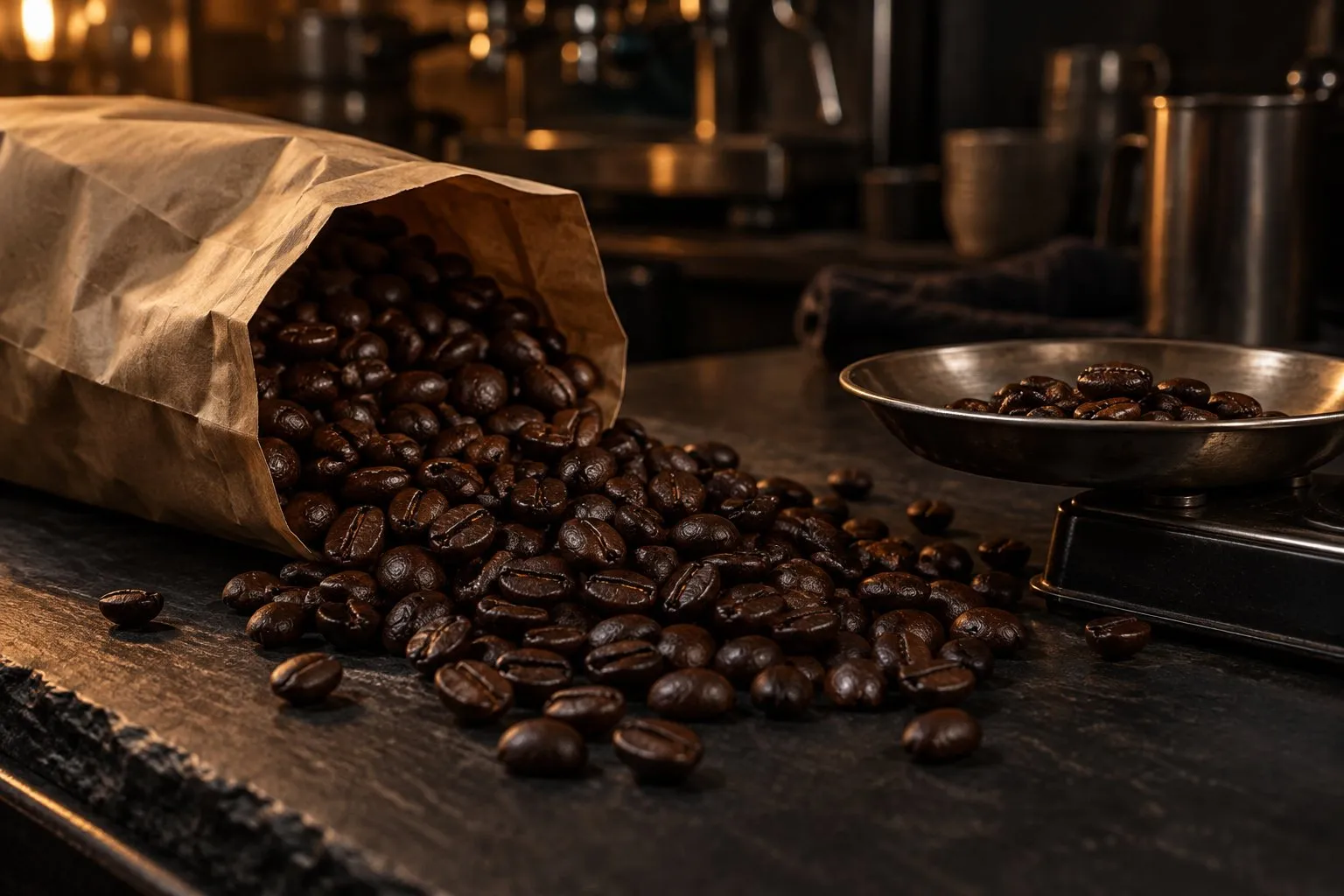 Best espresso grindersThe best burr grinder for espresso, compared by burrs, steps and retention from makers' pages: our pick, who should take what, and which numbers go unpublished.
- Single-dose grindersSingle dosing espresso grinders: what the method gets you, what we can document on the DF54, DF64 II and DF83, why zero retention is a myth, and who should skip it.
semiautomaticespressomachine.com Editorial Team
Espresso gear & shot craft
We are the editorial team at semiautomaticespressomachine.com. We read maker spec sheets, manuals, standards and published research on espresso and turn them into plain-English buying advice, with sources on every page. We do not run lab tests, and we say so openly.
- Spec sheets & standards read
- Sources on every page
- No lab tests – stated openly
- Publisher details in the imprint