How Many Grams of Coffee for Espresso? Dose by Basket Size, Not by Habit
Use what your basket was made for. Breville's 54 mm home baskets take about 8 to 11 g for one cup and 16 to 19 g for two, and its general guide calls 18 to 22 g a safe start. Italy's certified espresso uses 7 g. So there's no single right number, but there is a right number for your basket.
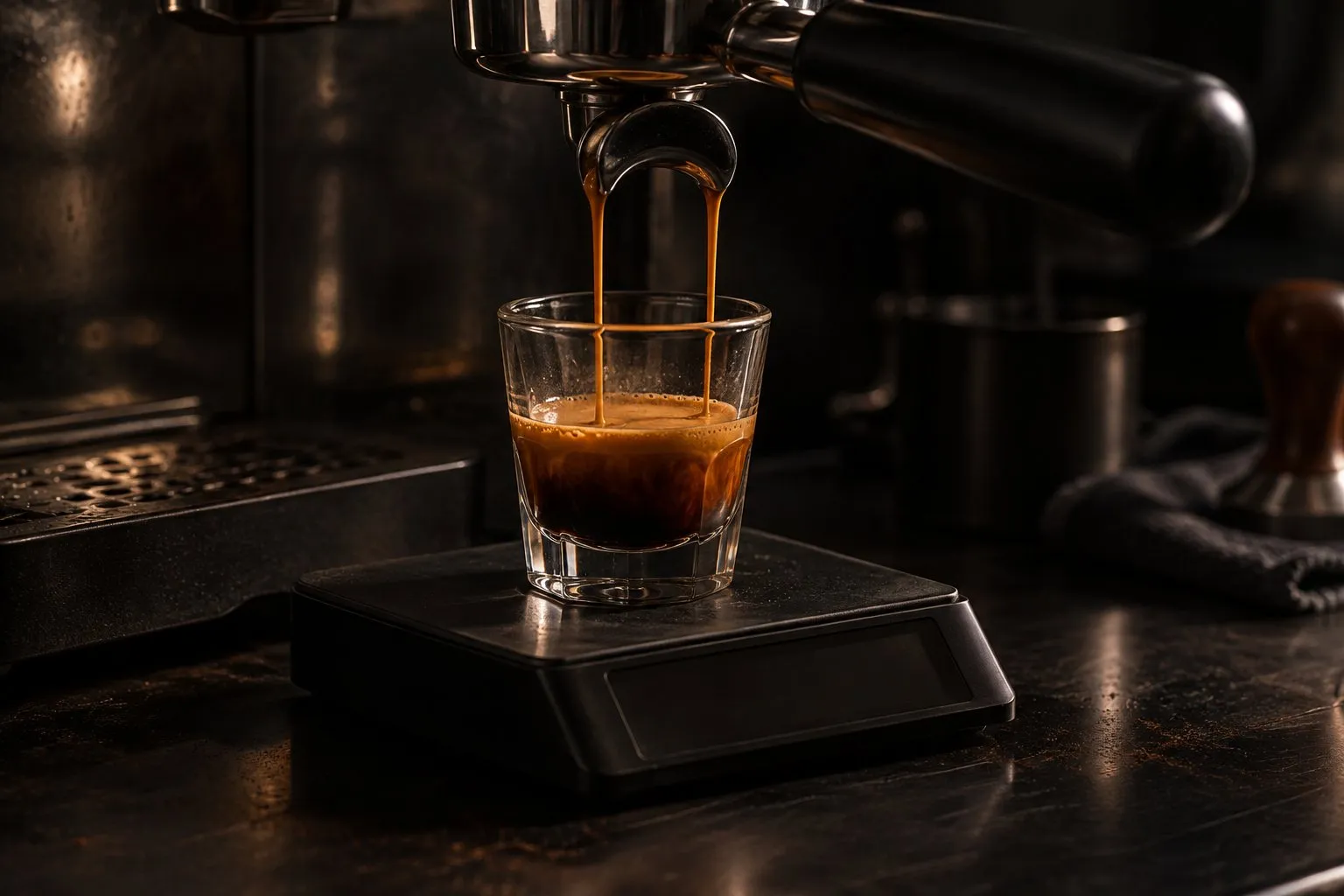
For a double on a home machine, start around 18 g. Breville's 2 Cup baskets are designed for about 16 to 19 g, and its 58 mm Dual Boiler page names 22 g. A single basket takes about 8 to 11 g. Italy's certified espresso uses 7 g for 25 ml. Weigh it, keep it fixed, and change the grind instead.
On this page
You'll see 18 g in a lot of home recipes, including Breville's. That's a fine place to begin. It isn't a rule, though, and the better question is what your basket is built to hold. A basket that's overfilled or underfilled makes every later step harder, whatever a chart says.
The numbers, and who says them
| Who says it | Basket or machine | Dose |
|---|---|---|
| Breville book | 1 Cup basket, Barista Express and Bambino | About 8 to 11 g |
| Breville book | 2 Cup basket, Barista Express and Bambino | About 16 to 19 g |
| Breville page | Bambino, 54 mm | 18 g, “the ideal dose” |
| Breville page | Dual Boiler, 58 mm | 22 g, “the ideal dose” |
| Breville guide | Any home machine | 18 to 22 g, “a safe start” |
| INEI | Certified Italian Espresso, one cup | 7 g ± 0.5 |
Two things stand out. Breville's numbers aren't one number. They follow the basket, and its guide says the ideal amount depends on your portafilter size and even the roast date. And Italy's figure belongs to a different drink: 7 g, 25 ml ± 2.5 in the cup including the froth, in 25 seconds ± 5. Our short version of the recipe question is this: “A good first recipe, not a standard. Italy's certified espresso is 7 g to 25 ml.” The espresso ratio page takes that further.
How to find your own dose
We can't give you a number for every basket, because many makers don't publish one. Gaggia's and Rancilio's manuals, for example, don't give grams in the sections we read. So here's a way that works without a chart:
Look it up
Check the manual, or the basket itself. A number stamped on an aftermarket basket is the seller's rating, so take it as a starting point.Grind and weigh
Grind into a dry basket on a scale that reads to 0.1 g. Use the maker's number, or the middle of its range.Check the headroom
Tamp and look. On a Breville, the top edge of the tamper's metal cap should sit level with the top of the basket after tamping. That check belongs to Breville's tamper, so it won't transfer to every machine.Pull and taste
Stop by weight, and taste. If the dose is right for the basket, what's left is a grind question.Keep it
Write the dose down and leave it alone while you adjust the grind.
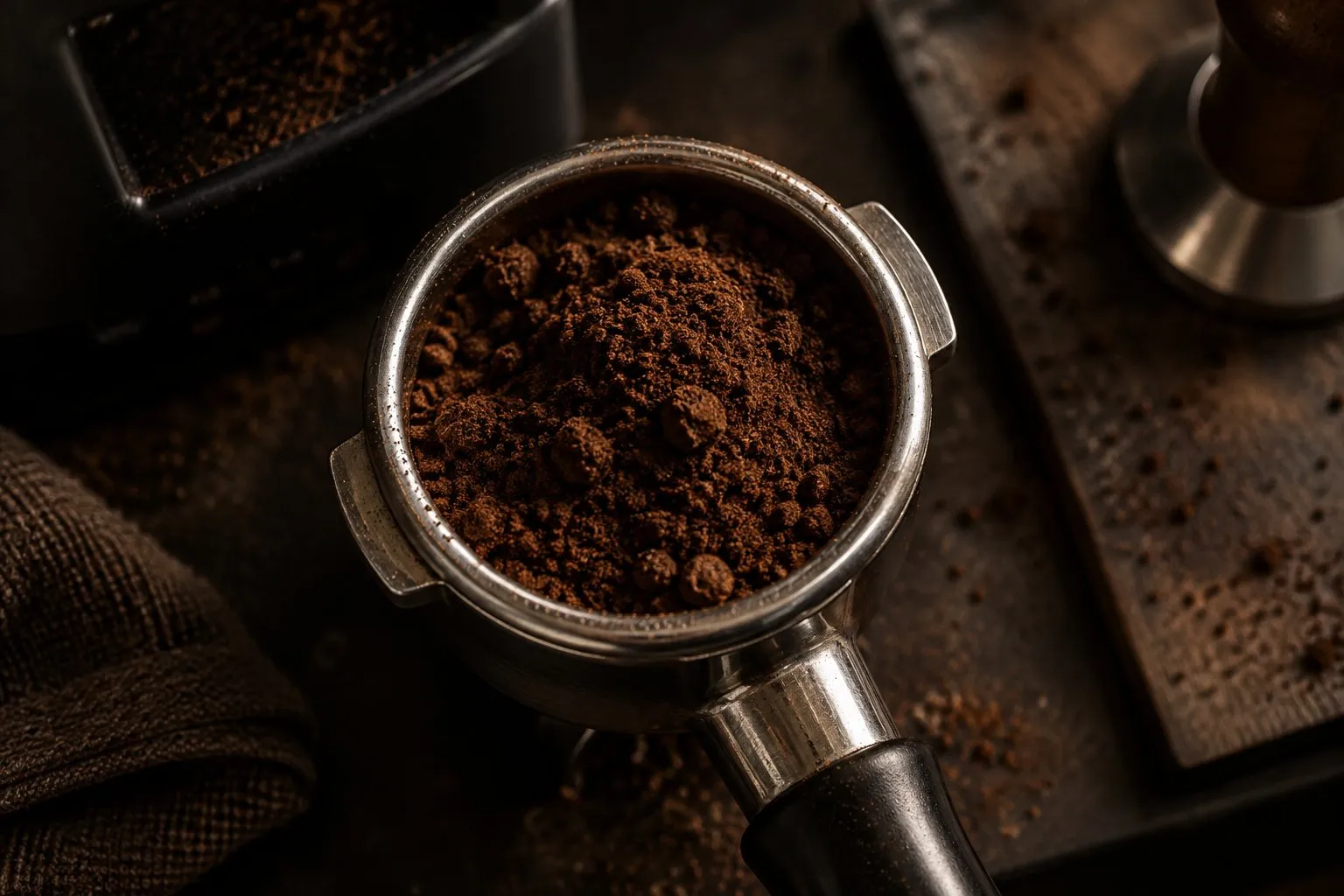
It looks like too much. It usually isn't.
Breville notes that untamped coffee takes up about three times the volume of tamped coffee, so a correct dose heaps up in the basket. Clumps exaggerate that too. Judge by weight, then settle and level it. Puck prep covers what happens next.
Single vs double: what actually changes
The shot names come from the cup more than the basket. Breville's guide offers a single at 1 ounce and a double at 2 ounces as a reference. Its Barista Express book says to use the 1 Cup basket for a single cup, and the 2 Cup basket for two cups or a stronger single cup or mug.
The catch is that the two baskets don't behave alike. Breville's book says you'll need to adjust the grind amount and size when you switch between them. So if you've dialed in a double and fancy a single, expect to start over. That's a good reason to pick one basket and stick with it. If you want to go further into basket shapes and ratings, see espresso baskets.
Why scoops don't work
Here's the clearest argument for a scale, and it comes from a manufacturer. Breville's Barista Express book says the 2 Cup basket takes about 3 level scoops of pre-ground coffee, and about 4 of fresh, fine-ground coffee. Pre-ground is often coarser and takes up more room, the book explains. Same basket, same scoop, and a different count.
So a scoop measures volume, and your basket cares about mass. A grinder with a timer has a similar limit, because seconds aren't grams either. If you've got a timed grinder like the Breville Smart Grinder Pro, weigh what comes out when you set it, and weigh again when you change beans. Our espresso scale comparison shows what to look for.
What a wrong dose looks like
Breville's Barista Express table connects dose and flow in both directions:
| What you see | What the table suggests | Next step |
|---|---|---|
| Espresso only drips | Too much coffee, or too fine | Lower the dose, then trim the top |
| Espresso runs too fast | Too little coffee, or too coarse | Raise the dose, then trim the top |
| Espresso runs out around the edge | Too much coffee, or grounds on the rim | Lower the dose, and wipe the rim |
If it still misbehaves with the dose inside the range, go to dialing in espresso and move the grind. If nothing helps, the Barista Express problem list covers the machine side.
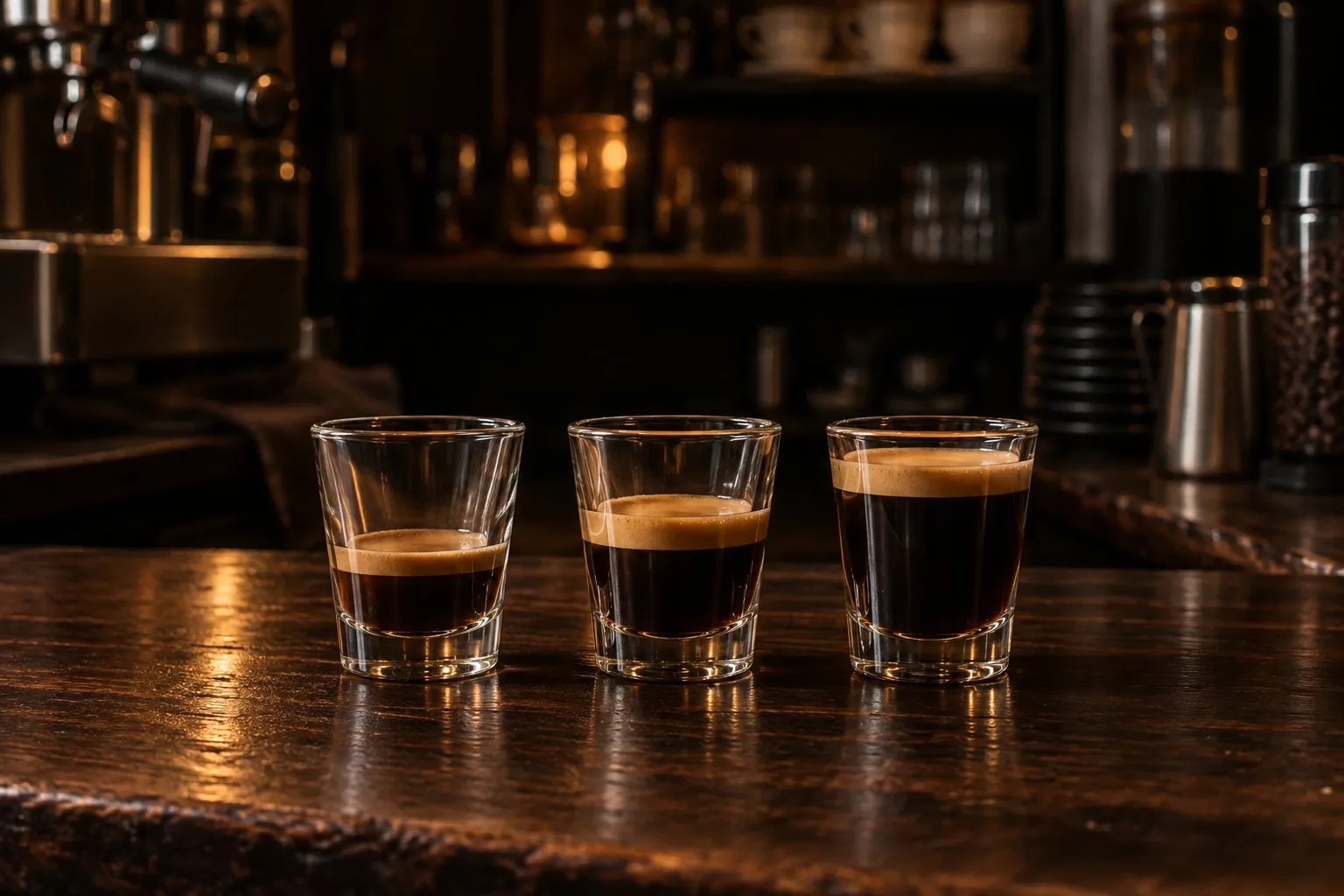
Fix the dose first. Then the only thing that moves is what lands in the glass.
Dose sets the yield
Once your dose is settled, the yield follows. Breville's starting ratio is 1:2. It also gives 1:1 for a ristretto and 1:3 for a lungo. Enter your dose here and read what to aim for:
Target in the cup
36 g1.3 oz
Plain arithmetic. The ratios are starting points from Breville's guide, not a standard.
Coffee and taste decide from there. Breville adds that shots can taste good anywhere from about 20 to 40 seconds, so let the cup have the last word. For the rest of the setup, go back to our start page.
Asked at the bar
How much coffee do I use for a double shot of espresso?
Start with what your double basket is made for. Breville designs the 2 Cup baskets on its 54 mm machines for about 16 to 19 g and calls 18 g the ideal dose on its Bambino page. Its 58 mm Dual Boiler page names 22 g. If your maker gives no number, fill to what fits and weigh that.
How many grams are in a single shot of espresso?
Breville's 1 Cup baskets are designed for about 8 to 11 g. Italy's certified espresso uses 7 g, give or take 0.5 g, for 25 ml in the cup. Note that a single isn't just half a double in practice, because Breville says you'll need to adjust the grind amount and size when you switch baskets.
Should I change the dose or the grind?
Change the grind first and hold the dose. Dose is the number your basket sets, so it should change rarely. If your shot still won't behave, Breville's tables do include dose: too much coffee can make the shot drip, and too little can make it run fast. Change one thing at a time and write it down.
Can I just use a scoop instead of a scale?
You can, but the same scoop gives different results. Breville's Barista Express book says its 2 Cup basket takes about 3 level scoops of pre-ground coffee and about 4 of freshly ground. That difference is why we recommend weighing. A scale also makes it easy to repeat a good shot the next day.
Does more coffee make stronger espresso?
Dose alone doesn't decide that, because strength also depends on how much you pull into the cup. Breville does suggest the 2 Cup basket when you want a stronger single cup or mug. If you raise the dose, keep your ratio the same, then taste it and adjust the grind, because a fuller basket also slows the shot.
Where this comes from
- Breville: how to dial in espresso
- Breville: Barista Express BES870 instruction book (US and Canada)
- Breville: Bambino BES450 instruction book (US and Canada)
- Breville: BES450 Bambino product page
- Breville: BES920 Dual Boiler product page
- Istituto Nazionale Espresso Italiano: Certified Italian Espresso leaflet
Next round
- Espresso ratioEspresso ratio explained: 1:2 in 25 to 30 seconds is a good first recipe, not a standard. See the numbers, Italy's 7 g to 25 ml, and a calculator for your own dose.
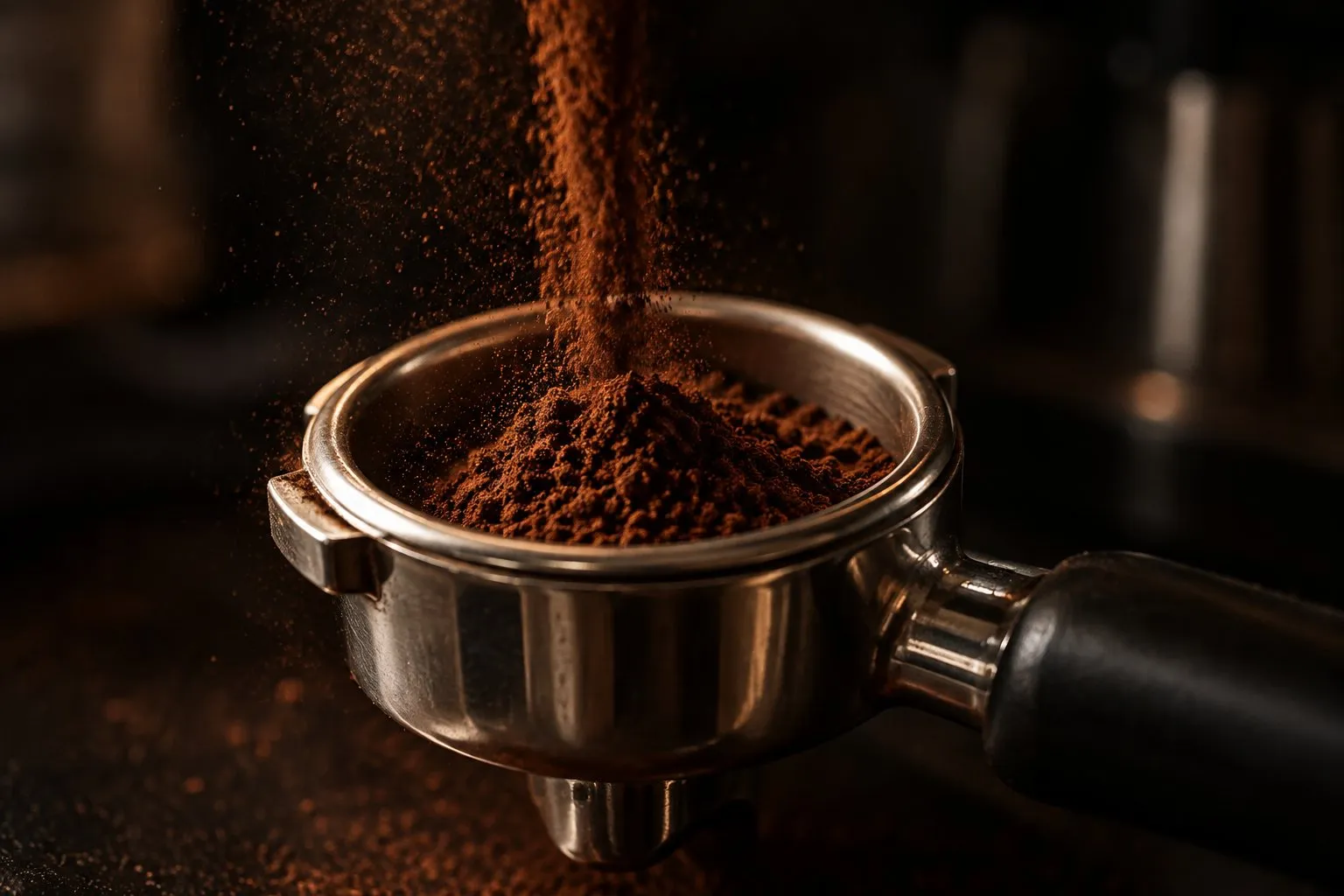 Espresso basketsEspresso baskets explained: single wall vs dual wall (pressurized), which machines ship with which, what VST and IMS publish, and how to match a basket to your dose.
- Espresso scaleWhat an espresso scale needs: 0.1 g steps, a timer and a size that fits your drip tray. Listed options, plus Acaia and Timemore dimensions from their own data.
- Dial in espressoHow to dial in espresso: fix the dose, set a yield, then change only the grind until time and taste line up. Steps, a symptom table and the exception to the rule.
- Puck prepEspresso puck prep in six steps: dry, weigh, stir, settle, tamp level, lock in. What channeling is, which tools have evidence, and what a wet puck means.
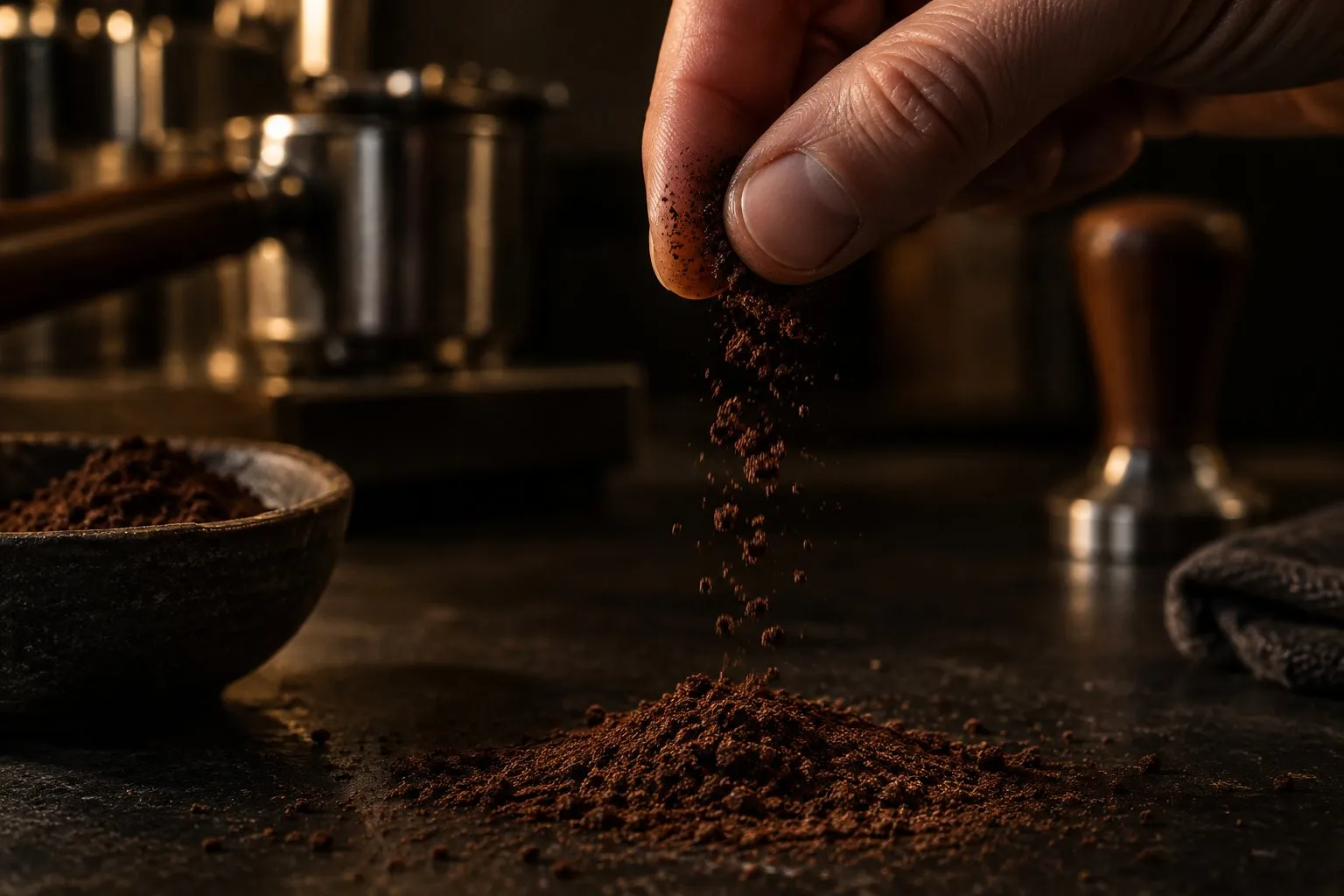 Espresso grind sizeHow fine to grind for espresso: start near fine table salt, then let the shot decide. Why no setting transfers, where finer stops working, and what coarser can do.
semiautomaticespressomachine.com Editorial Team
Espresso gear & shot craft
We are the editorial team at semiautomaticespressomachine.com. We read maker spec sheets, manuals, standards and published research on espresso and turn them into plain-English buying advice, with sources on every page. We do not run lab tests, and we say so openly.
- Spec sheets & standards read
- Sources on every page
- No lab tests – stated openly
- Publisher details in the imprint