How to Steam Milk on a Home Espresso Machine: Stretch, Spin, Stop
Start with cold milk and a purged wand. Hold the tip just under the surface for 5 to 10 seconds to add air, then lower it until the milk spins, and stop when the pitcher is too hot to hold for long, about 140 to 145 °F. Tap, swirl until glossy, and pour right away. The whole job takes under a minute once you know the feel.
Disclosure: This page contains affiliate links (marked with *). If you buy through them, we earn a small commission at no extra cost to you. As an Amazon Associate I earn from qualifying purchases. Learn more
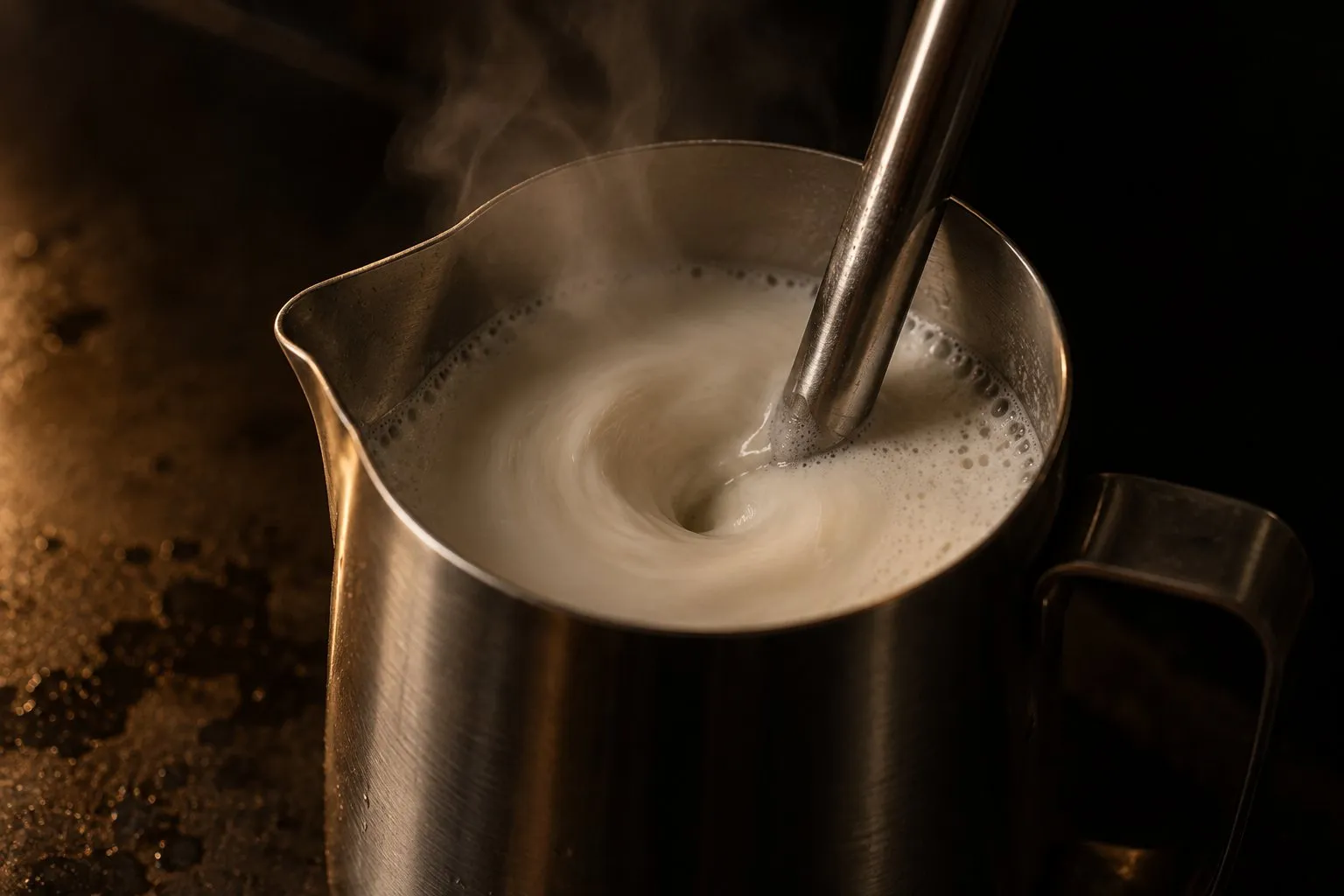
Purge the wand, fill a cold pitcher to the bottom of the spout with cold milk, and hold the tip just below the surface for 5 to 10 seconds to add air. Lower the tip until the milk spins. Stop at about 140 to 145 °F, or when you can barely keep your hand on the pitcher. Tap, swirl, and pour.
On this page
What you get: glossy milk with bubbles too small to see, ready to pour on any machine with a wand on your semi-automatic setup. What it takes: a pitcher, cold milk, and some milk down the sink while you learn.
You need a wand that makes real steam, and a steel pitcher. Breville's Barista Express and Bambino include a jug, and our milk pitcher page covers the sizes if yours doesn't suit you. A thermometer helps for the first few rounds. After that your hand does the job.
Stainless milk pitcher
A stainless pitcher offered from 8.5 oz to 66 oz.
Seller data only: We only have the Amazon listing for this product. We list it as an option, not as a recommendation.
Why here: Stainless steel, and offered from 8.5 oz to 66 oz per the listing, so you can match the size to the drink you make most.
Best for: Any machine with a steam wand
- Wide range of sizes, per listing title
- We only have the listing
- Type
- Milk pitcher
- Price class
- Budget
Steam milk step by step
Purge the wand
Point the wand at the drip tray and run steam briefly to clear condensed water, or it ends up in your milk. On a machine that switches modes, wait until it says steam is ready.Fill the pitcher with cold milk
Pour cold milk up to where the spout begins, about 4 oz or half a cup in a small pitcher. Breville's Barista Express manual agrees: fill just below the spout. Milk gains volume, so don't overfill.Stretch for 5 to 10 seconds
Hold the tip just below the surface, angled to one side, and start the steam. You want a soft sound like tearing paper. A high screech means the tip is too deep. Breville's latte art guide says to stop adding air by about 100 °F, which is roughly when the pitcher feels body warm.Spin the milk
Raise the pitcher slightly so the tip sits deeper and the milk turns in a whirlpool. Stretching stops here, the milk keeps heating, and the big bubbles get folded in.Stop at about 140 to 145 °F
Stop when a thermometer reads about 140 to 145 °F, or when you can only keep your hand on the pitcher for a moment. Turn the steam off before the tip comes out, or the milk sprays.Wipe and purge
Wipe the wand right away with a damp cloth, then point it at the drip tray and run a short burst of steam. Don't touch the wand with bare hands.Tap, swirl and pour
Tap the pitcher on the counter to pop large bubbles, then swirl until the surface looks glossy like wet paint. Pour straight away, because Breville's manual warns that the milk begins to separate.
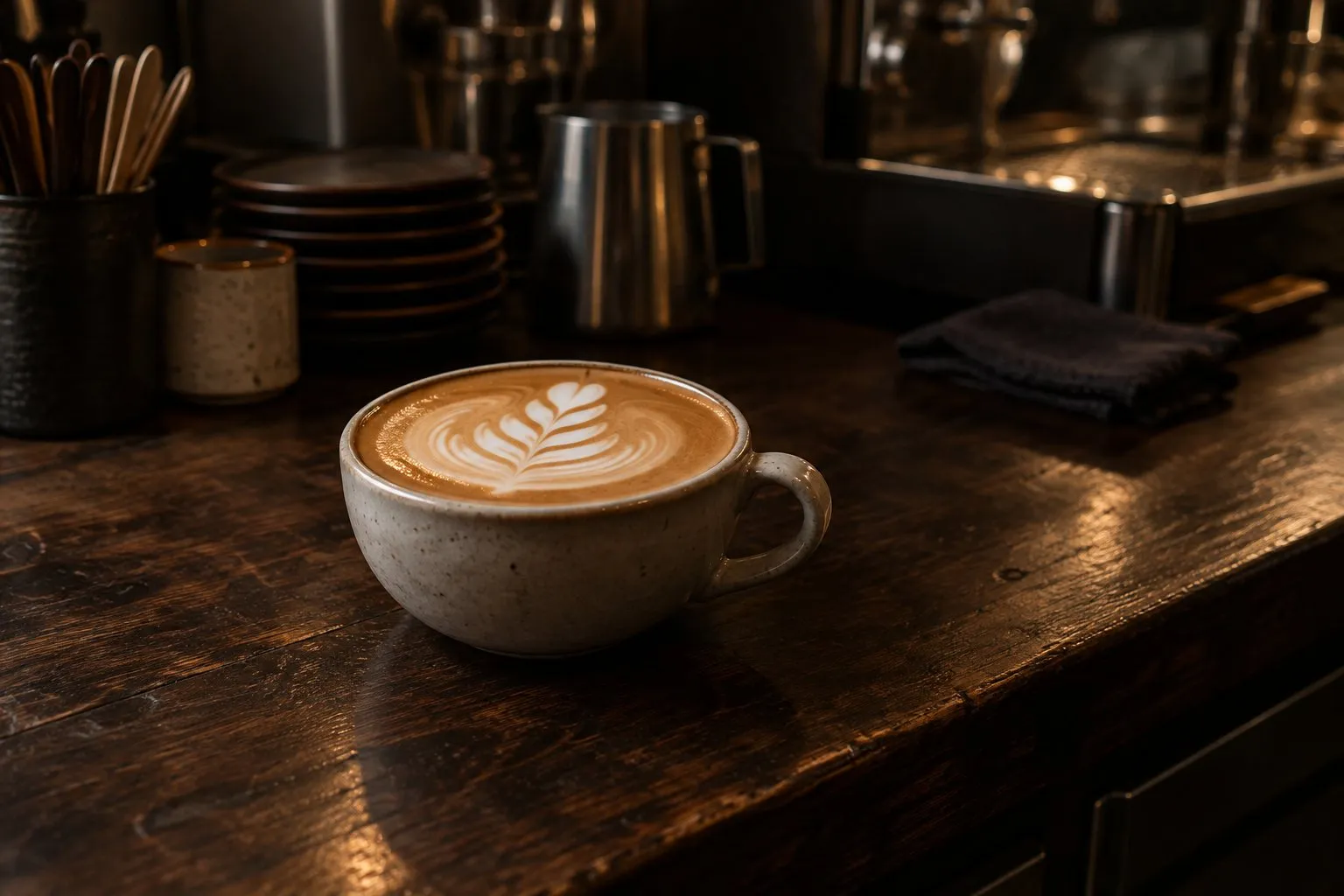
What you're after
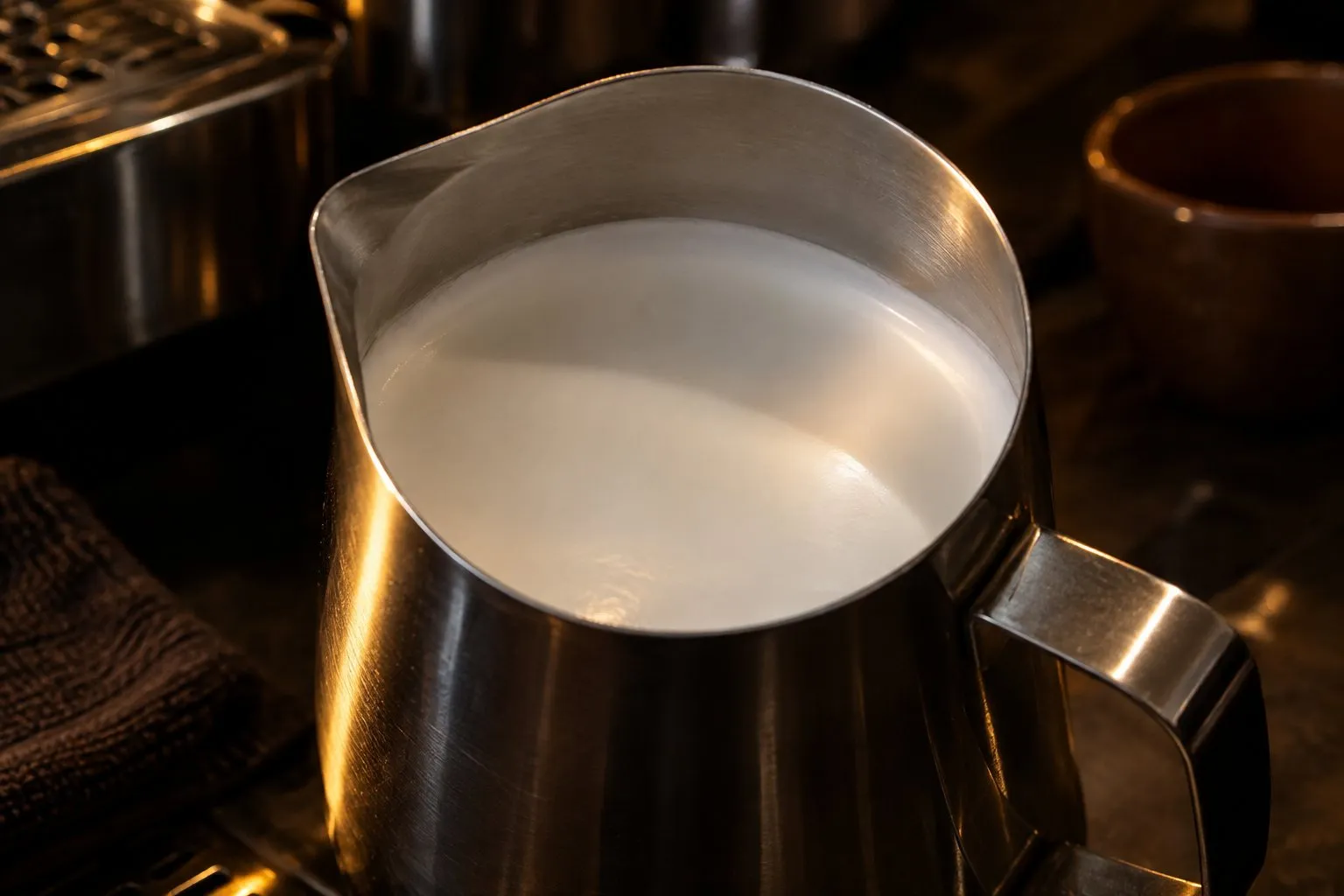
Milk that pours like thin paint, with a shine and no bubbles you can see. That's microfoam. Before you pour, tilt the pitcher: the milk should move as one body, with no pile of foam sitting on top.
How hot is right? The sources disagree
The internet likes one number. The sources we read don't give one:
| Source | Target | Notes |
|---|---|---|
| Breville steaming guide | 140 to 145 °F | Over 145 °F risks a scorched taste, it says |
| Breville manuals (Bambino, Barista Express) | 140 to 149 °F (60 to 65 °C) | “When the jug is hot to touch” |
| Breville latte recipe | 140 to 150 °F | |
| Breville latte art guide | Under 160 °F for dairy, 140 to 150 °F for plant-based | Upper limits |
| INEI Certified Italian Cappuccino | About 55 °C | 100 ml of cold milk grows to about 125 ml |
So aim for about 140 to 145 °F, and try lower if your milk tastes cooked. We found no study that settles which number tastes best. The INEI line also gives you a useful target for stretching: about a quarter more volume for a cappuccino, and less for a latte or flat white.
No thermometer? Breville's guide has you touch the side of the pitcher: it's about right when you can only hold your hand there briefly. That's a rough guide, so check it against a thermometer once or twice.
Common mistakes and fixes
| What happens | Likely cause | Fix |
|---|---|---|
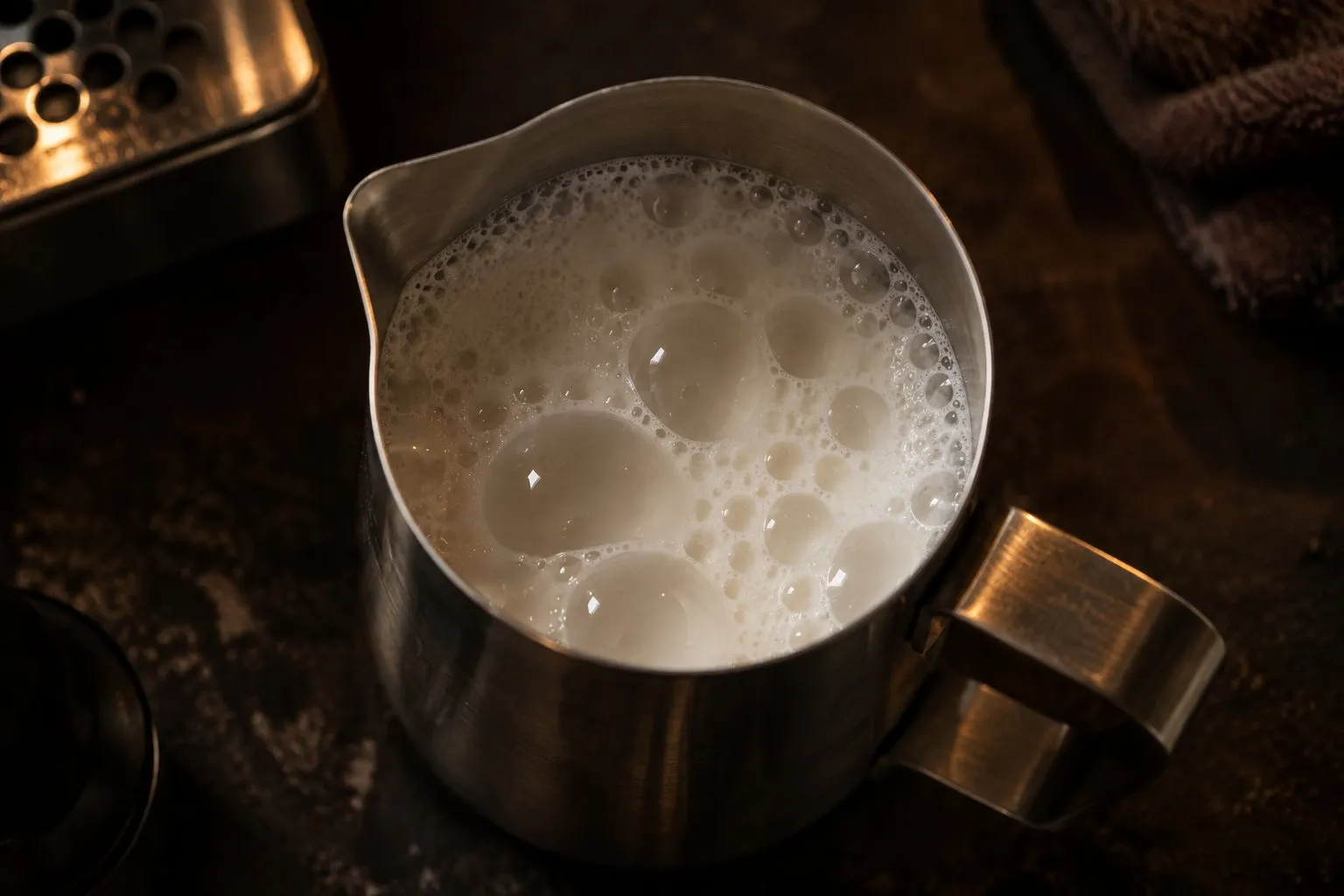
| Large soapy bubbles | Air added too long or too late | Shorter stretch, then sink the tip |
| Screeching, no foam | Tip too deep | Lower the pitcher until the sound softens |
| Big splashes | Tip too close to the surface | Start with the tip below the surface, and hold steady |
| Milk not spinning | Tip in the middle of the pitcher | Move it off-center, near the right side |
| Burnt or flat taste | Over 145 to 150 °F, or reheated milk | Stop sooner, and start again with fresh milk |
| Weak steam | Blocked tip | Purge, and clear the holes with the tool in your box |
Breville's guide also says not to reheat steamed milk, because too few intact proteins remain to make good foam. Pour out what you don't use. Steaming only what you need saves more milk than any technique.
Your machine changes the routine
- Single boiler. Brew first, then wait for steam, because a single boiler takes turns. Waits and time limits differ by model, so take them from your manual. Our Gaggia page gives that machine's numbers.
- Thermocoil or ThermoJet. Steam comes up quickly. The Barista Express manual adds a neat trick: pause the steam, insert the tip within 8 seconds, then go back to steam. That stops splashing.
- Dual boiler. You can brew and steam at once, which helps with several drinks in a row. Do you need a dual boiler goes into when that matters.
- Automatic wand. The Breville Bambino Plus* textures milk by itself with 3 temperatures and 3 texture levels (Breville). It's our pick if you'd rather skip this page altogether.
From milk to a latte
Breville's latte recipe uses two shots and about half a cup of milk at 140 to 150 °F. Pull the shot first, using a recipe you've dialed in, then steam, so the milk doesn't wait.
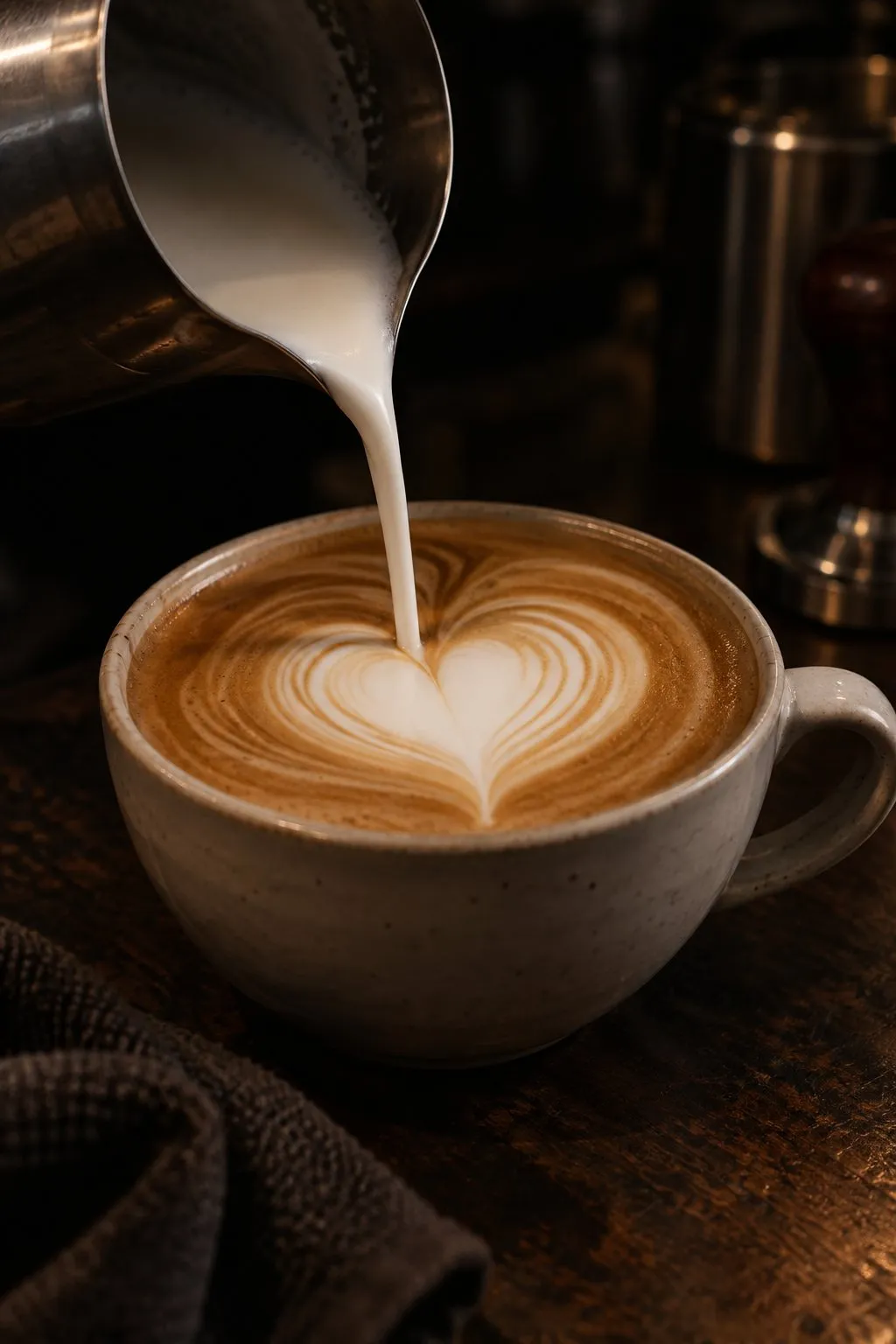
For latte art, Breville starts with the pitcher raised and the cup tilted toward it. Past halfway, level the cup, bring the pitcher close to the surface and pour a little faster. A heart is a steady pour in the center until a creamy dot forms, then a lift and a line through it. A rosetta adds a gentle side-to-side rock of the wrist.
Milk types
Breville calls whole milk the top choice for frothing, and its guide favors high-protein milk. For plant-based milk, it says oat is a good alternative and needs a few seconds longer. Almond is thinner and does best near 131 °F. Soy steams about twice as fast and tolerates up to 150 °F.
Next up: what microfoam really is, how flat whites and lattes differ, and the right pitcher for your drink.
Asked at the bar
What temperature should steamed milk be for a latte?
About 140 to 145 °F is a good target. Breville's steaming guide gives that range and warns about scorching above it, its latte recipe says 140 to 150 °F, and its Bambino and Barista Express manuals say 140 to 149 °F. Italy's certified cappuccino sits lower, at about 55 °C. It is a range, not a rule.
Why does my milk have big bubbles?
Usually too much air, added too late. Keep the stretching phase to 5 to 10 seconds and stop adding air by about 100 °F, as Breville's latte art guide suggests. Then sink the tip so the milk spins and the bubbles break up. Tap and swirl the pitcher before you pour to deal with the rest.
What is the difference between steaming and frothing milk?
In practice they are one job with more or less air. Steaming heats the milk, and frothing or stretching adds air to it. A latte or flat white needs a short stretch that gives fine microfoam, while a cappuccino takes more air. A handheld frother whisks in air without heating, which is a different tool.
Can I steam oat or almond milk?
Yes, with changes. Breville says whole milk is the top choice for frothing and oat is a good plant-based alternative. Its guide says oat needs a few seconds longer, almond is thinner and does best near 131 °F, and soy steams about twice as fast and tolerates up to 150 °F. Expect to adjust by feel.
Where this comes from
- Breville: how to steam milk, a step-by-step guide
- Breville: how to make a latte
- Breville: how to make latte art with ease
- Breville: Bambino instruction book (US, Canada, Mexico)
- Breville: Barista Express instruction book (copy hosted by Williams-Sonoma)
- INEI: Certified Italian Espresso and Cappuccino leaflet (copy on a third-party server)
Next round
- Milk pitcherWhich milk frothing pitcher to buy: size by how much milk you steam, what makers say about jug shape and fill level, and when you should keep the jug in your box.
- MicrofoamMicrofoam is steamed milk with bubbles too small to see. How it differs from froth, how hot to steam it, why you get big bubbles, and which wands can make it.
 Flat white vs latteFlat white vs latte: less milk and a thin layer of microfoam against a larger, milkier drink. What sources agree on, where they differ, and how to steam for each.
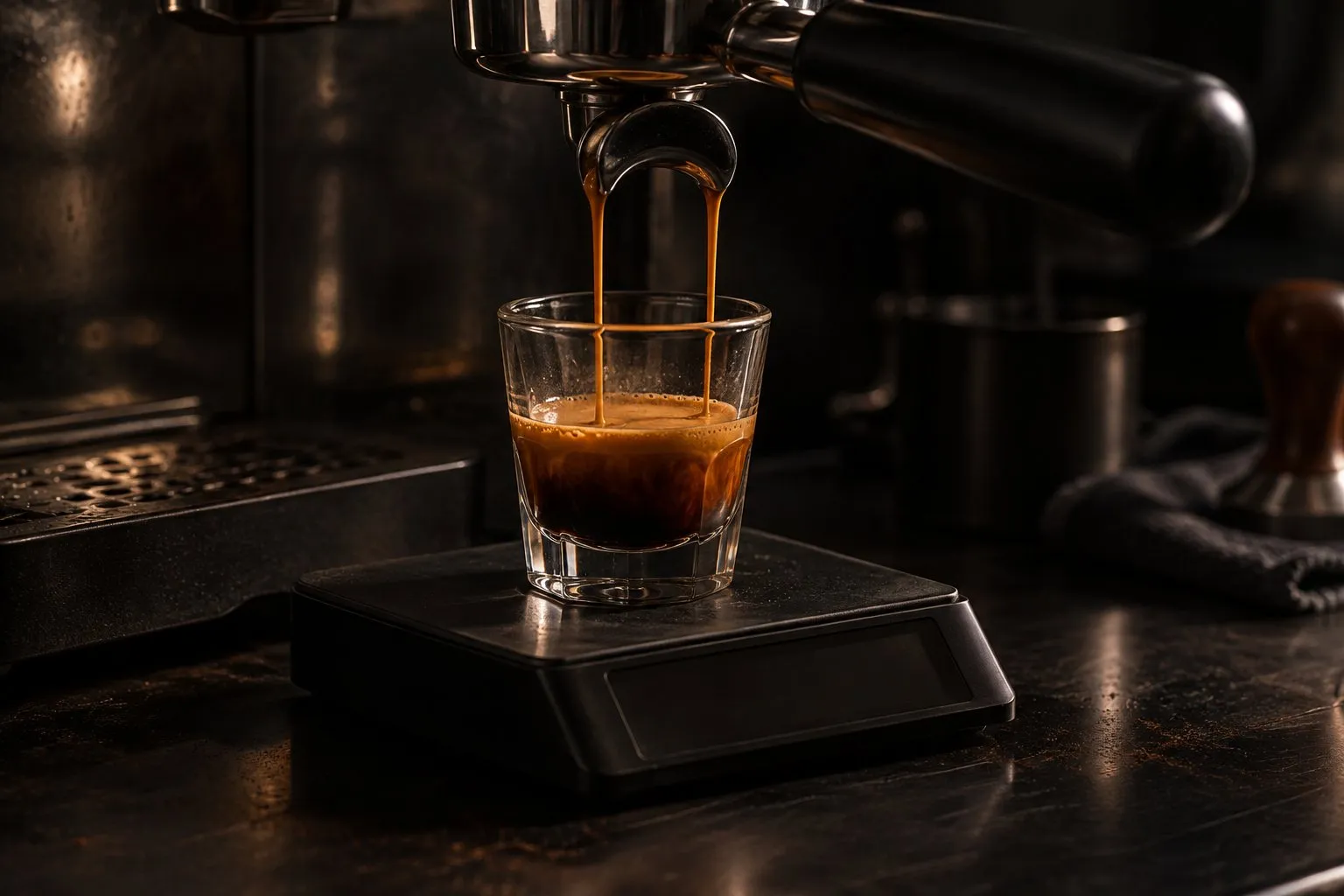 Dial in espressoHow to dial in espresso: fix the dose, set a yield, then change only the grind until time and taste line up. Steps, a symptom table and the exception to the rule.
- Do You Need a Dual Boiler at Home? It Depends on Drinks in a Row, Not on Shot QualityDo you need a dual boiler at home? Count the milk drinks you make in a row. One latte a morning doesn't need two boilers, and a thermoblock or single boiler will do.
semiautomaticespressomachine.com Editorial Team
Espresso gear & shot craft
We are the editorial team at semiautomaticespressomachine.com. We read maker spec sheets, manuals, standards and published research on espresso and turn them into plain-English buying advice, with sources on every page. We do not run lab tests, and we say so openly.
- Spec sheets & standards read
- Sources on every page
- No lab tests – stated openly
- Publisher details in the imprint