Espresso Machines With a Real Steam Wand: Sleeve, Plain Tip or Automatic?
A steam wand is a pipe that injects steam into milk, and the type decides how much you learn and how much you control. Our pick is the Breville Bambino Plus, because it steams automatically and still lets you take over by hand. If you want to learn the wand from day one, take the Bambino. For several milk drinks in a row, look at a dual boiler.
Disclosure: This page contains affiliate links (marked with *). If you buy through them, we earn a small commission at no extra cost to you. As an Amazon Associate I earn from qualifying purchases. Learn more
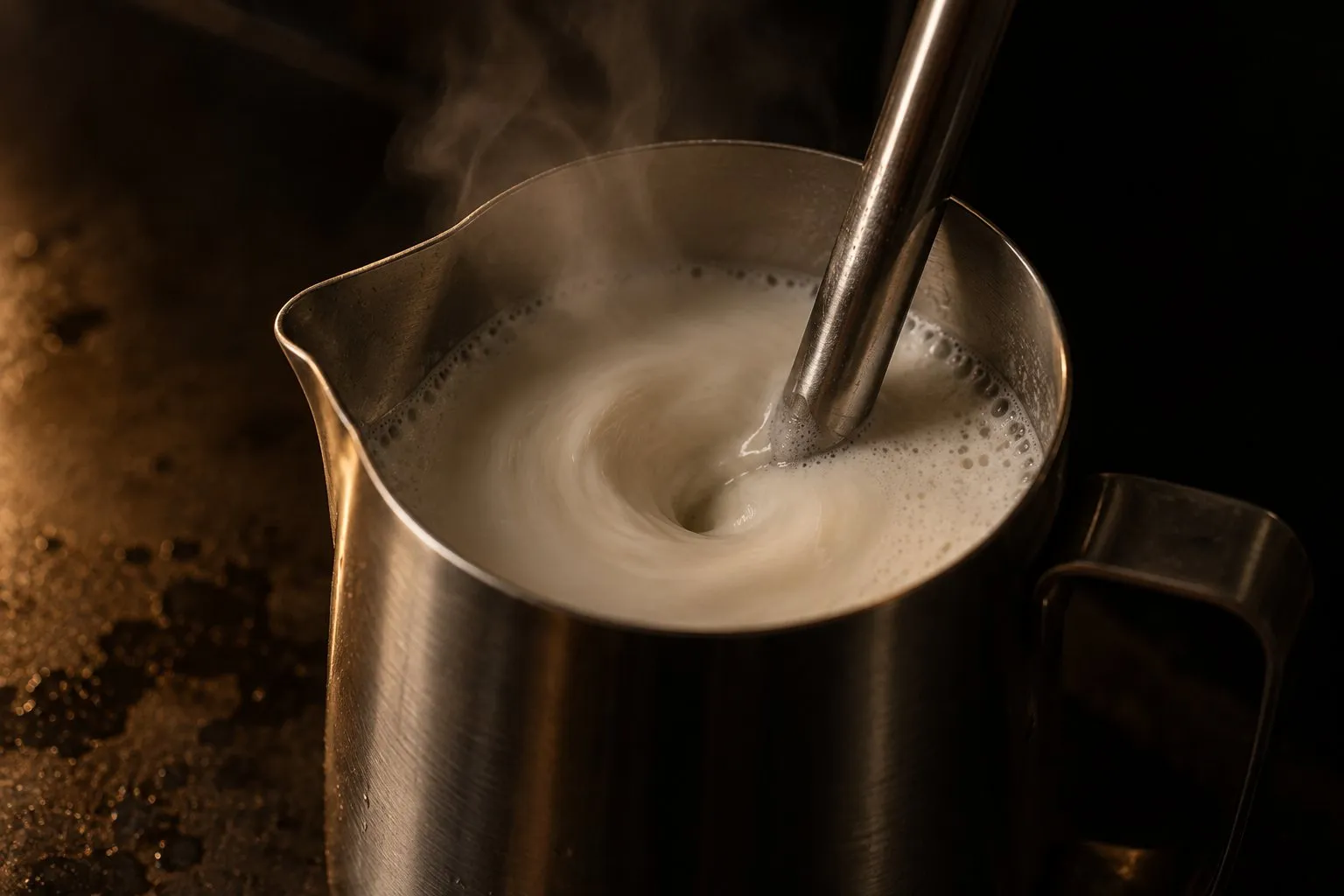
Get the Breville Bambino Plus if you drink milk most days and don't want to learn the wand first: it has 3 temperatures, 3 textures and a manual mode. Choose the Bambino or a Gaggia Classic if you want to steam by hand. Choose a dual boiler to brew and steam at once. Sleeve frothers are easy, but they give you less control.
On this page
Almost every machine on this site has something for milk, and the listings call it a wand, a frother or a steamer as if those were the same. They aren't. What you want depends on whether you like the job or just want the latte. We compare by spec sheet and manual, and we don't run our own trials.
Breville Bambino Plus
The small machine that textures milk by itself: 3 temperatures and 3 texture levels, or by hand.
Why here: Our pick for most milk drinkers: automatic texturing when you want it, a manual mode when you don't, and 266 °F steam per Breville.
Best for: Latte and flat white drinkers who do not want to learn the wand first
- Hands-free steam wand with 3 milk temperatures and 3 textures (Breville)
- Ready to start in 3 seconds (Breville)
- America's Test Kitchen's compact pick of 2 July 2025
- Needs a separate espresso-capable grinder
- Breville's product page does not mention PID, though its BES500 instruction book does
- Heating
- ThermoJet
- Pump, as stated
- 15 bar
- Brew pressure, as stated
- 9 bar
- Portafilter
- 54 mm
- PID
- Yes, per the instruction book
- Built-in grinder
- No
- Milk
- Hands-free or manual
- Price class
- Mid-range
Which machine for which milk routine?
If you want good milk now and may learn the wand later → Breville Bambino Plus
View(paid link to Amazon, opens in a new tab)Ad · paid link · check price & delivery on AmazonIf you want to learn to steam by hand on a small machine → Breville Bambino
View(paid link to Amazon, opens in a new tab)Ad · paid link · check price & delivery on AmazonIf you enjoy tinkering and mostly drink espresso → Gaggia Classic E24
View(paid link to Amazon, opens in a new tab)Ad · paid link · check price & delivery on AmazonIf you want automatic milk in a narrow body → De'Longhi Dedica Maestro Plus
View(paid link to Amazon, opens in a new tab)Ad · paid link · check price & delivery on AmazonIf you make several milk drinks in a row → Breville Dual Boiler
View(paid link to Amazon, opens in a new tab)Ad · paid link · check price & delivery on Amazon
The machines side by side
| Our pick: milk drinksBreville Bambino Plus | Our pick: with a separate grinderBreville Bambino | Our pick: straight espressoGaggia Classic E24 | De'Longhi Classic Signature | Our pick: dual boilerBreville Dual Boiler | |
|---|---|---|---|---|---|
| Heating | ThermoJet | ThermoJet | Single boiler, per retailers; brass (Gaggia) | Thermoblock | Dual boiler |
| Pump, as stated | 15 bar | 15 bar | 15 bar nominal (Gaggia) | 15 bar | 15 bar |
| Brew pressure, as stated | 9 bar | 9 bar | 9 bar OPV, per retailers | 9 bar | 9 bar |
| Portafilter | 54 mm | 54 mm | 58 mm (Gaggia) | – | 58 mm |
| PID | Yes, per the instruction book | Yes, per the instruction book | No, per retailers | – | Yes |
| Built-in grinder | No | No | No | No | No |
| Milk | Hands-free or manual | Manual wand | – | 2-setting steam wand | Steam wand |
| Price class | Mid-range | Mid-range | Mid-range | Mid-range | Premium |
| Best for | Latte and flat white drinkers who do not want to learn the wand first | Beginners who want to pick their grinder and upgrade it later | Straight espresso drinkers who enjoy learning and tinkering | Buyers who want a pressure gauge in front of them and stop-by-itself presets | Upgraders who make several milk drinks in a row |
| On Amazon(paid link to Amazon, opens in a new tab)Ad · paid link · check price & delivery on Amazon | On Amazon(paid link to Amazon, opens in a new tab)Ad · paid link · check price & delivery on Amazon | On Amazon(paid link to Amazon, opens in a new tab)Ad · paid link · check price & delivery on Amazon | On Amazon(paid link to Amazon, opens in a new tab)Ad · paid link · check price & delivery on Amazon | On Amazon(paid link to Amazon, opens in a new tab)Ad · paid link · check price & delivery on Amazon |
A blank row means we have no value, and it doesn't mean the feature is missing. The Gaggia values come from retailers.
Three kinds of wand
| Sleeve frother (Panarello style) | Plain wand with a tip | Automatic wand | |
|---|---|---|---|
| How air gets in | A side hole draws it in | You place the tip at the surface | The machine controls it |
| Learning curve | Short | Longest | Shortest |
| Control over texture | Low | High | The settings you get |
| Example here | Check the listing or manual | Bambino, Gaggia Classic | Bambino Plus, Dedica Maestro Plus |
Coffeeblog describes the sleeve as a sheath over the steam pipe with a hole on the side, easy to use but largely uncontrollable on texture. It describes the plain wand as a pipe with a steam tip, which takes practice and gives you full control. The word “frother” in a listing doesn't tell you which one you're getting. De'Longhi, for example, calls the wand on the Dedica EC680 a manual frother.
What about holes in the tip? Gaggia's manual speaks of the nozzle hole, in the singular, on the Classic. Breville's books speak of the holes in the tip. You'll see strong opinions about one-hole and four-hole tips, but we found no measurement that settles it, and it's not something to choose a machine by.
What you're after
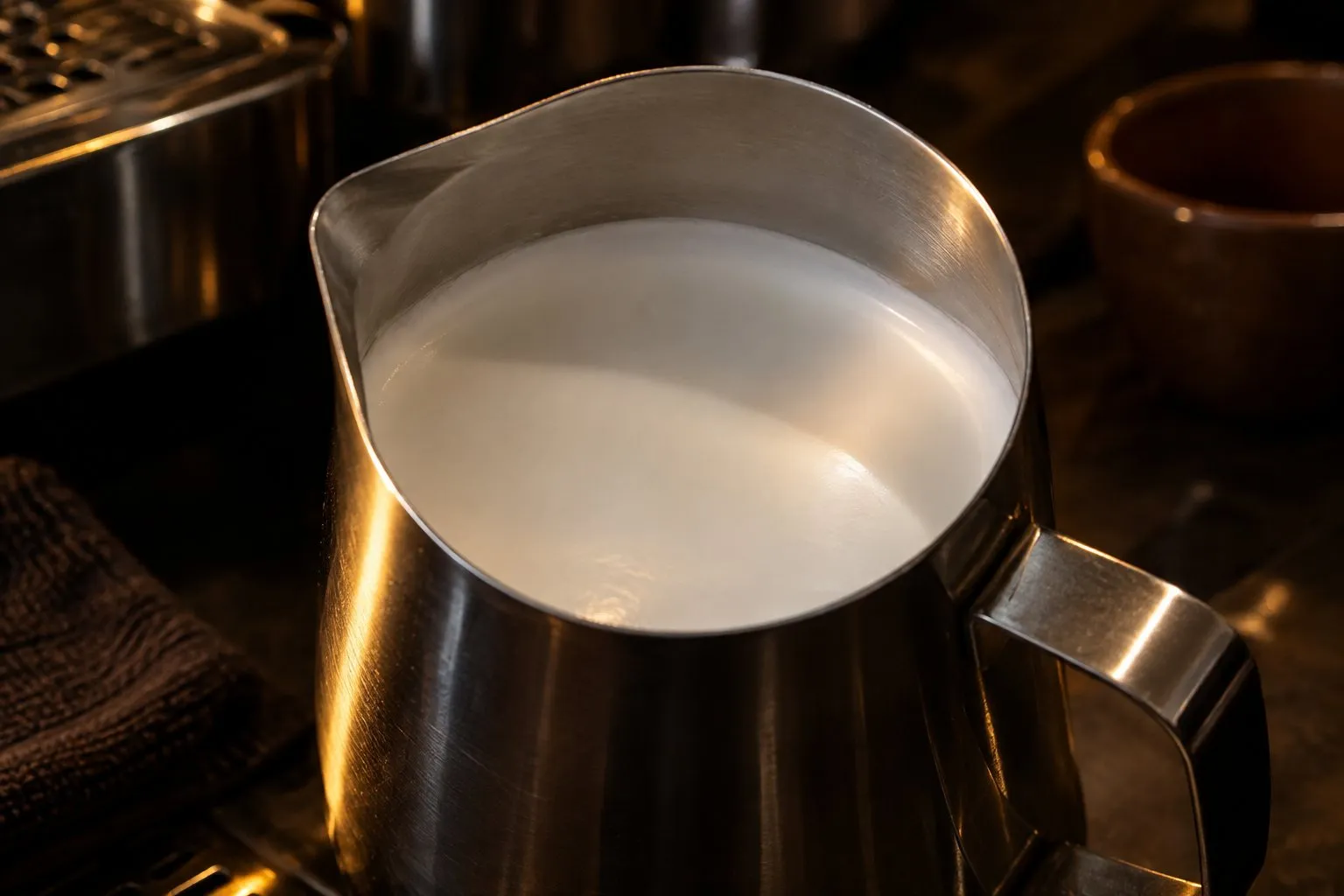
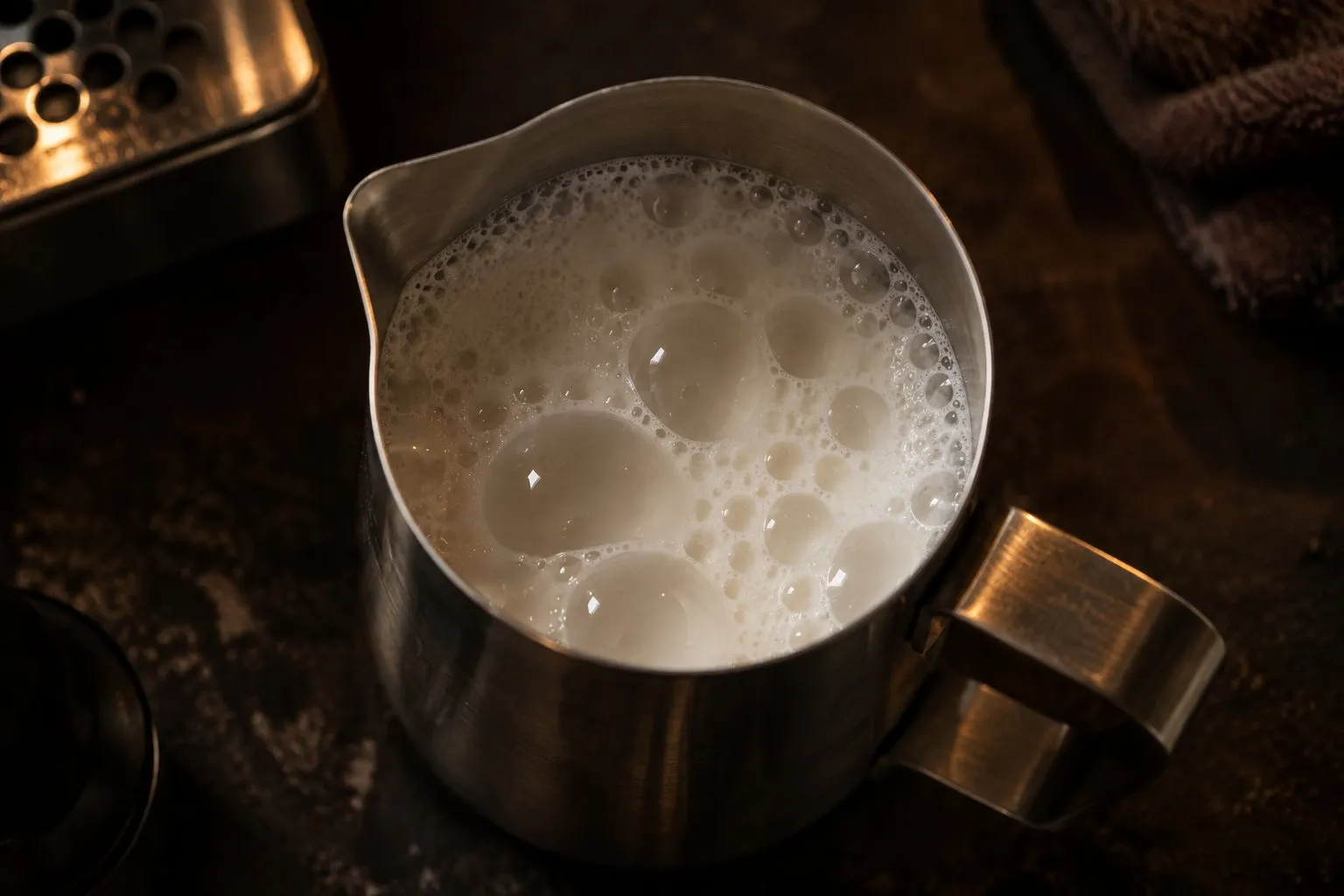
Glossy milk that pours like wet paint, with no visible bubbles. Any wand type can get you foam, and the difference is how much say you have over it. How to steam milk covers the technique on a plain wand.
The models in short
Breville Bambino Plus. The wand is hands-free: 3 temperatures and 3 textures, stopping by itself once the milk reaches temperature, per Breville. You can also texture by hand, and auto mode is turned off when you do. The manual says to use only the supplied stainless steel jug, and it warns that other containers may lead to dangerous conditions. America's Test Kitchen named it the compact pick in its roundup of July 2, 2025.
Breville Bambino. Same 54 mm portafilter, but the milk is entirely up to you, with a manual wand and no automatic mode. If you want to learn the skill, this is the small machine to do it on, and how to steam milk walks through it.
Gaggia Classic. The manual treats it like a small professional machine: open the steam knob, keep the nozzle in contact with the milk, and don't run steam for more than 60 seconds, or you can empty the boiler. After steaming, it tells you to run water through the group to lower the temperature, or the coffee may taste burnt. If you like that sort of thing, it's a good teacher. Retailers list it at 58 mm with a 9 bar OPV.
De'Longhi Classic Signature. De'Longhi lists a 2-setting steam wand on this thermoblock machine, along with a pressure gauge. It's for people who want a manual wand and a little guidance on the shot.
De'Longhi Dedica Maestro Plus. An automatic wand in a narrow body, with 3 milk temperatures and 3 textures. There's no grinder, and the portafilter size isn't on the product page.
Breville Dual Boiler. A separate steam boiler means you can brew and steam at once. That's the answer for two or three milk drinks in a row, and the price class goes up accordingly.
Budget listings like the Gevi 20 bar compact* are a different case. We hold only a seller's title for that one, so it isn't a recommendation, and you'd need the manual to learn which wand you get.

Same milk, different cups. The wand decides how much of that is up to you.
What to look for
- Wand type first. Decide whether you want to steam or just want steamed milk. That choice narrows the list more than any spec.
- Taking turns or not. A single boiler has to take turns between brewing and steaming, and a dual boiler can do both at once. Brewing wants about 200 °F and steaming about 266 °F, so one heater has to move between them. We give wait times only per model from a manual. Single vs dual boiler has the detail.
- Room to move. A wand needs space for a jug below and to the side. Check the height under the wand against your pitcher. Look for a pivot or a swivel in the maker's description.
- Cleaning tools. Breville's books use a pin and a tip spanner, and Gaggia's nozzle unscrews. Find out how the tip comes off before you need to know.
- Steam number. The 266 °F for the Bambino Plus is Breville's figure. Most makers don't print one, so don't rank machines on it.
Keeping the wand working
This is where most wand trouble starts, and the manuals agree on the basics: wipe it and purge it after every jug of milk.
| Maker and document | After each use | If it's blocked |
|---|---|---|
| Breville, Barista Express book | Wipe with a damp cloth, then purge briefly over the tray | Dial on STANDBY, power off, cool, clear with the pin; if needed, remove the tip with the spanner, soak in hot water and clear again |
| Breville, Bambino Plus book | Wipe, then lower the wand so it purges itself | Purge manually; if needed, unscrew the tip with the tool and clear the holes, then purge after refitting |
| Gaggia, Classic manual | Wipe with a damp cloth, open the knob for 1 or 2 seconds | Unscrew the nozzle and wash under running water |
| Rancilio, Silvia manual | Wipe, then purge steam for about 2 seconds | Clean encrusted nozzles; check the tip if steam is irregular |
The Bambino Plus has a detail worth knowing. If you leave the wand raised, it doesn't purge, and Breville says that could result in a blockage. If it detects a block while texturing, it stops, and the milk lights flash until you've cleared it.
When to stop and call. Your manual's steps cover a blocked tip, and that's where they end. If the wand still won't give steam after you've cleared it and descaled as your manual asks, if it leaks at the joint, or if the knob or lever feels wrong, contact the maker or a qualified technician. Rancilio's manual says to contact customer service when in doubt. Don't open the housing or modify the wand yourself. How to clean an espresso machine covers the routine care.
Common mistakes
- Buying the 20 bar number and ignoring the wand. “The 15 or 20 bar on the box is what the pump can reach. Espresso is brewed at about 9 bar.” It says nothing about your milk.
- Skipping the purge. Milk dried inside the tip is the easiest block to avoid.
- Choosing automatic, then wanting manual. The Bambino Plus does both. Check that any other machine you're looking at does too.
- Heating too much milk. Gaggia's manual says to froth only what you need and not reuse the rest for a cappuccino.
Find your machine
Bottom line
If milk matters more than the craft of steaming, take the Breville Bambino Plus*. If you want to learn, the Bambino* does it on a smaller scale. And if you pour milk drinks for a crowd, a dual boiler earns its place. Machines for lattes and cappuccino goes further on milk drinks, and the start page sorts everything by what you drink.
Asked at the bar
What is the difference between a sleeve frother and a plain steam wand?
A Panarello-style sleeve covers the steam pipe and has a side hole that draws air into the milk. That makes foam easy, but the texture is largely out of your hands. A plain wand is a steam pipe with a tip on the end, so you add the air yourself by placing the tip. It takes practice, and it gives you more control.
Can you make microfoam with an automatic steam wand?
That's what the makers state. Breville says the Bambino Plus wand makes microfoam for you, with 3 temperatures and 3 textures. De'Longhi lists 3 milk temperatures and latte art, fine and dense textures on the Dedica Maestro Plus. We haven't compared the results in a cup. Both still leave you to choose the setting and pour the milk.
Why does my steam wand have no steam?
Run through Breville's list: the machine may not be hot enough yet, the tank may be empty or loose, it may need descaling, the tip may be blocked, or the dial may not be fully on steam. Rancilio's manual also says to check whether the tip is obstructed. If it's none of these, contact the maker's support.
How do I unclog a steam wand?
Start with the manual. Breville has you purge first, then switch off and let the machine cool, clear the holes with the pin on its tool, and soak the removed tip in hot water if it stays blocked. Gaggia has you unscrew the nozzle and wash it under running water. Turn off the steam before you touch the tip.
Can I brew espresso and steam milk at the same time?
On a dual boiler, yes. A single boiler has to take turns between brewing and steaming, and a thermoblock or thermocoil machine usually works one job at a time too. Check the manual for the machine you're looking at. If you make one or two milk drinks at a time, taking turns is rarely a real problem.
Where this comes from
- Breville: BES500 Bambino Plus product page
- Breville: Bambino Plus BES500 instruction book (US and Canada)
- Breville: Barista Express BES870 instruction book (US and Canada)
- Gaggia: Classic user manual (copy hosted by Stark Insider)
- Rancilio: Silvia user manual (copy hosted by Seattle Coffee Gear)
- Coffeeblog: the different kinds of coffee machine milk frothers (2023)
Next round
- Steam milkHow to steam milk at home: purge, stretch 5 to 10 seconds, spin, stop near 140 to 145 °F. Steps, the temperatures sources disagree on, and fixes for big bubbles.
- MicrofoamMicrofoam is steamed milk with bubbles too small to see. How it differs from froth, how hot to steam it, why you get big bubbles, and which wands can make it.
 For lattes and cappuccinoChoosing an espresso machine for cappuccino and lattes comes down to wand and routine. Bambino Plus, Dual Boiler and Silvia compared by spec sheet and manual.
- Milk pitcherWhich milk frothing pitcher to buy: size by how much milk you steam, what makers say about jug shape and fill level, and when you should keep the jug in your box.
- Heating systems comparedHeat exchanger vs dual boiler, single boiler and thermoblock: how each heats, what it does to your morning, and why listing labels can't always be trusted.
 Bambino PlusBreville Bambino Plus BES500: how the hands-free steam wand works, what the manual says about the jug, the specs from Breville, and who should skip it.
semiautomaticespressomachine.com Editorial Team
Espresso gear & shot craft
We are the editorial team at semiautomaticespressomachine.com. We read maker spec sheets, manuals, standards and published research on espresso and turn them into plain-English buying advice, with sources on every page. We do not run lab tests, and we say so openly.
- Spec sheets & standards read
- Sources on every page
- No lab tests – stated openly
- Publisher details in the imprint