Microfoam: What It Is, How It Differs From Froth, and Which Wand Makes It
Microfoam is steamed milk with bubbles too small to see, so it looks glossy and pours like wet paint. Froth has visible bubbles and sits on top of the drink. You get microfoam by letting in a little air early, then spinning the milk to fold it in, on any wand with enough steam.
Disclosure: This page contains affiliate links (marked with *). If you buy through them, we earn a small commission at no extra cost to you. As an Amazon Associate I earn from qualifying purchases. Learn more
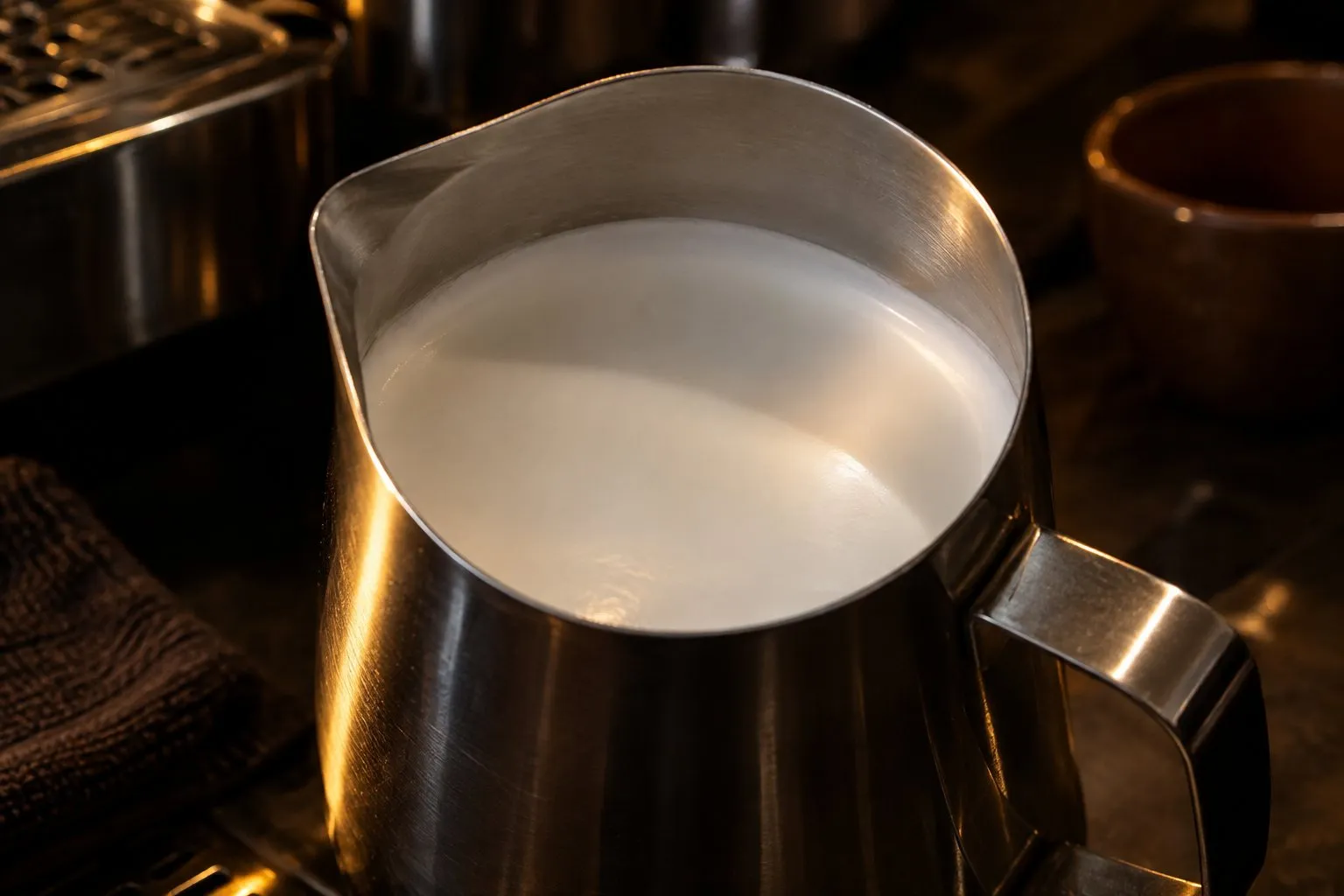
Microfoam is milk aerated into very fine, even bubbles. It looks glossy, pours smoothly and mixes with espresso, which makes latte art possible. Froth, or dry foam, has visible bubbles and separates from the milk. A wand with enough steam can make it: let in air briefly, then spin the milk. Sources put the finished milk anywhere from 131 to 158 °F.
On this page
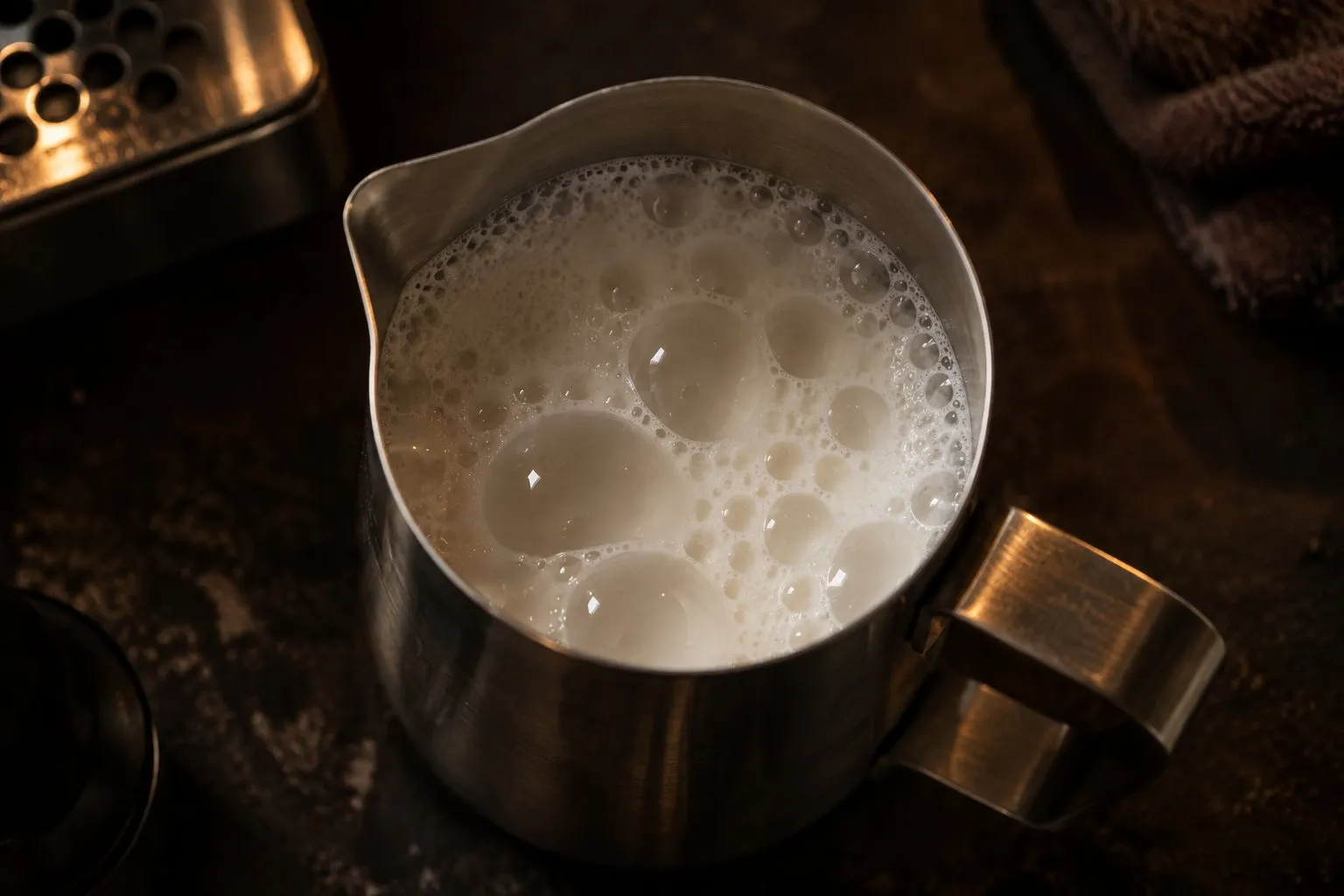
If your milk looks like wet paint in the jug, you have microfoam. If it looks like the head on a bubble bath, you have froth. Everything else here is about getting from one to the other, and what the sources do and don't agree on. For the full technique, go to how to steam milk. This page covers what you are aiming for and why it goes wrong.
Microfoam and froth, side by side
| Microfoam | Froth (dry foam) | |
|---|---|---|
| Bubbles | Too small to see | Visibly large |
| Surface | Glossy, like wet paint | Bubbles you can see |
| Behavior | Stays mixed with the milk for a while, then slowly separates | Floats on top |
| Typical use | Latte, flat white, latte art | Traditional dry cappuccino, per Wikipedia |
Even the cappuccino line is a matter of tradition. Wikipedia describes a traditional cappuccino with light dry foam, while Italy's INEI asks for a tight mesh with very fine or no visible bubbles. Two authorities, two different foams, both called cappuccino.
How it forms
There are two jobs, and they happen in order.
Air first, then spin
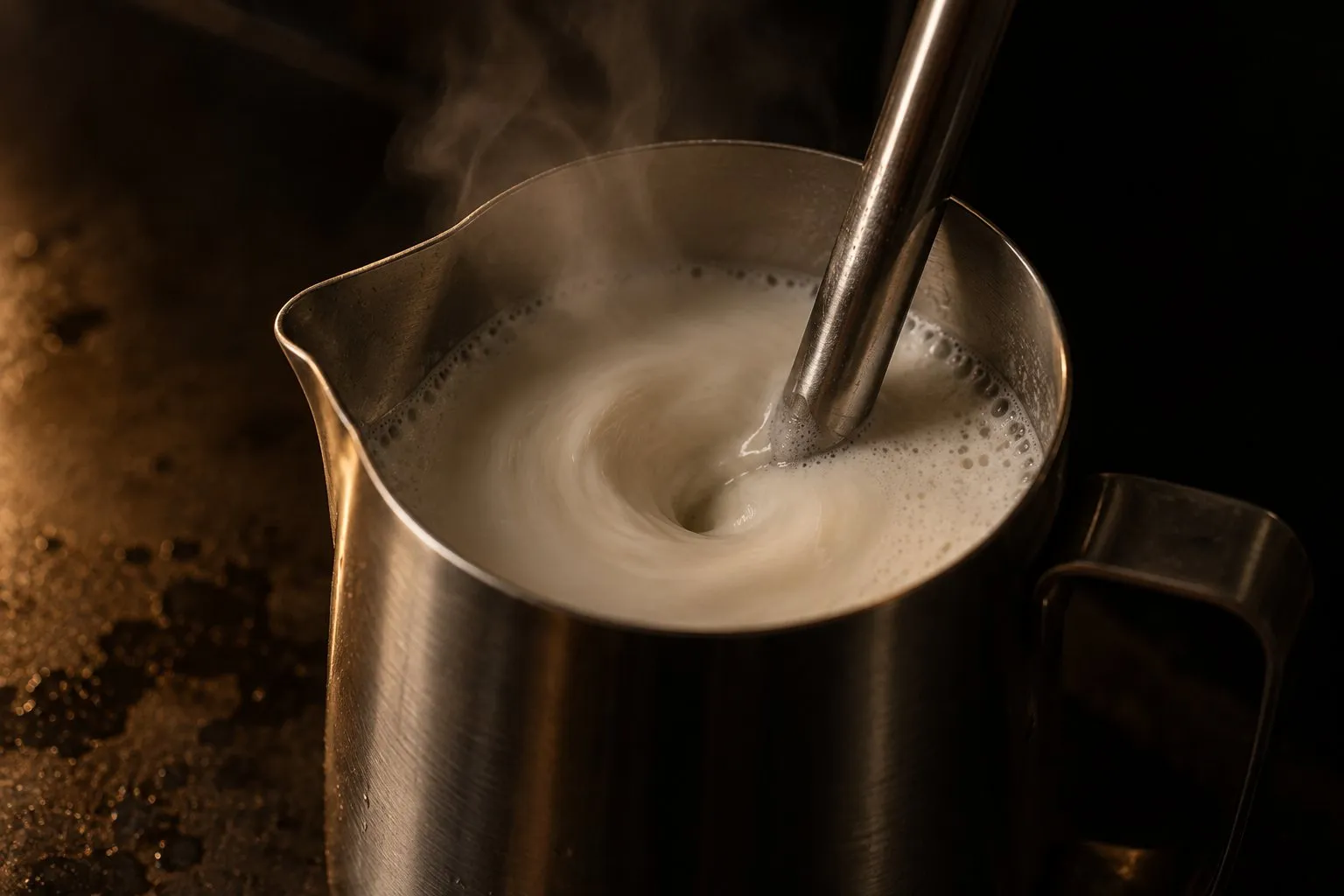
Breville's Bambino book has you start with the tip just under the surface, near the side of the jug, until the milk spins. Then you lower the jug slowly so the tip reaches the surface and takes in air. Once you have the volume you want, lift the jug so the tip goes under again, and keep the milk spinning. Wikipedia puts the air stage at under about 10 seconds. The spinning then mixes the foam through the milk.
Breville's rule is texture first, then temperature, so get the air in early and spend the rest of the time spinning. If bubbles stay on top, swirl the jug and tap it on the counter, as Breville advises, and let in less air next time. A weak jet makes all of this harder, and Breville's book lists a blocked wand as one cause of small steam, so clean the tip before you blame your technique.
How hot should it be?
The numbers vary more than you would expect:
| Source | Target | Note |
|---|---|---|
| INEI, for Certified Italian Cappuccino | About 55 °C | 100 ml of cold milk grows to about 125 ml |
| Breville recipes | About 140 to 150 °F (60 to 65 °C) | The jug becomes too hot to touch |
| Wikipedia | About 158 °F (70 °C) | Scalded above 180 °F (82 °C), and microfoam no longer forms |
| Breville, non-dairy | Below about 130 °F (55 °C) | To prevent separation or curdling |
We found no authority that settles this. Breville's range is a good place to start, and you can taste your way cooler or hotter from there. The milk matters too. INEI requires fresh cow's milk with at least 3.2% protein and 3.5% fat for its cappuccino, and Wikipedia reports that whole milk gives smaller, more even bubbles than skim. In Wikipedia's summary, proteins hold the bubbles up while fat competes with them. Breville warns that milk alternatives texture differently.

Why it matters in the cup
Microfoam pours as part of the milk, so it mixes with the espresso and can carry a pattern on top. That's why latte art needs it. How much you want depends on the drink: a flat white has less milk than a latte and a thin layer of microfoam, while Breville tops its latte with about ½ inch.
Which wand makes it?
You need steam with some force behind it and a way to control the tip. Breville lists 266 °F steam for the Bambino Plus, the same steam temperature Serious Eats gives in general. Serious Eats, in a roundup copy dated May 2, 2023, sets its bar at a wand powerful enough to create microfoam, and comments on individual machines:
| Machine | What the source says |
|---|---|
| Breville Bambino | Breville: a manual wand, made to turn milk into smooth microfoam |
| Breville Bambino Plus | Breville: automatic, with 3 temperatures and 3 textures. Serious Eats: silky foam, a step behind a skilled hand |
| Breville Barista Express | Breville: a wand made to turn milk into smooth microfoam |
| Gaggia Classic Pro | Serious Eats: slow to make steam, and the pressure isn't very strong |
| Breville Barista Express Impress | Serious Eats: enough pressure for good-quality microfoam |
| Breville Dual Boiler | Serious Eats: wished for stronger steam |
| Rancilio Silvia Pro X | Serious Eats: excellent microfoam |
That is one roundup's opinion from 2023 plus maker statements, and we ran no comparison of our own. It's still useful for one conclusion: price class doesn't predict the wand, since the Breville Dual Boiler drew a complaint about steam power in the same roundup. On a machine with a single heating element, Breville says to brew first and then texture the milk.
If you want to skip the learning curve, the automatic wand is the short route. If you'd rather learn the skill, a manual wand and a jug that suits your usual amount of milk will get you there. Our milk pitcher guide covers sizes, and a basic stainless pitcher* is enough to begin with. Our steam wand page compares the wands.
Breville Bambino Plus
The small machine that textures milk by itself: 3 temperatures and 3 texture levels, or by hand.
Why here: It textures milk by itself, with 3 temperatures and 3 texture levels according to Breville, and you can still steam by hand when you want to learn.
Best for: Latte and flat white drinkers who do not want to learn the wand first
- Hands-free steam wand with 3 milk temperatures and 3 textures (Breville)
- Ready to start in 3 seconds (Breville)
- America's Test Kitchen's compact pick of 2 July 2025
- Needs a separate espresso-capable grinder
- Breville's product page does not mention PID, though its BES500 instruction book does
- Heating
- ThermoJet
- Pump, as stated
- 15 bar
- Brew pressure, as stated
- 9 bar
- Portafilter
- 54 mm
- PID
- Yes, per the instruction book
- Built-in grinder
- No
- Milk
- Hands-free or manual
- Price class
- Mid-range
Asked at the bar
What is the difference between microfoam and foam?
Bubble size and how the milk behaves. Microfoam has bubbles too small to see, stays mixed with the milk for a while and pours like wet paint. Dry foam, also called macrofoam or froth, has visible bubbles and floats on top. Wikipedia notes that microfoam is unstable and slowly separates into dry foam over liquid milk.
What temperature should microfoam be?
It depends on the source. Breville aims for about 140 to 150 °F (60 to 65 °C). Italy's INEI specifies about 55 °C for cappuccino. Wikipedia gives about 158 °F (70 °C) and says milk above 180 °F (82 °C) is scalded. Start with Breville's range, and stop when the jug feels too hot to touch.
Why do I get big bubbles instead of microfoam?
Usually too much air. Keep the tip at the surface only briefly, then move it just under the surface so the milk spins. Wikipedia puts the air stage at under about 10 seconds. If large bubbles remain, tap the jug on the counter and swirl it, as Breville advises, and let in less air next time.
Can a frother make microfoam?
Sometimes, but it's harder. Wikipedia lists whisks, hand pumps, electric frothers and French presses as alternatives, says they are rarely as effective as a steam wand, and notes that a French press can come close with practice. We found no measured comparison, so treat that as a general guide and not a result.
Can I make microfoam with non-dairy milk?
You can try, but expect it to behave differently. Breville's Bambino Plus book says different milks and milk alternatives texture differently, and its recipes say to keep non-dairy milk below about 130 °F (55 °C) to prevent separation or curdling. Adjust the foam level for each type of milk, and change one thing at a time.
Where this comes from
Next round
- Steam milkHow to steam milk at home: purge, stretch 5 to 10 seconds, spin, stop near 140 to 145 °F. Steps, the temperatures sources disagree on, and fixes for big bubbles.
- Milk pitcherWhich milk frothing pitcher to buy: size by how much milk you steam, what makers say about jug shape and fill level, and when you should keep the jug in your box.
 Flat white vs latteFlat white vs latte: less milk and a thin layer of microfoam against a larger, milkier drink. What sources agree on, where they differ, and how to steam for each.
 Bambino PlusBreville Bambino Plus BES500: how the hands-free steam wand works, what the manual says about the jug, the specs from Breville, and who should skip it.
- Dual boilerWhat a dual boiler does, when it earns its price, and how to read budget listings that use the word. One confirmed pick, plus what we could not verify.
semiautomaticespressomachine.com Editorial Team
Espresso gear & shot craft
We are the editorial team at semiautomaticespressomachine.com. We read maker spec sheets, manuals, standards and published research on espresso and turn them into plain-English buying advice, with sources on every page. We do not run lab tests, and we say so openly.
- Spec sheets & standards read
- Sources on every page
- No lab tests – stated openly
- Publisher details in the imprint