Breville Bambino: Compact, 54 mm, 3-Second Heat-Up, No Grinder
The Breville Bambino is our pick if you want a small machine and your own choice of grinder. Breville lists a 54 mm portafilter, a ThermoJet heater that's ready in 3 seconds, and a manual steam wand. There's no grinder in the box, and you steam milk by hand.
Disclosure: This page contains affiliate links (marked with *). If you buy through them, we earn a small commission at no extra cost to you. As an Amazon Associate I earn from qualifying purchases. Learn more
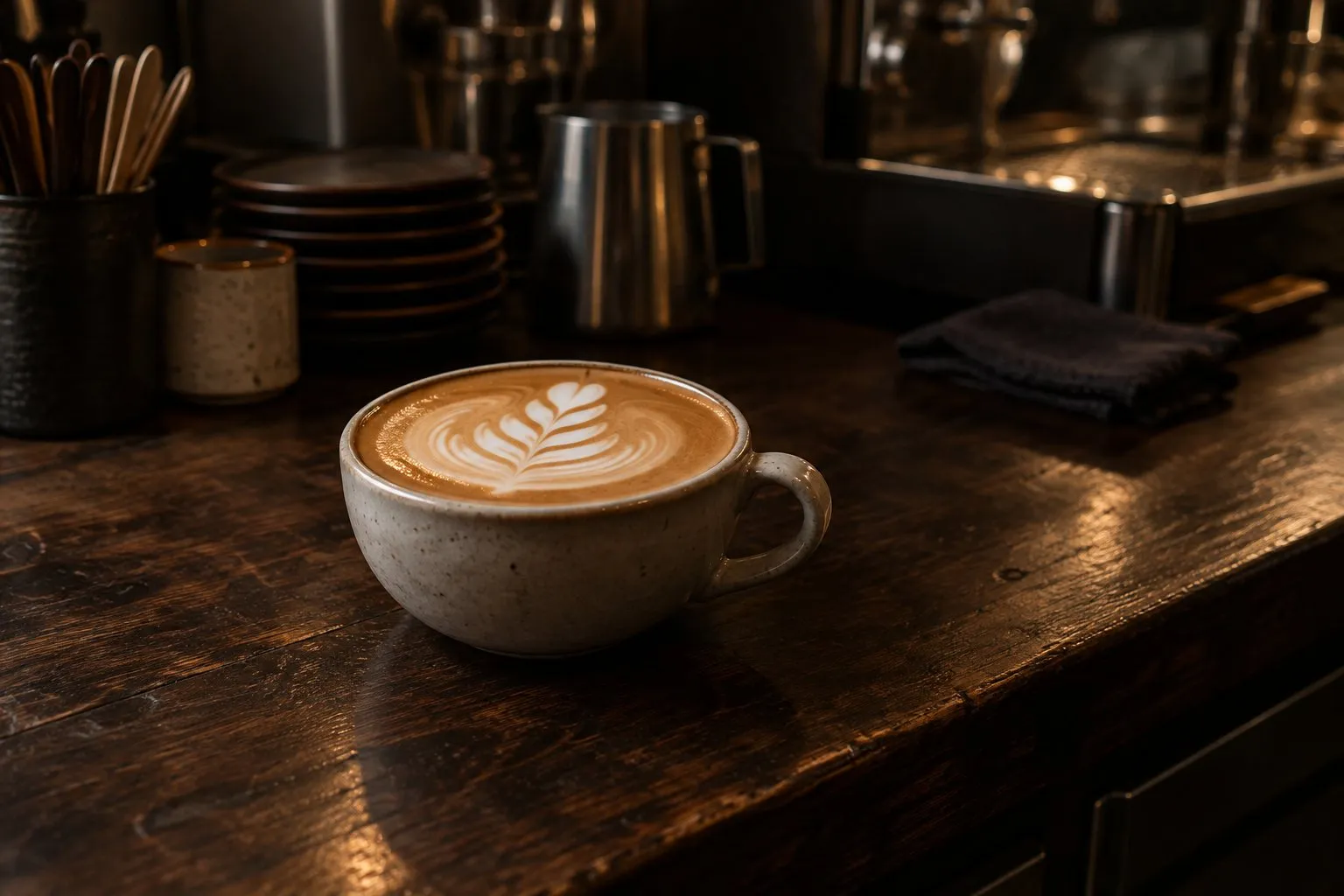
Buy the Breville Bambino if you want a small, fast-heating machine and plan to pick your own grinder and upgrade it later. Skip it if you want one box with a grinder inside, or if you drink milk daily and don't want to learn the wand. The Barista Express and Bambino Plus cover those two cases.
On this page
The Bambino gives up the grinder and the milk automation, and it keeps what's hard to change later: a proper portafilter and baskets that respond to your grind.
For everything below we used Breville's US product page and its instruction book. We compare by spec sheet and don't run tests of our own.
Who it suits, and who it doesn't
- People who want to choose their grinder now and replace it later
- Small counters: Breville prints 11.9 x 6.1 x 13.5 in
- Anyone who wants to drink a shot soon after switching on
- Weighers: you can stop a shot by hand at your target weight
- No grinder in the box, so budget for one first
- You learn the steam wand yourself, because there's no automatic setting
- People who want one box should look at the Barista Express
Technical data
| Value | Bambino | Source |
|---|---|---|
| Heating | ThermoJet, ready to start in 3 seconds | Product page |
| Pressure | 15 bar pump, 9 bar extraction after low-pressure pre-infusion | Product page |
| Portafilter | 54 mm, with a 54 mm tamper | Product page, manual |
| Dose | 18 g; 2 cup basket designed for 16 to 19 g, 1 cup for 8 to 11 g | Product page, manual |
| Shot control | 1 and 2 cup presets, about 1 and 2 oz (30 and 60 ml), programmable | Manual |
| Milk | Manual steam wand | Product page |
| Baskets | Single wall and dual wall, 1 and 2 cup | Product page |
| In the box | Milk jug, tamper, steam tip cleaning tool, descaling powder | Product page |
| Size | 11.9 x 6.1 x 13.5 in, labeled W x D x H, a label that looks mixed up | Product page |
| PID | “Electronic PID temperature control” | US manual; the product page doesn't mention it |
The pressure line is the useful one. The 15 or 20 bar on the box is what the pump can reach. Espresso is brewed at about 9 bar, and Breville prints both numbers side by side. Breville's product page doesn't mention PID, while the US instruction book BES450_USCM_IB_M26 lists it.
The Bambino in brushed steel* is the listing we link here. Read the model number on any other listing before you buy.
Daily use, from the manual
- Baskets. Use single wall baskets with fresh-ground coffee and dual wall baskets with pre-ground. Only the single wall ones respond to your grind, dose and tamp, so start there once you own a grinder.
- Before the shot. Run a short flow through the group head to stabilize the temperature, as the manual asks. Then lock in the portafilter.
- The shot. Espresso should start to flow after 8 to 12 seconds, per the manual. Under 7 seconds points to a small dose or a coarse grind, and no real flow after 12 points to a grind that's too fine.
- Milk. Put the tip about ¾ inch below the surface, near the right side of the jug, and press Steam. Then lower the jug to add air. The full routine is in how to steam milk.
- Purge. Wipe the wand, point it at the drip tray, and hold the Steam button for 3 seconds to run the purge. The manual warns that steam takes a few seconds to stop after you press the button, so keep your hands clear.
- Descaling. The 2 Cup button flashes when the machine wants a clean and descale. You'll need a container that holds 68 fl oz (2 L) under the group and wand.
Stop by weight, not by preset
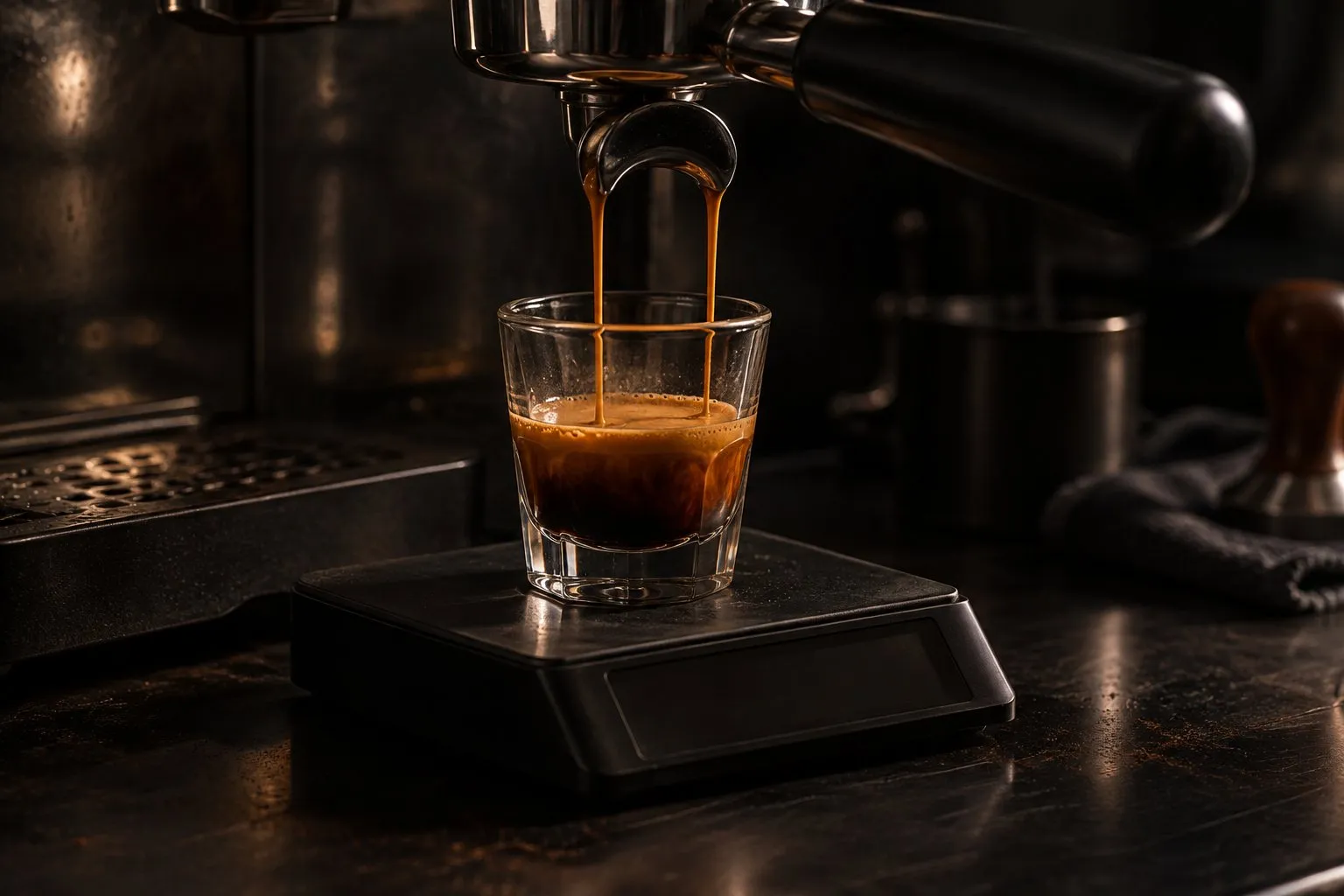
The presets run on volume, about 1 oz and 2 oz, and foam counts toward that. Breville's own dial-in guide suggests weighing the drink for a truer picture than volume gives. So start a 2 Cup shot, watch the scale, and press the button again at your target weight. The manual says that press stops the extraction immediately.
Grinder and tools
The grinder is the bigger decision, and it's the reason to buy this machine over a one-box model. It needs to go fine and move in small steps. Our grinder guide has the choices. The Smart Grinder Pro* has a cradle for 50 to 54 mm portafilters (Breville), and the Baratza Encore ESP* suits anyone who also brews filter coffee.
A scale comes next. The espresso scale page sorts those, and the Maestri House S2* is one option. The supplied tamper works fine to begin with. If you want an upgrade, our tamper page explains why a 54 mm machine can take a 53.3 mm tamper such as the Normcore V4*.
The wand is the part you practice
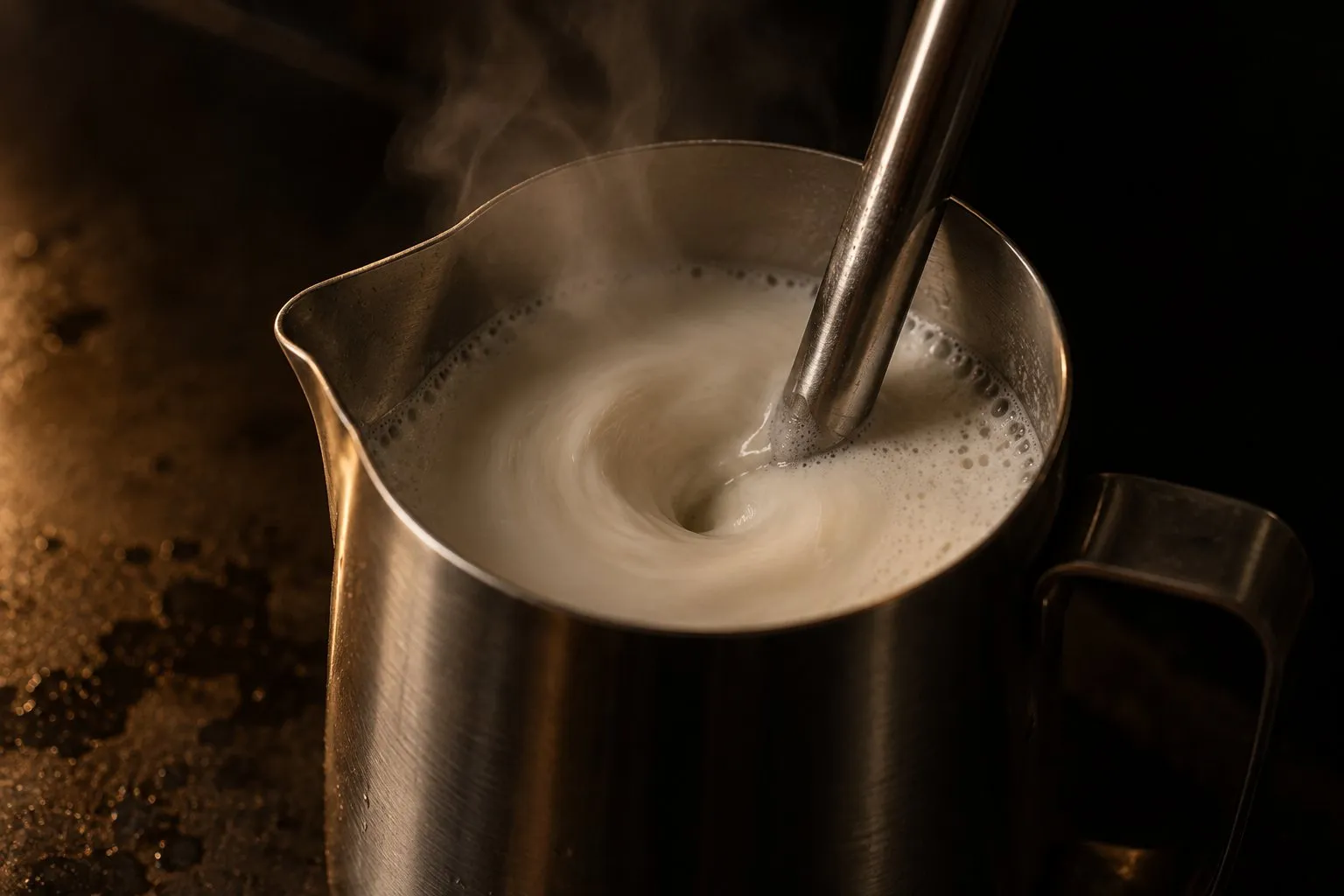
Breville's instruction book describes two phases: first the tip stays near the surface to add air, then it goes deeper to spin the milk until the jug is hot to touch. There's no automatic setting to fall back on. If that sounds like a chore every morning, the Plus is worth the step up.
What others report
America's Test Kitchen doesn't review the plain Bambino separately. It named the Bambino Plus its best compact model on July 2, 2025, and it describes that machine as basically the Barista Express without a grinder. We don't pass on buyer reviews.
Alternatives
- Want the wand done for you? The Bambino Plus* has 3 milk temperatures and 3 texture levels (Breville). Its own page has the details.
- Want the grinder included? The Breville Barista Express puts it in one body. Bambino or Barista Express goes through that decision. At full price the separate pair is cheaper; on sale they cost the same. Check both on the day.
- Drink straight espresso and like tinkering? The Gaggia Classic* has a 58 mm portafilter, per Gaggia, and our Gaggia page covers it.
- Comparing the whole brand? Our Breville overview lines up the range, and the start page sorts every machine by what you drink.
Asked at the bar
What size is the Breville Bambino portafilter?
54 mm, according to Breville's product page, and the supplied tamper is 54 mm as well. Breville designs the 1 cup basket for 8 to 11 g and the 2 cup basket for 16 to 19 g, per the instruction book. Check fit notes when you buy a third-party tamper, because some are sold at 53.3 mm for these baskets.
Does the Breville Bambino need a separate grinder?
Yes, unless you brew pre-ground coffee in the dual wall baskets. Breville reserves the single wall baskets for fresh grinding, and those are the ones that let your grind, dose and tamp change the shot. You need an espresso-capable grinder that moves in small steps. Our grinder guide sets out the options.
What is the difference between the Bambino and the Bambino Plus?
Mainly the milk. The Bambino has a manual wand. The Bambino Plus adds an automatic wand with 3 temperatures and 3 texture levels, and you can still steam by hand. Both have a 54 mm portafilter, an 18 g dose and a 3-second start, per Breville. The Plus is deeper and slightly taller.
Does the Bambino stop the shot by itself?
On the presets, yes. Breville's manual says a short press of the 1 Cup or 2 Cup button runs about 1 oz (30 ml) or 2 oz (60 ml) and stops by itself, and you can reprogram both. Pressing the button again during a shot stops it right away, which is how you stop by weight on a scale.
Where this comes from
Next round
 BrevilleEvery Breville semi-automatic espresso machine we cover, from Bambino to Dual Boiler: how they differ, what Breville states and omits, and which one to pick.
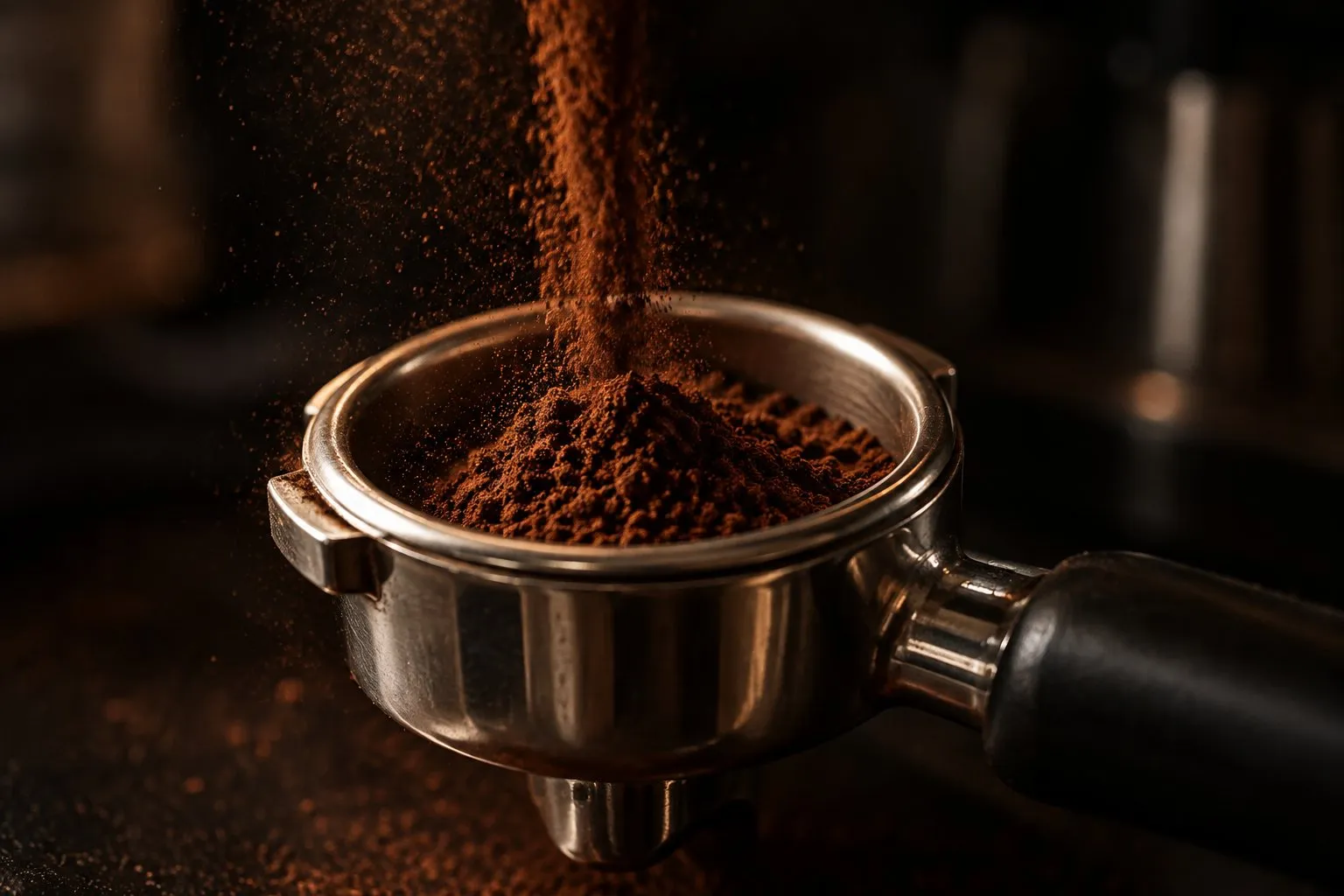 Bambino vs Barista ExpressBambino or Barista Express? Same 54 mm portafilter and 9 bar extraction, so the choice comes down to the grinder, the counter and how you plan to upgrade.
- Espresso grindersWhat makes a grinder suitable for espresso: burrs, small steps and clean dosing. One clear pick, the alternatives sorted by routine, and honest notes on the data.
- Bambino PlusBreville Bambino Plus BES500: how the hands-free steam wand works, what the manual says about the jug, the specs from Breville, and who should skip it.
- Steam milkHow to steam milk at home: purge, stretch 5 to 10 seconds, spin, stop near 140 to 145 °F. Steps, the temperatures sources disagree on, and fixes for big bubbles.
semiautomaticespressomachine.com Editorial Team
Espresso gear & shot craft
We are the editorial team at semiautomaticespressomachine.com. We read maker spec sheets, manuals, standards and published research on espresso and turn them into plain-English buying advice, with sources on every page. We do not run lab tests, and we say so openly.
- Spec sheets & standards read
- Sources on every page
- No lab tests – stated openly
- Publisher details in the imprint