Breville Bambino vs Barista Express: With or Without a Grinder
Take the Bambino with a separate grinder if you weigh your shots and expect to get picky, because the grinder is where that road leads. Take the Barista Express if you want one box and one decision. Both use a 54 mm portafilter, an 18 g dose and 9 bar extraction, so the shot recipe is not what separates them.
Disclosure: This page contains affiliate links (marked with *). If you buy through them, we earn a small commission at no extra cost to you. As an Amazon Associate I earn from qualifying purchases. Learn more
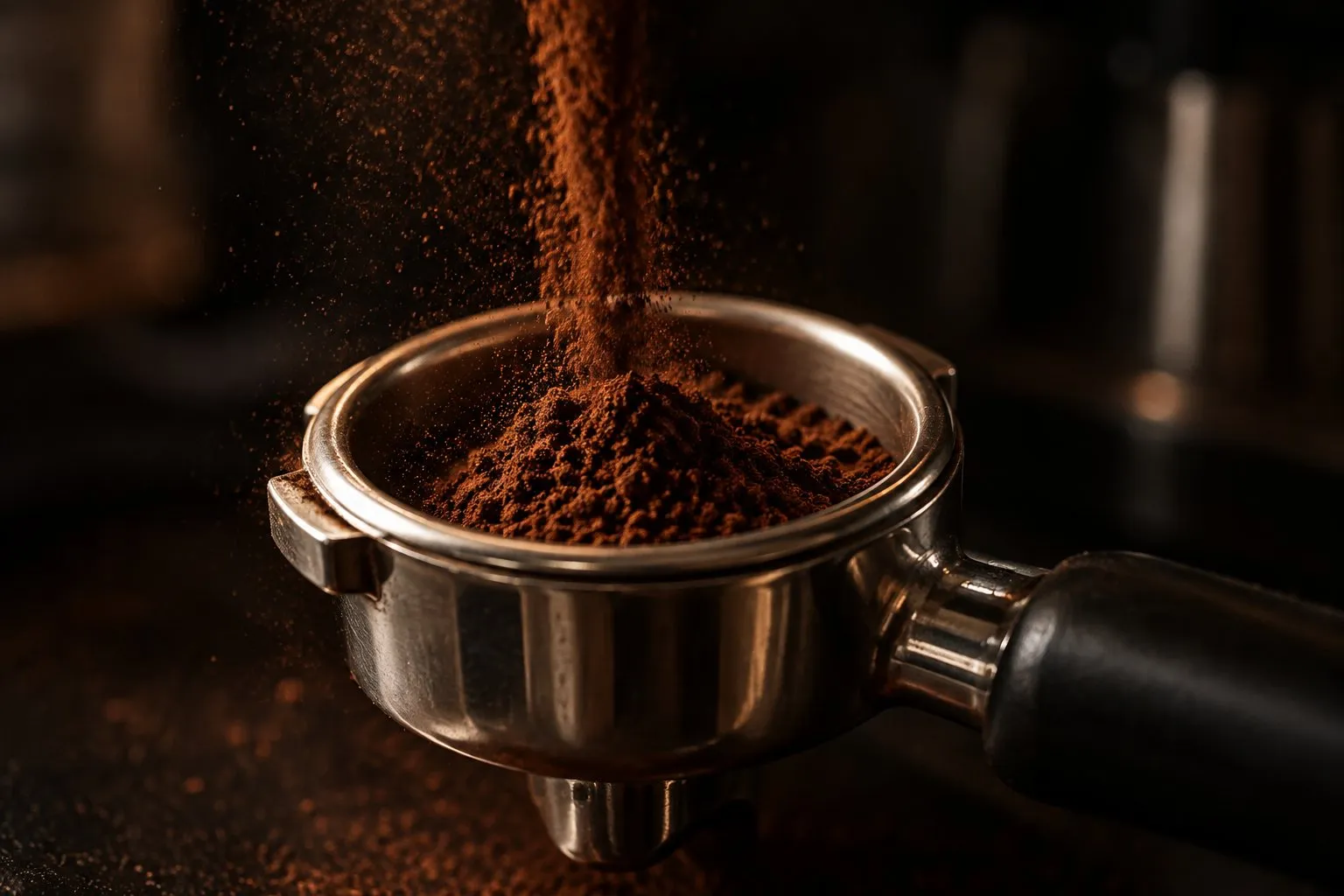
The Bambino and Barista Express share a 54 mm portafilter, an 18 g dose and 9 bar extraction, per Breville. The Express adds a 16-setting grinder and takes more depth. The Bambino needs a separate grinder you can replace later. At full price the separate pair is cheaper; on sale they cost the same. Check both on the day.
On this page
The short verdict
If you are the kind of person who already owns a scale, or knows you will, we lean toward the Breville Bambino and a separate grinder. Grind is the first thing you adjust and the first limit you run into, and a separate grinder lets you buy past that limit and keep the machine.
If you would rather make one purchase and get on with it, the Barista Express is a sensible single box. America's Test Kitchen named it best overall on July 2, 2025, for the mix of grinder, friendly settings and steam wand. We compare by spec sheet and have not pulled shots on either machine.
The two side by side
| Our pick: with a separate grinderBreville Bambino | Our pick: built-in grinderBreville Barista Express | |
|---|---|---|
| Heating | ThermoJet | Thermocoil |
| Pump, as stated | 15 bar | 15 bar |
| Brew pressure, as stated | 9 bar | 9 bar |
| Portafilter | 54 mm | 54 mm |
| PID | Yes, per the instruction book | Yes |
| Built-in grinder | No | Yes, 16 settings |
| Milk | Manual wand | Manual wand |
| Price class | Mid-range | Mid-range |
| Best for | Beginners who want to pick their grinder and upgrade it later | First-time buyers who want one box and no separate grinder to choose |
| On Amazon(paid link to Amazon, opens in a new tab)Ad · paid link · check price & delivery on Amazon | On Amazon(paid link to Amazon, opens in a new tab)Ad · paid link · check price & delivery on Amazon |
Some details that the table above leaves out, from Breville's pages unless noted:
| Bambino (BES450) | Barista Express (BES870) | |
|---|---|---|
| Size (W x D x H) | 11.9 x 6.1 x 13.5 in | 15.9 x 13.1 x 12.4 in |
| Heat-up | Ready to start in 3 seconds | Ready time of 48 seconds (America's Test Kitchen) |
| Temperature adjustment | Not stated on the page | Up to 4 °F either way, in 2 °F steps (manual) |
| Pressure gauge | Not listed | Yes |
| Tamper | Separate, in the box | Integrated |
| Dosing funnel | Not listed | Yes |
| Water filter | Not listed | Holder and filter in the box |
| Milk jug | Yes | Yes, stainless steel |
The differences, point by point
Grinder
This is the whole decision. The Express has conical burrs with 16 settings and automatic dosing. The Bambino has nothing, so you need an espresso-capable grinder on top. Our usual partner for it is the Smart Grinder Pro*, with 60 settings and a cradle for 50 to 54 mm portafilters.
More settings do not automatically mean more useful settings, and Breville's manual gives settings 1 to 30 of the 60 to espresso. America's Test Kitchen counts the Express's 16 as close to the 20 on the standalone grinder it rates highest. So the built-in grinder is not a joke. Its real limit is that it can't be swapped. If you outgrow it, you buy a separate grinder and the built-in one sits there unused. Our page on built-in vs separate grinders covers this in full, and the grinder guide has the options.
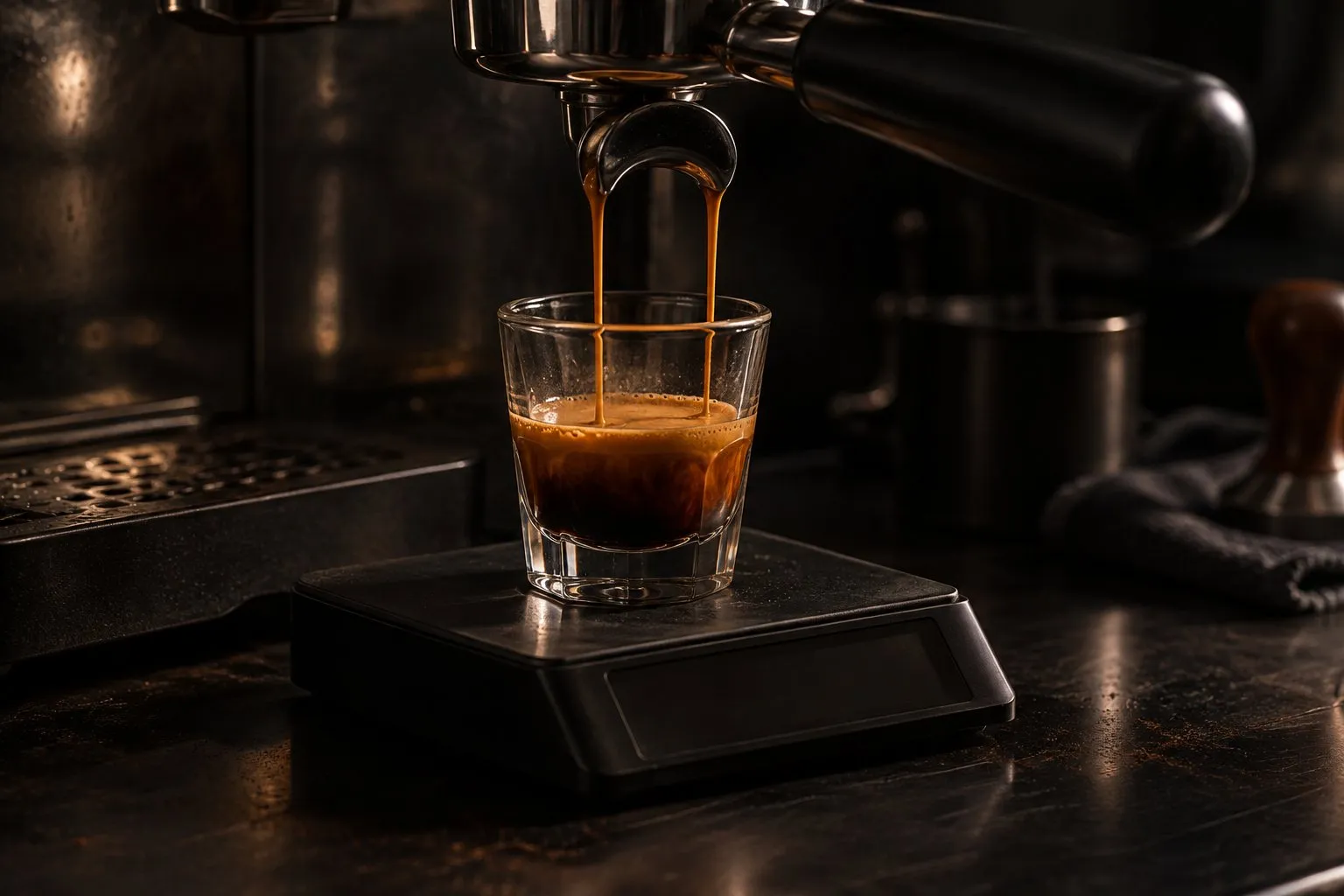
Both need a scale
Neither box lists one, and it matters more than the machine choice. Weigh your dose and your yield, change one thing at a time, and dial in by taste. The workflow is the same on either machine. Only the place you turn the grind dial changes.
Heating and temperature
The Bambino uses ThermoJet, Breville's name for a flow heater that is ready in about 3 seconds. The Express uses a thermocoil with PID, and its manual lets you shift the water temperature up to 4 °F either way.
Don't read too much into that. Breville's Bambino page does not mention PID, while its US instruction book, BES450_USCM_IB_M26, lists “Electronic PID temperature control”. PID keeps the boiler closer to the set point. Measured stability at the puck depends on the machine. We found no measurement comparing these two, and our page on PID explains what the word does and doesn't promise.
Milk
Both have a manual steam wand, and neither has two boilers, so you brew and steam in turn. The Express purges into the drip tray after steaming, per its manual, to bring the thermocoil back to temperature. If you want the milk done for you, neither is your machine. The Bambino Plus adds a hands-free wand, and how to steam milk covers the manual route.
Counter space
Breville prints the Bambino as 11.9 x 6.1 x 13.5 in, labeled W x D x H, a label that looks mixed up, so hold it both ways against your gap. It also needs a spot for a grinder, and Breville gives the Smart Grinder Pro as 8.5 x 6.3 x 15.3 in. The Express is printed at 15.9 x 13.1 x 12.4 in, all in one footprint. Measure the height under your cabinets for the grinder, too.
Price
At full price the separate pair is cheaper; on sale they cost the same. Check both on the day. That comes from Amazon data of November 1 and 2, 2026, and the Barista Express listing moved a lot between those two days. Both machines sit in the mid-range class, and so does the grinder.
One box or two: it's mostly a question of how you'll want to upgrade.
What if you drink it straight?
If you mainly drink straight espresso and enjoy tinkering, look past both. The Gaggia Classic E24* is a single boiler, per retailers, with a 58 mm portafilter, per Gaggia, and a wide tool market. It's a slower machine for milk and has no PID, per retailers. Our Gaggia Classic Pro page has the detail.
Take the Bambino if, take the Barista Express if
If you already weigh shots, or plan to, and may want a better grinder later → Breville Bambino
View(paid link to Amazon, opens in a new tab)Ad · paid link · check price & delivery on AmazonIf you want one box, one purchase and a grinder you don't have to research → Breville Barista Express
View(paid link to Amazon, opens in a new tab)Ad · paid link · check price & delivery on AmazonIf you chose the Bambino and need the grinder to go with it → Breville Smart Grinder Pro
View(paid link to Amazon, opens in a new tab)Ad · paid link · check price & delivery on AmazonIf you drink espresso straight and like learning a machine → Gaggia Classic E24
View(paid link to Amazon, opens in a new tab)Ad · paid link · check price & delivery on AmazonIf you want to compare the whole Breville range first
Back to the guide to choosing a machine if neither of these feels right.
Asked at the bar
Is the Bambino just a Barista Express without the grinder?
Close, but no. Breville gives both a 54 mm portafilter, an 18 g dose, a 15 bar pump and 9 bar extraction. The heating differs: the Express uses a thermocoil with PID, and the Bambino uses ThermoJet. Breville's Bambino page does not mention PID, though its US instruction book lists it. The Express also adds a water filter holder, a dosing funnel and a pressure gauge.
Which is better for a beginner, the Bambino or the Barista Express?
The Express is simpler to buy, since there is no grinder to research. Neither is simpler to use: you still dose, tamp and judge the shot on both. If you want to learn by changing one thing at a time, a Bambino with a separate grinder gives you finer control over grind, at the cost of one more purchase.
Can I use the same accessories on both machines?
Mostly. Both portafilters are 54 mm according to Breville, so 54 mm tools are the place to start. The Express has its tamper built in and includes a funnel. The Bambino comes with a tamper and a jug but no funnel in its parts list. Neither lists a scale, so you need to add one for weighing shots.
Which one heats up faster?
Breville says the Bambino is ready to start in 3 seconds. America's Test Kitchen timed a ready time of 48 seconds on the Barista Express. Neither wait will change your morning much, but it does show what the two heating systems are built around. The Express also purges after steaming to bring the thermocoil to temperature, per its manual.
Where this comes from
Next round
- Built-In Grinder or Separate Grinder for Espresso: Which Setup Should You Buy?Built-in grinder or separate grinder? The price math in words, the settings compared, and the upgrade path, with one clear rule for choosing your espresso setup.
 Breville BambinoBreville Bambino BES450: 54 mm portafilter, 3-second ThermoJet, one-touch shots and a manual wand. What the manual asks of you, and who should pick something else.
 Barista ExpressBreville Barista Express BES870XL: grinder, PID, 54 mm portafilter and care from Breville's own documents, and who should buy something else.
 BrevilleEvery Breville semi-automatic espresso machine we cover, from Bambino to Dual Boiler: how they differ, what Breville states and omits, and which one to pick.
- Espresso grindersWhat makes a grinder suitable for espresso: burrs, small steps and clean dosing. One clear pick, the alternatives sorted by routine, and honest notes on the data.
semiautomaticespressomachine.com Editorial Team
Espresso gear & shot craft
We are the editorial team at semiautomaticespressomachine.com. We read maker spec sheets, manuals, standards and published research on espresso and turn them into plain-English buying advice, with sources on every page. We do not run lab tests, and we say so openly.
- Spec sheets & standards read
- Sources on every page
- No lab tests – stated openly
- Publisher details in the imprint