How to Dial In Espresso: One Recipe, One Change at a Time
Dialing in means fixing your dose and target yield, then changing only the grind until time and taste line up. Start at 18 g in and 36 g out, aim for 25 to 30 seconds, and go finer if the shot runs fast and sour, coarser if it runs slow and bitter.
Disclosure: This page contains affiliate links (marked with *). If you buy through them, we earn a small commission at no extra cost to you. As an Amazon Associate I earn from qualifying purchases. Learn more
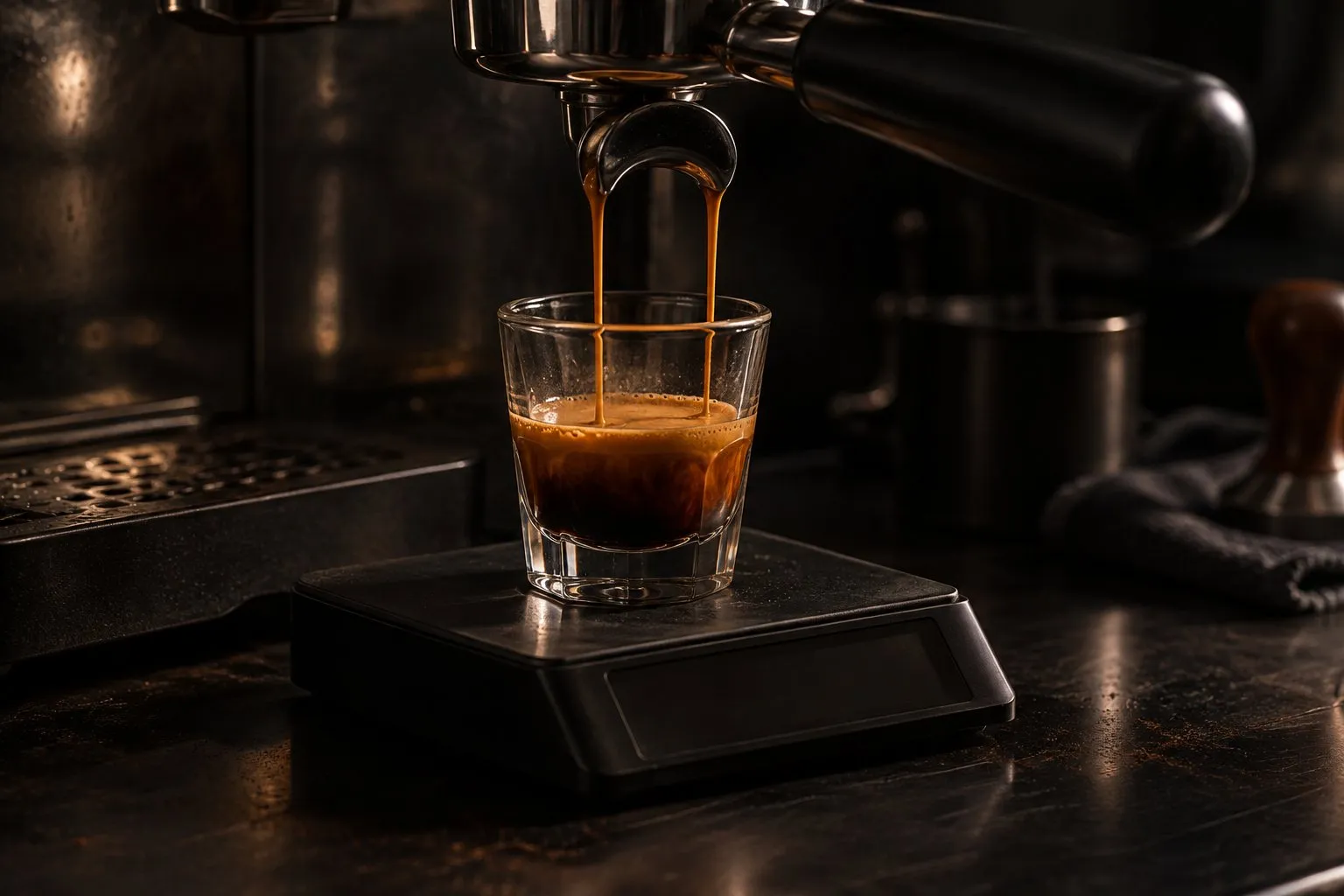
Weigh 18 g of coffee, set a yield of 36 g, and time the shot from the start of the brew cycle. If it runs fast and tastes sour, grind finer. If it runs slow and tastes bitter, grind coarser. Change one thing per shot and let taste make the final call.
On this page
What you get: a written recipe for one coffee on your semi-automatic machine that you can repeat tomorrow. What it costs: several shots of that coffee. At 18 g a shot, a 12 oz (340 g) bag holds about 18 attempts, and you don't need most of them.
You need a grinder with small enough steps, a scale that reads to 0.1 g, and a timer. The scale can do both jobs if it has one built in, as the Maestri House S2* does per its listing. Keep a note of each shot on paper or your phone.
The recipe is a starting point
Breville's guide starts you at 18 to 22 g, a 1:2 ratio and 25 to 30 seconds, and adds that a good shot can fall anywhere from 20 to 40 seconds. Many people repeat this as if it were a rule. It's a good first recipe, not a standard. Italy's certified espresso is 7 g to 25 ml, in 25 seconds give or take 5, at water of about 190 °F (88 °C). Different cup, same word.
So use 1:2 because it gives you a fixed target, not because anyone certified it. Set your own dose here and read the yield:
Target in the cup
36 g1.3 oz
Plain arithmetic. The ratios are starting points from Breville's guide, not a standard.
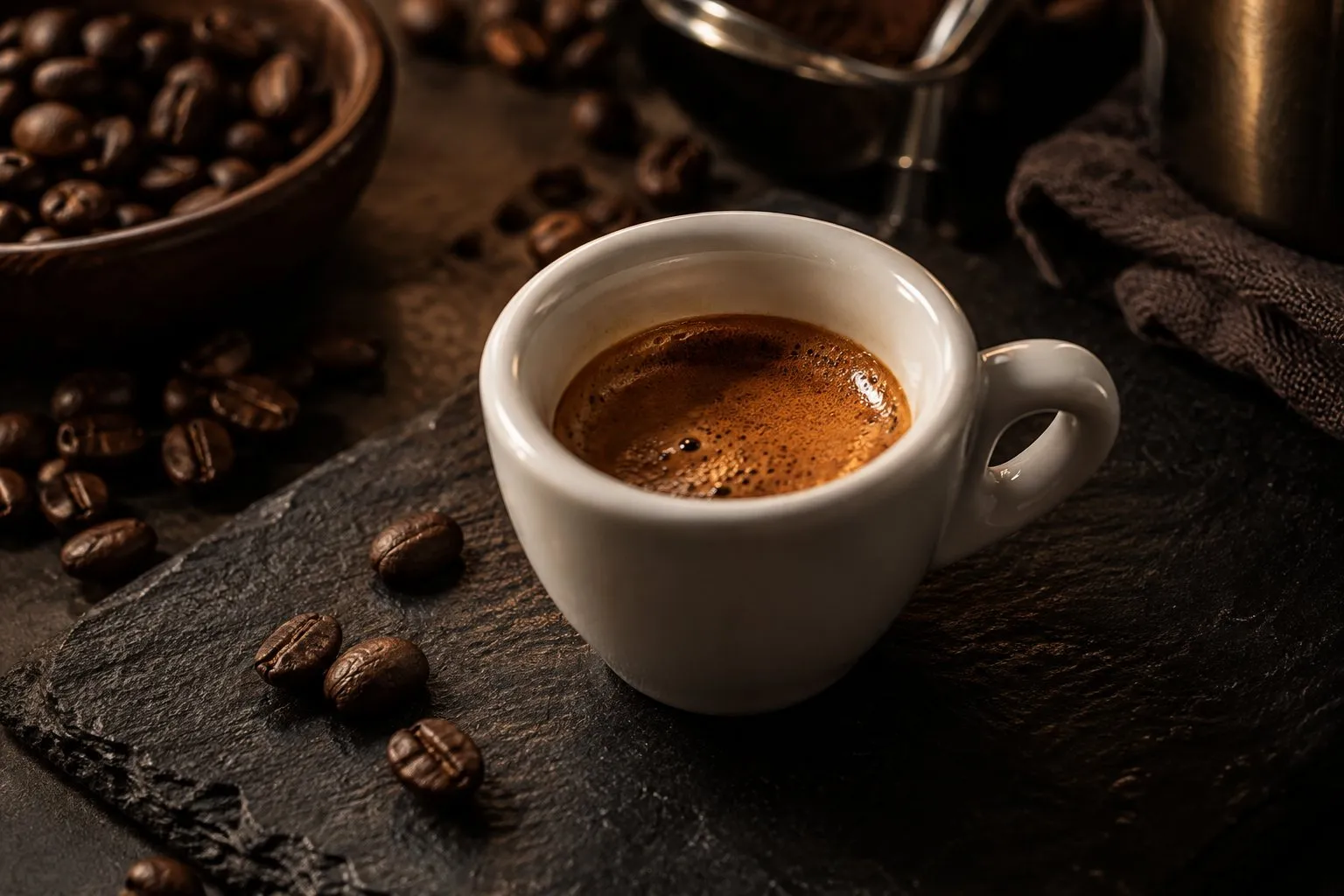
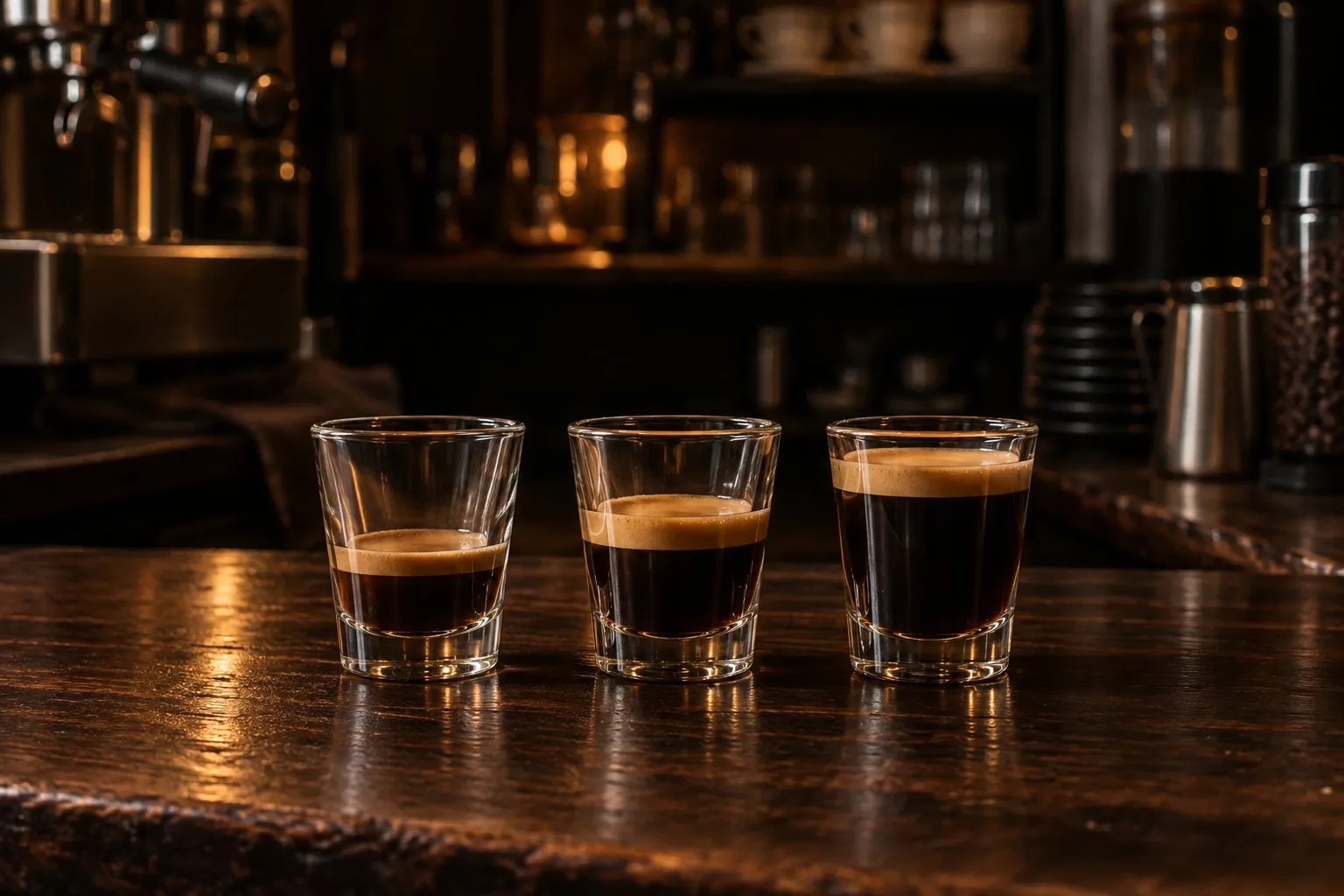
Dial in step by step
Fix the dose
Weigh your dose and keep it the same for every shot in the session. 18 g is the low end of Breville's 18 to 22 g range, and your basket decides what fits. Breville names 18 g for the 54 mm Barista Express and 22 g for the 58 mm Dual Boiler.Set the yield
Take 1:2 as the first target, so 18 g in means 36 g in the cup. Stop the shot when the scale reaches that weight, whatever the clock says. The yield is your constant and the time is your readout.Grind and prepare the puck
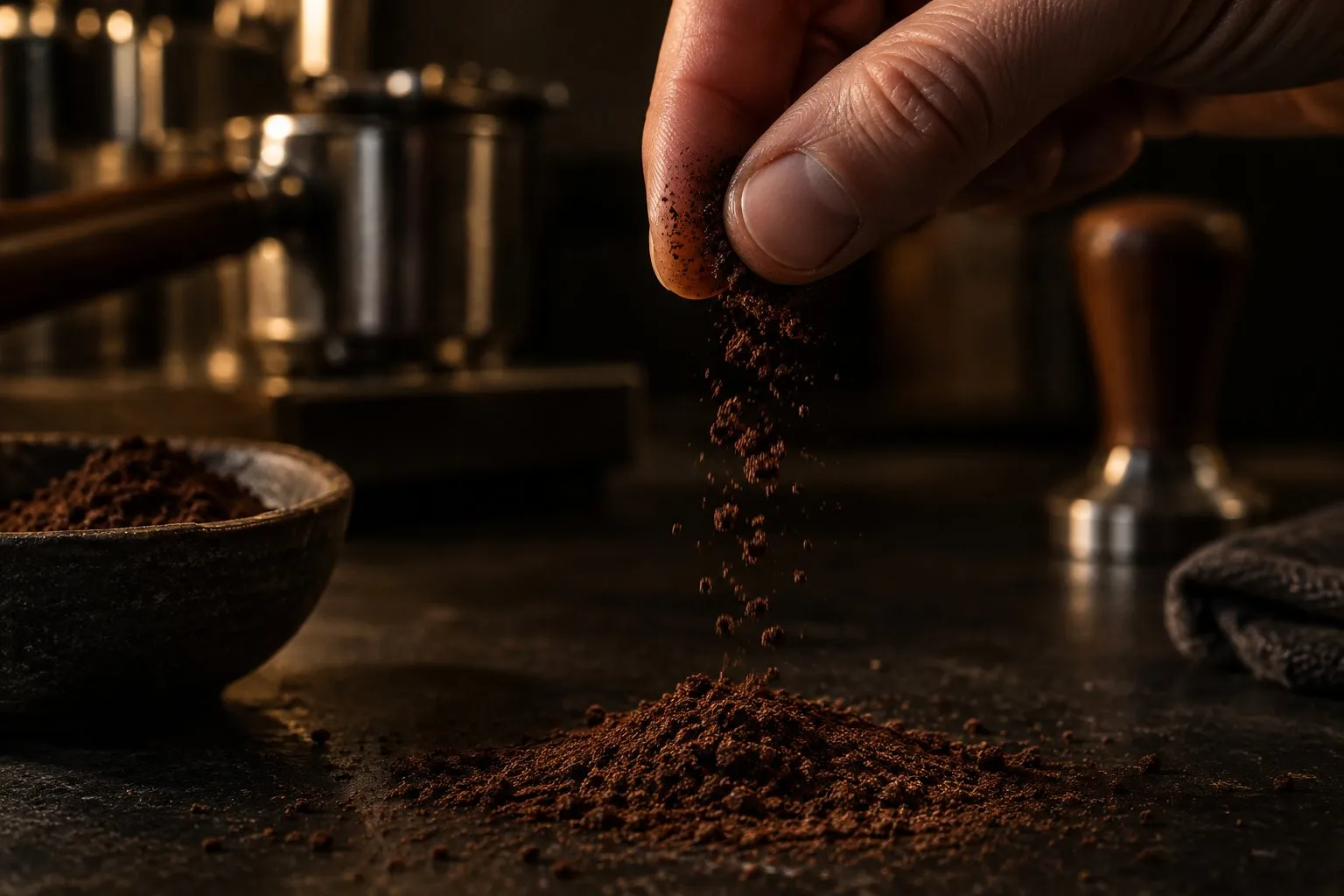
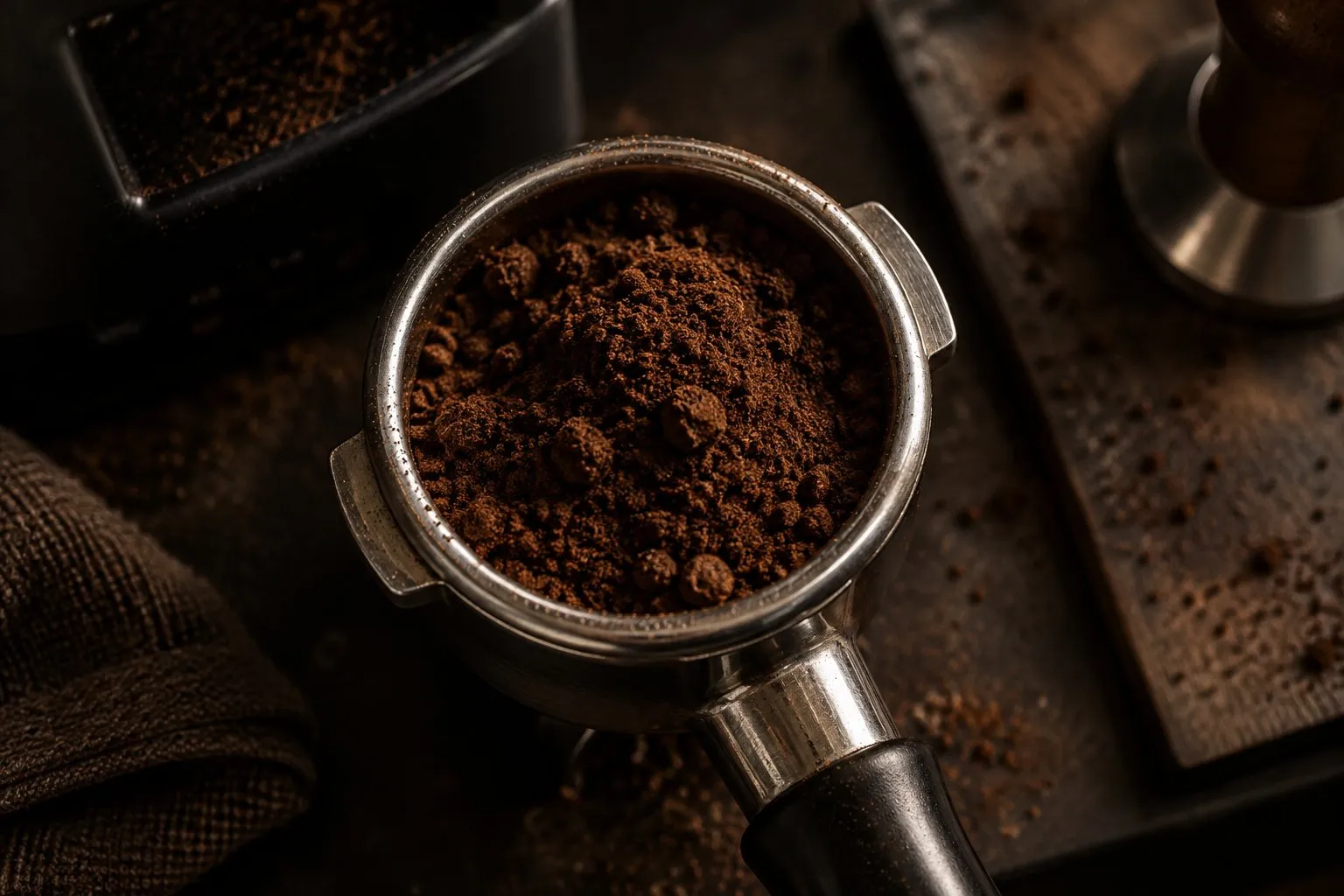
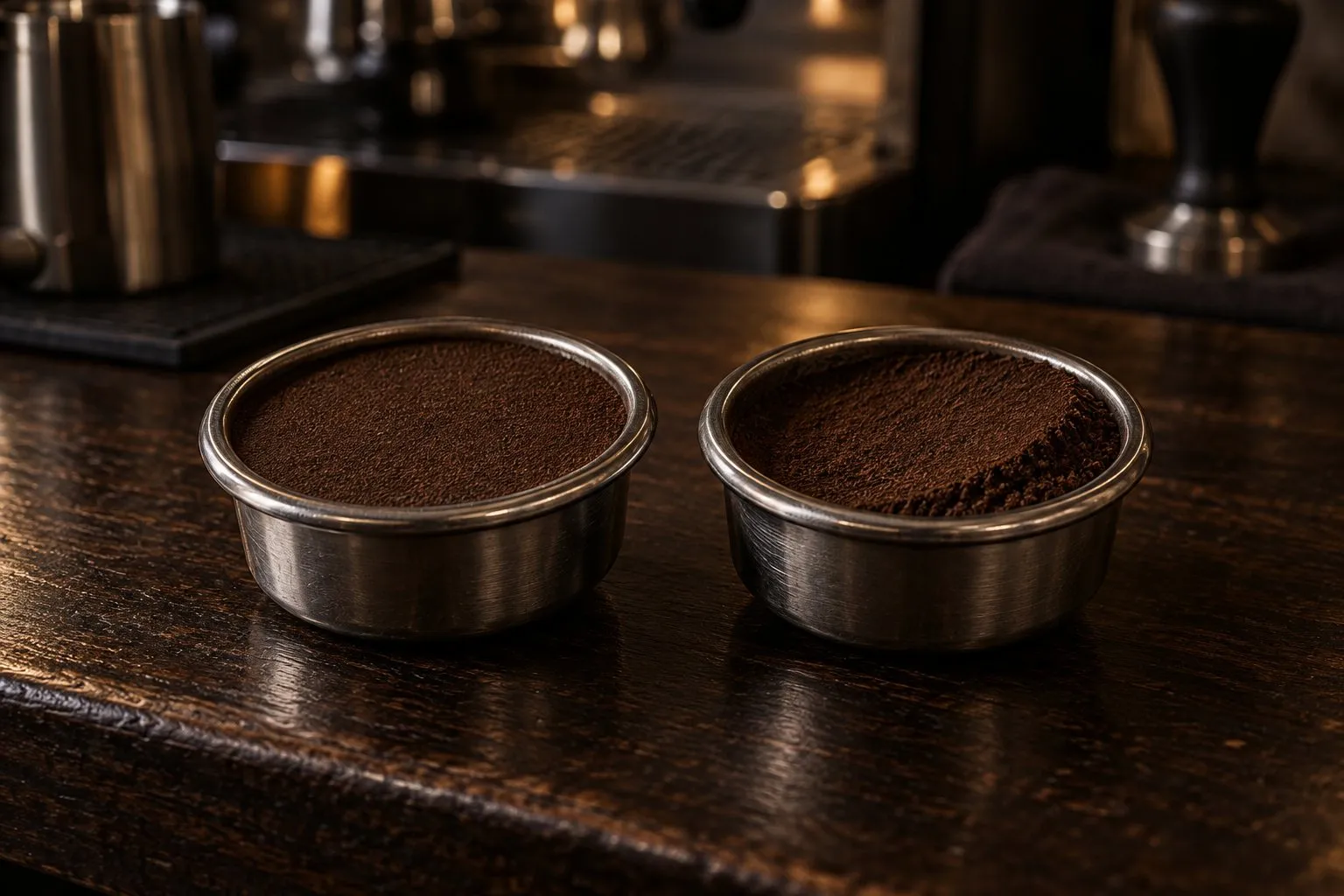
Start at a texture close to fine table salt. Distribute evenly, press until the coffee stops compressing, and keep it level. Do it the same way every time, because a change in your puck looks just like a change in your grind.Pull and record
Time from the start of the brew cycle, as Breville does. Write down dose, yield, time and grind setting, then taste the shot before you touch anything.Change the grind only
Stop when it tastes good
Aim for 25 to 30 seconds, and accept anything from 20 to 40 if you like the cup. To refine it, move the ratio or adjust the dose by a gram or two. Then save the recipe with the coffee's name and roast date.
Where to set the grinder first
Breville's starting point is a texture close to fine table salt, and it notes that darker roasts call for a finer grind. Feel helps you get into the right area on a new grinder. After that, trust the scale and the clock. Grind is the first thing to change when the timing is off.
What the shot is telling you
| What you see and taste | Likely meaning | Next move |
|---|---|---|
| Fast, sour, thin | Too little extracted | Grind finer |
| Slow, bitter, harsh | Too much extracted | Grind coarser |
| On time, but sour or bitter | The clock isn't the whole story | Trust the taste, and adjust ratio or grind |
| Very fine already, still sour | Flow may have turned uneven | Go coarser |
| Same grind, very different times | Your preparation is changing | Fix the puck before the grinder |
Breville ties fast shots to a sour, thin cup and slow shots to over-extraction. “Bitter means coarser” is the common shorthand for the second part, and it works as a first step.
The fourth row is the exception most guides leave out. Cameron and colleagues (Matter, 2020) measured extraction rising as the grind got finer, then falling again at very fine settings, and attributed the fall to uneven flow. We read only the abstract, so we keep to what it says: sour means finer as a first step. First step, yes. If you are already very fine and it stays sour, go coarser.
Common mistakes
- Changing two things at once. Breville's guide says to change one variable and hold the rest. If you move grind and dose together, you learn nothing from the next shot.
- Tamping harder to slow a fast shot. Press until the coffee stops compressing, and keep it level. Force above that adds nothing measurable in the one test we found: Seven Miles pulled “a total of 25 shots of espresso at 10, 20 & 30kg” and saw no difference.
- Chasing the clock. A shot at 34 seconds that tastes good is a good shot.
- Judging by crema. Crema shows CO2, so freshness and roast. It says little about flavor.
- Dialing in on a starter basket. If your machine came with a starter filter and traditional ones, use a traditional one here. Gaggia's Classic Evo manual calls its “crema perfetta” filter the one for first-time use and says the traditional filters take skill and experience. That skill is what you are building.
- Ignoring the rest of the setup. Breville also asks for filtered or mineral water and clean equipment. Keep both constant, or the recipe you worked out won't hold.
The two tools that make this easier
The method works on any machine, but it needs a grinder that can make small moves. If yours jumps from too fast to too slow between two settings, the grinder is your limit, and no technique will fix that. Our espresso grinder guide is the place to go next, and the accessories page covers the scale and the puck tools.
Breville Smart Grinder Pro
A programmable conical burr grinder with 60 settings and cradles for 50 to 54 mm and 58 mm portafilters.
Why here: 60 settings and grind time in 0.2 second steps give you room to make the small changes this method depends on.
Best for: A first separate grinder, especially beside a Bambino
- 60 grind settings (Breville)
- Grind time in 0.2 second steps (Breville)
- Portafilter cradles for 50 to 54 mm and for 58 mm (Breville)
- Breville's page does not state the burr size
- A hopper grinder, not built for single dosing
- Type
- Electric, hopper
- Burrs
- Stainless steel conical
- Grind settings
- 60
- Fits
- 50–54 mm and 58 mm cradles
- Price class
- Mid-range
Once one coffee tastes right, the same recipe carries into milk. Flat white or latte is a good next read, and if you are still choosing a machine, start with our comparison by spec sheet.
Asked at the bar
What is a good first recipe for dialing in espresso?
Breville's guide gives 18 to 22 g of coffee, a 1:2 ratio and 25 to 30 seconds, and says a good shot can land anywhere from 20 to 40 seconds. It is a good first recipe, not a standard. Italy's certified espresso is 7 g to 25 ml.
Should I change the grind or the dose first?
The grind. Breville calls it the first place to make a change when the timing is off. Changing the dose also shifts the ratio and the flow, so you lose track of what caused what. Adjust the dose by a gram or two only if grinding alone does not get you there.
Why is my espresso still sour when I grind very fine?
Finer is the right first step, but it has a limit. Cameron and colleagues measured extraction peaking and then falling again at very fine settings, and attributed that to uneven flow through the coffee. First step, yes. If you are already very fine and it stays sour, go coarser.
How many shots does it take to dial in a new coffee?
We found no reliable figure, and it depends on how far your starting point is from the coffee's sweet spot. Plan on several shots. At 18 g per shot, a 12 oz (340 g) bag holds about 18 attempts, so one bag leaves plenty of room to find a recipe and then drink it.
Where this comes from
- Breville: how to dial in espresso
- INEI: Certified Italian Espresso leaflet (copy on a third-party server)
- Cameron et al.: Systematically improving espresso (Matter, 2020), abstract only
- Seven Miles Coffee Roasters: tamping test
- Gaggia: Classic Evo (RI9481) operating instructions, copy on a third-party server
Next round
 Espresso grindersWhat makes a grinder suitable for espresso: burrs, small steps and clean dosing. One clear pick, the alternatives sorted by routine, and honest notes on the data.
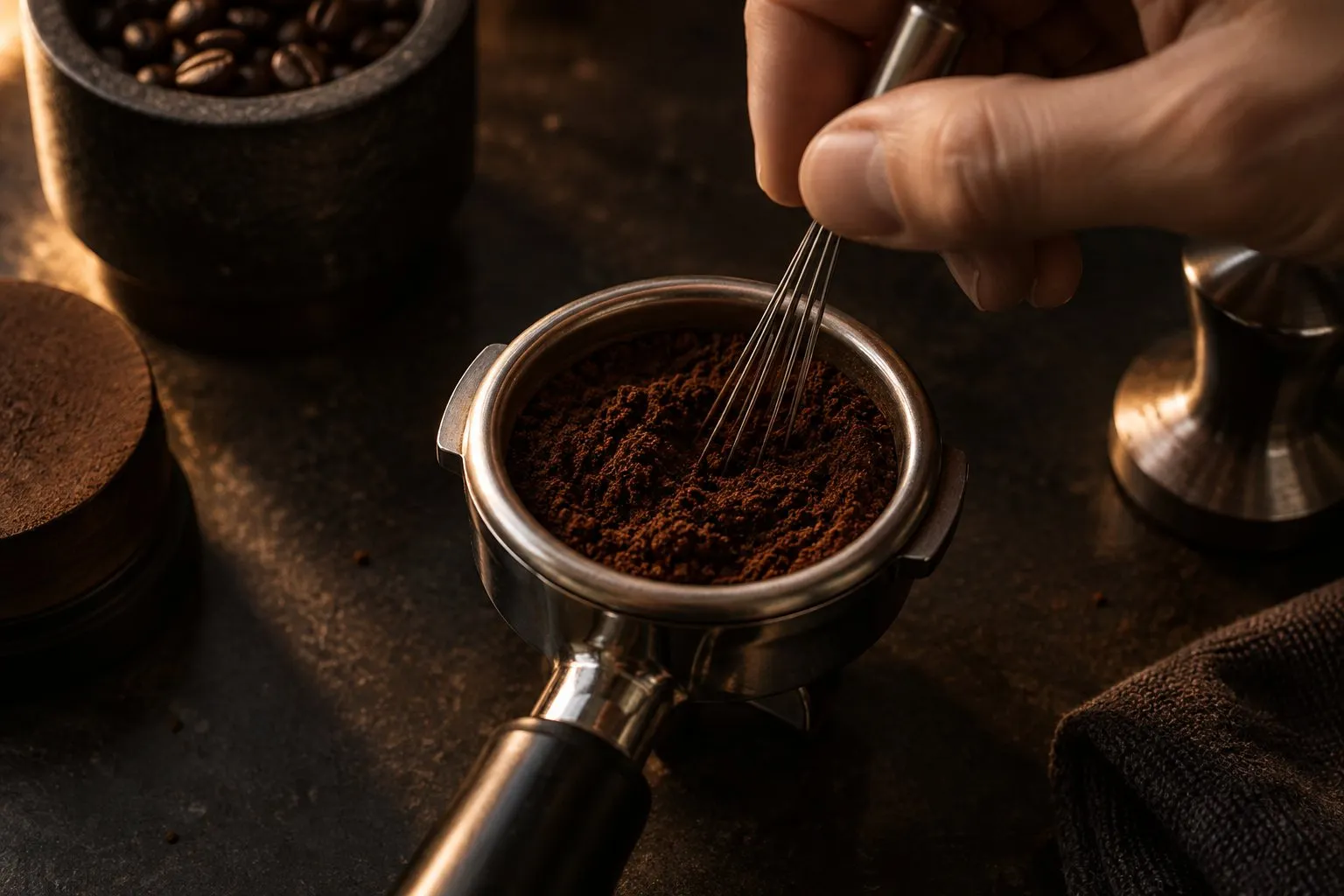 AccessoriesWhich espresso accessories are worth buying first: scale, tamper, pitcher, WDT tool and more, sorted by portafilter size, with what your machine already includes.
 Best machines comparedThe best semi-automatic espresso machines compared by spec sheet, from budget to premium: one pick per need, what each one lacks, and which outside tests agree.
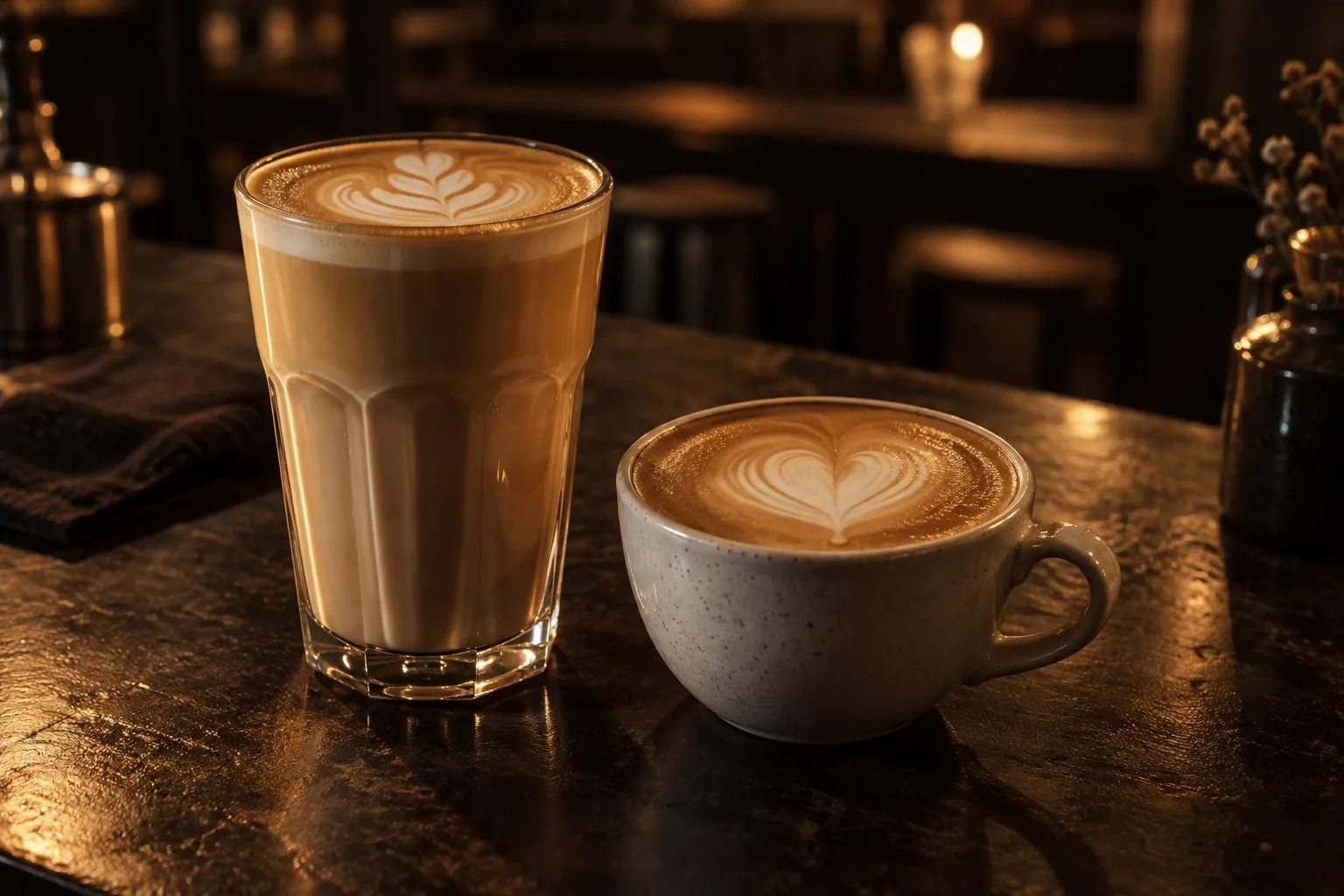 Flat white vs latteFlat white vs latte: less milk and a thin layer of microfoam against a larger, milkier drink. What sources agree on, where they differ, and how to steam for each.
semiautomaticespressomachine.com Editorial Team
Espresso gear & shot craft
We are the editorial team at semiautomaticespressomachine.com. We read maker spec sheets, manuals, standards and published research on espresso and turn them into plain-English buying advice, with sources on every page. We do not run lab tests, and we say so openly.
- Spec sheets & standards read
- Sources on every page
- No lab tests – stated openly
- Publisher details in the imprint