Sour Espresso: Why It Happens and What to Change First
Sour espresso usually means under-extracted espresso, so keep your dose and yield the same and grind finer first. There is one exception most guides skip. If the shot is already very fine and slow and still tastes sour, go coarser, because at very fine settings water can start to miss parts of the puck.
Disclosure: This page contains affiliate links (marked with *). If you buy through them, we earn a small commission at no extra cost to you. As an Amazon Associate I earn from qualifying purchases. Learn more
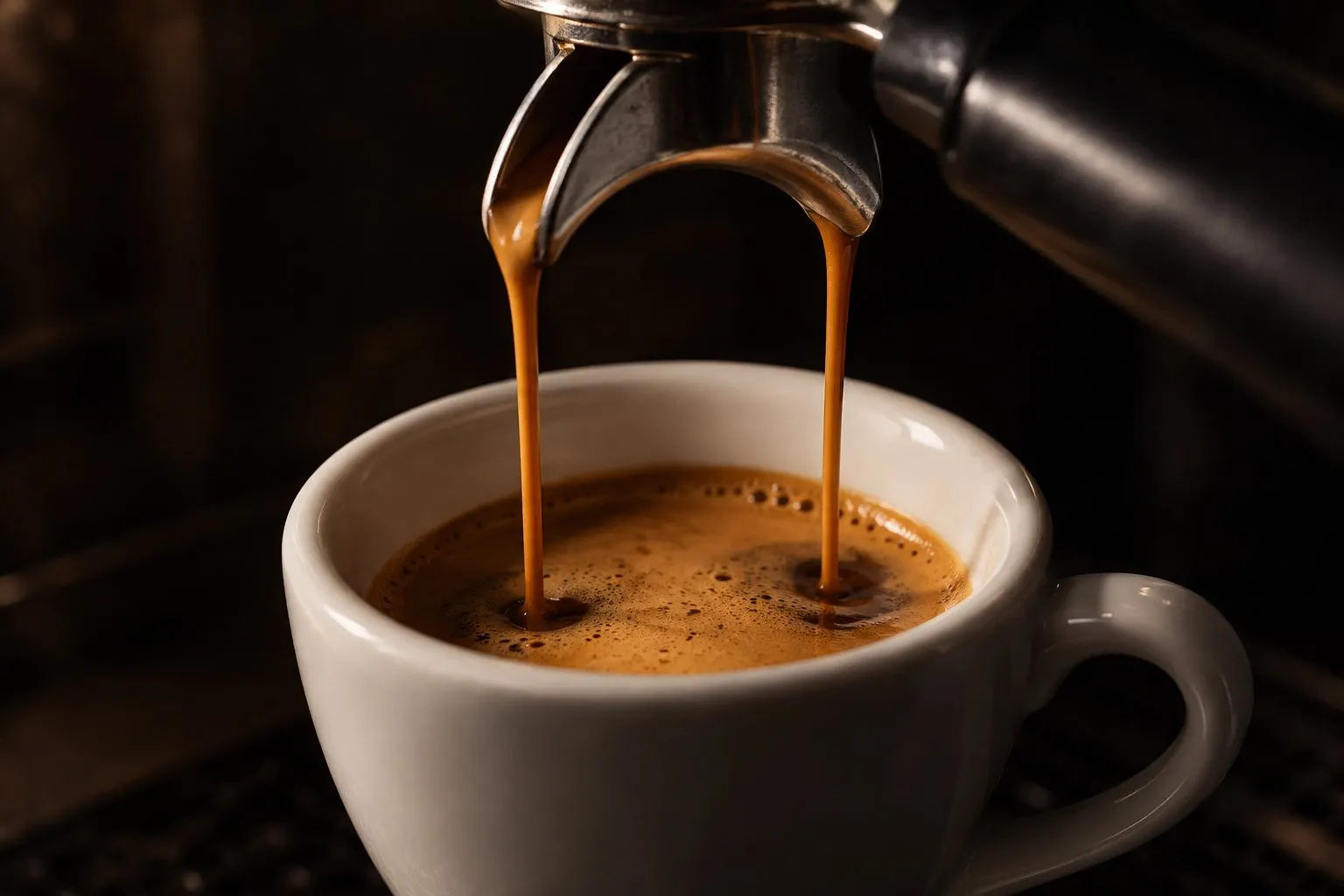
Sour usually means the water took too little from the coffee. Hold dose and yield steady and grind finer until the shot slows. First step, yes. If you are already very fine and it stays sour, go coarser. After that, check the age and roast of the beans, your water and the brew temperature.
On this page
Sharp, thin, gone in a second. That's the usual complaint, and it usually has a boring cause. Breville's extraction guide explains why: the first compounds out of the coffee are the fruity, acidic ones, and the sweeter, rounder ones follow. Stop too early and acid is most of what you get.
So the question to answer first is whether the shot got enough time with the water. A scale tells you that faster than your tongue does.
Sour or just bright?
Not every acidic cup is a fault. Sage notes that very light roasts carry more natural acidity, so some of that sharpness may be the coffee itself. If a light roast tastes lively and also sweet, you may be done. If it tastes thin and pinched, keep going.
Likely causes, most common first
| What you notice | Likely cause | First move |
|---|---|---|
| Fast shot, thin body, target yield arrives early | Grind too coarse | Grind finer |
| Time looks right, cup is still sharp | Yield too short for this coffee | Let a little more into the cup |
| Very fine already, slow or patchy flow, still sour | Water missing parts of the puck | Go coarser |
| Old bag, and the shot has been drifting faster | Stale beans (Sage) | Try a fresher bag |
| Only this one very light coffee does it | Roast acidity (Sage) | Finer first, then a longer ratio or a darker coffee |
| Every coffee does it, and the grind makes little difference | Water too cool (Sage) | Check heat-up and temperature settings |
Fix it in this order
Fix the dose and the yield
Weigh the coffee and the shot. Breville's first recipe is 18 to 22 g at 1:2, so 18 g in means 36 g out. Nothing below means much if these two numbers move around.Grind finer, in small steps
Baratza's advice is finer if sour and quick, in small increments. Pull, taste, then move again. Breville aims for 25 to 30 seconds and says a good shot can take anywhere from 20 to 40.Watch for the turn
If each finer step stops improving the cup, or the flow turns slow and patchy while it stays sour, you have probably passed the useful range. First step, yes. If you are already very fine and it stays sour, go coarser.Pull a longer shot
With the grind settled, let more into the cup. Sage suggests lengthening the brew slightly to balance sharp notes. Move from 1:2 toward 1:2.5, and see our espresso ratio guide for how far that can go.Check the beans
Try a fresher bag, or a coffee with a darker roast. Sage says stale beans can taste sour and calls medium and dark roasts the easier choice if you want less acidity.Check heat and water
Let the machine reach temperature before you judge a shot. If your machine lets you set brew temperature, raise it one step at a time. Then look at your water and descaling, because Sage also names unfiltered water and mineral buildup.
Why finer can stop working
This is where the common advice runs out. Cameron and colleagues (Matter, 2020) built a model that assumed water flows evenly through the coffee. It predicted that extraction keeps rising as the grind gets finer. Their measurements showed a peak instead, with extraction falling again at very fine settings, and they put that fall down to uneven flow.
The University of Portsmouth's release on the study describes the same thing in plainer terms: very fine particles can clog parts of the bed, and those parts get wasted. So a very fine shot can run slowly and still be under-extracted, and it tastes sour for the same reason a fast one does. We read the abstract and the press releases, not the full paper.
Before you go coarser, rule out your preparation. Clumps and a tilted bed can also send water down the easy path, and puck prep deals with that.
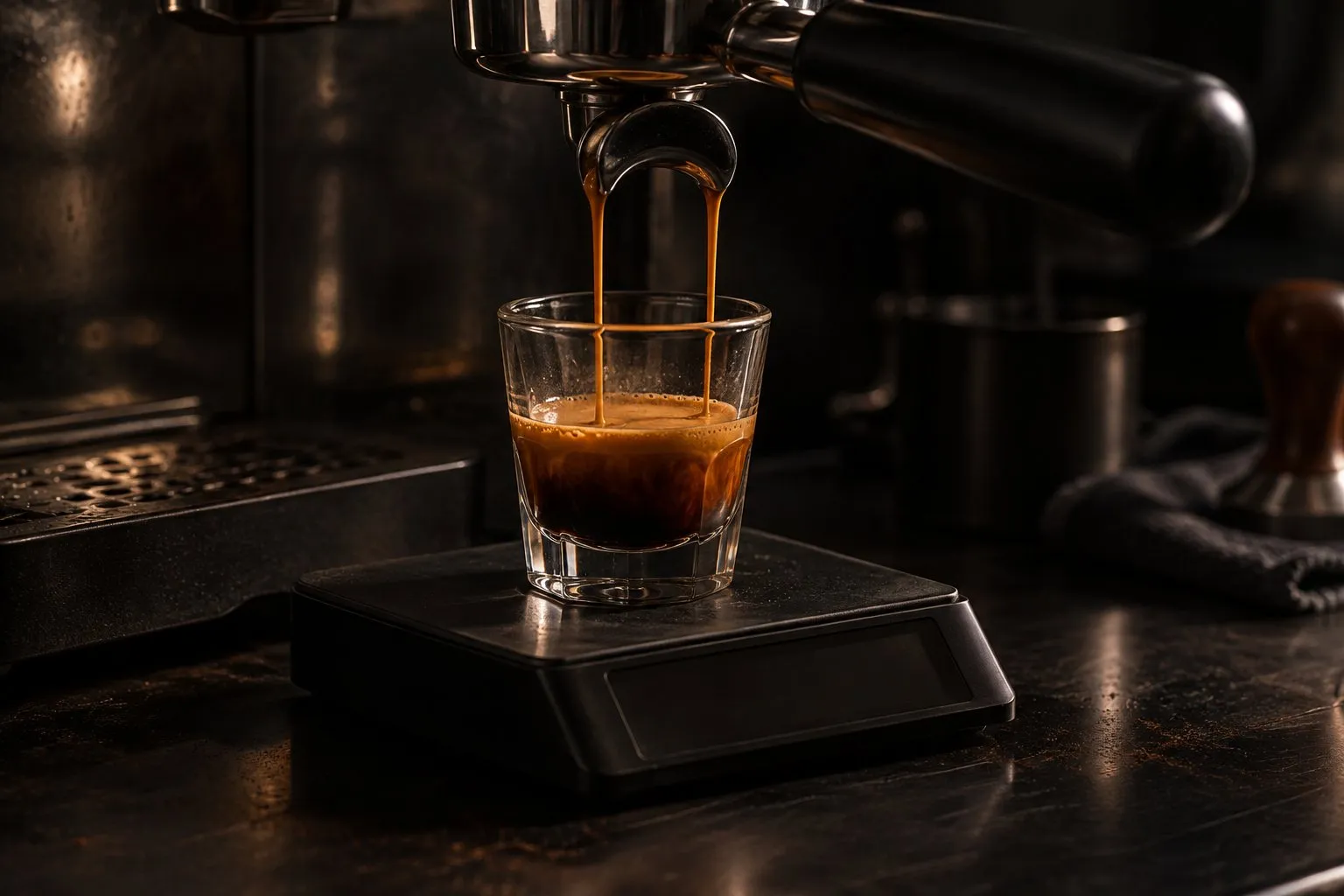
Weigh it before you blame the grinder
A shot that looks short and a shot that is short are different things. Put the cup on a scale, stop at your target weight, and only then read the clock. The full routine, with a symptom table for all the other cases, is in how to dial in espresso. If your cup tastes harsh and not sharp, bitter espresso is the page you want instead.
A note on temperature
Sage gives 92 to 96 °C (about 198 to 205 °F) for espresso. Italy's certified espresso specifies about 88 °C (about 190 °F). Those don't agree, so no single figure settles this, and we would treat temperature as the last thing to change. Breville also says that cooler water tends to taste sweeter, so going hotter isn't automatically an improvement. On machines with PID temperature control, you can move it in steps. On others, the practical check is full heat-up.
When a new grinder is the real fix
If one step on your grinder takes the shot from too fast to too slow, you can't land between them, and no technique will change that. Pre-ground coffee has the same problem, since you can't adjust it at all. That is the point where a purchase makes sense, and our espresso grinder guide is where to look. The full picture on semi-automatic machines starts on our home page.
Breville Smart Grinder Pro
A programmable conical burr grinder with 60 settings and cradles for 50 to 54 mm and 58 mm portafilters.
Why here: 60 settings and grind time in 0.2 second steps, per Breville, leave room for the small moves that fix a sour shot.
Best for: A first separate grinder, especially beside a Bambino
- 60 grind settings (Breville)
- Grind time in 0.2 second steps (Breville)
- Portafilter cradles for 50 to 54 mm and for 58 mm (Breville)
- Breville's page does not state the burr size
- A hopper grinder, not built for single dosing
- Type
- Electric, hopper
- Burrs
- Stainless steel conical
- Grind settings
- 60
- Fits
- 50–54 mm and 58 mm cradles
- Price class
- Mid-range
More on what the setting does, and why no number transfers between grinders, is in espresso grind size.
Asked at the bar
Why is my espresso sour?
Most often the shot is under-extracted: it ran too fast or the grind is too coarse, so you tasted the early, acidic part of the extraction and not much else. Breville ties a fast shot to a sour, thin cup. Stale beans, very light roasts, water that is too cool and mineral buildup can add to it, according to Sage.
Is sour espresso under-extracted?
Usually, yes. Breville's extraction guide says a cup that tastes thin, weak or sour is likely under-extracted, because acidic compounds come out first. It isn't the only explanation, though. A very light roast carries more natural acidity, and uneven flow through a very fine puck can leave part of the coffee barely touched.
Should I grind finer or use more coffee to fix a sour shot?
Grind first. Breville suggests either a finer grind or a gram or two more coffee for a fast shot, and it calls grind the first place to make a change. A new dose also moves your ratio, so you learn less from the next shot. Change one thing, pull again and taste.
Why is my espresso sour even though the shot takes 30 seconds?
The clock isn't the whole story. A shot can hit the time and still be short on yield, too cool, or running unevenly through part of the puck. Check the yield on a scale first. If the grind is already very fine, try coarser. Breville's guide says good shots can take anywhere from 20 to 40 seconds.
Can old coffee beans make espresso taste sour?
Sage lists stale beans among the causes of sour espresso and recommends fresh whole beans ground just before use. We found no measured age limit we could stand behind, so treat this as a check and not a rule. If a new bag from the same roaster fixes it without any grinder change, the old bag was the problem.
Where this comes from
- Breville: the coffee extraction process
- Breville: how to dial in espresso
- Sage (Breville's name in Europe): what causes sour espresso
- Baratza: dialing in espresso
- Cameron et al.: Systematically improving espresso (Matter, 2020), abstract only
- University of Portsmouth press release on that study, via EurekAlert
Next round
- Dial in espressoHow to dial in espresso: fix the dose, set a yield, then change only the grind until time and taste line up. Steps, a symptom table and the exception to the rule.
 Bitter espressoWhy espresso tastes bitter: read the flow first. Slow and dark means grind coarser, fast and watery means something else. Then check roast, cleaning and temperature.
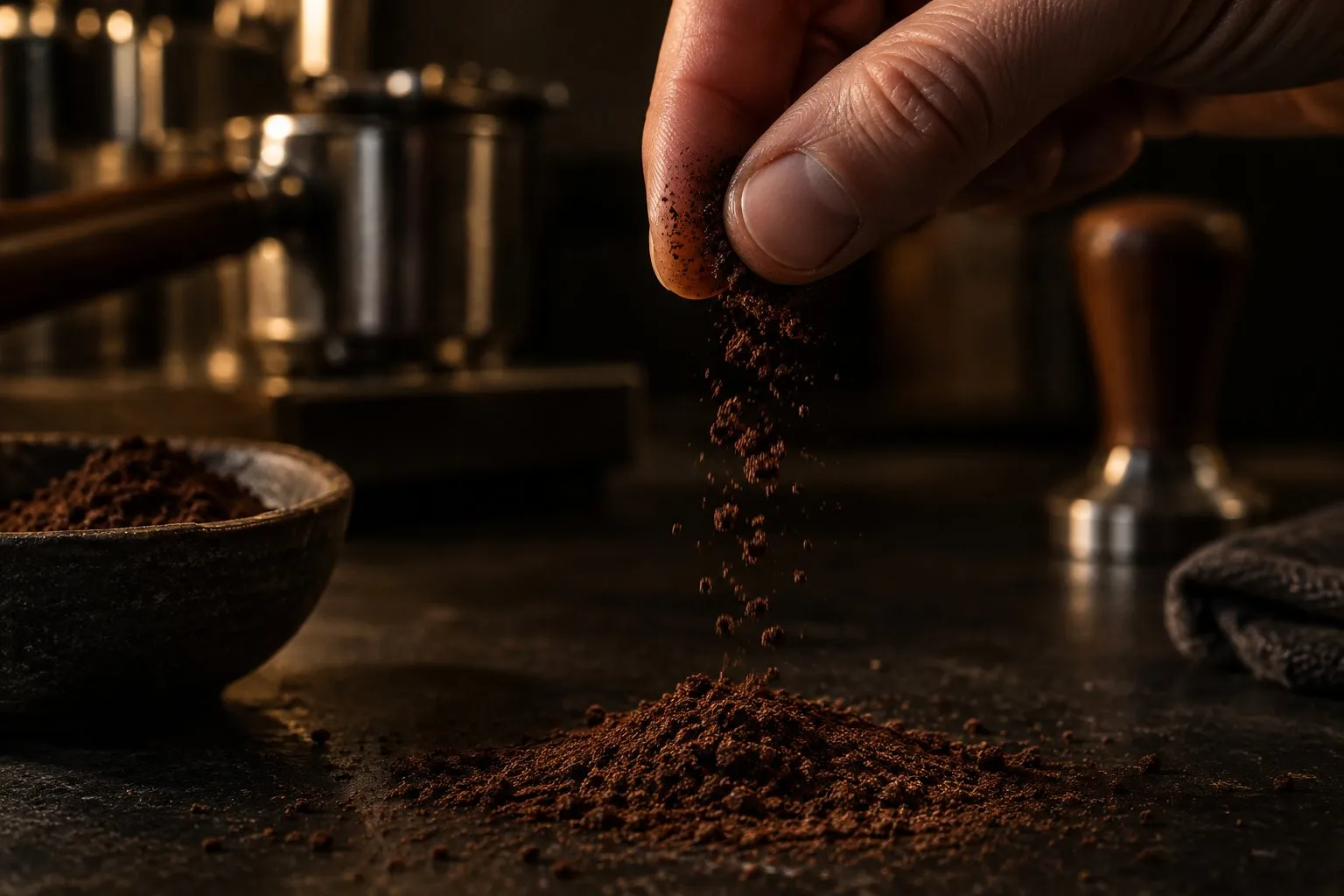 Espresso grind sizeHow fine to grind for espresso: start near fine table salt, then let the shot decide. Why no setting transfers, where finer stops working, and what coarser can do.
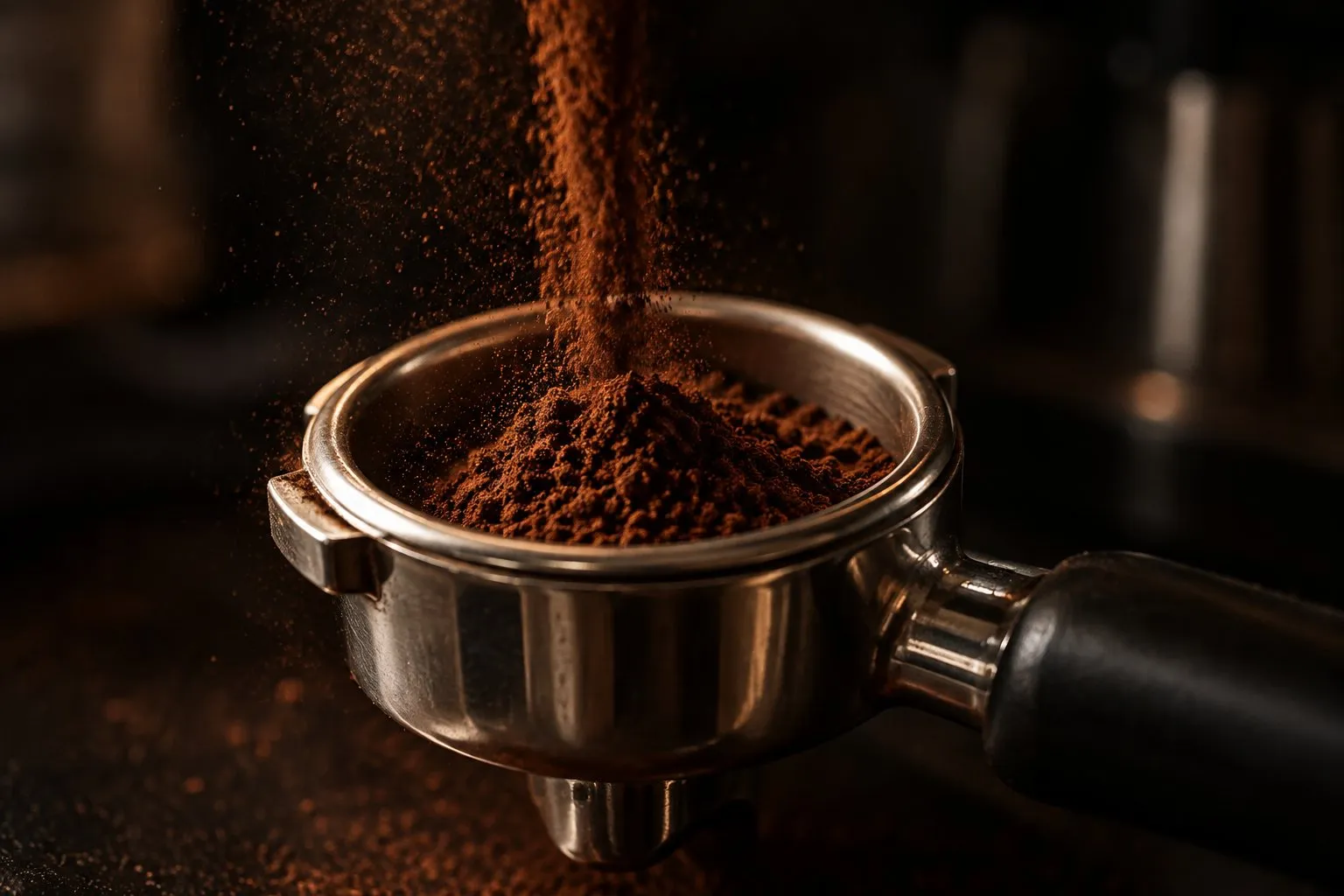 Espresso grindersWhat makes a grinder suitable for espresso: burrs, small steps and clean dosing. One clear pick, the alternatives sorted by routine, and honest notes on the data.
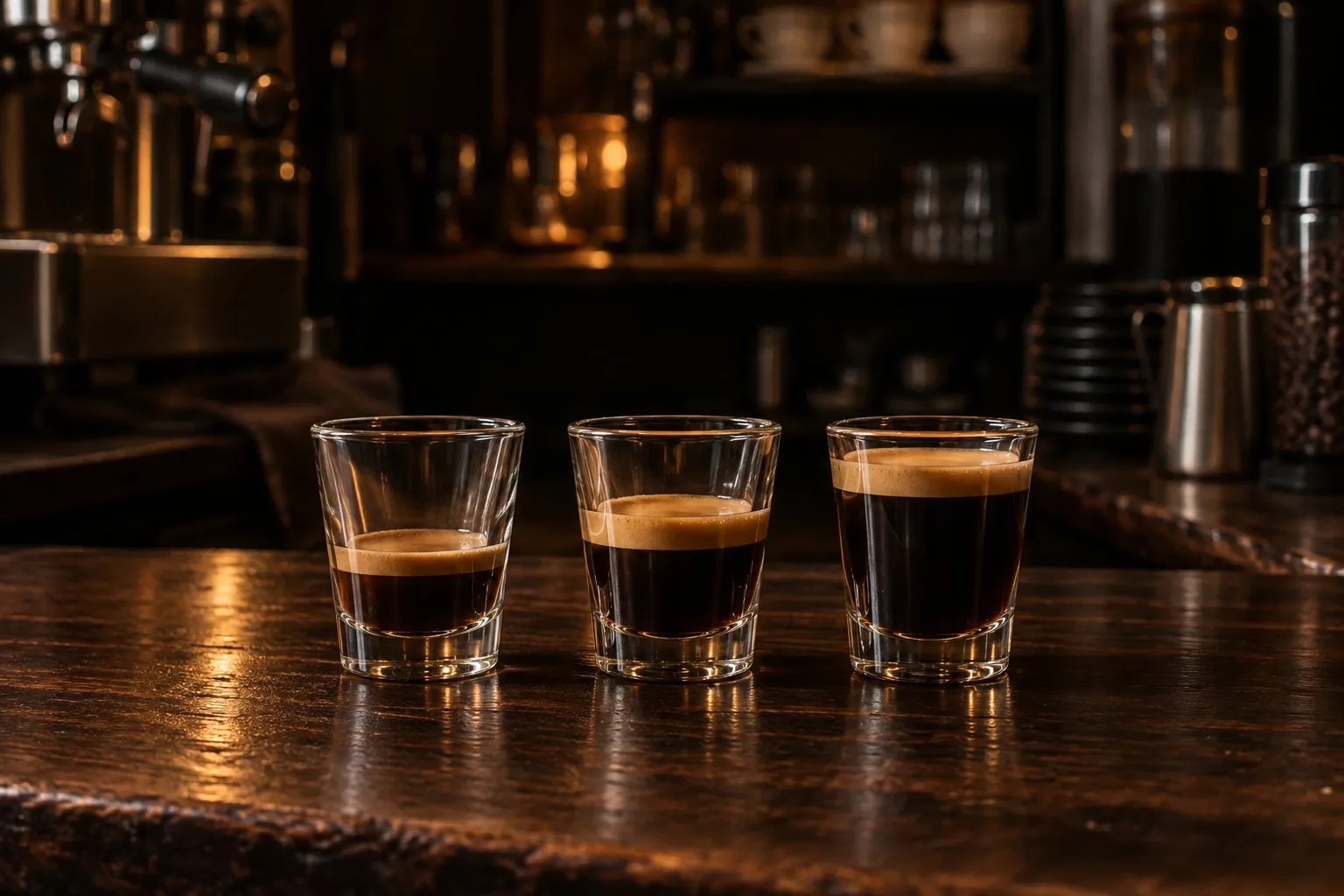 Espresso ratioEspresso ratio explained: 1:2 in 25 to 30 seconds is a good first recipe, not a standard. See the numbers, Italy's 7 g to 25 ml, and a calculator for your own dose.
semiautomaticespressomachine.com Editorial Team
Espresso gear & shot craft
We are the editorial team at semiautomaticespressomachine.com. We read maker spec sheets, manuals, standards and published research on espresso and turn them into plain-English buying advice, with sources on every page. We do not run lab tests, and we say so openly.
- Spec sheets & standards read
- Sources on every page
- No lab tests – stated openly
- Publisher details in the imprint