How to Clean a Semi-Automatic Espresso Machine: After Each Shot, and When the Manual Says
Rinse the basket and portafilter after each session, wipe and purge the steam wand after milk, keep the group head clear, and run the deeper cycle when your manual asks for it. The small jobs take minutes. The manuals differ on the details, so follow yours, not a general checklist.
Disclosure: This page contains affiliate links (marked with *). If you buy through them, we earn a small commission at no extra cost to you. As an Amazon Associate I earn from qualifying purchases. Learn more
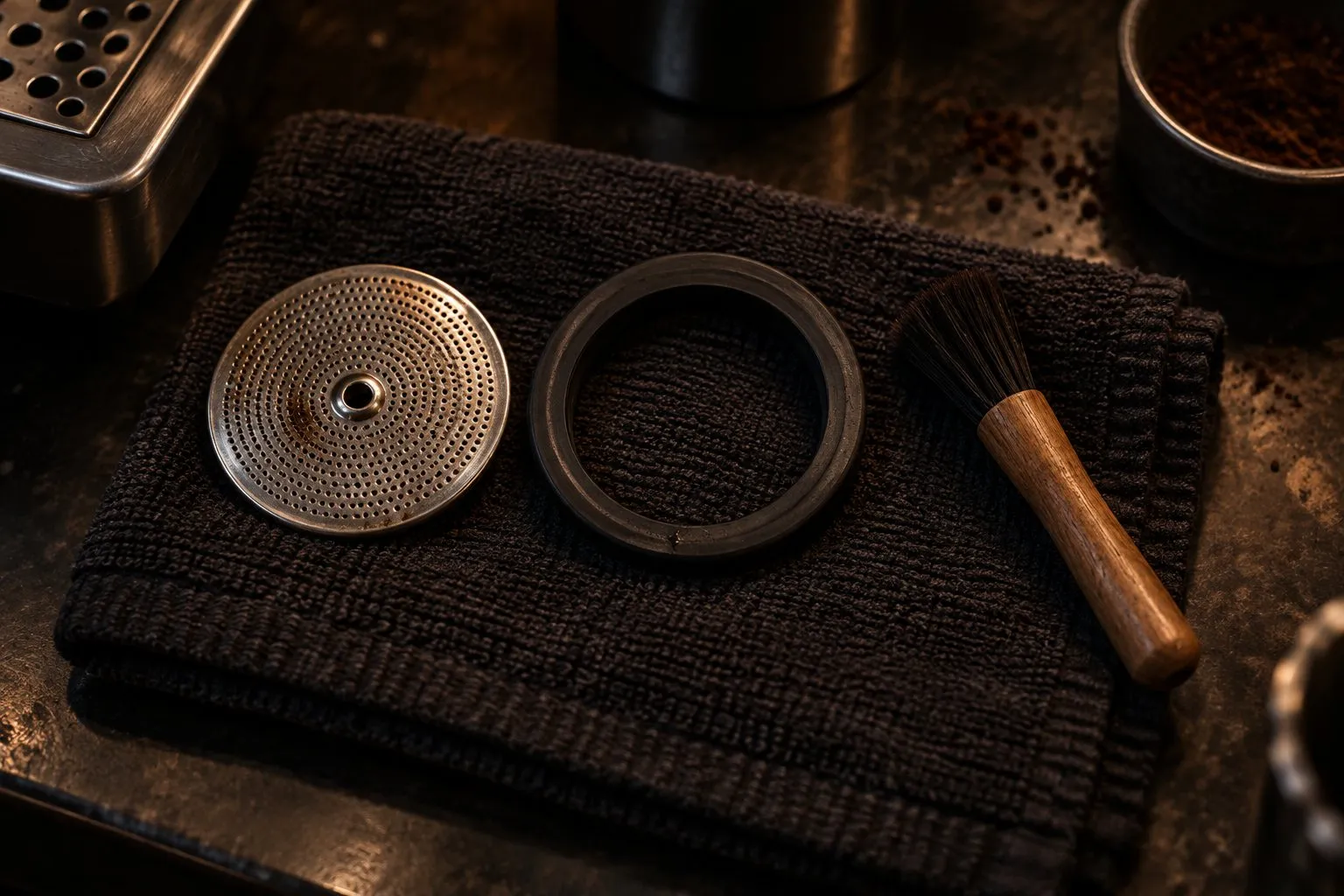
After each session, rinse the basket and portafilter, wipe and purge the wand, and empty the drip tray. Then follow your manual for the deeper clean. On a Barista Express, a flashing light calls for a back-flushing cycle with a disc and tablet. A Silvia uses a blind filter with detergent. The Classic Evo manual we read describes neither step.
On this page
Most cleaning guides give you a schedule that fits every machine. We read four manuals to see if that holds up, and it doesn't. They agree on the basics and disagree on the group head, on the deeper clean and on what you may use. Allow a few minutes for the routine after a session, and about 5 minutes of machine time when a Barista Express runs its cycle.
What you need
- Your machine's manual. It outranks everything on this page.
- A damp cloth and a soft dry one.
- The brush and tools that came with your machine.
- A large container if your machine has a cleaning or descale cycle.
- Whatever cleaning product your manual names.
Where the manuals differ
| Job | Barista Express | Bambino | Gaggia Classic Evo | Rancilio Silvia |
|---|---|---|---|---|
| Shower screen | Damp cloth | Damp cloth | Brush, then hot water | “Brush the outlet and the seal under the group head”; one older copy adds “Do not brush the shower!” |
| Deeper clean | Disc and tablet cycle | Combined clean and descale cycle | None described | Blind filter and detergent |
| When | Light flashes | 2 Cup button flashes | Not stated | Under daily cleaning |
| Basket trouble | Tool, then tablet soak | Wand tool | Boiling water, 10 min | Not covered |
Those are the manuals we could read, in the versions linked below. Your machine's printing may differ, so treat this as a map and check your own book. The Gaggia file is for the Classic Evo RI9481, so owners of older Classic Pro or E24 machines should use theirs.
The routine, step by step
Find your manual's routine
Look up the care section for your exact model, including what its lights mean. The steps below are the ones the manuals share, and the differences are in the table above.Rinse basket and portafilter
Rinse them under hot water right after use to remove coffee oils. Breville says not to put parts in the dishwasher. Gaggia says to wash the filter every day in warm water.Wipe and purge the steam wand
After milk, wipe the wand with a damp cloth and let steam run briefly to clear the tip. Clear blocked holes with the tool your machine came with, with the machine off and cool.Clear the group head
Breville says to wipe the group head and shower screen with a damp cloth. Gaggia says to brush grounds from the screen and rinse with hot water. Rancilio's Silvia manual says “Brush the outlet and the seal under the group head”.Empty and wash the drip tray
Wash the tray and grid. Don't use abrasive pads or cleaners, and wipe the housing with a soft, damp cloth.Run the deeper clean your manual describes
Run the Barista Express cleaning cycle when the light flashes, the Bambino's clean and descale cycle when the button flashes, or the Silvia's blind filter routine. If your manual describes no such step, don't add one on your own.Clean the built-in grinder
If your machine has a grinder, empty the hopper and run it empty, then unlock the top burr and brush the burrs and chute, as the Barista Express manual shows.
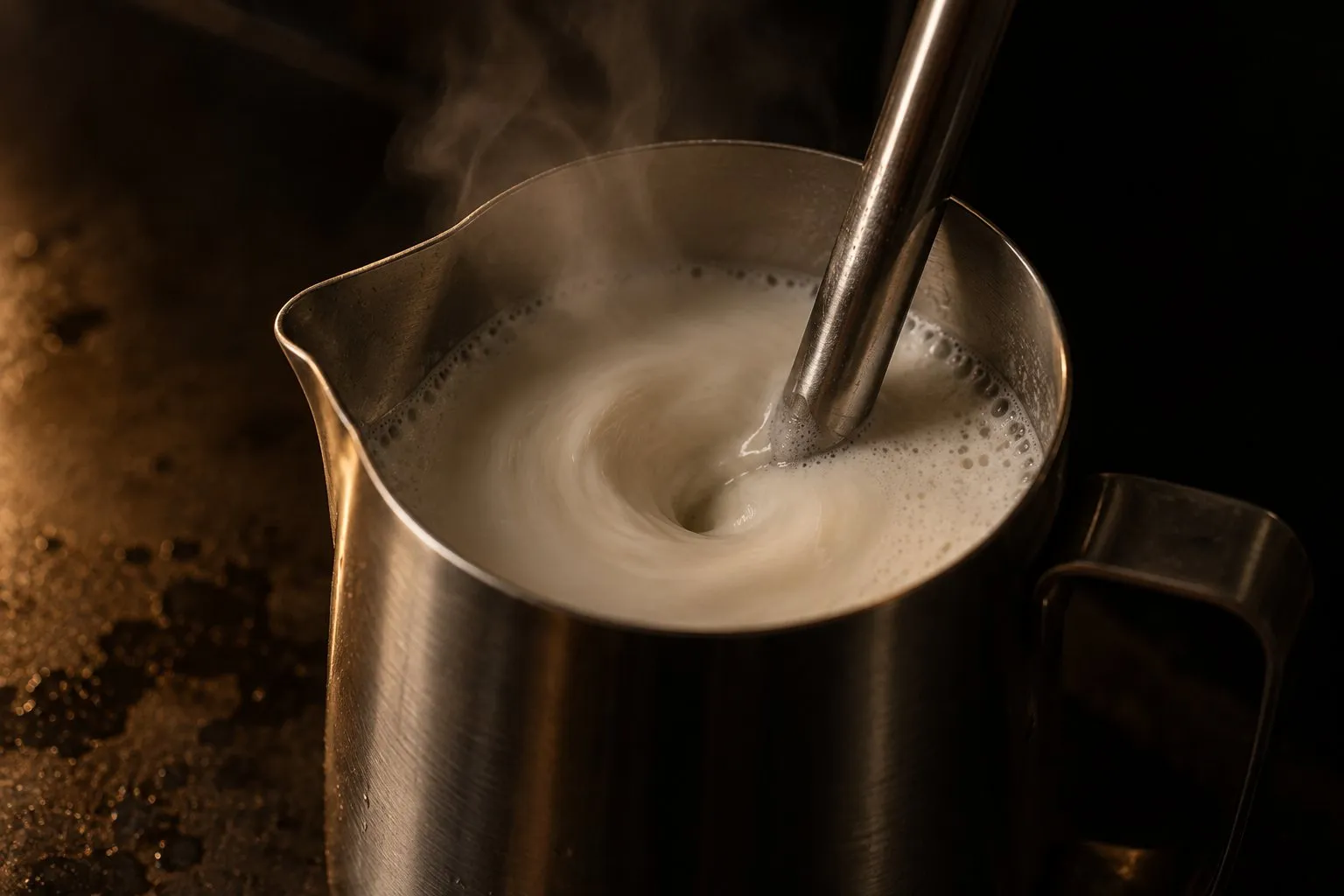
Rancilio goes further than the others on the wand. Its daily routine has you heat the wand in a milk cleaning solution, with a suggestion of at least 10 minutes depending on the detergent, then repeat in fresh water. It warns against aluminum containers for this.
The deeper clean, by machine
Barista Express. A flashing CLEAN / DESCALE light means a cleaning cycle, which Breville calls a back-flushing cycle separate from descaling. A solid light means descaling. Fit the 1 Cup basket, the cleaning disc and one tablet, and follow the buttons in the manual. The cycle runs about 5 minutes and ends with 3 beeps. Check that the tablet has dissolved. If you need more, the Breville BEC250 tablets* are Breville's own. On an Impress or another model, use that machine's manual, since we read only the books named here.
Bambino. The 2 Cup button flashes when the machine wants a clean and descale, and both happen in one cycle with the descaling agent. The manual we read has no separate tablet step. It warns against ignoring the alert, and our Bambino page has the details.
Gaggia Classic Evo. The manual describes no backflush. For a more thorough clean of the filters, it recommends Gaggia's own cleaning tablets. So there's no reason to add a blind filter routine from a general guide without asking Gaggia first.
Rancilio Silvia. Under daily cleaning, the manual has you insert a blind filter disk with cleaning detergent for espresso machines, then run the coffee switch for 5 seconds and rest for 10, until the water runs clear in the drip tray. Afterward, rinse the blind filter and portafilter under fresh water. Clean the removed parts, too, with hot water to dissolve any coffee oil.
Backflush powder, if your manual allows it
Urnex's training sheet for Cafiza powder* describes a blind filter with 3 g of powder, the brew cycle on for 10 seconds and off for 10, five times, then a repeat with plain water and one shot thrown away. It speaks of “each group head,” and it isn't written for any one home machine, so your manual comes first. For 58 mm machines there's a listing for a metal backflush insert*, though we only have the seller's data on it. Tablets and powders has the full comparison.
Close the bar: rinse, wipe, purge, empty.
Common mistakes
- Mixing up cleaning and descaling. Cleaning removes coffee oils. Descaling removes minerals. On the Barista Express, they are different lights and different products. How to descale a Breville and our page on descalers cover the second job.
- Following a guide written for another machine. Brushing the shower screen is in Gaggia's manual. Rancilio's Silvia manual names the outlet and the seal, and one older copy says not to brush the shower.
- Using abrasives. Breville and Rancilio both warn against abrasive pads and cleaners, and Gaggia against scouring pads and abrasive agents.
- Forgetting the water. Scale builds up faster or slower depending on what you put in the tank. See water for espresso.
If a job goes beyond this, such as a leaking seal, our page on the gasket and shower screen is the next stop. Breville's manual also covers the seal change, and it starts with switching the machine off and unplugging it. Back to the home page for the rest of the bar.
Asked at the bar
What does the flashing clean light mean on a Breville Barista Express?
A flashing CLEAN / DESCALE light means a cleaning cycle is due, and a solid light means descaling is due. Breville's manual calls the cleaning cycle a back-flushing cycle, separate from descaling. It uses the 1 Cup basket, the cleaning disc and a tablet, and it takes about 5 minutes.
How do you run a cleaning cycle on a Barista Express?
Insert the 1 Cup basket, the cleaning disc and one tablet, and lock in the portafilter over a large container. Fill the tank, empty the tray and switch off. Press 1 Cup and 2 Cup, then Power, and hold all three for about 10 seconds. When the 3 beeps sound, check that the tablet has dissolved, and repeat if it hasn't.
How often should I clean an espresso machine?
Use the rhythm your machine sets. Rinsing and wiping belong after every session. Breville machines tell you when the deeper clean is due with a light or a flashing button, and Rancilio's manual lists its blind filter routine under daily cleaning. We found no independent evidence for a general weekly or monthly schedule.
Can I backflush any espresso machine?
Don't assume so. The Barista Express and the Silvia manuals describe a procedure, while the Bambino and Gaggia Classic Evo manuals we read don't. Backflushing means blocking the outlet so water pushes back through the group, so only do it on a machine whose manual allows it.
Can I put a portafilter in the dishwasher?
Not on a Breville. The Barista Express manual says not to clean any parts or accessories in the dishwasher, and the Bambino manual repeats that for the portafilter. Rinsing under hot water right after use is usually enough, and a soak in a tablet solution is Breville's fix for blocked basket holes.
Where this comes from
- Breville: Barista Express instruction book (copy hosted by Williams-Sonoma)
- Breville: Bambino BES450 instruction book (US and Canada)
- Gaggia: Classic Evo (RI9481) operating instructions, copy on a third-party server
- Rancilio: Silvia user manual, copy at Seattle Coffee Gear
- Rancilio: Silvia user manual, older copy on a third-party server
- Urnex: Cafiza training sheet, copy on a third-party server
Next round
- Cleaning tabletsEspresso machine cleaning tablets and Cafiza powder: what each maker's manual asks for, Breville's disc and tablet, blind filters, and how often to clean.
 DescalersWhich espresso machine descaler to use: what the Breville, Gaggia and De'Longhi manuals specify, what citric and lactic formulas contain, and when a universal fits.
- Descale a BrevilleHow to descale a Breville espresso machine, step by step from the manuals: Barista Express, Impress, Bambino and Bambino Plus, what the lights mean, and what to use.
- Gasket and shower screenWhen an espresso machine gasket or shower screen needs attention: what Breville, Gaggia and Rancilio's manuals say, the checks to do first, and when to call.
- Espresso waterWhich water to use in an espresso machine: why too hard and too pure both cause trouble, what Breville and La Marzocco ask for, and where the SCA target fits in.
semiautomaticespressomachine.com Editorial Team
Espresso gear & shot craft
We are the editorial team at semiautomaticespressomachine.com. We read maker spec sheets, manuals, standards and published research on espresso and turn them into plain-English buying advice, with sources on every page. We do not run lab tests, and we say so openly.
- Spec sheets & standards read
- Sources on every page
- No lab tests – stated openly
- Publisher details in the imprint