The Best Espresso Grinders Compared by Burr, Steps and Retention
The best burr grinder for espresso is the one whose burrs, step size and leftover grounds suit how you work. For most people starting out, we pick the Breville Smart Grinder Pro. We compare by published specs and run no tests, and few makers publish all three numbers, which is itself worth knowing before you buy.
Disclosure: This page contains affiliate links (marked with *). If you buy through them, we earn a small commission at no extra cost to you. As an Amazon Associate I earn from qualifying purchases. Learn more
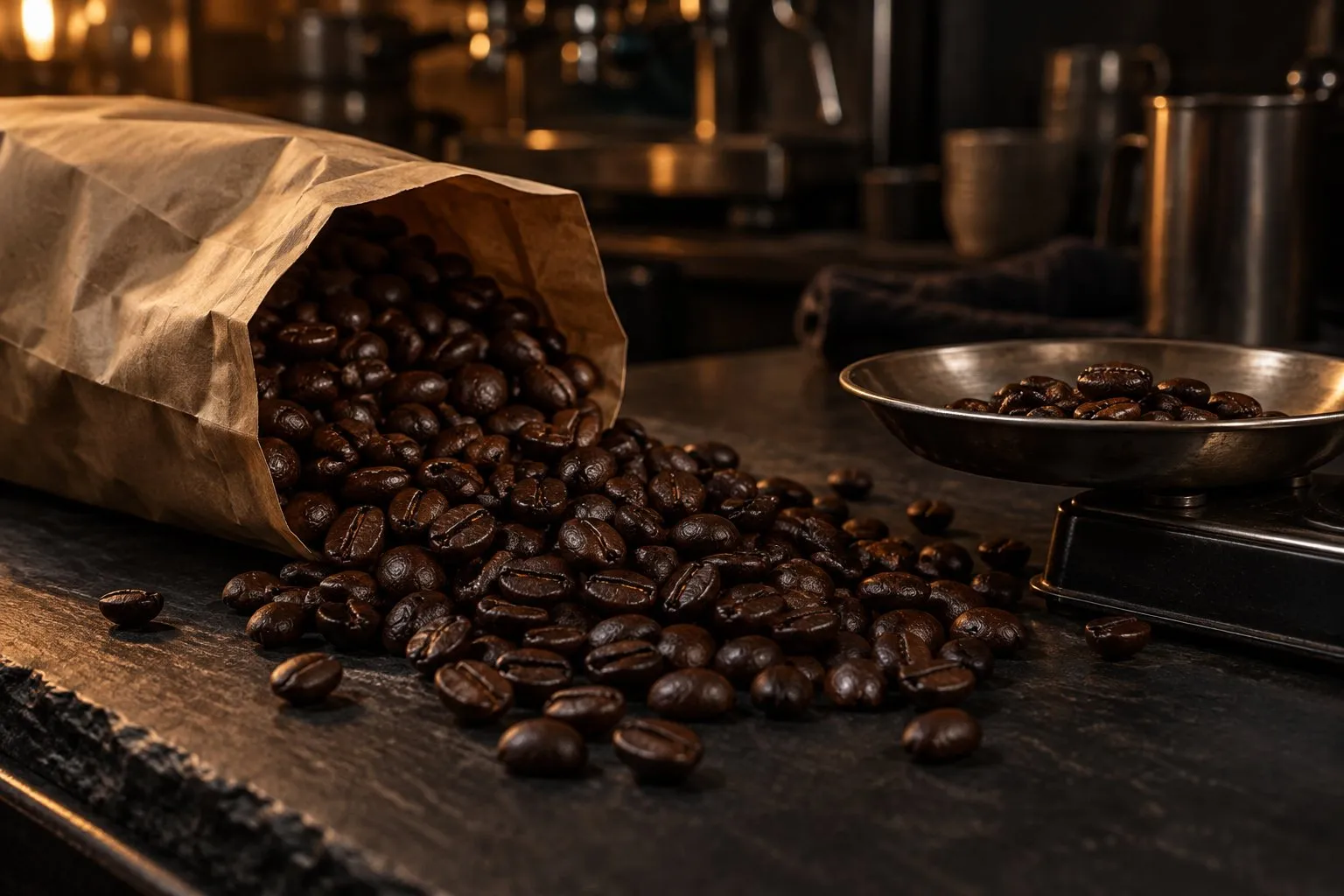
Our first pick is the Breville Smart Grinder Pro: Breville documents it and it fits 54 and 58 mm portafilters. Take the Baratza Encore ESP if you also brew filter, the Fellow Opus 2 for single dosing with a maker's spec page, and the 1Zpresso K-Ultra if you grind by hand and want a published step size.
On this page
The short verdict
Buy the Breville Smart Grinder Pro* if this is your first separate grinder and you want no surprises. If you already know why you want something else, the three numbers below will tell you what. Our espresso grinder guide sorts grinders by routine. This page sorts them by spec, for people who like to read the sheet before they read the review.
Breville Smart Grinder Pro
A programmable conical burr grinder with 60 settings and cradles for 50 to 54 mm and 58 mm portafilters.
Why here: Documented by its maker, programmable in 0.2 second steps, with cradles for 50 to 54 mm and 58 mm portafilters. The gaps are real too: no burr size and no retention figure.
Best for: A first separate grinder, especially beside a Bambino
- 60 grind settings (Breville)
- Grind time in 0.2 second steps (Breville)
- Portafilter cradles for 50 to 54 mm and for 58 mm (Breville)
- Breville's page does not state the burr size
- A hopper grinder, not built for single dosing
- Type
- Electric, hopper
- Burrs
- Stainless steel conical
- Grind settings
- 60
- Fits
- 50–54 mm and 58 mm cradles
- Price class
- Mid-range
Three numbers, side by side
We filled this table only from what the source states. “Not stated” means we couldn't find the value, and that tells you something too.
| Grinder | Burrs | Steps | Retention | Source |
|---|---|---|---|---|
| Smart Grinder Pro | Stainless conical, size not stated | 60 settings, espresso on 1 to 30, start at 12; grind time in 0.2 s steps | Not stated | Breville |
| Baratza Encore ESP | 40 mm conical M2, per Baratza | 40 settings, espresso range 1 to 20 | Not stated in what we read | Baratza, retailers |
| Fellow Opus 2 | 48 mm stainless conical | Stepless dial | “Near-zero”, no figure | Fellow |
| MiiCoffee DF54 | 54 mm flat | Stepless dial, 0 to 90 | 0.1 to 0.2 g, after the bellows | Tom's Coffee Corner |
| MiiCoffee DF64 II | Not stated | Not stated | Not stated | Listing |
| Eureka Mignon Notte | Not stated | Not stated | Not stated | Listing |
| SHARDOR conical | Conical | 51 settings | Not stated | Listing |
| KINGrinder K6 | Heptagonal stainless | 60 clicks per round, 16 microns per click | Not stated | KINGrinder |
| 1Zpresso K-Ultra | Heptagonal conical | 100 clicks per rotation, 20 microns per click | Not stated | 1Zpresso |
Look down the retention column. Nobody in this list gives a measured figure of their own. That's the honest state of this market, and it's why “low retention” in a title is worth so little.
| Our pick: first espresso grinderBreville Smart Grinder Pro | Baratza Encore ESP | Seller data onlyFellow Opus 2 | Seller data onlyMiiCoffee DF54 | |
|---|---|---|---|---|
| Type | Electric, hopper | Electric, hopper | Electric | Electric, single dose |
| Burrs | Stainless steel conical | 40 mm conical M2 (Baratza) | 48 mm conical, per listing | – |
| Grind settings | 60 | 40, split 1 to 20 and 21 to 40 (Baratza) | Stepless, per listing | – |
| Fits | 50–54 mm and 58 mm cradles | 54 mm dosing cup, 58 mm adapter (Baratza) | – | – |
| Price class | Mid-range | Mid-range | Mid-range | Mid-range |
| Best for | A first separate grinder, especially beside a Bambino | Buyers who make both espresso and filter coffee | One grinder for espresso and every other brew method | People who change beans often and weigh every dose |
| On Amazon(paid link to Amazon, opens in a new tab)Ad · paid link · check price & delivery on Amazon | On Amazon(paid link to Amazon, opens in a new tab)Ad · paid link · check price & delivery on Amazon | On Amazon(paid link to Amazon, opens in a new tab)Ad · paid link · check price & delivery on Amazon | On Amazon(paid link to Amazon, opens in a new tab)Ad · paid link · check price & delivery on Amazon |
Burr: how much it matters
Baratza sells both shapes, so its description is a useful one, though still a maker's. It calls conical burrs round and sweet, slightly more forgiving thanks to their fine particles, and lower in retention. It calls flat burrs clean and articulate, and good for single-origin espresso. We found no neutral study we could read that ranks one above the other, so we don't.
Burr size is a weaker clue than it looks too. A bigger burr is a bigger part, not a promise about your shot, and the Smart Grinder Pro's page doesn't state a size at all.
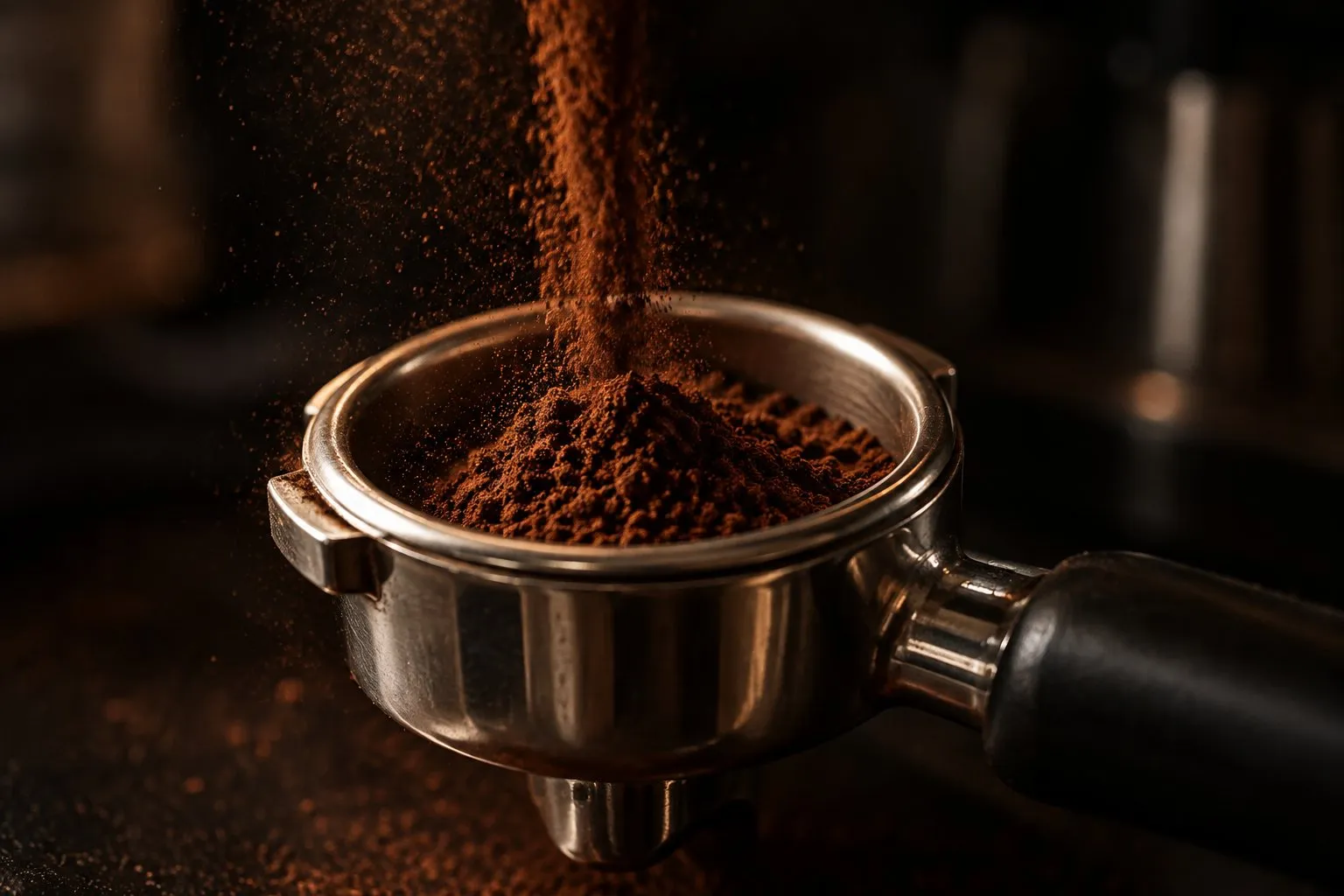
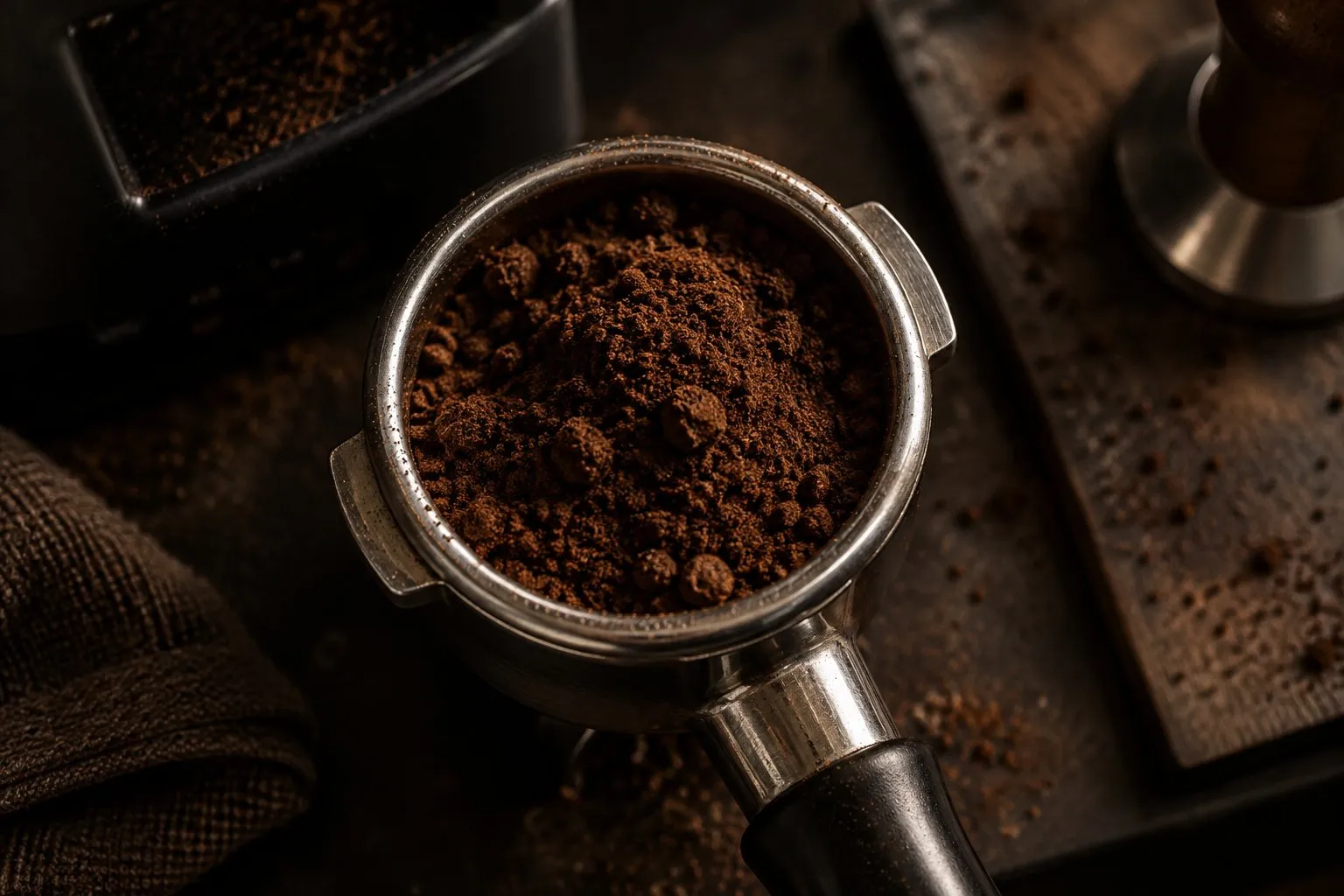
Steps: the number that decides dialing in
A setting count on its own says almost nothing. The Encore ESP has 40 settings, and Baratza puts its espresso range at 1 to 20. Breville's BCG820 manual gives settings 1 to 30 of the Smart Grinder Pro's 60 to espresso, starting at 12. So compare the fine end, if you can find it.
The only makers here that publish a step size are the hand grinder makers. KINGrinder gives 16 microns per click on the K6, and 1Zpresso gives 20 on the K-Ultra. Those are burr movements and not particle sizes, but they are real numbers you can compare. Two things to weigh: KINGrinder calls the K6 a versatile grinder and names its K4 as the one for espresso, so check that before you buy a K6 for espresso alone. And the Smart Grinder Pro gives you a second small move, since it meters grind time, and so the dose, in 0.2 second steps.
Stepless dials, on the Opus 2 and the DF54, have no clicks at all, so you can stop anywhere. The trade-off is that you have no numbered click to go back to, though the DF54's dial does have markings. The test that matters is simple: can you move a shot by a few seconds with the smallest change you can make?
Retention: what's left inside
Retention is the coffee that stays in the grinder after you think you have finished. It matters if you change beans often, because the old grounds end up in the next shot. If you stay with one coffee, you can care a lot less.
The evidence is thin. Fellow claims “near-zero” for the Opus 2 with no figure. Tom's Coffee Corner reports about 0.1 to 0.2 g on the DF54 after using the bellows, with some caked powder left on the burr edges and screws. At an 18 g dose, 0.2 g is about 1 percent. We found no agreed way of measuring this, so treat every figure as a rough guide. Our dial-in guide shows how to keep the shot itself consistent.
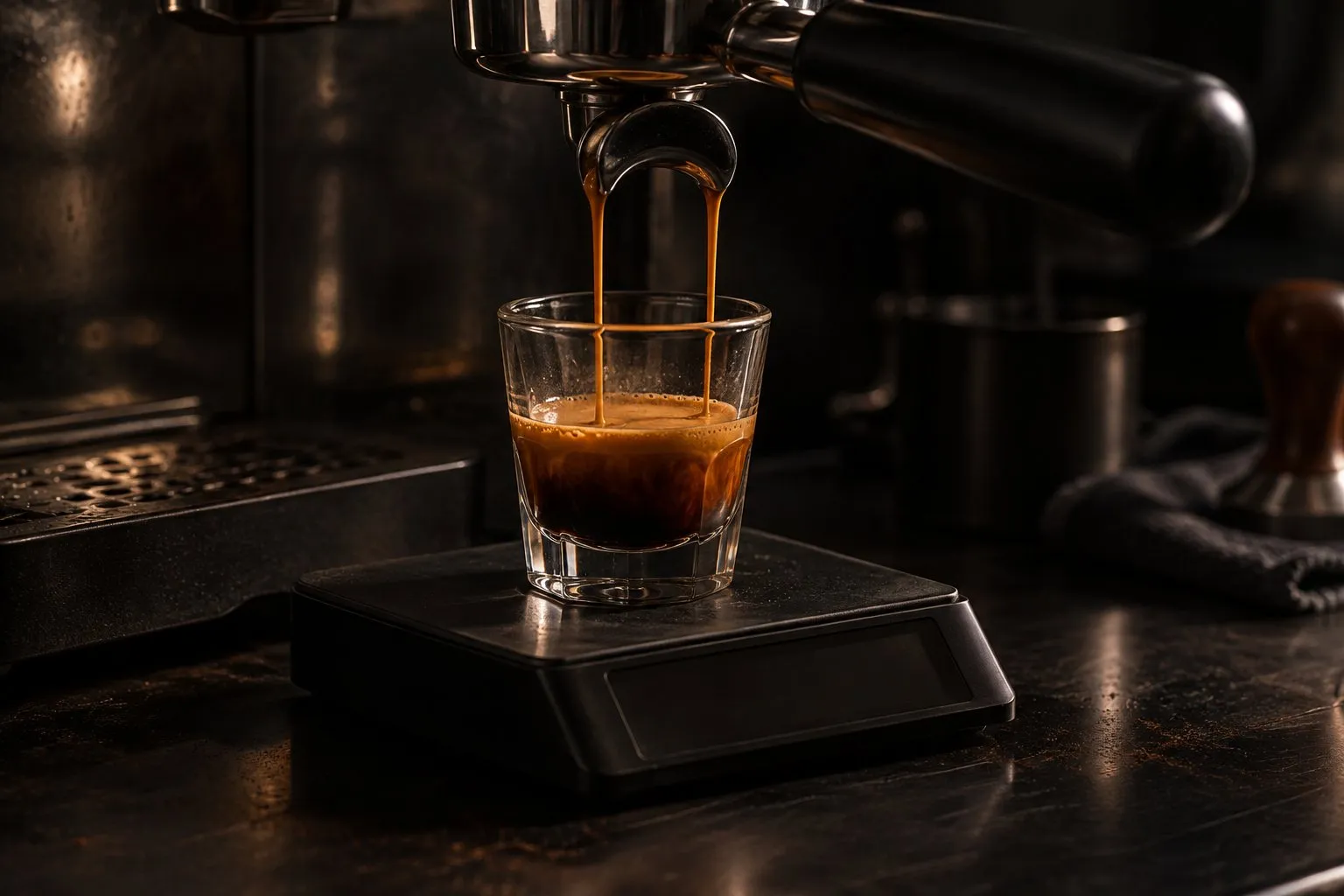
Your scale can check a retention claim
Weigh the beans in and the grounds out. Do it a few times with the same grinder, because any one reading can mislead. The gap tells you what stays behind on your own counter, which is worth more than any figure in a listing.
Take this one if
If this is your first separate grinder, or you pair it with a Bambino or Gaggia → Breville Smart Grinder Pro
View(paid link to Amazon, opens in a new tab)Ad · paid link · check price & delivery on AmazonIf you also brew filter and want the settings split for you → Baratza Encore ESP
View(paid link to Amazon, opens in a new tab)Ad · paid link · check price & delivery on AmazonIf you single dose and want a dosing cup for 54 and 58 mm, per Fellow → Fellow Opus 2 · Seller data only
View(paid link to Amazon, opens in a new tab)Ad · paid link · check price & delivery on AmazonIf you single dose and accept slow grinding, as one review reports → MiiCoffee DF54 · Seller data only
View(paid link to Amazon, opens in a new tab)Ad · paid link · check price & delivery on AmazonIf you grind by hand and want a published step size → 1Zpresso K-Ultra · Seller data only
View(paid link to Amazon, opens in a new tab)Ad · paid link · check price & delivery on AmazonIf you would rather have it all in one box
A few caveats, since most of these carry the “Seller data only” label on our cards. The DF64 II* and the Mignon Notte* are options we couldn't check against a maker's page. The SHARDOR* sits in the budget class with 51 settings per its title, and as with any big count, that says nothing about step size. The K6* suits a small budget and one or two shots a day. Tom's Coffee Corner also found the DF54 slow, at about 1 g per second against about 1.5 g on a Baratza ESP.
Should your machine already have a grinder, read built-in or separate before you add one. And how we compare explains why we state gaps instead of filling them. The grinder still needs a machine to feed, and our semi-automatic guide starts there.
Asked at the bar
What is the best burr grinder for espresso?
For a first grinder we pick the Breville Smart Grinder Pro, because it is documented by its maker, programmable in 0.2 second steps and fits both common portafilter sizes. We compare by spec sheet and run no tests of our own, so read that as the best-documented starting point. It is not a claim about the cup.
Do more settings mean a better espresso grinder?
No. What counts is how small the steps are at the fine end, and few makers publish that. The Baratza Encore ESP has 40 settings, but its espresso range is 1 to 20. The Smart Grinder Pro has 60, and Breville's manual gives settings 1 to 30 to espresso, starting at 12. Check whether one step can move a shot by a few seconds.
What is grinder retention, and how much does it matter?
Retention is the coffee left inside the grinder after a dose. It matters most if you change beans often, because old grounds end up in the next shot. One independent review measured 0.1 to 0.2 g on a MiiCoffee DF54, about 1 percent of an 18 g dose. Most makers publish no figure at all, or only a claim like near-zero.
Flat or conical burrs: which is better for espresso?
Neither has been shown better in anything neutral we could read. Baratza, which sells both, describes conical as round and sweet and a little more forgiving, and flat as clean and articulate. Most grinders on this page are conical. Choose on steps and workflow first, and treat the burr shape as a question of taste.
Is a hand grinder good enough for espresso?
It can be, and hand grinder makers are the ones in our list that publish step size: 16 microns per click on the KINGrinder K6 and 20 on the 1Zpresso K-Ultra. Note that KINGrinder describes the K6 as a versatile grinder and names its K4 as the espresso model. The cost is effort, since you grind by hand for every shot.
Where this comes from
Next round
- Espresso grindersWhat makes a grinder suitable for espresso: burrs, small steps and clean dosing. One clear pick, the alternatives sorted by routine, and honest notes on the data.
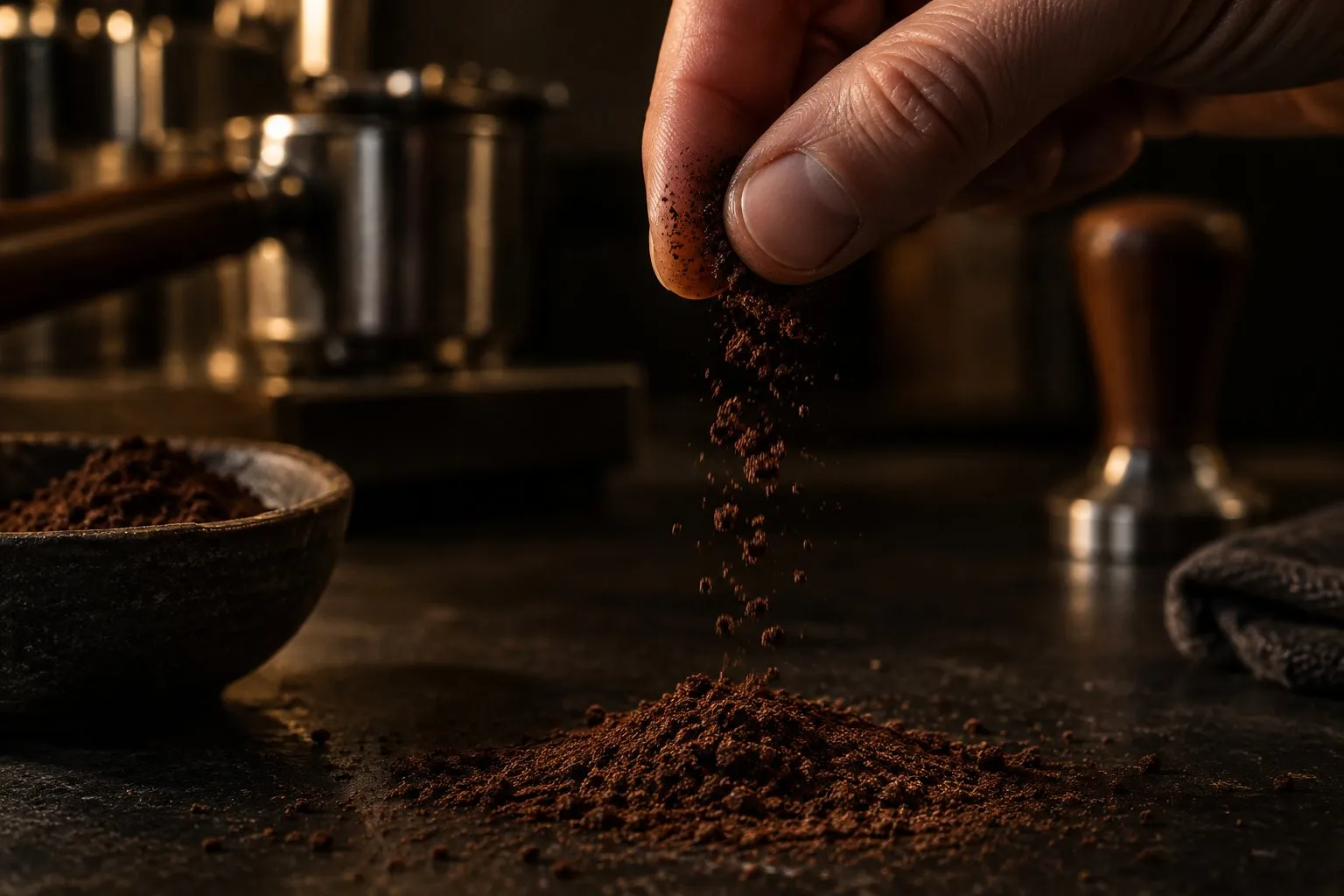 Espresso grind sizeHow fine to grind for espresso: start near fine table salt, then let the shot decide. Why no setting transfers, where finer stops working, and what coarser can do.
- How we compareHow our espresso machine picks come about: spec sheets, standards and published research, what we cannot verify, which outside tests exist, and how we are funded.
- Built-In Grinder or Separate Grinder for Espresso: Which Setup Should You Buy?Built-in grinder or separate grinder? The price math in words, the settings compared, and the upgrade path, with one clear rule for choosing your espresso setup.
- Dial in espressoHow to dial in espresso: fix the dose, set a yield, then change only the grind until time and taste line up. Steps, a symptom table and the exception to the rule.
semiautomaticespressomachine.com Editorial Team
Espresso gear & shot craft
We are the editorial team at semiautomaticespressomachine.com. We read maker spec sheets, manuals, standards and published research on espresso and turn them into plain-English buying advice, with sources on every page. We do not run lab tests, and we say so openly.
- Spec sheets & standards read
- Sources on every page
- No lab tests – stated openly
- Publisher details in the imprint