Espresso Beans vs Coffee Beans: A Label, Not a Species
Espresso beans are coffee beans. Espresso on a bag is a suggestion from the roaster. Any roasted bean can be brewed as espresso. The National Coffee Association says espresso roast isn't a specific roast level, so read the label as the roaster's opinion about how this coffee will taste under pressure.
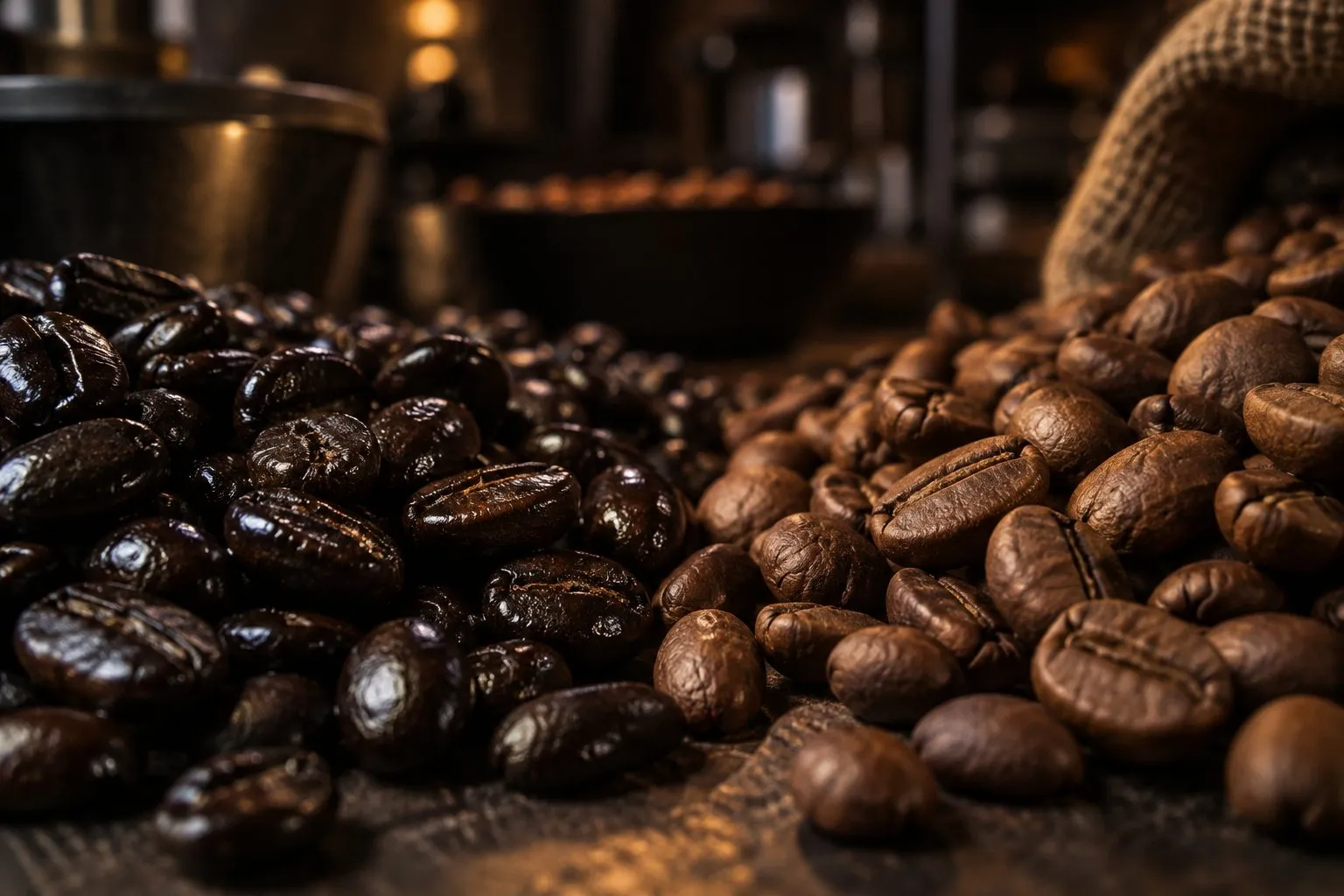
There is no separate espresso bean. Espresso on a bag is a suggestion from the roaster, and any roasted bean can be brewed as espresso. The label usually means the roaster chose a blend or roast with that brew method in mind, and it doesn't name a roast level. What changes the shot is the roast, the freshness, and your grind.
On this page
The aisle makes it look like two products: coffee on one shelf, espresso on another. It's the same crop. What differs is the roaster's intent and sometimes the roast. That's worth knowing before you pay attention to the wrong word on the bag.
We found no primary source that defines “espresso beans”, so the opening line is our editorial reading of what the sources below add up to.
What the word on the bag means
Espresso is a way of brewing, not a kind of bean. Italy's espresso institute, INEI, defines it as the drink you get by forcing adequately pressurized hot water through coffee powder. So the definition sits in the brewing, and any roasted bean can go through that process.
The word on the bag does carry some meaning, though. The National Coffee Association says espresso roast isn't a specific roast level. The coffee in an espresso roast or blend is roasted according to what the roaster thinks will best serve that brew method. That is useful information. It just isn't a standard, and two bags with the same word can be very different coffees.
INEI's certified espresso goes a step further and asks for a “qualified” blend, tested under its scheme. That's a certification for Italian bars, and it says nothing about what's inside a supermarket bag with the same word on it.
What the roast changes
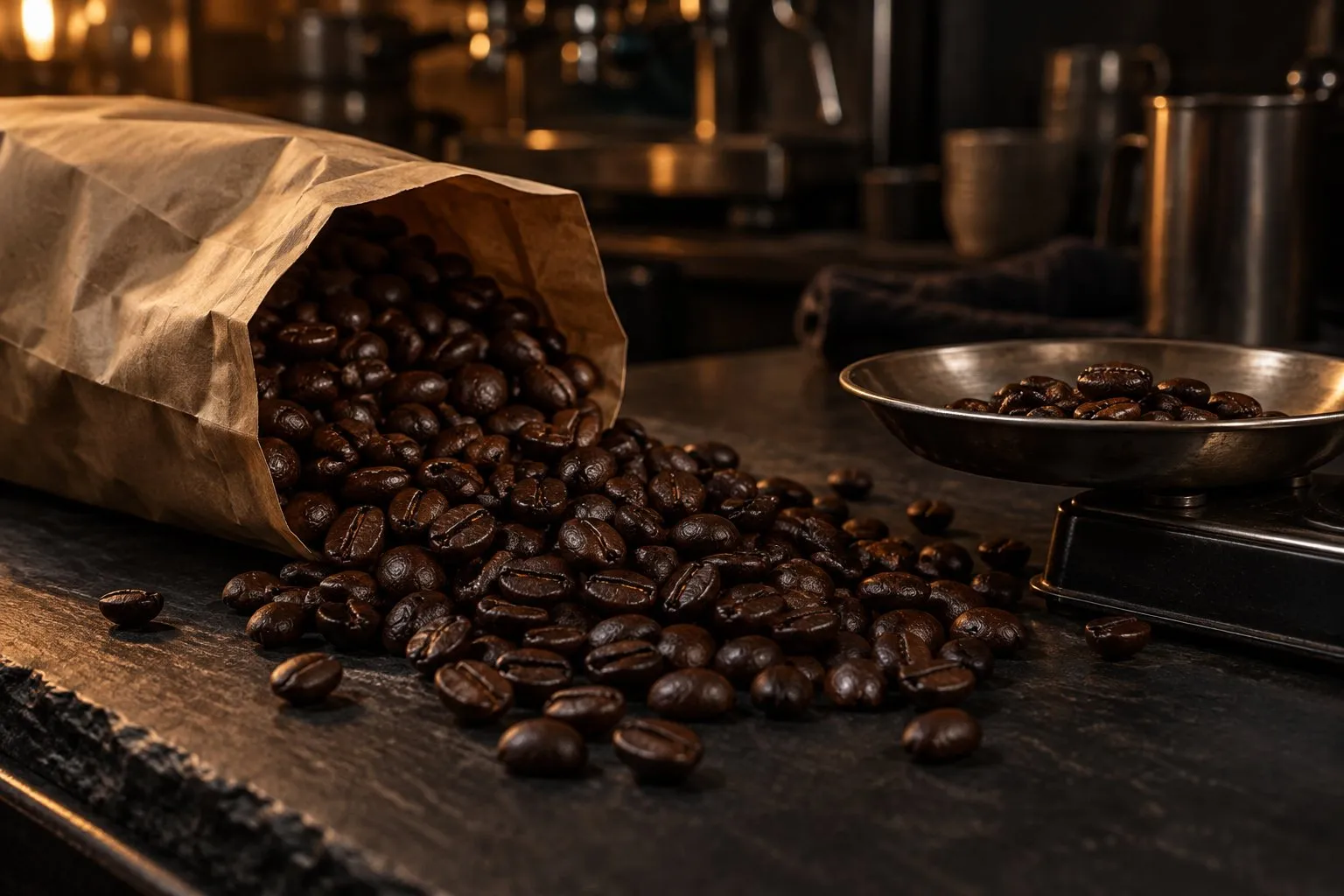
Roast is the real variable behind most of what people mean by “espresso beans”. The National Coffee Association groups roasts by color into three families, and it warns that names vary between roasters.
| Roast | Surface | Taste, per the NCA | What it means at the machine |
|---|---|---|---|
| Light | Matte | Subtle roast flavor, more acidic | May need more work to dial in, by our assessment, because sourness shows easily |
| Medium | Not oily | Stronger flavor | A forgiving place to start, by our assessment |
| Dark | Oily | Pronounced bitterness, less acidic | Breville's guide says the darker the roast, the finer the setting should be |
So if you buy a dark bag labeled espresso and a light one labeled filter, you are comparing roasts, not bean types. Swap the labels and the coffee doesn't change.
Oil matters too in a practical way. Breville's Barista Pro manual has a cleaning step for the conical burrs because oil buildup can impede performance. If you run dark, oily coffee, keep up with that step.
Grind does more than the label
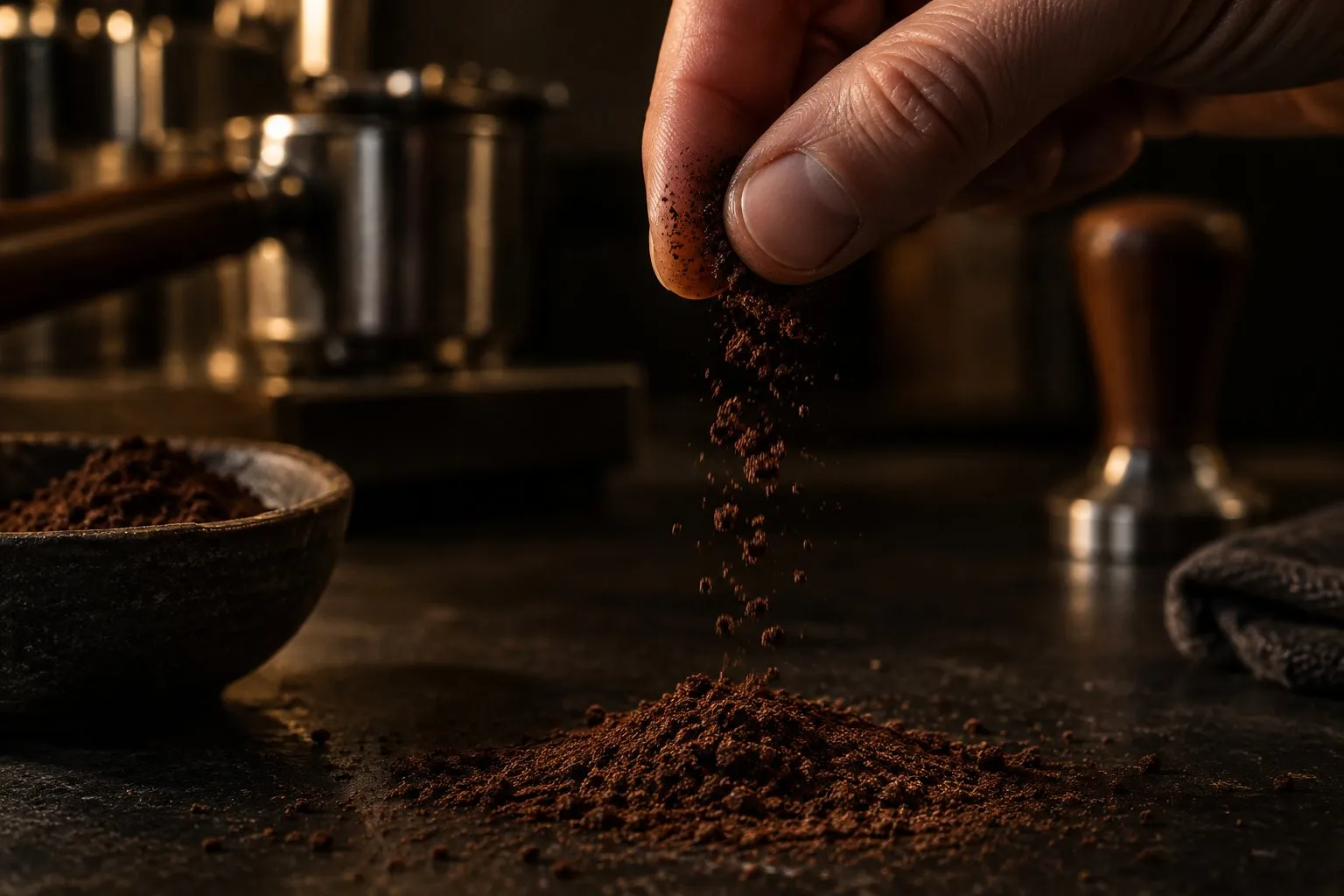
What makes a coffee work as espresso on your counter is mostly fine grind and the recipe. Breville's guide sets a first recipe at 18 to 22 g, a 1:2 ratio and 25 to 30 seconds. A good first recipe, not a standard. Italy's certified espresso is 7 g to 25 ml. Change beans, and you can expect to adjust the grinder again.
What to check on the bag instead
Here's what we would read, in order.
- The roast date. Breville's Barista Pro manual recommends a “Roasted On” date over a “Best Before” date and says beans are at their best 5 to 20 days after roasting. It adds that stale coffee may pour too fast and taste bitter and watery. Many bags don't print one, and that's a useful answer in itself.
- Whole bean. Gaggia's Classic Evo manual says it would be ideal to grind just before use. Grinding fresh is what lets you adjust at all.
- Roast description. Words like “chocolate and nuts” or “bright and floral” tell you more than the word espresso. So does the color of the beans.
- Roasted, not green. The Barista Pro manual warns against grinding unroasted or under-roasted beans, which are dense and can damage a burr grinder or even pose a safety risk.
Does the label get you more crema?
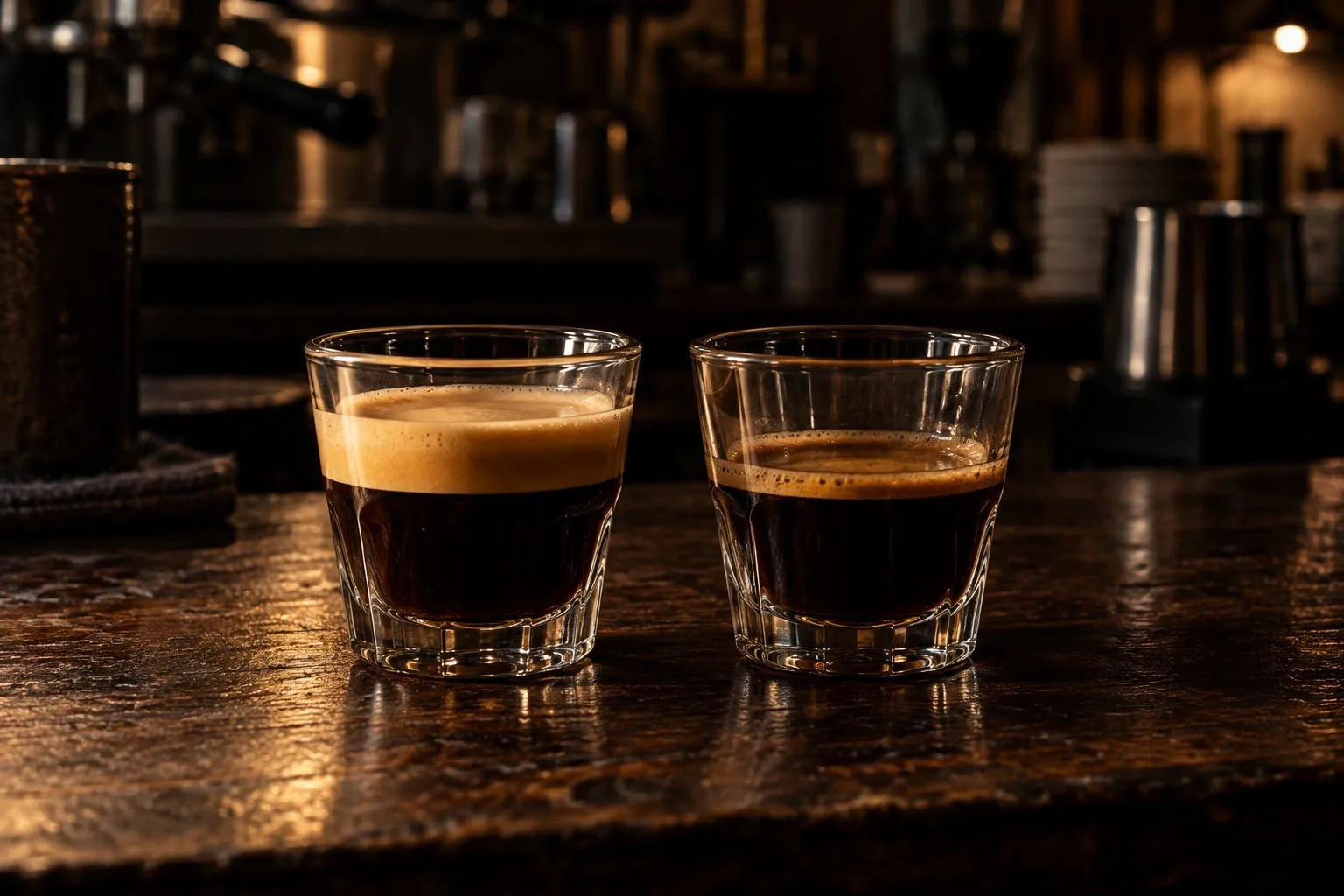
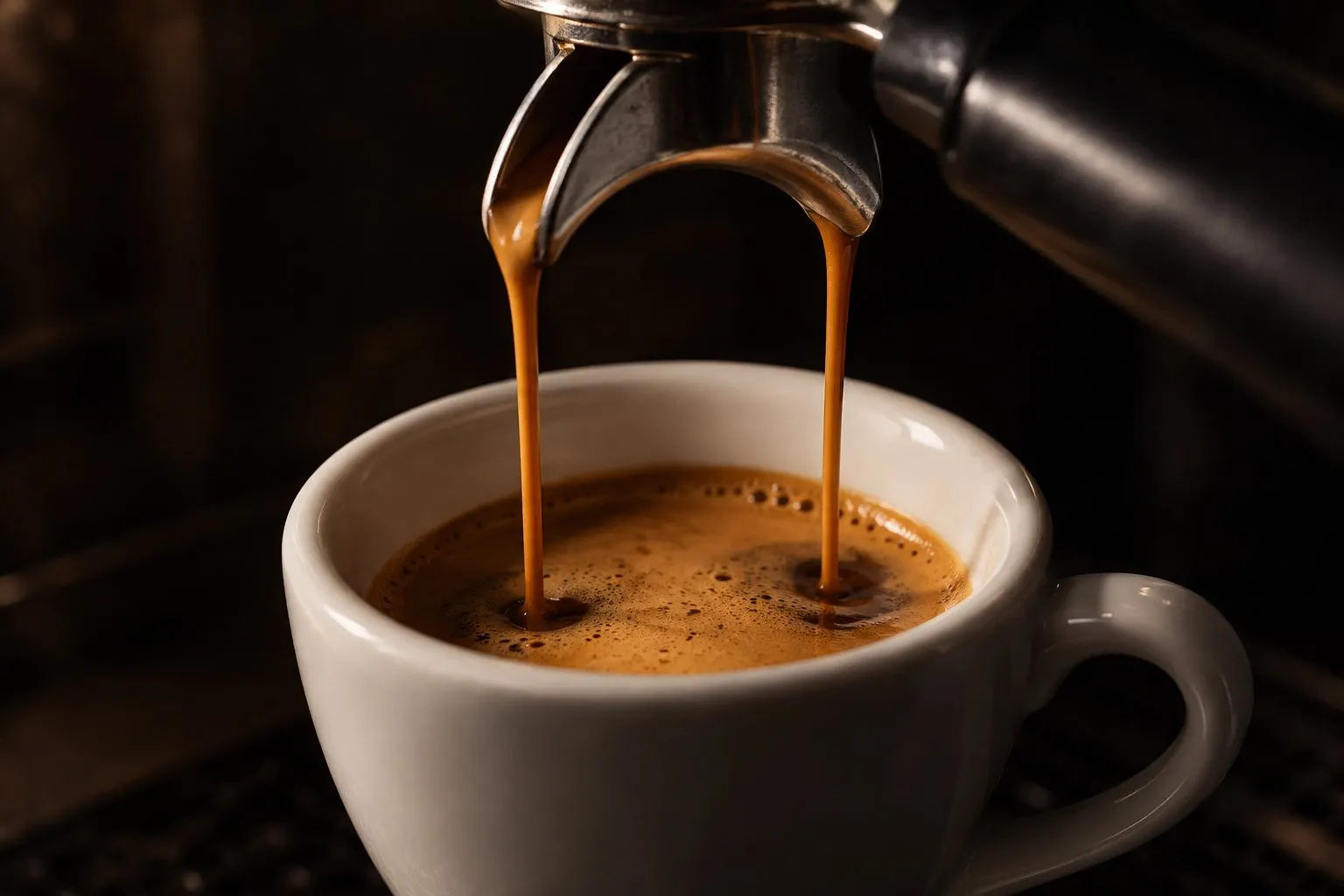
Crema is the reason many people reach for the espresso bag, so it deserves a line. Crema shows CO2, so freshness and roast. It says little about flavor. A fresh bag will likely do more for your crema than a label will. Our page on crema sets out the evidence, including what is and isn't known about bean species.
If your shots are off, the label is rarely why. Sour espresso and bitter espresso both start with grind and yield, not with a different bag. If you are ready to dial in a new coffee, follow our process page and change one thing at a time.
So should you buy the espresso bag?
Yes, if you like the description and the roast date is recent. It's a fair starting point from a roaster who has thought about pressure brewing. No need to go out of your way for it, though. A fresh medium roast labeled for filter is a perfectly good thing to try in your machine, and a stale bag labeled espresso won't make up for its age.
For specific bags, roast levels and what's worth buying, go to our espresso beans guide. To see how beans fit with the rest of your setup, start at our guide to semi-automatic machines.
Asked at the bar
Can I use regular coffee beans in an espresso machine?
Yes, as long as they are roasted whole beans and you can grind them fine enough. A bag without the word espresso isn't a problem. You may need a different grind and recipe, because Breville's guide says the darker the roast, the finer the setting should be. By our assessment, very light coffee may also take more dialing in.
Can I use espresso beans for drip coffee?
Yes. They are ordinary roasted coffee, and you grind them coarser for drip. The roaster picked that blend or roast with espresso in mind, so it may taste heavier or more roasted than you are used to. Try a small bag first if you normally drink lighter coffee.
Are espresso beans darker than coffee beans?
Often, not always. The National Coffee Association says espresso roast isn't a specific roast level, and each roaster decides what will serve the brew method best. One roaster's dark may also differ from another's. So look at the bean surface and the roaster's description instead of the word espresso.
Does an espresso blend need to be arabica?
No. The Italian certification leaflet we read asks for a qualified blend, and it names no required species. Breville's Barista Pro manual recommends quality 100% arabica, which is one maker's advice. Blends vary widely, so taste decides here more than a rule does.
Where this comes from
- National Coffee Association: coffee roasts guide
- INEI: Certified Italian Espresso and Cappuccino leaflet (copy on a third-party server)
- Breville: how to dial in espresso
- Breville: Barista Pro instruction book (US, Canada, Mexico)
- Gaggia: Classic Evo (RI9481) operating instructions, copy on a third-party server
Next round
- Espresso beansChoosing coffee beans for espresso: why the roast date matters more than the word on the bag, what roast and blend change, and two Lavazza bags with their limits.
- What is cremaWhat crema is: foam made mostly of CO2 from roasting. What changes it, what it tells you about a shot, and why more crema or added robusta doesn't mean better.
- Espresso grind sizeHow fine to grind for espresso: start near fine table salt, then let the shot decide. Why no setting transfers, where finer stops working, and what coarser can do.
 Dial in espressoHow to dial in espresso: fix the dose, set a yield, then change only the grind until time and taste line up. Steps, a symptom table and the exception to the rule.
- Sour espressoSour espresso usually means under-extraction. What to change first, when grinding finer stops helping, and where roast, water and temperature fit in.
semiautomaticespressomachine.com Editorial Team
Espresso gear & shot craft
We are the editorial team at semiautomaticespressomachine.com. We read maker spec sheets, manuals, standards and published research on espresso and turn them into plain-English buying advice, with sources on every page. We do not run lab tests, and we say so openly.
- Spec sheets & standards read
- Sources on every page
- No lab tests – stated openly
- Publisher details in the imprint