What Is Crema? Foam, CO2 and Why More Is Not Automatically Better
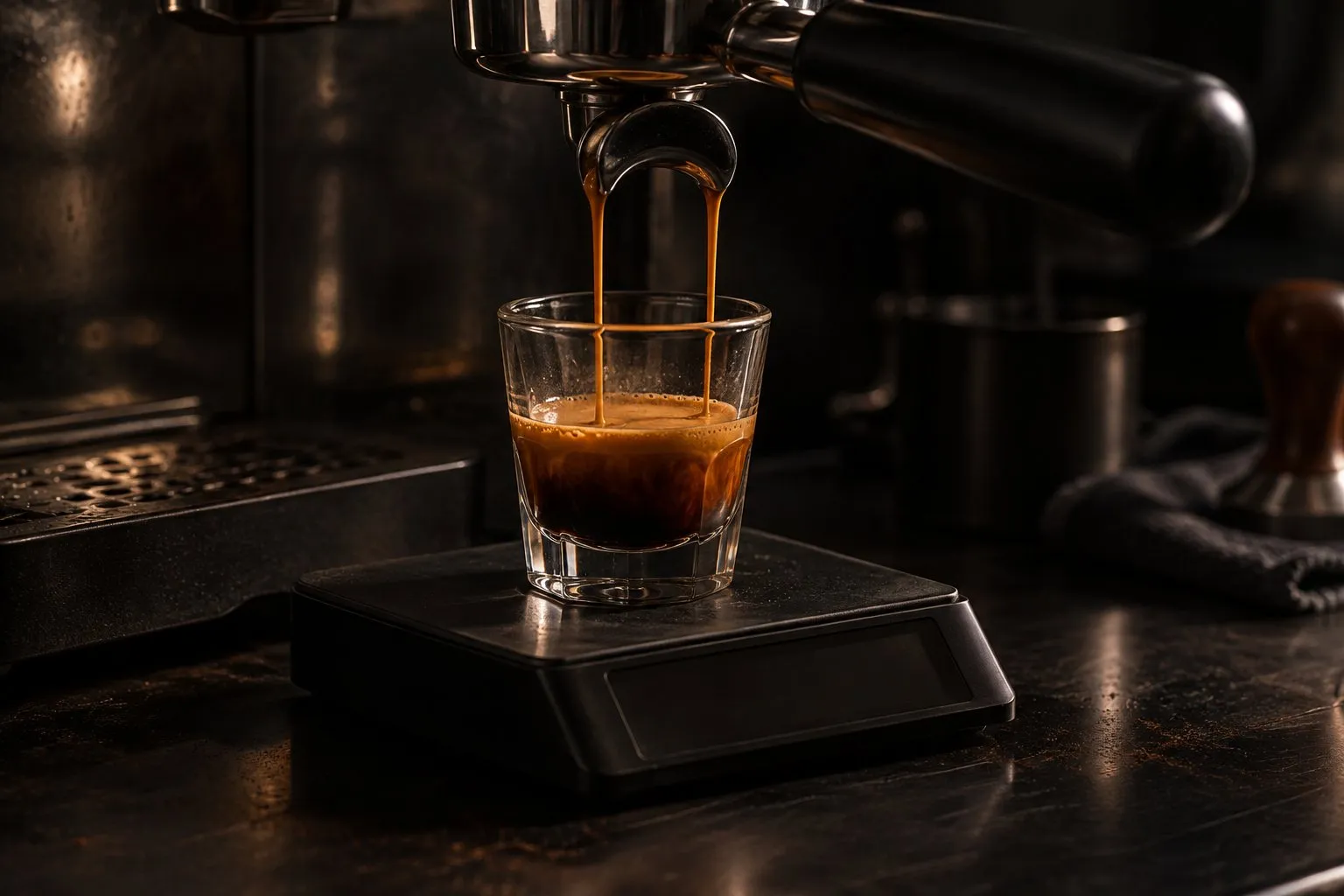
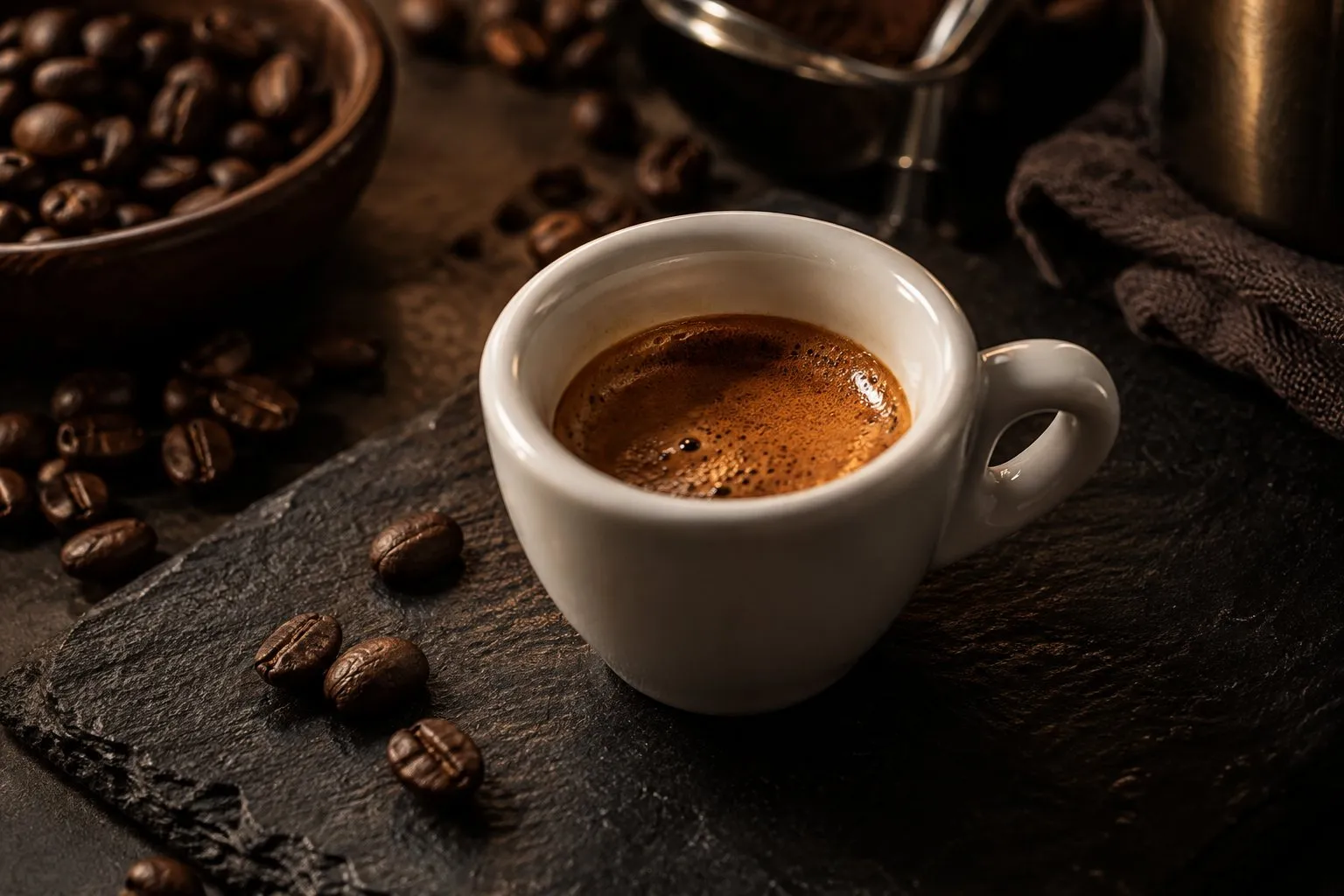
Crema is the foam on top of an espresso: tiny gas bubbles, mostly CO2 from roasting, held in the coffee's own liquid. Crema shows CO2, so freshness and roast. It says little about flavor, and more of it is not automatically better.
Disclosure: This page contains affiliate links (marked with *). If you buy through them, we earn a small commission at no extra cost to you. As an Amazon Associate I earn from qualifying purchases. Learn more
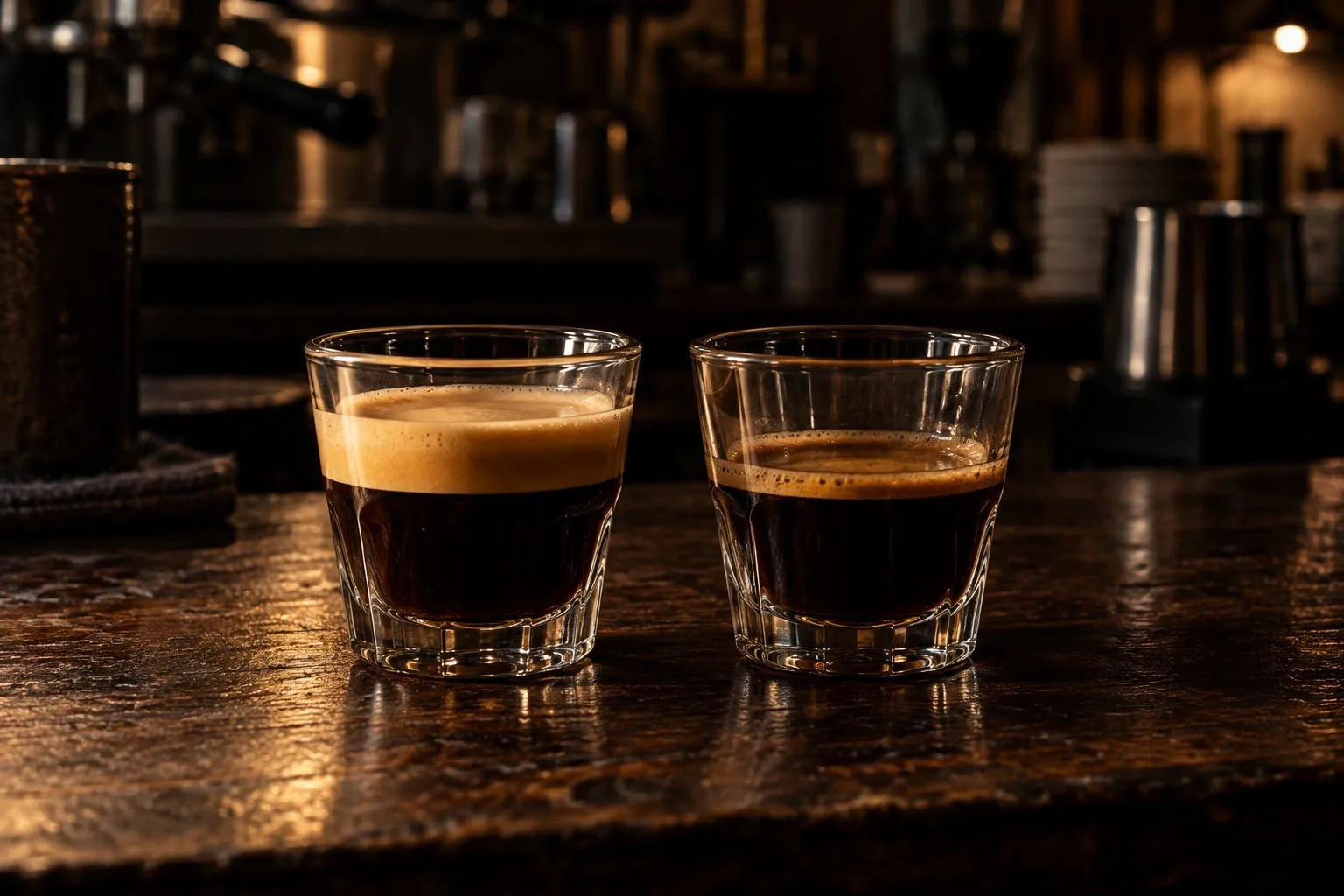
Crema is the layer of foam on an espresso, made mainly of CO2 that roasting left in the beans and brewing released into the cup. It tells you about freshness and roast. A scientific review reports it has little sensory interest by itself, and says the supposed need for robusta is substantially contradicted by recent data.
On this page
Crema gets more attention than any other part of a shot, mostly because it's the part you can see. Italy's espresso institute, INEI, describes it as a hazelnut-colored froth with a fine, tight texture, and it counts that froth in the cup volume. That is a fair description of what it looks like. What it means is a different question, and the best answer we found is a 2011 review by Illy and Navarini in Food Biophysics. Most of this page draws on it. Both authors are listed under illycaffè, so a coffee company wrote it, and they say the measuring methods have never been standardized.
What crema is made of
Crema is a foam. Roasting produces CO2, which stays in the beans. Grinding and brewing release it, and the bubbles end up trapped in a thin film of coffee liquid. The review calls CO2 content the key to understanding the many things that affect crema. Foam volume and foam weight both track it closely.
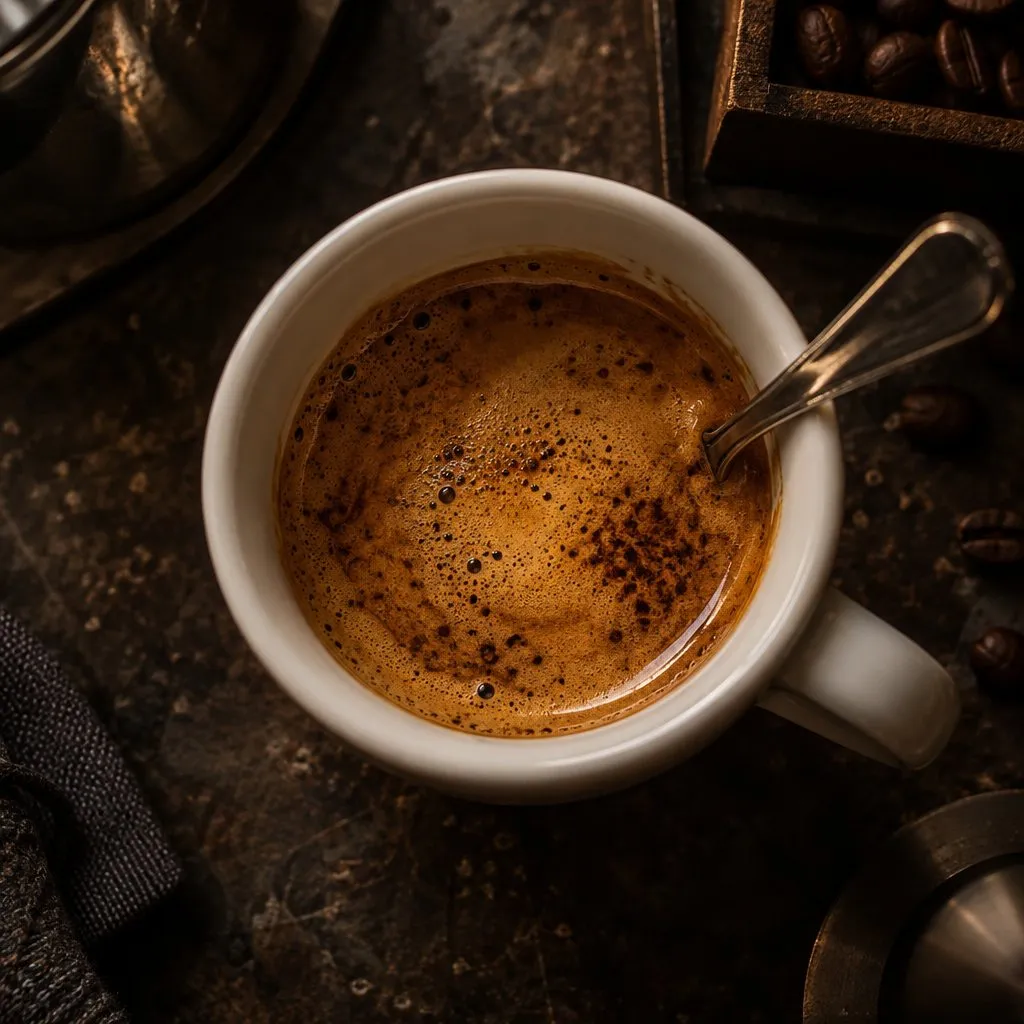
A foam that is already falling apart
The review describes crema as metastable. It starts as a wet, bubbly layer and turns into a drier foam as it ages, until the liquid below shows through. It reports espresso lipids as foam-negative: they appear to weaken the film around each bubble. So crema is a balance between gas that builds foam and fats that break it down.
- 10%
- Minimum foam share of the cup volume, an older benchmark cited in the review
- 0.40–0.60 g/mL
- Reported foam density, so it weighs far less than the liquid below
- 2+ minutes
- How long it should last before a dark spot appears, per the review
- 88–98 °C
- Water temperature range with no significant effect on foam volume
What changes it
| Factor | What the review reports | At your machine |
|---|---|---|
| Time since roasting | CO2 loss starts at roasting and continues even in whole beans, and foam tracks CO2 | Older coffee, less foam |
| Roast degree | Volume rose with roast in one data set, and a very dark roast gave less than a dark one in another. Persistence peaked at a medium roast | Dark gives more foam up to a point, medium gives longer-lasting foam |
| Time since grinding | One cited study found over 70% of the CO2 released after grinding to 500 μm | Grind just before you brew |
| Stored ground coffee | Coffee stored ground for 36 hours scored at the very bottom of one study's foam-strength range, and the review advises brewing within 30 minutes of grinding | Pre-ground costs you foam first |
| Water pressure | Higher pressure gave more volume, 5.1 to 6.9 mL in the cited study | Not a reason to shop by the pump number |
| Water temperature | No significant effect between 88 and 98 °C (about 190 to 208 °F) | Don't change temperature for crema |
| Species | The CO2 and lipid balance matters more than arabica or robusta | Pick the coffee you like the taste of |
Don't read the pressure row as a point for high-bar machines. The 15 or 20 bar on the box is what the pump can reach. Espresso is brewed at about 9 bar, and our comparison of 15 and 20 bar covers the rest.
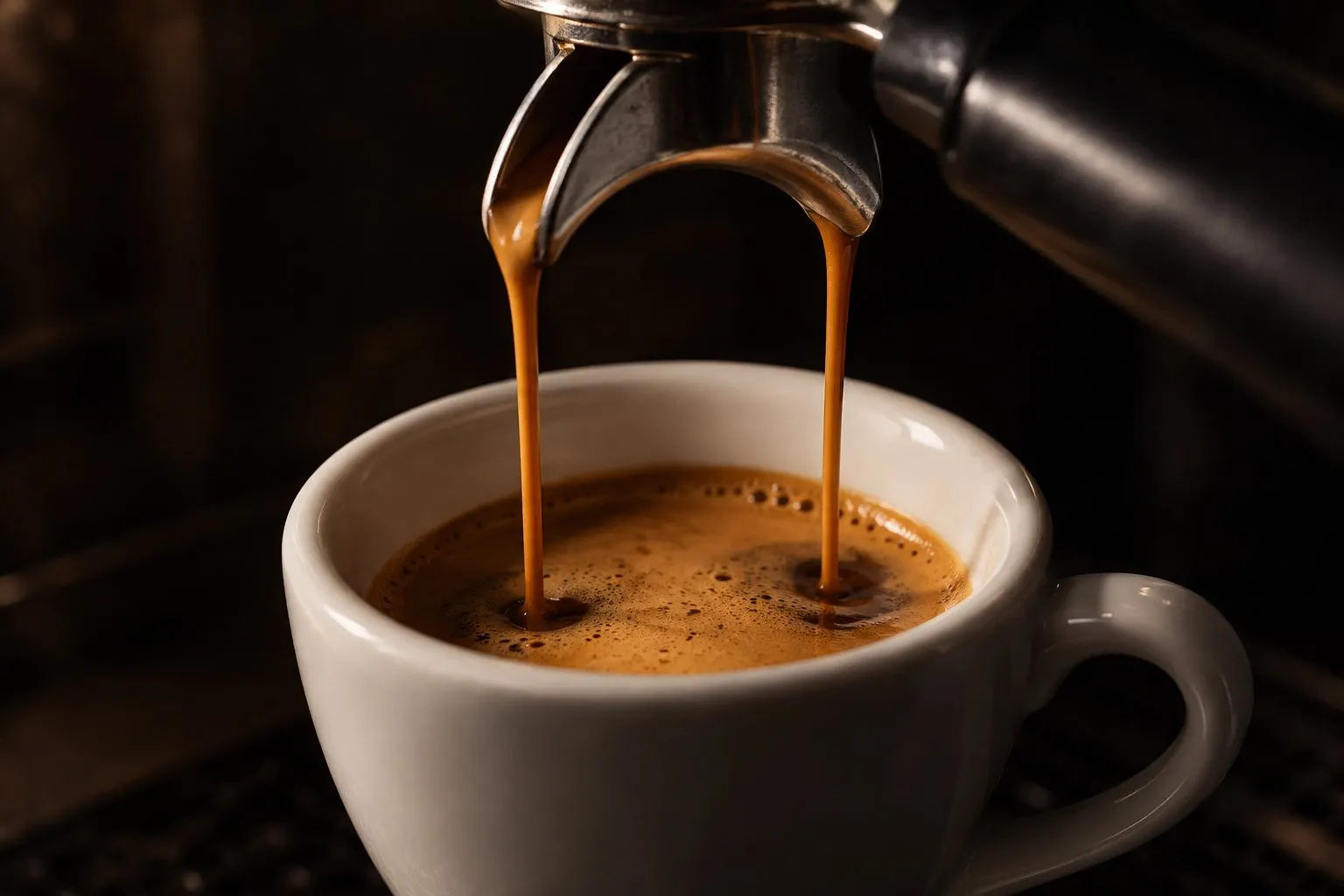
Most of what you see on top was made at the roaster.
Two claims worth dropping
“Robusta gives more crema.” You will see this in a lot of retail copy. The review addresses it directly: the claim that robusta is indispensable for proper crema is substantially contradicted by recent experimental data, and the authors say the idea can't be generalized. There are real differences. Pure robusta foam clung to solid surfaces in one study, the way beer foam laces a glass, and pure arabica foam didn't. Meanwhile arabica shows the “tiger skin” pattern that robusta lacks. Arabica usually holds more total lipid, so its foam may be more prone to breaking down. Those are differences in foam, not a ranking of espresso. And you don't need a bag labeled for the job. Espresso on a bag is a suggestion from the roaster. Any roasted bean can be brewed as espresso.
“More crema means a better shot.” The review reports that crema by itself is of little sensory interest, though bitterness and astringency can stand out when it is tasted alone. It also notes that higher foam volume tends to go with lower persistence, so even “better foam” isn't one thing. The authors suspect CO2 may affect taste, and they say nobody has studied that properly yet. INEI, for its part, grades the foam as one item in a longer sensory profile, next to aroma, body and the balance of sour and bitter.
Crema as a clue to the shot
Crema does have one everyday use. Breville's instruction book for the Bambino reads it together with flow and color:
| What you see | Flow | Breville's verdict |
|---|---|---|
| Golden brown, with a fine mousse texture | Slow, like warm honey | Correct extraction |
| Thin and pale | Fast, like water | Under-extraction |
| Dark and spotty | Drips, or not at all | Over-extraction |
Use that as a quick read, then let your scale and your tongue decide. A fast, pale shot points you to our sour espresso page, and a slow, dark one to bitter espresso. The full routine is in our dial-in guide.
Baskets complicate the picture. Breville says its dual wall baskets regulate the pressure and help the extraction regardless of grind, dose, tamp or freshness. Our reading is that foam from a dual wall basket tells you less about your coffee and technique than foam from a single wall basket does. If you want crema to work as a clue, use a single wall basket, as Breville advises for freshly ground beans.
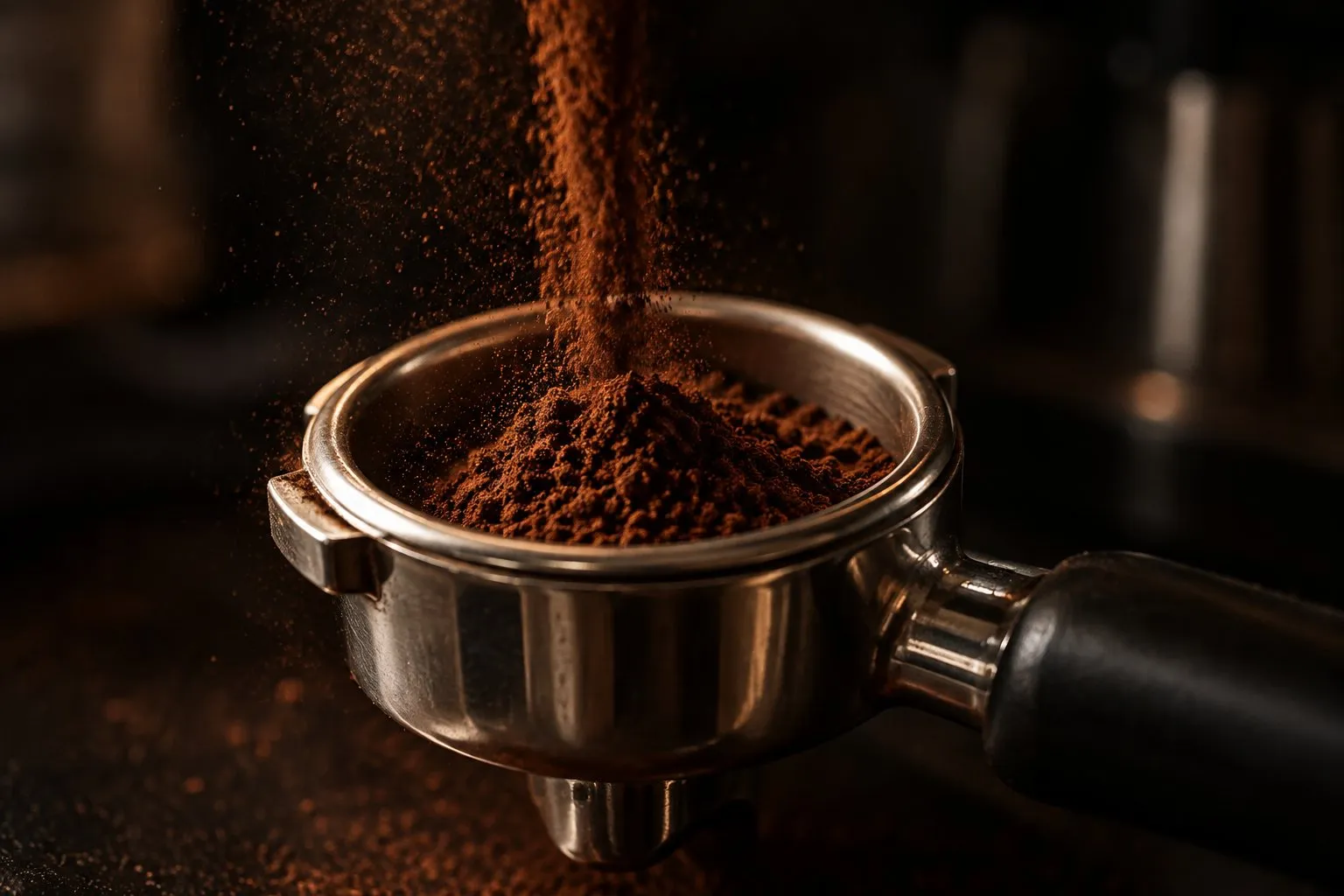
The easy way to get more of it
If you do want more crema, the sources point to the same short list. Buy coffee with a roast date, and Breville suggests using it 5 to 20 days after that date. Grind right before the shot. Use a single wall basket once your grind can support it. Change nothing else until you have tasted the result.
Where a grinder fits
Fresh grinding is the one change here that also helps your everyday espresso routine, because you can then adjust the grind to the coffee in front of you. Our espresso grinder comparison has the options, and our espresso beans page covers the bag.
Breville Smart Grinder Pro
A programmable conical burr grinder with 60 settings and cradles for 50 to 54 mm and 58 mm portafilters.
Why here: Grinding fresh for each shot is the most direct way to keep the CO2 that crema depends on, and this grinder is our first pick.
Best for: A first separate grinder, especially beside a Bambino
- 60 grind settings (Breville)
- Grind time in 0.2 second steps (Breville)
- Portafilter cradles for 50 to 54 mm and for 58 mm (Breville)
- Breville's page does not state the burr size
- A hopper grinder, not built for single dosing
- Type
- Electric, hopper
- Burrs
- Stainless steel conical
- Grind settings
- 60
- Fits
- 50–54 mm and 58 mm cradles
- Price class
- Mid-range
Asked at the bar
What is crema made of?
It is a foam of gas bubbles in the coffee's liquid. Illy and Navarini's 2011 review says the gas comes mainly from CO2 formed during roasting, with bicarbonate in the water as a possible second source. Lipids and other coffee compounds shape how the foam behaves, and lipids tend to destabilize it.
Why does my espresso have no crema?
Breville's Bambino book lists four causes: coffee tamped too lightly, a grind that is too coarse, coffee that isn't fresh, and a blocked filter basket. It suggests using beans 5 to 20 days after the roast date and pre-ground coffee within a week. Start with freshness and grind, since the review ties crema so closely to CO2.
Does more crema mean a better shot?
No. Crema shows CO2, so freshness and roast. It says little about flavor. Illy and Navarini report that crema is of little sensory interest by itself, and that higher foam volume tends to go with lower persistence. A thick layer can tell you the coffee is fresh without telling you the shot tastes good.
Does robusta give more crema?
Not as a general rule. The claim that Italian espresso needs robusta for proper crema is, in the words of the 2011 review, substantially contradicted by recent experimental data. The authors conclude that the balance of CO2 and lipids matters more than the species. Robusta and arabica do differ in some foam details, such as how it clings to solid surfaces.
How long should crema last?
The review says crema should last at least a couple of minutes before a dark spot appears. Early studies it cites measured foam lasting from 6 to 40 minutes, under lab conditions. Time it if you are curious, but a shot that loses its foam quickly can still taste good.
Where this comes from
Next round
- Make espressoHow to make espresso at home on a semi-automatic machine: warm up, grind, weigh 18 g, tamp level, pull 36 g in about 25 to 30 seconds, then taste and clean up.
- Espresso grindersWhat makes a grinder suitable for espresso: burrs, small steps and clean dosing. One clear pick, the alternatives sorted by routine, and honest notes on the data.
 Dial in espressoHow to dial in espresso: fix the dose, set a yield, then change only the grind until time and taste line up. Steps, a symptom table and the exception to the rule.
 Bitter espressoWhy espresso tastes bitter: read the flow first. Slow and dark means grind coarser, fast and watery means something else. Then check roast, cleaning and temperature.
- Sour espressoSour espresso usually means under-extraction. What to change first, when grinding finer stops helping, and where roast, water and temperature fit in.
semiautomaticespressomachine.com Editorial Team
Espresso gear & shot craft
We are the editorial team at semiautomaticespressomachine.com. We read maker spec sheets, manuals, standards and published research on espresso and turn them into plain-English buying advice, with sources on every page. We do not run lab tests, and we say so openly.
- Spec sheets & standards read
- Sources on every page
- No lab tests – stated openly
- Publisher details in the imprint