De'Longhi Stilosa: An Entry Machine, and Why Amazon Calls It Manual
The De'Longhi Stilosa is a small budget pump machine with a stainless steel boiler and a manual milk frother, per De'Longhi. It's sold as “manual” because that's how De'Longhi and Amazon file it, but a pump does the pressing, so in the trade's terms it's a semi-automatic. It's a fair first try. If you plan to weigh and adjust, look one step up.
Disclosure: This page contains affiliate links (marked with *). If you buy through them, we earn a small commission at no extra cost to you. As an Amazon Associate I earn from qualifying purchases. Learn more
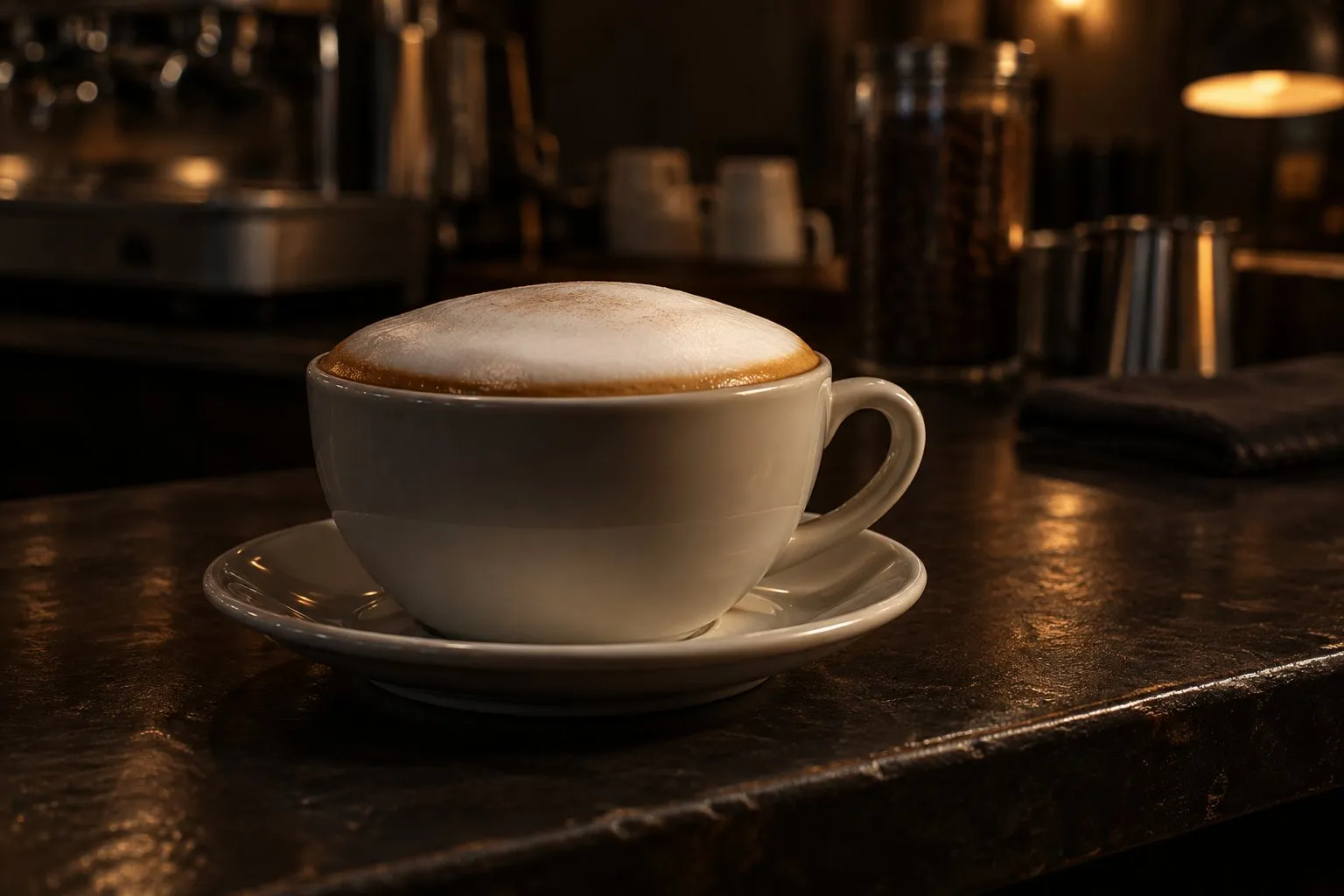
The De'Longhi Stilosa suits a low-stakes first try at espresso from a brand you know. De'Longhi lists a 15 bar pump, a boiler and a manual frother, and the “manual” label only reflects how it's filed. Skip it if you want temperature settings, a stated portafilter size or a gauge. For those, look one step up at De'Longhi's Classic Signature.
On this page
A note on our evidence. Everything below about the machine comes from De'Longhi's US product page, which we read. De'Longhi's support center offers the instructions as a download, and we didn't get to read that file. So nothing here comes from the manual, and we give no wait times.
Why “manual” is on the box
Here's the question the listing raises. Amazon's title says “Compact Manual Espresso Machine”, and Amazon files it under manual machines. De'Longhi does the same on its own site, and the product description repeats the word.
The same page lists a 15 bar pump. A pump machine that leaves the coffee preparation to you is what this site calls semi-automatic: a pump-driven espresso machine in which you grind, dose and tamp the coffee yourself and start and stop the shot, while the machine supplies the water pressure and temperature. In the trade, “manual” usually means a lever machine, where your arm supplies the force. Semi-automatic vs manual goes through that split, and semi-automatic vs automatic shows how each brand uses the words. Nothing is wrong with the Stilosa here. It's just shelved under a word that means something else to enthusiasts.
Who it suits, and who it doesn't
- You want a first try at espresso without a big outlay
- You know the brand and want a maker's page to check, per De'Longhi
- You want a small machine, 8.61 lb per De'Longhi
- You want a hot water outlet and a manual frother in one body
- You want to set the brew temperature: De'Longhi marks it not applicable
- You want a stated portafilter size to buy tools against
- You want a pressure gauge or a display: none listed
- You want a shot on a scale under a tall cup, since cup height tops out at 4.29 inches
De'Longhi Stilosa
A small budget machine with a 15 bar pump and a stainless steel boiler, per De'Longhi. Sold as "manual", yet a pump does the pressing.
Why here: A small budget pump machine with a 15 bar pump, a stainless steel boiler and a manual frother, per De'Longhi, for a low-stakes first try.
Best for: Budget first machines from a brand you already know
- 15 bar pump and stainless steel boiler (De'Longhi)
- Manual milk frother and a hot water outlet (De'Longhi)
- 33.81 oz tank and 8.61 lb body (De'Longhi)
- "Manual" in the title is misleading: this is a pump machine
- De'Longhi's page does not state the portafilter size or an extraction pressure
- Needs a separate grinder if you buy beans
- Type
- Pump machine
- Heating
- Stainless steel boiler
- Pump, as stated
- 15 bar
- Built-in grinder
- No
- Milk
- Manual frother
- Price class
- Budget
Technical data
| Value | What De'Longhi lists |
|---|---|
| Model | EC260BK |
| Pump | 15 bar |
| Extraction pressure | Not listed |
| Heating | Stainless steel boiler; capacity not listed |
| Controls | Dial, no display |
| Grinder | No |
| Milk | Manual frother |
| Hot water | Yes, dispenser listed |
| Water tank | 33.81 oz |
| Max cup height | 4.29 in |
| Weight | 8.61 lb |
| Dimensions (L x W x H) | 13.5 x 8.07 x 11.22, with no unit printed |
| Power | 1100 W, 120 V, 60 Hz |
| In the box | Portafilter, tamper, single and double filters, measuring spoon |
| Portafilter size | Not listed |
| Warranty | 1 year, plus 1 year with registration |
| Price class | Budget (our wording) |
The 15 or 20 bar on the box is what the pump can reach. Espresso is brewed at about 9 bar. Our page on the bar number goes into that. De'Longhi's page also doesn't say whether the filters are single wall or dual wall, and that decides how much a change of grind can do for you. Look at the baskets when the box arrives.
What daily use asks of you
The machine won't do your preparation. You need coffee ground fine enough for espresso, and if you buy beans, a grinder that can go fine in small steps. That grinder is the bigger decision, and on a tight budget it's the one to plan for first.
If you already weigh shots, check two things before you buy. Measure your scale and cup together against that 4.29 inch limit. Then measure the basket before you shop for an espresso tamper, since the supplied one is a combined spoon and tamper.
Milk is a manual job too. De'Longhi describes the frother for lattes, cappuccinos and flat whites, and gives no settings for temperature or texture. How to steam milk covers the technique in general. Steam and hot water can burn, so follow the instructions in your box.
Outside coverage
America's Test Kitchen's roundup of July 2, 2025 doesn't cover it, and neither does the Serious Eats roundup we read. We don't pass on buyer reviews, and we run no tests, so we have no shot quality verdict to give you. How we compare explains how we work.
Alternatives
If you're set on De'Longhi, go up one step to the Classic Signature. It's where De'Longhi states 9 bar extraction, and it adds the gauge and presets.
De'Longhi Classic Signature
A thermoblock machine with a pressure gauge and auto-stop presets, per De'Longhi's own page.
Why here: Our De'Longhi pick: a thermoblock machine with a pressure gauge, auto-stop presets and stated 9 bar extraction, for people ready to go past a first try.
Best for: Buyers who want a pressure gauge in front of them and stop-by-itself presets
- Pressure gauge on the front (De'Longhi)
- Single and double presets with auto-stop (De'Longhi)
- 2-setting steam wand (De'Longhi)
- Needs a separate espresso-capable grinder
- De'Longhi's page does not state the portafilter size
- Match the listing to model EM450M before you buy, because Amazon's title gives no number
- Heating
- Thermoblock
- Pump, as stated
- 15 bar
- Brew pressure, as stated
- 9 bar
- Built-in grinder
- No
- Milk
- 2-setting steam wand
- Price class
- Mid-range
The other options come down to what you want to fix:
- Still on a tight budget, another brand. The CASABREWS CM5418* is in the same class. Budget espresso machines compares them, including what each maker documents.
- Sizes you can trust. The Breville Bambino* sits a class up, with a 54 mm portafilter and an 18 g dose stated by Breville. It suits a grinder and scale routine, and it needs a separate grinder too.
If the De'Longhi Stilosa* still fits your plan, it's a reasonable way to find out whether you like the routine. Our De'Longhi overview puts it in the context of the range, and the start page sorts every machine by what you drink.
Asked at the bar
Is the De'Longhi Stilosa a manual or a semi-automatic machine?
It's sold as manual, and it works as a semi-automatic. De'Longhi's page lists a 15 bar pump, so you don't press the water through by hand. You fill and tamp the portafilter and work the dial. In the trade, “manual” usually means a lever machine, while De'Longhi and Amazon use the word for pump machines too.
What size is the De'Longhi Stilosa portafilter?
De'Longhi's product page includes a portafilter in the box but gives no size. We won't repeat a number we couldn't confirm at the maker. Measure the inside of your basket before you buy a tamper or a funnel, and check whether a tool is sold for this model by name.
Does the De'Longhi Stilosa have a grinder?
No. The box holds a portafilter, single and double filters, a spoon and tamper, and printed guides. De'Longhi marks grinding as not applicable on its spec list. So you need ground coffee or a separate grinder that can go fine enough for espresso, and that second purchase affects your budget more than the machine's bar number.
Is 15 bar good on the Stilosa?
It tells you little. The 15 or 20 bar on the box is what the pump can reach. Espresso is brewed at about 9 bar. De'Longhi's Stilosa page lists only the 15 bar pump, while its Classic Signature and Dedica Maestro Plus pages also name 9 bar extraction.
What warranty does the De'Longhi Stilosa have?
De'Longhi's product page lists a one year warranty, plus one more year with product registration. A site banner mentions longer terms, but it isn't tied to this model, so go by the product line. Register soon after you buy, and keep your receipt, as the terms can change.
Where this comes from
Next round
- De'LonghiDe'Longhi's pump machines by spec sheet: Stilosa, Classic Signature, Dedica Maestro Plus and La Specialista. What the maker states, and what it leaves out.
 Budget machinesWhat budget espresso machines can do, what they can't, and how to read 15 and 20 bar listings. Options by price class in words, with what their manuals really say.
 Semi vs manualSemi-automatic vs manual espresso machines: in the trade, manual means a lever, but listings use it for pump machines. How to tell which you're buying.
 Semi vs automaticSemi-automatic vs automatic espresso machines: “automatic” means different things by brand. How to read a spec sheet, what to ask instead, and who should pick which.
 On a budgetBudget espresso machines: what a low price buys, where a little more changes the cup, why the grinder comes first, and what cheap dual boiler titles really tell you.
semiautomaticespressomachine.com Editorial Team
Espresso gear & shot craft
We are the editorial team at semiautomaticespressomachine.com. We read maker spec sheets, manuals, standards and published research on espresso and turn them into plain-English buying advice, with sources on every page. We do not run lab tests, and we say so openly.
- Spec sheets & standards read
- Sources on every page
- No lab tests – stated openly
- Publisher details in the imprint