Semi-Automatic vs Automatic: What the Words Mean on Different Brands' Spec Sheets
There's no single meaning of “automatic”. Sage and De'Longhi use it for machines that grind, tamp and brew by themselves. Serious Eats uses it for a machine that stops the shot on its own, and listings use it for milk wands. So ignore the label, and ask who grinds, who tamps and who stops the shot.
Disclosure: This page contains affiliate links (marked with *). If you buy through them, we earn a small commission at no extra cost to you. As an Amazon Associate I earn from qualifying purchases. Learn more
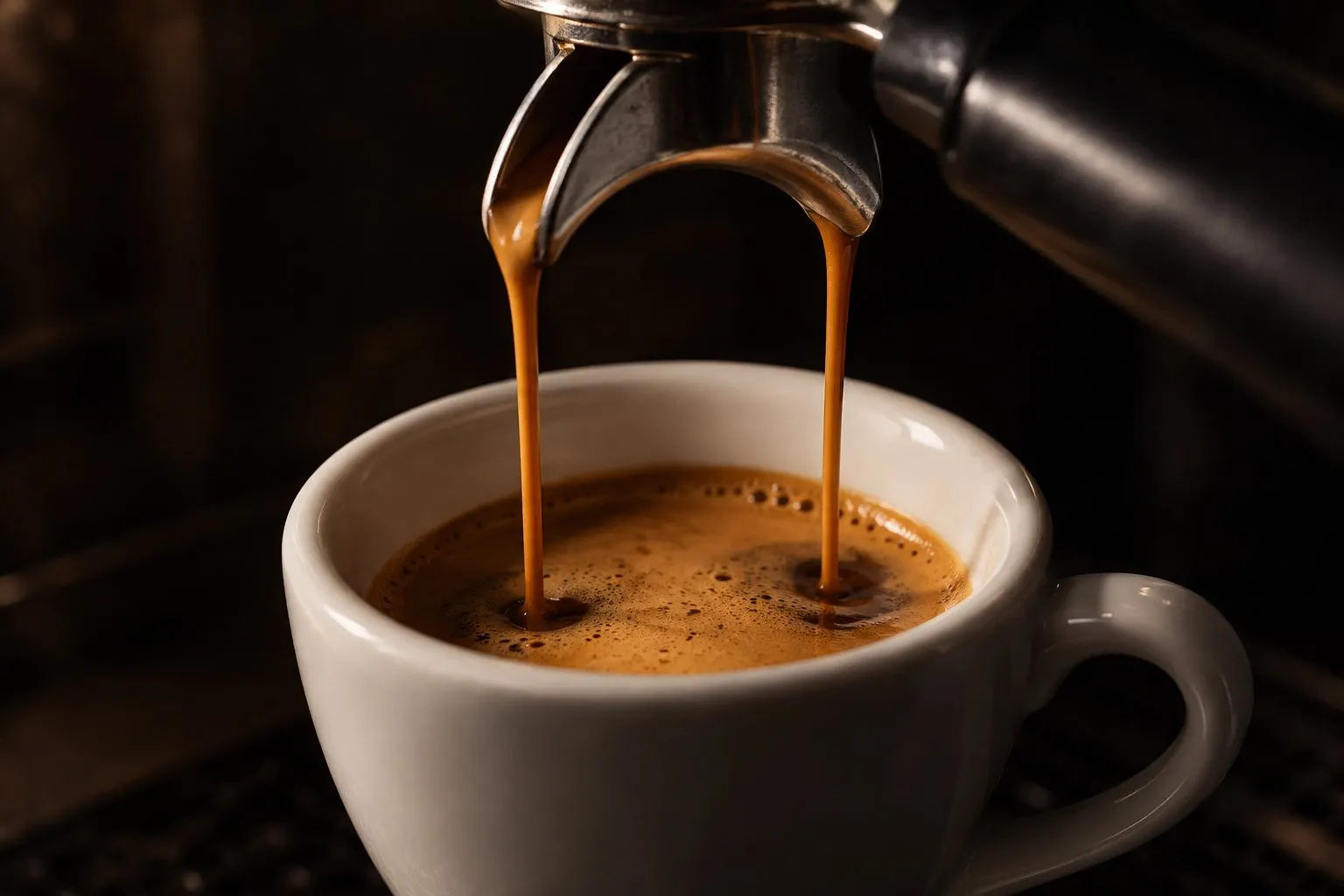
A semi-automatic espresso machine is a pump-driven espresso machine in which you grind, dose and tamp the coffee yourself and start and stop the shot, while the machine supplies the water pressure and temperature. “Automatic” has no fixed meaning: it can mean a super-automatic, a machine that stops the shot by itself, or just an automatic milk wand. Check who does each step.
On this page
The short verdict
“Automatic” is the least useful word on an espresso listing. A shopper searching for it may want a machine that does everything, or may only want the shot to stop on its own. Those are very different machines.
If you want control and don't mind the steps, get a semi-automatic with presets you can override, such as the Breville Bambino*. If you want one button and no tamping, you're looking for what the trade calls a super-automatic, and semi vs super-automatic is the comparison to read.
What the words mean, by source
| Who | “Semi-automatic” | “Automatic” | Other words |
|---|---|---|---|
| Sage/Breville blog | Electric pump gives the pressure; you start and stop, and load and tamp | Automates nearly every step, typically with a built-in grinder, PID and frother | Also says “super automatic” for models with preset drinks |
| Serious Eats (copy dated May 2, 2023) | A button or switch starts and stops the shot | Stops the shot by itself, using a flow meter | “Superautomatic” does everything from one press |
| America's Test Kitchen (July 2, 2025) | You grind, tamp and start the brew | Uses “fully automatic” for superautomatics | Warns that retailers use the names inconsistently |
| De'Longhi US site | Not its shelf name | “Automatic” appears in Magnifica listing titles | Files pump machines under “Manual Espresso Machines” |
| Ninja, ES601ANZ guide | Not used | Not used for the machine | Calls it a “Manual Espresso Machine” |
| Amazon | A category that includes the Classic Signature and La Specialista Touch | Used in super-automatic titles | Files the Ninja under coffeemaker combos |
Two sources in that table can look at the same machine and disagree. Under Serious Eats' definition, a Bambino on its presets behaves like an automatic. Under Sage's, it's plainly not one.
A button that stops the shot doesn't change who did the rest.
Four machines, four meanings
Here's how the word plays out on real spec sheets. None of these labels tells you what you'd need to do in the morning:
| Our pick: with a separate grinderBreville Bambino | De'Longhi Classic Signature | De'Longhi Dedica Maestro Plus | Seller data onlyDe'Longhi Magnifica Evo | |
|---|---|---|---|---|
| Type | – | – | – | Super-automatic |
| Heating | ThermoJet | Thermoblock | Thermoblock | – |
| Pump, as stated | 15 bar | 15 bar | 15 bar | – |
| Brew pressure, as stated | 9 bar | 9 bar | 9 bar | – |
| Portafilter | 54 mm | – | – | – |
| PID | Yes, per the instruction book | – | – | – |
| Built-in grinder | No | No | No | Yes |
| Milk | Manual wand | 2-setting steam wand | Automatic wand | – |
| Price class | Mid-range | Mid-range | Mid-range | Mid-range |
| Best for | Beginners who want to pick their grinder and upgrade it later | Buyers who want a pressure gauge in front of them and stop-by-itself presets | Milk drinkers who want an automatic wand in a body about 8 inches wide | Readers who decide they do not want to do the steps themselves |
| On Amazon(paid link to Amazon, opens in a new tab)Ad · paid link · check price & delivery on Amazon | On Amazon(paid link to Amazon, opens in a new tab)Ad · paid link · check price & delivery on Amazon | On Amazon(paid link to Amazon, opens in a new tab)Ad · paid link · check price & delivery on Amazon | On Amazon(paid link to Amazon, opens in a new tab)Ad · paid link · check price & delivery on Amazon |
- Breville Bambino. Its manual says a short press of the 1 or 2 Cup button runs a preset of about 1 or 2 oz and stops by itself. You still grind, dose and tamp.
- De'Longhi Classic Signature. De'Longhi lists “auto-stop” for its presets, and files the machine under manual espresso machines. Same job as the Bambino, with a very different word on the shelf.
- De'Longhi Dedica Maestro Plus. Its “automatic steam wand” is only about milk. The shot, the grind and the tamp are still yours.
- De'Longhi Magnifica Evo. Sold as an “automatic” machine in its listing, and it's a super-automatic in trade terms: grind, dose, tamp and brew happen inside.
Then there's the group in between. The Ninja Luxe Café suggests the grind and doses by preset, but you still press the tamper. The Barista Express Impress assists the tamp and leaves the rest to you. We call those assisted, and our list of machines with a grinder shows how much each one does.
The four questions that replace the word
| Ask | If you do it | If the machine does it |
|---|---|---|
| Who grinds and sets the dose? | Semi-automatic, with a separate or built-in grinder | Assisted or super-automatic |
| Who tamps? | Semi-automatic | Super-automatic, or assisted if it's only helped |
| Who stops the shot? | Semi-automatic, in the strict sense | Presets or a flow meter: often still sold as semi-automatic |
| Who textures the milk? | Manual wand | Automatic wand: says nothing about the coffee side |
Most of the difference you'd feel day to day sits in the first two rows. The third is a convenience you can usually override, and the fourth is a separate decision altogether.
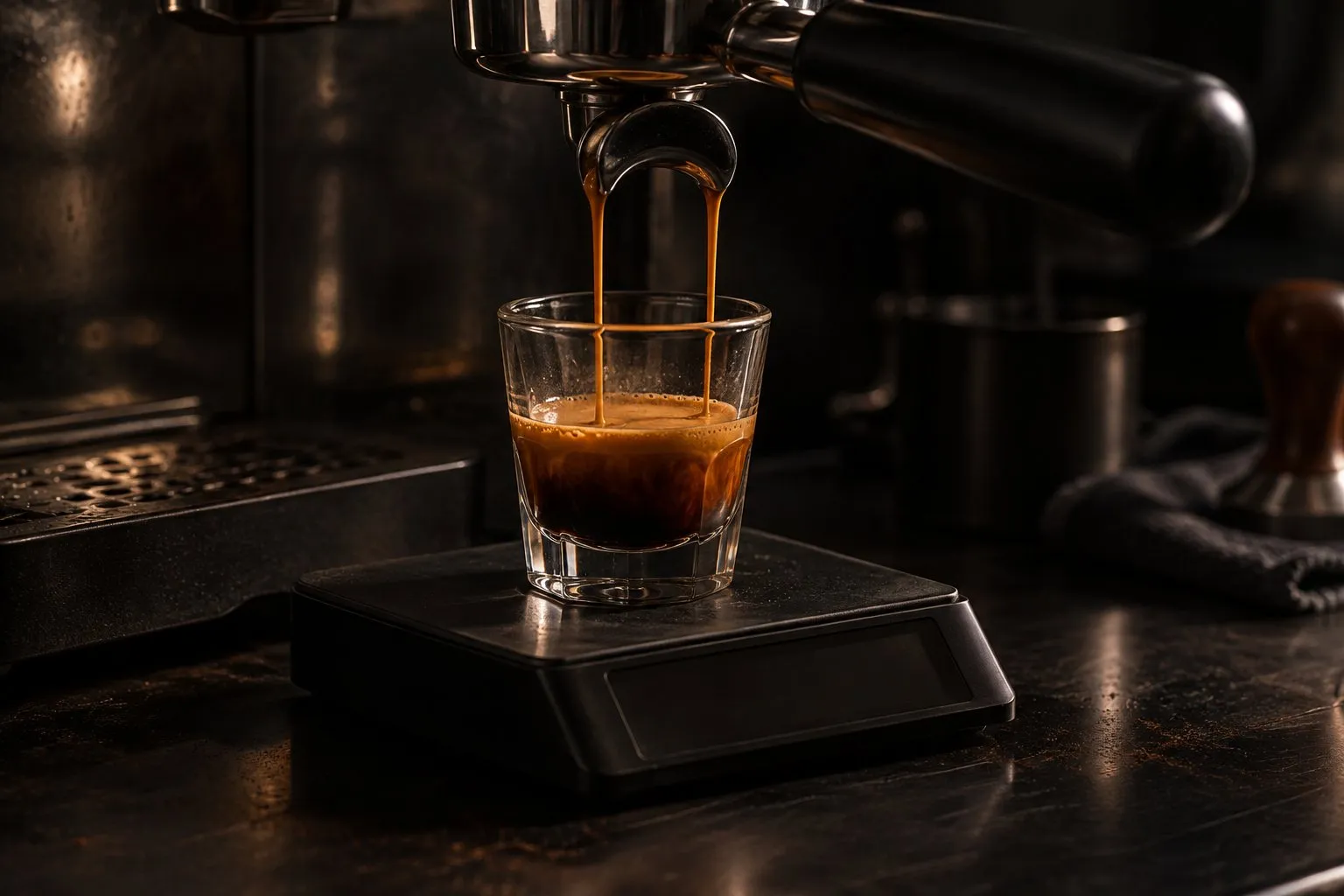
If you weigh your shots, check the third row
Presets run on volume, and yield depends on weight. A flow-meter stop can be handy for repeating a recipe, but you need a way to end the shot early once your scale hits the target. On the Bambino, the manual says pressing the button again stops the extraction immediately. Before you buy another machine with presets, check that it lets you do the same.
Is automatic better?
Not by default. An automatic stop helps if your grind and dose stay steady, because the same water goes through each time. It doesn't fix a grind that has drifted. Sage says automatic machines are typically priced higher, and that some super-automatics are harder to clean, though that comes from a maker's marketing article. Serious Eats calls super-automatics costly and hard to maintain. We found no neutral taste test that settles it, and we run no tests ourselves.
Pick by what you want to do
If you want to steer the shot and still have presets for a busy morning → Breville Bambino
View(paid link to Amazon, opens in a new tab)Ad · paid link · check price & delivery on AmazonIf you want presets and a gauge to watch, from a brand you know → De'Longhi Classic Signature
View(paid link to Amazon, opens in a new tab)Ad · paid link · check price & delivery on AmazonIf you want automatic milk but your own shot → De'Longhi Dedica Maestro Plus
View(paid link to Amazon, opens in a new tab)Ad · paid link · check price & delivery on AmazonIf you want coffee from one button with no tamping → De'Longhi Magnifica Evo · Seller data only
View(paid link to Amazon, opens in a new tab)Ad · paid link · check price & delivery on AmazonIf you want guidance and drip coffee too → Ninja Luxe Café Premier · Seller data only
View(paid link to Amazon, opens in a new tab)Ad · paid link · check price & delivery on Amazon
Unsure what a semi-automatic even is? Our definition page starts there, and the start page sorts machines by what you drink. We compare by spec sheet and published sources, as how we compare explains.
Asked at the bar
What is the difference between semi-automatic and automatic espresso machines?
On a semi-automatic you grind, dose and tamp yourself and start and stop the shot. What “automatic” adds depends on who is talking: for Sage and De'Longhi's listings it means a machine that also grinds and tamps, and for Serious Eats a machine that stops the shot by itself. Check each step, not the word.
Is an automatic espresso machine better?
Not in itself. It gives you less to do and less to adjust. We found no neutral taste test that settles it, and we run no tests ourselves. A machine that stops the shot by itself is handy if your grind is steady, while a full super-automatic trades your say over the shot for convenience.
Is fully automatic the same as super-automatic?
Usually, yes. America's Test Kitchen uses “superautomatic” and “fully automatic” for the same kind of machine, one that grinds, tamps and brews after a button press, and it warns that retailers use these names inconsistently. So check what the machine does on the spec sheet before you rely on either word.
Do programmed shot buttons make a machine automatic?
They don't change how it's sold. The Breville Bambino's presets stop by themselves, per its manual, and De'Longhi's Classic Signature has an auto-stop. Both machines leave the grinding and tamping to you, and models like these are still sold as semi-automatic. You can still stop a shot by hand on the Bambino.
Where this comes from
- Sage/Breville: semi-automatic vs automatic espresso machines
- Serious Eats roundup, read through a Yahoo copy dated May 2, 2023
- America's Test Kitchen: espresso machines, July 2, 2025
- Breville: Bambino instruction book (US, Canada, Mexico)
- De'Longhi: Classic Signature EM450M product page
- De'Longhi: Dedica collection under Manual Espresso Machines
Next round
- Semi vs super-automaticSemi-automatic or super-automatic? What each machine leaves to you, how price class and cleaning differ, what is known about the cup, and who should pick which.
- What Is a Semi-Automatic Espresso Machine? What You Do and What the Machine DoesWhat semi-automatic means on an espresso machine: what you grind, dose, tamp and stop yourself, what the machine handles, and how to read confusing listing names.
 Ninja Luxe CaféNinja Luxe Café Premier, Pro and Mini Plus: an assisted machine between semi-automatic and super-automatic. What it does for you, what you give up, and who it suits.
 With grinderEspresso machines with a built-in grinder compared by spec sheet: Barista Express, Impress, Pro and Touch, plus Ninja, De'Longhi, KitchenAid, Gevi and CASABREWS.
- How we compareHow our espresso machine picks come about: spec sheets, standards and published research, what we cannot verify, which outside tests exist, and how we are funded.
semiautomaticespressomachine.com Editorial Team
Espresso gear & shot craft
We are the editorial team at semiautomaticespressomachine.com. We read maker spec sheets, manuals, standards and published research on espresso and turn them into plain-English buying advice, with sources on every page. We do not run lab tests, and we say so openly.
- Spec sheets & standards read
- Sources on every page
- No lab tests – stated openly
- Publisher details in the imprint