What Is a Semi-Automatic Espresso Machine? What You Do and What the Machine Does
A semi-automatic espresso machine is a pump-driven espresso machine in which you grind, dose and tamp the coffee yourself and start and stop the shot, while the machine supplies the water pressure and temperature. The word tells you who prepares the coffee and who decides when the shot ends. It says nothing about quality or price.
Disclosure: This page contains affiliate links (marked with *). If you buy through them, we earn a small commission at no extra cost to you. As an Amazon Associate I earn from qualifying purchases. Learn more
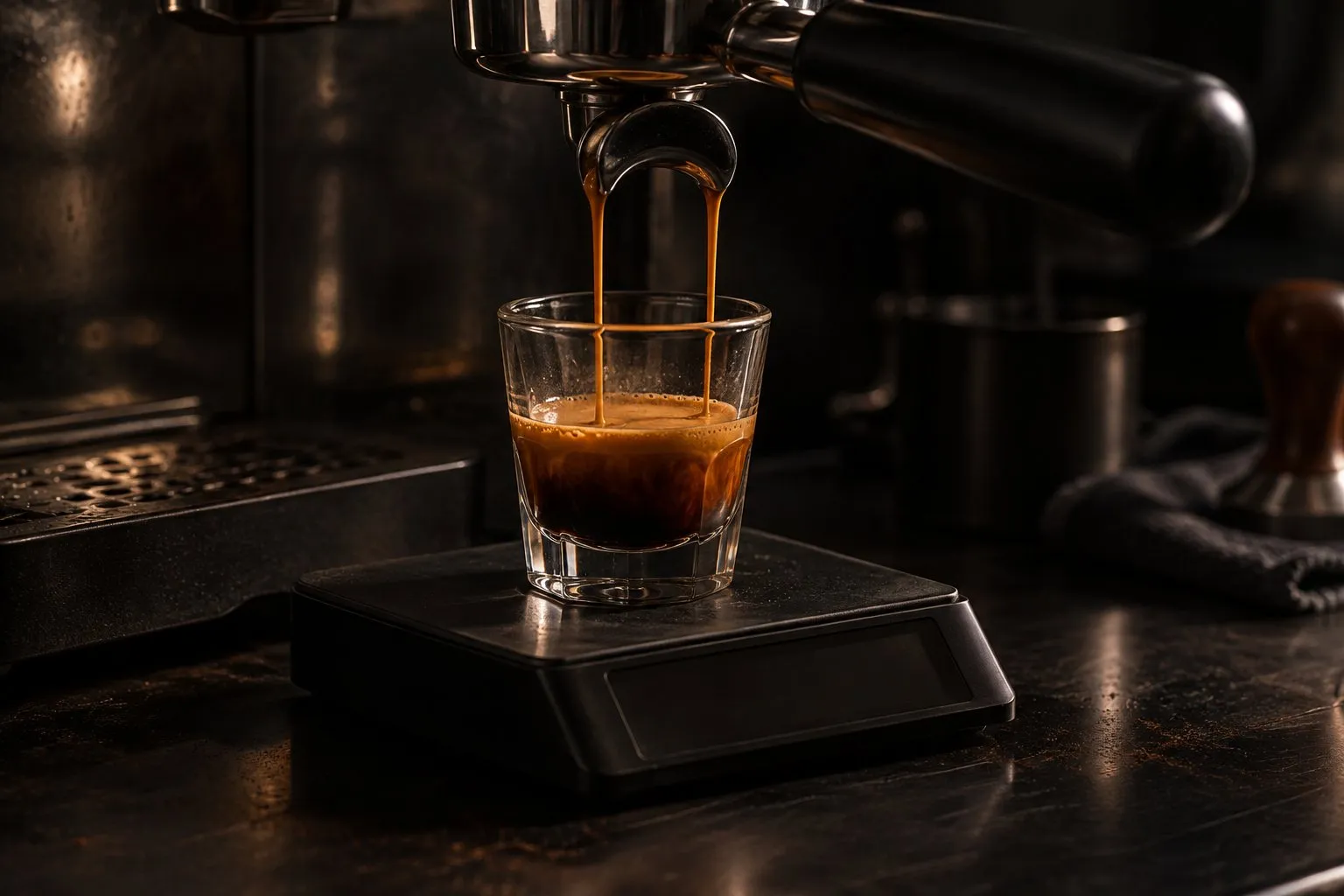
It is a pump-driven espresso machine in which you grind, dose and tamp the coffee yourself and start and stop the shot, while the machine supplies the water pressure and temperature. Models with programmed shot buttons are still sold as semi-automatic. If a machine also grinds, doses and tamps without your hands, it is a super-automatic.
On this page
The term has no owner. We found no standards document that defines it, and Wikipedia names “semi-automatic” in its article on espresso machines without giving it an entry of its own. In practice it comes down to a split of labor, and that split is what you are buying.
Who does what
| Step | On a semi-automatic |
|---|---|
| Grinding | You, on a separate or built-in grinder |
| Dosing | You weigh it or set it |
| Tamping | You, or assisted on some models |
| Starting the shot | You press the button or flip the switch |
| Stopping the shot | You, or a programmed button |
| Water pressure | The machine's pump |
| Water temperature | The machine |
| Milk | Usually you, with a steam wand; some models do it for you |
Sage sums up your part as starting and stopping the extraction yourself and loading and tamping the portafilter by hand. Serious Eats puts it as a button or switch that the person at the machine uses to start and stop the shot. If that sounds like the part you would enjoy, you are in the right category. If it sounds like a chore, read semi-automatic vs super-automatic before you buy anything.
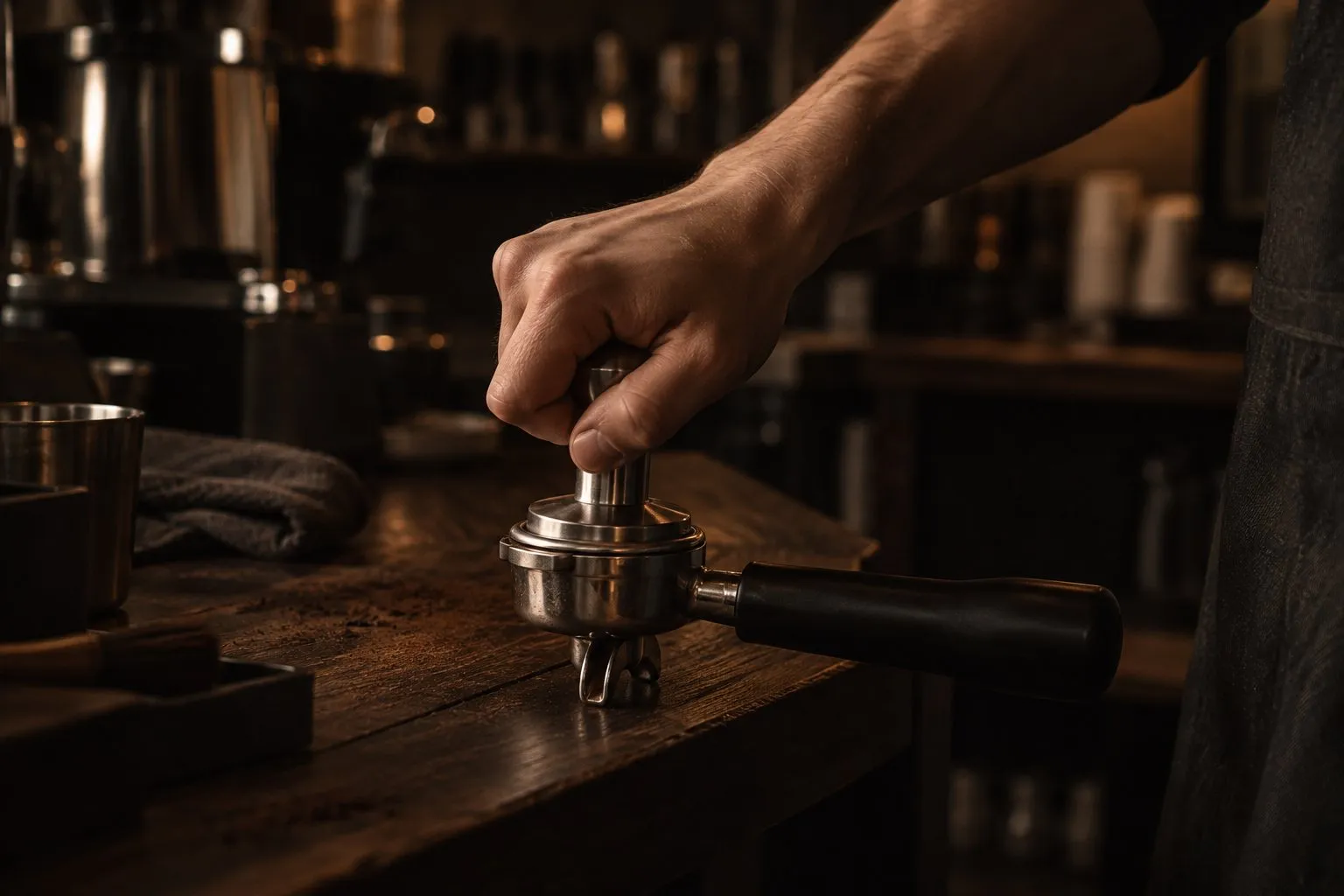
Programmed buttons don't change the category
This is the bit that trips people up. The Breville Bambino* has one-touch 1 and 2 shot buttons that stop at a set volume, according to Breville, and it's still sold as a semi-automatic. You still ground, dosed and tamped. The buttons only save you from watching the cup. Serious Eats uses “automatic” for machines that stop the shot themselves, and makers use the word differently again, which is why semi-automatic vs automatic has a page of its own.
Names on listings that can mislead
- “Manual.” In the trade this tends to mean a lever machine. On Amazon the De'Longhi Stilosa* is sold as “manual” and is a pump machine. If it has a pump and you start and stop the shot, it belongs in this category.
- “Automatic.” Sage and De'Longhi use it where the trade says super-automatic, and Sage says these machines automate nearly every step. Check what the machine does, not what the title says.
- “With grinder.” A built-in grinder doesn't change the category. Machines with a grinder inside are mostly still semi-automatic.
- “Assisted” or “guided.” Models such as the Barista Express Impress and the Ninja Luxe Café take over some steps and sit in between.
- “20 bar.” The 15 or 20 bar on the box is what the pump can reach. Espresso is brewed at about 9 bar. More on that in 15 bar vs 20 bar.
What running one takes
Three things beyond the machine. A grinder that goes fine enough, since grind is the first thing you change when timing is off. A scale, because Breville's guide wants you to weigh both the coffee and the shot. And some patience with the first bag. A first recipe of 18 to 22 g at 1:2 in 25 to 30 seconds will get you close, and it's a good first recipe, not a standard. Italy's certified espresso is 7 g to 25 ml. How to dial in espresso shows how to get from close to good.
The category runs from budget machines like the CASABREWS CM5418* and CASABREWS 3700* up to premium dual boilers, so the word alone won't tell you what a machine can do. Our semi-automatic guide sorts them by what you drink, and what to buy first puts the purchases in order. If milk comes first, the Bambino Plus* textures it for you. If straight espresso does, look at the Gaggia Classic*.
Breville Bambino
A compact machine with a 54 mm portafilter, ready in 3 seconds. The grinder is yours to choose.
Why here: A clear example of the category: you bring the grinder and the tamping, and Breville documents the 54 mm portafilter, 15 bar pump and 9 bar extraction.
Best for: Beginners who want to pick their grinder and upgrade it later
- Ready to start in 3 seconds (Breville)
- 54 mm portafilter, 18 g dose (Breville)
- Manual steam wand for hand-textured milk (Breville)
- Needs a separate espresso-capable grinder
- Breville's product page does not mention PID, though its BES450 instruction book does
- Heating
- ThermoJet
- Pump, as stated
- 15 bar
- Brew pressure, as stated
- 9 bar
- Portafilter
- 54 mm
- PID
- Yes, per the instruction book
- Built-in grinder
- No
- Milk
- Manual wand
- Price class
- Mid-range
Asked at the bar
What does semi-automatic mean for an espresso machine?
It means the machine handles part of the job and you handle the rest. The pump supplies pressure and the heater supplies temperature. You grind, dose and tamp, and you start and stop the shot, or let a programmed button stop it. Sage, the name Breville machines carry in Europe, and Serious Eats both describe it this way.
Is a machine with a built-in grinder still semi-automatic?
Yes. A built-in grinder only moves the grinder into the same body. On a Breville Barista Express you still dose into the portafilter, tamp, lock it in and control the shot. Models with assisted steps, such as the Barista Express Impress and the Ninja Luxe Café, sit between semi-automatic and super-automatic.
Is a semi-automatic espresso machine better than an automatic one?
Better depends on what you want from the morning. A semi-automatic gives you more ways to change the taste, and it asks for more practice in return. A super-automatic gives you one-button coffee with less say over the cup. We found no neutral taste test that settles it, and we run no tests of our own.
Do I need a separate grinder for a semi-automatic machine?
You need a grinder that can go fine enough for espresso, built in or separate, unless you stay with pre-ground coffee and the baskets made for it. Grind is the first thing you change when a shot runs too fast or too slow, so it matters as much as the machine. A scale comes next.
Where this comes from
Next round
- Semi vs super-automaticSemi-automatic or super-automatic? What each machine leaves to you, how price class and cleaning differ, what is known about the cup, and who should pick which.
 Semi vs automaticSemi-automatic vs automatic espresso machines: “automatic” means different things by brand. How to read a spec sheet, what to ask instead, and who should pick which.
 For beginnersThe beginner espresso machine to buy first, and in which order: machine, espresso-capable grinder, scale. Our pick is the Breville Bambino, with budget options.
- Dial in espressoHow to dial in espresso: fix the dose, set a yield, then change only the grind until time and taste line up. Steps, a symptom table and the exception to the rule.
- 15 Bar vs 20 Bar: Is the Bigger Number Better?Is a 20 bar espresso machine better than 15 bar? No: the box shows what the pump can reach, and espresso is brewed at about 9 bar. What to compare instead.
semiautomaticespressomachine.com Editorial Team
Espresso gear & shot craft
We are the editorial team at semiautomaticespressomachine.com. We read maker spec sheets, manuals, standards and published research on espresso and turn them into plain-English buying advice, with sources on every page. We do not run lab tests, and we say so openly.
- Spec sheets & standards read
- Sources on every page
- No lab tests – stated openly
- Publisher details in the imprint