How to Make a Flat White at Home
Pull a shot into a cup of 8 oz or less, steam whole milk to 140 to 149 °F with only a little air, and pour it in so about a quarter inch of texture stays on top. Less milk than a latte and a thin layer of microfoam. Shot type and size differ by café, so your own recipe counts.
Disclosure: This page contains affiliate links (marked with *). If you buy through them, we earn a small commission at no extra cost to you. As an Amazon Associate I earn from qualifying purchases. Learn more

Brew a single or double shot into a cup of 8 oz or less. Steam cold whole milk with the tip just under the surface, add only a little air, and stop at 140 to 149 °F. Tap and swirl until the milk is glossy, then pour low and steady. Finish with about a quarter inch of microfoam.
On this page
What you get: a small, strong milk drink where the coffee still leads, with silky milk and just a thin skin of microfoam on top. What it takes: one good shot, a steel pitcher, and enough milk for a few practice rounds before it clicks.
A flat white takes no special gear, only a machine with a real steam wand, a small pitcher and a cup that isn't too big. If you're after the difference from a latte, that's on our flat white vs latte page. This page is the doing.
What the recipes say
No standards body defines the drink, so here's how two named sources build it.
| Breville's guide | Starbucks' home recipe | |
|---|---|---|
| Espresso | Single or double shot | 2 shots; ristretto in its cafés |
| Milk | Whole; plant milks if suitably thick | 1.25 cups of whole milk |
| Cup | No larger than 8 oz, if possible | Mug, poured almost full |
| Milk temperature | 140 to 149 °F dairy; 120 to 130 °F non-dairy | Not stated on the page we read |
| Foam | About a quarter inch of textured milk | A dot of foam, then optional latte art |
We follow Breville's smaller cup in the steps below. It keeps the espresso dominant, which is what separates this drink from a latte, in Breville's description.
Make it step by step
Weigh and pull the shot
Dial in your usual espresso and pull a single or double shot straight into a cup of 8 oz or less. A sweet, syrupy shot matters here, because there's less milk to hide behind.Fill a cold pitcher
Pour cold whole milk into a small steel pitcher. Purge the steam wand into the drip tray first, so condensed water stays out of the milk.Add a little air
Hold the tip just under the surface and start the steam. Add air only briefly, less than you would for a cappuccino, until the milk starts to swell slightly.Spin until hot
Raise the pitcher so the tip sits a little deeper and the milk turns in a vortex. Fold in the bigger bubbles. Stop at 140 to 149 °F, or when the jug is hot to touch.Tap and swirl
Wipe and purge the wand. Tap the pitcher on the counter to pop large bubbles, then swirl until the surface looks glossy and flat.Pour low and steady
Start pouring from a little height, then bring the spout close to the cup. Keep the textured milk on top, aiming for about a quarter inch of microfoam at the end.
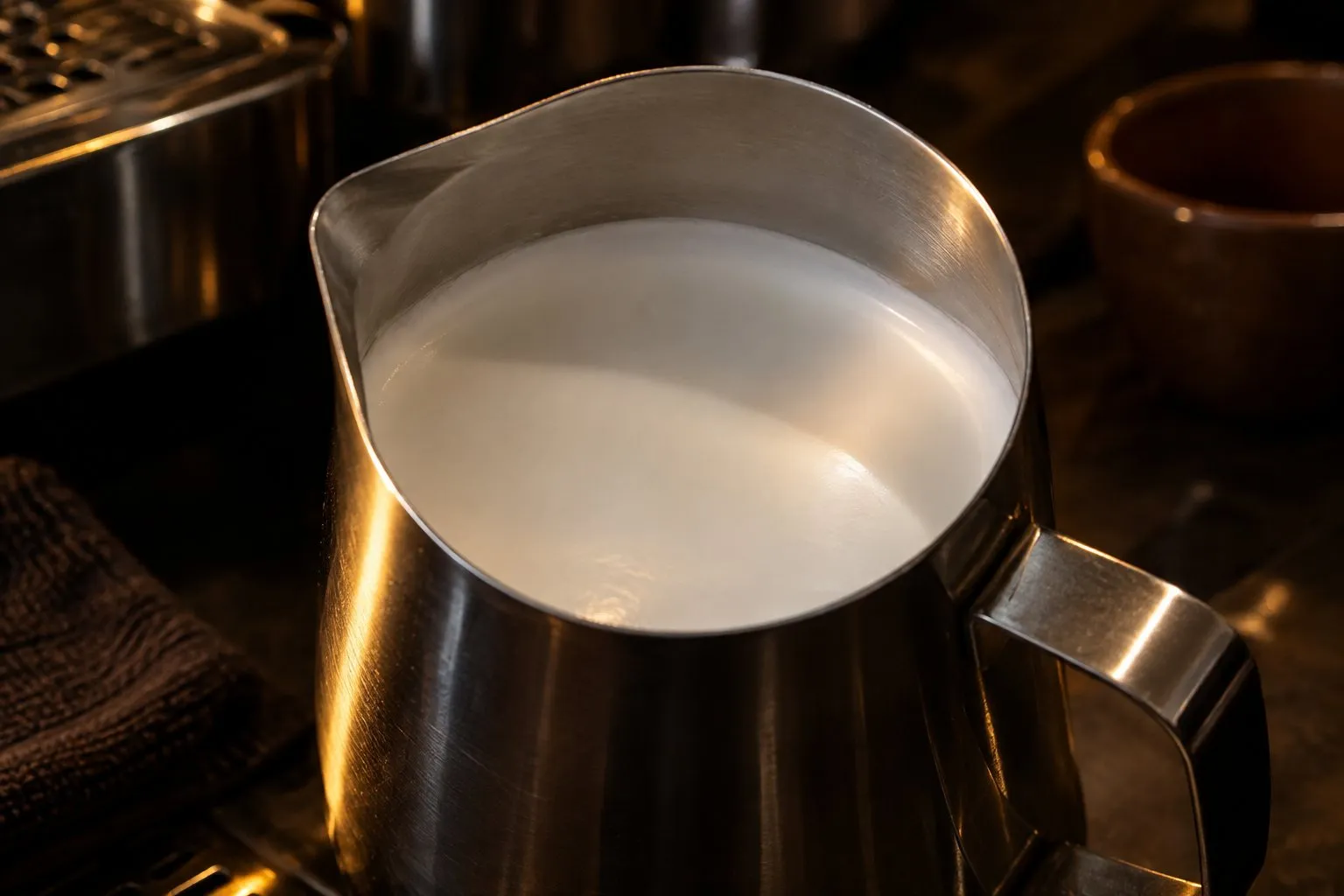
The milk should look like wet paint
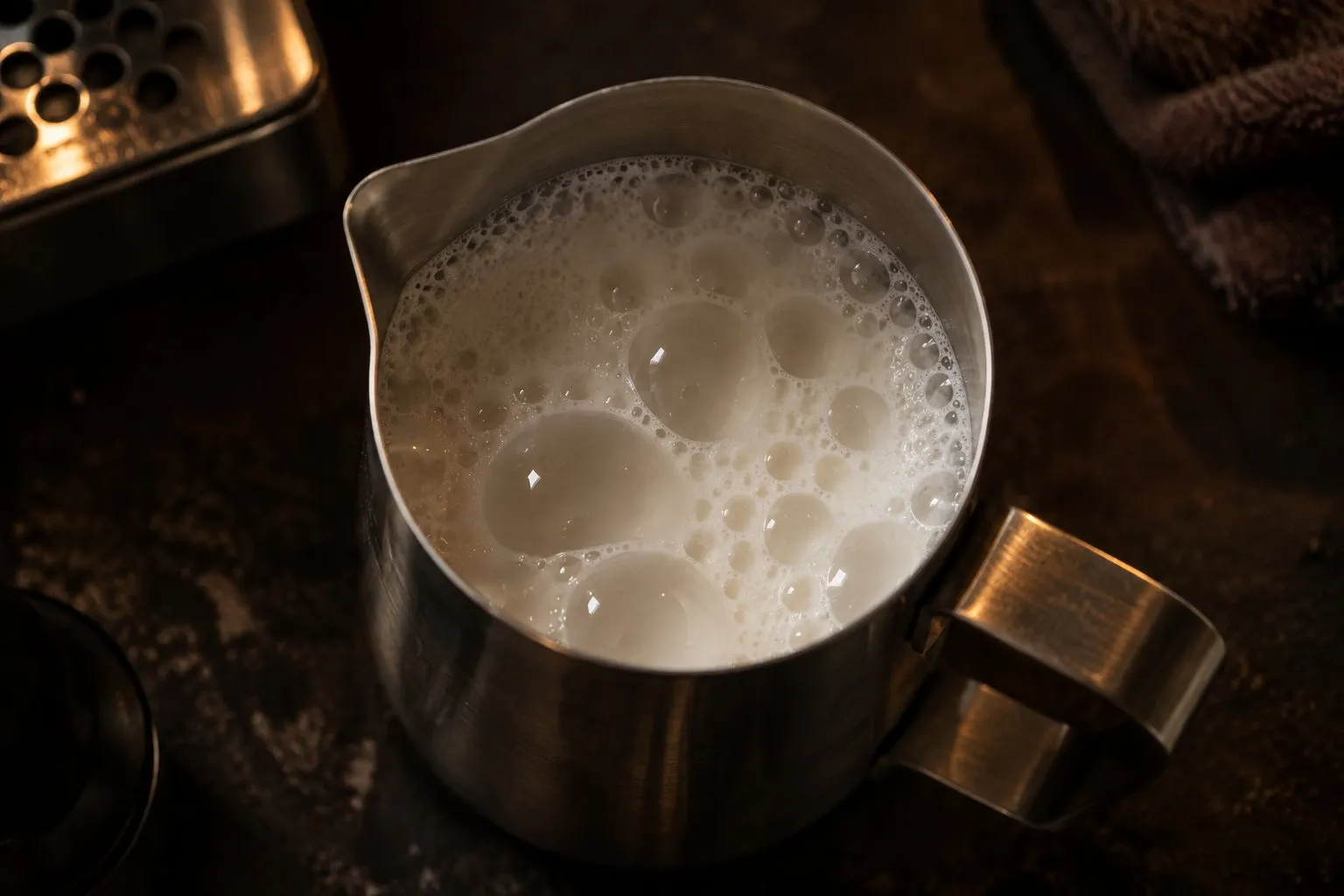
That glossy surface in the pitcher is the goal. Breville wants the milk smooth, velvety and relatively flat across the surface. Bubbles you can see mean too much air or too little spin. Our microfoam page explains what's going on in there.
The shot
Your normal recipe is fine. Breville's guide gives 18 to 22 g, a 1:2 ratio and 25 to 30 seconds. A good first recipe, not a standard. This calculator gives you the yield to stop at, and you can try a tighter ratio if you want the coffee stronger through the milk.
Target in the cup
36 g1.3 oz
Plain arithmetic. The ratios are starting points from Breville's guide, not a standard.
Our ratio page goes further into what each ratio does. If the coffee tastes sour or thin once the milk is in, fix the shot first. Our dial-in guide goes through that.
Common mistakes
- Too big a cup. A big mug turns this into a latte, however careful the milk. Choose the cup first, then pour to fit.
- Too much air. A thick cap makes something closer to a cappuccino. Shorten the stretch, and keep the tip nearer to the vortex.
- Milk too hot. Breville's range tops out at 149 °F. Stop when the jug is hot to touch, and use a thermometer for your first few rounds.
- Steaming too early. Pull the shot first, then steam, and pour soon after you swirl.
- Reheating leftovers. Gaggia's Classic Evo manual warns against reusing hot milk, because it hurts the froth and the taste. Measure what you need instead.
Which machine makes this easy?
Any machine with a real steam wand can do it, including a single boiler that makes you wait a little before steaming. If you don't want to learn the wand, the Bambino Plus textures milk for you with 3 temperatures and 3 levels of texture, and you can still go manual, per Breville.
Breville Bambino Plus
The small machine that textures milk by itself: 3 temperatures and 3 texture levels, or by hand.
Why here: Automatic milk with 3 temperatures and 3 textures, plus a manual option when you want more control over a thin flat white foam.
Best for: Latte and flat white drinkers who do not want to learn the wand first
- Hands-free steam wand with 3 milk temperatures and 3 textures (Breville)
- Ready to start in 3 seconds (Breville)
- America's Test Kitchen's compact pick of 2 July 2025
- Needs a separate espresso-capable grinder
- Breville's product page does not mention PID, though its BES500 instruction book does
- Heating
- ThermoJet
- Pump, as stated
- 15 bar
- Brew pressure, as stated
- 9 bar
- Portafilter
- 54 mm
- PID
- Yes, per the instruction book
- Built-in grinder
- No
- Milk
- Hands-free or manual
- Price class
- Mid-range
For the full routine at the wand, including tip positions, see how to steam milk. A small pitcher helps with a small drink, and our milk pitcher page sorts them by size. For the machines themselves, our guide to semi-automatic machines starts from what you drink.
Asked at the bar
How much milk goes in a flat white?
There's no agreed amount. Breville sets the limit with the cup, suggesting no larger than 8 oz where possible, so you fill what's left after the shot. Starbucks' home recipe uses 1.25 cups of whole milk and pours until the mug is almost full, which is a much larger drink. We'd start with Breville's cup.
Does a flat white use ristretto?
Sometimes. Starbucks uses ristretto shots in its cafés, though its home recipe calls for two espresso shots. Breville's guide says a single or double shot. Shot type and size differ by café, so try what you like. A shorter shot makes the coffee more concentrated, which suits a small drink.
Can I make a flat white with oat milk?
Yes. Breville says plant milks should be suitably thick, and it sets a lower target of 120 to 130 °F for non-dairy milk, against 140 to 149 °F for dairy. Expect the texture to behave differently from dairy, and adjust by feel.
Can I make a flat white without a steam wand?
You can make something close. Starbucks' recipe allows a frother, an aerator or a whisk, and even a moka pot for the coffee. You won't get the same fine microfoam as from a steam wand, and it's the texture that makes this drink. Treat that as a home version.
Where this comes from
- Breville: how to make a flat white at home
- Starbucks at Home: flat white recipe
- Breville: Barista Pro instruction book (US, Canada, Mexico), on texturing milk and burn warnings
- Breville: BES500 Bambino Plus product page
- Breville: how to dial in espresso
- Gaggia: Classic Evo (RI9481) operating instructions, copy on a third-party server
Next round
 Flat white vs latteFlat white vs latte: less milk and a thin layer of microfoam against a larger, milkier drink. What sources agree on, where they differ, and how to steam for each.
- MicrofoamMicrofoam is steamed milk with bubbles too small to see. How it differs from froth, how hot to steam it, why you get big bubbles, and which wands can make it.
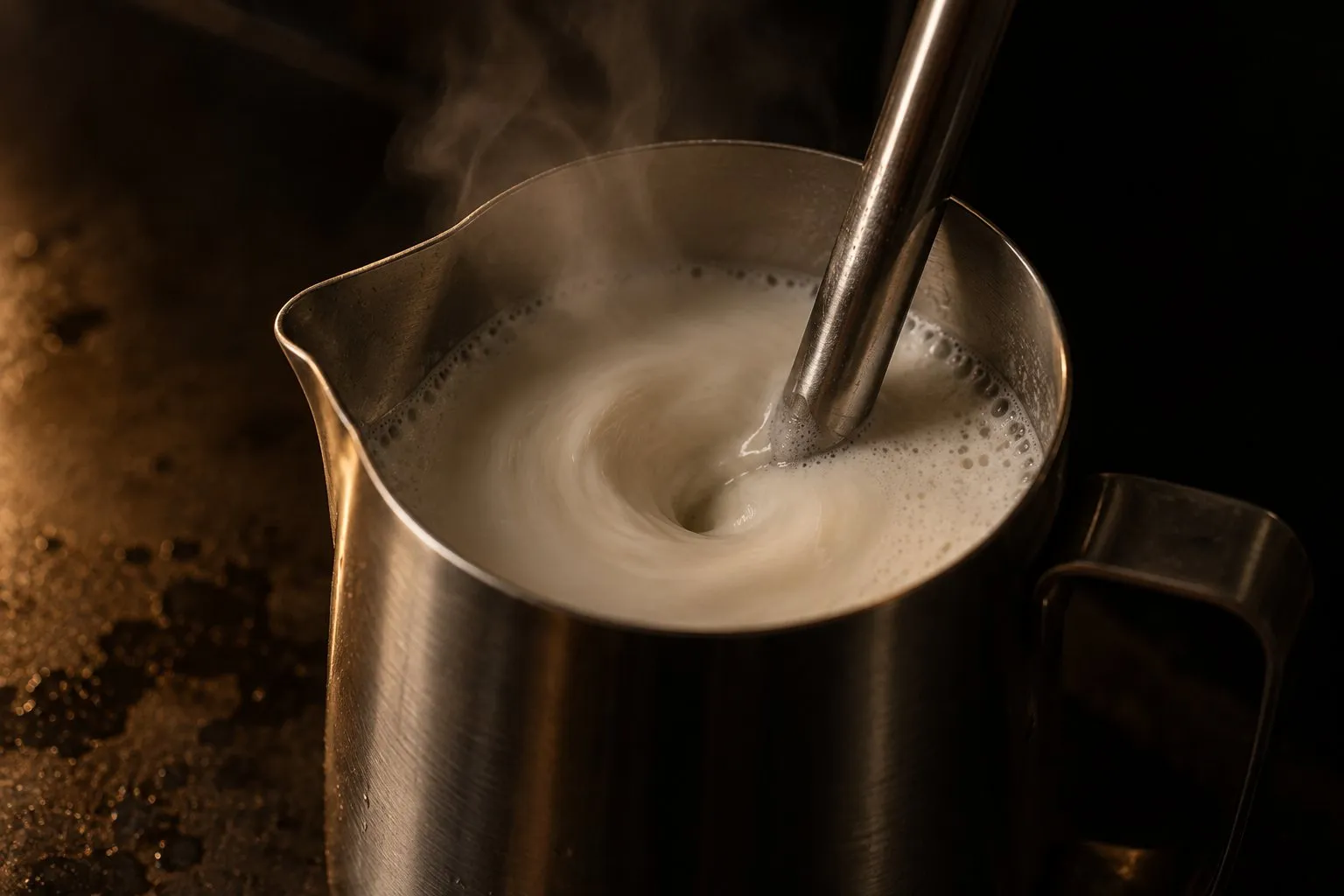 Steam milkHow to steam milk at home: purge, stretch 5 to 10 seconds, spin, stop near 140 to 145 °F. Steps, the temperatures sources disagree on, and fixes for big bubbles.
- Milk pitcherWhich milk frothing pitcher to buy: size by how much milk you steam, what makers say about jug shape and fill level, and when you should keep the jug in your box.
 Espresso ratioEspresso ratio explained: 1:2 in 25 to 30 seconds is a good first recipe, not a standard. See the numbers, Italy's 7 g to 25 ml, and a calculator for your own dose.
semiautomaticespressomachine.com Editorial Team
Espresso gear & shot craft
We are the editorial team at semiautomaticespressomachine.com. We read maker spec sheets, manuals, standards and published research on espresso and turn them into plain-English buying advice, with sources on every page. We do not run lab tests, and we say so openly.
- Spec sheets & standards read
- Sources on every page
- No lab tests – stated openly
- Publisher details in the imprint