Knock Boxes: Size, Bar Material and Drawer-Style Alternatives
A knock box holds spent pucks so you don't walk to the trash after every shot. For most home bars the small size is enough, and we would start with the Breville Knock Box 10. Sellers list about 10 pucks for the small boxes. Size it for how often you will empty it, then check the bar and the base.
Disclosure: This page contains affiliate links (marked with *). If you buy through them, we earn a small commission at no extra cost to you. As an Amazon Associate I earn from qualifying purchases. Learn more
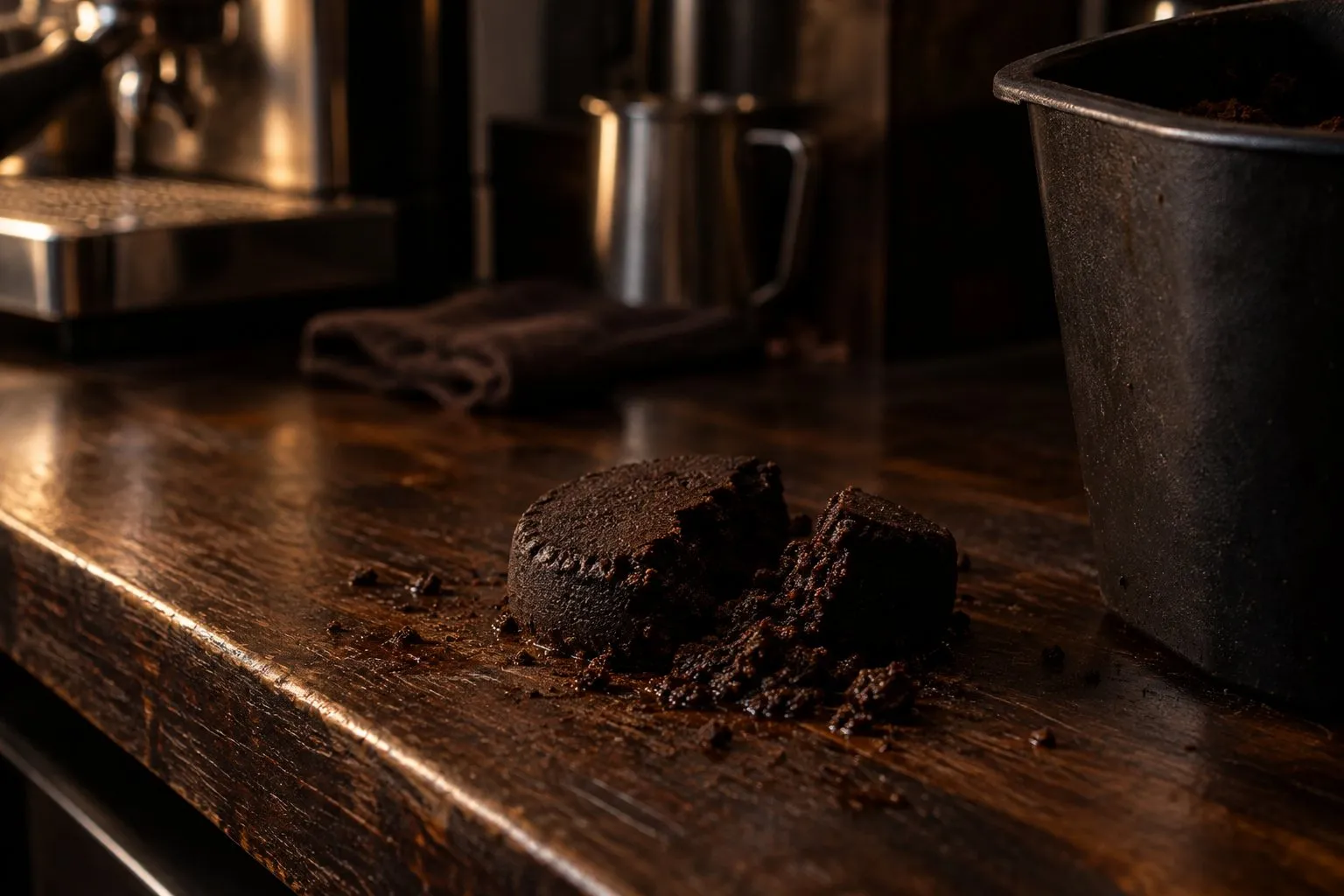
Start with a small box such as the Breville Knock Box 10, which holds 10 pucks and measures 4.8 x 4.8 x 4.4 in per Sur La Table. Go up to the Knock Box 20 only if many shots pile up between emptying. Check for a removable bar and a non-slip base. If your trash can is close, you may not need one.
On this page
Nobody ever said their espresso improved because of a knock box. It earns its spot in smaller ways. There's no walk to the trash with a dripping portafilter, and no puck balanced on the edge of the sink while you steam milk. That's convenience, so spend accordingly: our accessories page ranks it behind a scale, a tamper and a pitcher, and we agree with that order.
One thing to know: for these boxes we have Amazon listings, plus retailer and Breville pages for the Breville models. None of them is a tested pick, and the “Seller data only” label on the cards tells you which ones rest on the listing alone.
Breville Knock Box 10
A small stainless box for up to 10 pucks, with a removable knock bar and an anti-slip base, per Sur La Table.
Why here: Small enough for a crowded counter, and it holds 10 pucks with a removable bar and an anti-slip base, per Sur La Table.
Best for: Anyone tired of carrying pucks to the trash
- Holds 10 pucks and measures 4.8 x 4.8 x 4.4 in (Sur La Table)
- Removable bar and anti-slip base (Sur La Table)
- We read a retailer's page for this size, not a Breville US page
- Type
- Knock box, 10 pucks
- Fits
- 4.8 x 4.8 x 4.4 in (Sur La Table)
- Price class
- Budget
Which one for which bar
If you pull a few shots a day and space is tight → Breville Knock Box 10
View(paid link to Amazon, opens in a new tab)Ad · paid link · check price & delivery on AmazonIf several people use the machine, or you host often → Breville Knock Box 20
View(paid link to Amazon, opens in a new tab)Ad · paid link · check price & delivery on AmazonIf you own a Ninja Luxe Café and want the matching box → Ninja Luxe Café knock box · Seller data only
View(paid link to Amazon, opens in a new tab)Ad · paid link · check price & delivery on AmazonIf you want the smallest footprint listed here → 4.6 in knock box · Seller data only
View(paid link to Amazon, opens in a new tab)Ad · paid link · check price & delivery on AmazonIf you also need a brush and a blower → Li&Zhao knock box · Seller data only
View(paid link to Amazon, opens in a new tab)Ad · paid link · check price & delivery on AmazonIf your trash can is right there
The boxes compared
| Box | Capacity | Size | Bar and base | Source |
|---|---|---|---|---|
| Breville Knock Box 10 | 10 pucks | 4.8 x 4.8 x 4.4 in | Removable bar, anti-slip base | Sur La Table |
| Breville Knock Box 20 | 20 pucks | 7.3 x 7.3 x 7.6 in, or 16.4 x 16.2 x 16.2 cm | Removable bar, anti-slip base | Sur La Table; Breville Australia |
| Ninja Luxe Café box | 10 double shot pucks | Not stated | Not stated | Listing |
| 4.6 in box | Not stated | 4.6 in | Removable plastic rod, non-slip base | Listing |
| Li&Zhao box | Not stated | Not stated | Non-slip base; brush and blower included | Listing |
Two things don't line up for the Knock Box 20. Sur La Table's dimensions are larger than the ones on Breville's Australian page, and Sur La Table says stainless steel where Breville says stainless steel and plastic. If the fit under a shelf is tight, measure against the box itself before you drill or rearrange.
| Breville Knock Box 10 | Breville Knock Box 20 | Seller data onlyNinja Luxe Café knock box | Seller data only4.6 in knock box | Seller data onlyLi&Zhao knock box | |
|---|---|---|---|---|---|
| Type | Knock box, 10 pucks | Knock box, up to 20 pucks | Knock box, 10 pucks, per listing | Knock box, 4.6 in, per listing | Knock box with brush and blower, per listing |
| Fits | 4.8 x 4.8 x 4.4 in (Sur La Table) | – | – | – | – |
| Price class | Budget | – | Budget | – | – |
| Best for | Anyone tired of carrying pucks to the trash | Households that pull many shots between emptying | Ninja Luxe Café owners who want the matching box | Small counters where the box should stay small | Buyers who also want a brush and a blower in the same order |
| On Amazon(paid link to Amazon, opens in a new tab)Ad · paid link · check price & delivery on Amazon | On Amazon(paid link to Amazon, opens in a new tab)Ad · paid link · check price & delivery on Amazon | On Amazon(paid link to Amazon, opens in a new tab)Ad · paid link · check price & delivery on Amazon | On Amazon(paid link to Amazon, opens in a new tab)Ad · paid link · check price & delivery on Amazon | On Amazon(paid link to Amazon, opens in a new tab)Ad · paid link · check price & delivery on Amazon |
Size: think in days, not pucks
Capacity only tells you how long you can put off emptying it. At two doubles a day, a 10-puck box lasts five days, and wet coffee isn't something you want on the counter for that long. So the number is a ceiling and not a target. Most home setups get emptied long before a small box fills up, which is why we would start small.
The 20-puck box earns its space in a household where several people pull shots, or for a morning with guests. It's a big object, though, at around 7 in on each side by either measure. Check the height too: you need room to swing the portafilter over the bar, and that gets harder under a low cabinet.
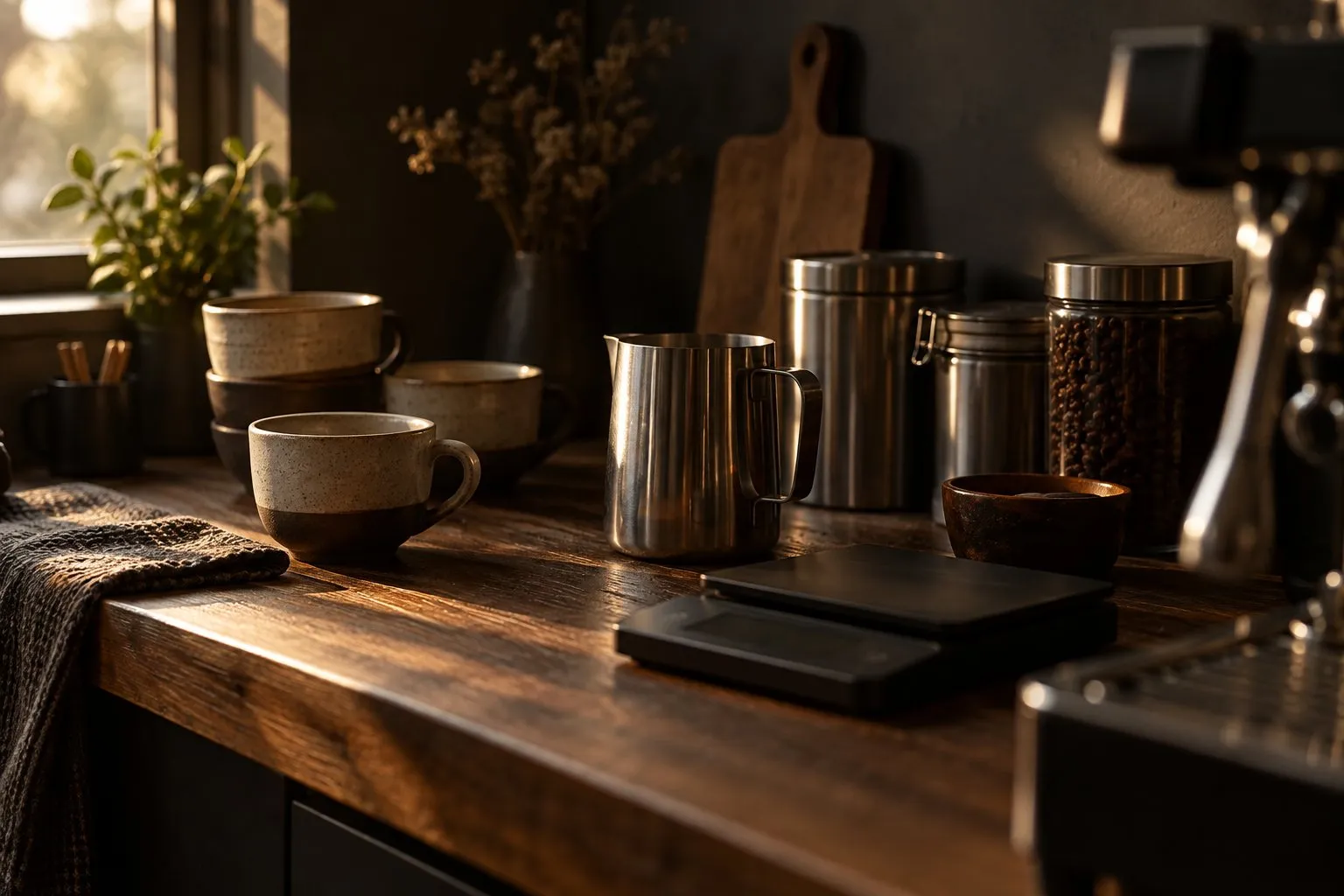
Put it where your hand already goes after the shot.
The bar: what to check
Breville's description is the clearest we found. You strike the portafilter against the bar, and Sur La Table's copy of the description says the bar is durable, designed for aggressive use, and removable for cleaning the inner vessel. Three things are worth checking on any box:
- Does it come out? Grounds work their way around a fixed bar. Breville's and the 4.6 in box's bars are listed as removable. The others don't say.
- What is it made of? Breville doesn't name the bar material on the pages we read. The 4.6 in box lists plastic. A hard strike on a hard bar makes noise, and we have no measurements, so read the listing if you share a wall with someone asleep.
- Is the base grippy? You are hitting this thing on purpose. Breville lists an anti-slip rubber base, and the two generic boxes list non-slip bases.
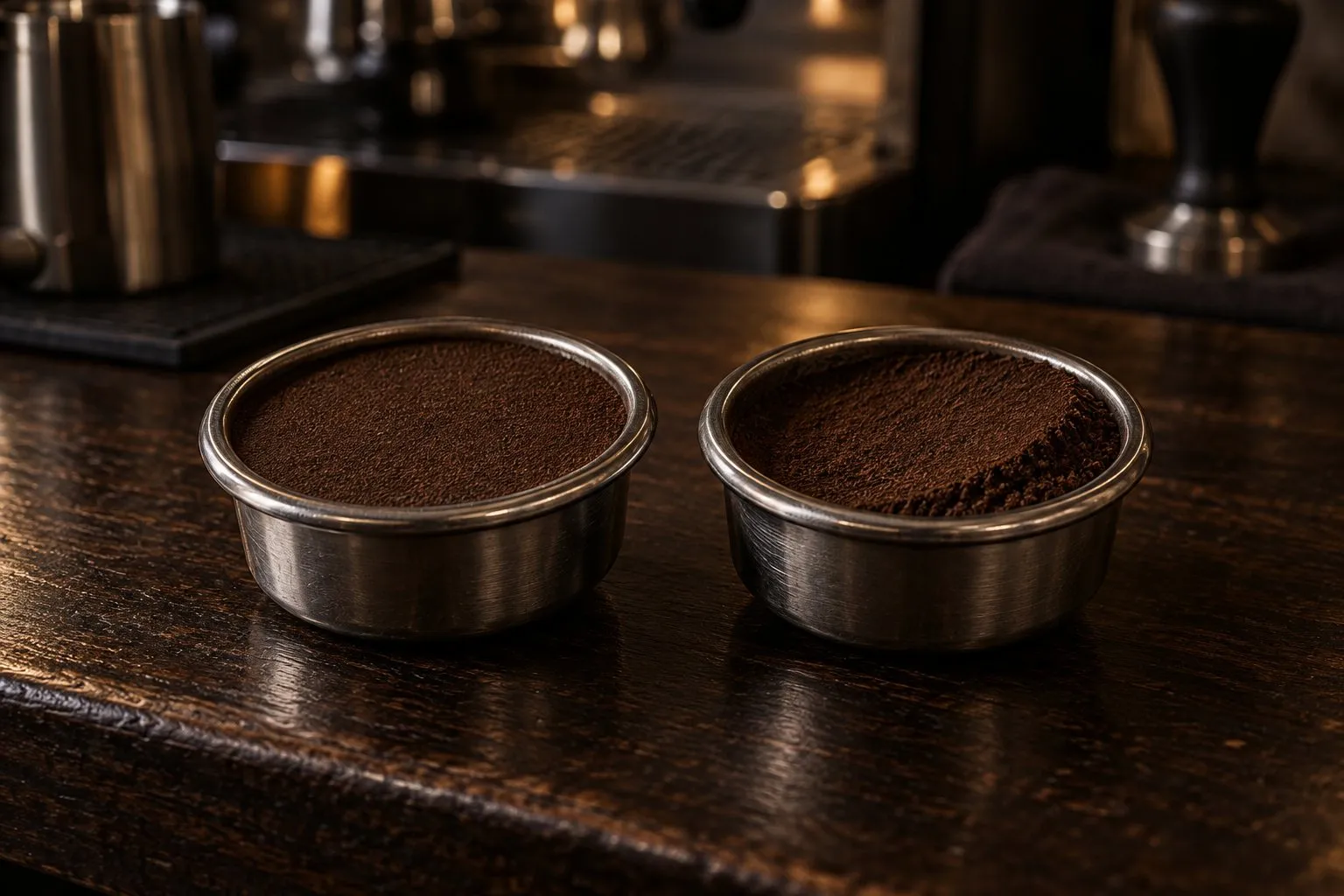
A clean knock starts before the shot
What falls out of the basket depends on what went in. A box won't fix a soupy puck, so if yours come out as slurry, the answer is in the preparation and the shot. Puck prep is the place to start, and the dial-in guide covers the rest.
Drawers and other alternatives
A knock drawer. It's the same idea, built as a shallow drawer with a bar, and it sits under a grinder so it uses that footprint and not new counter space. It suits a fixed station more than a machine that moves around. We have no drawer in our list and no specs we could verify from a maker, so measure your grinder's feet against the seller's dimensions, and check it can carry the grinder's weight.
A kit. If you need a tamping station anyway, the 54 mm accessory kit* lists a knock box along with the station and a tamper. Compare that list with what your machine already includes, because you may be buying a second tamper.
A trash can. It costs nothing extra. If yours is within arm's reach, it does much the same job, and our list of what to buy first wouldn't argue. The one thing it lacks is a bar, so mind what you knock the portafilter against.
Common mistakes
- Buying big by default. A 20-puck box takes real counter space, and it encourages leaving old pucks around.
- Forgetting the swing. Measure the height under your cabinet with the portafilter in your hand.
- Trusting “for espresso machines” as a fit claim. A listing can't know how much room you have, so measure.
- Buying it before a scale. A scale changes your shots. A knock box only changes where the puck goes.
Still setting up?
If the machine is still undecided, these four questions end in one, with the reason next to it. The wider picture is on our semi-automatic guide.
Our recommendation
Buy the small box unless you have a clear reason not to: the Breville Knock Box 10* is where we would start. Go to the Knock Box 20* for a busy household. And if your trash can is close, keep your money for a better grinder, because that's the purchase you will taste. Our coffee bar setup page shows where a box fits.
Asked at the bar
What is a knock box for?
It's a small bin with a bar across the top. You strike the portafilter against the bar and the used puck drops out. It saves you carrying wet pucks to the trash between shots, and it keeps them off the counter. It does nothing for the taste of your coffee, so it comes well after a scale and a good grinder.
What size knock box do I need?
Divide the capacity by your shots per day. A 10-puck box covers five days at two doubles a day, which is more than you would want to leave sitting. So a small box suits most home setups. A 20-puck box makes sense if several people drink coffee, or if you often host, and you have the counter space for it.
What should the bar be made of?
Sellers rarely say in detail. Breville calls its bar durable and built for aggressive use and says it's removable, without naming the material on the pages we read. One generic box lists a removable plastic rod. Look for a bar that comes out for cleaning, and check whether it's covered if noise matters. We have no noise measurements to offer.
Is a knock drawer better than a knock box?
It depends on your layout. A drawer slides out from under a grinder and uses that footprint, so it suits a fixed station with a sturdy grinder on top. A box goes anywhere and costs less counter planning. We have no drawer in our list and no specs we could verify, so check the seller's dimensions against your grinder.
Where this comes from
Next round
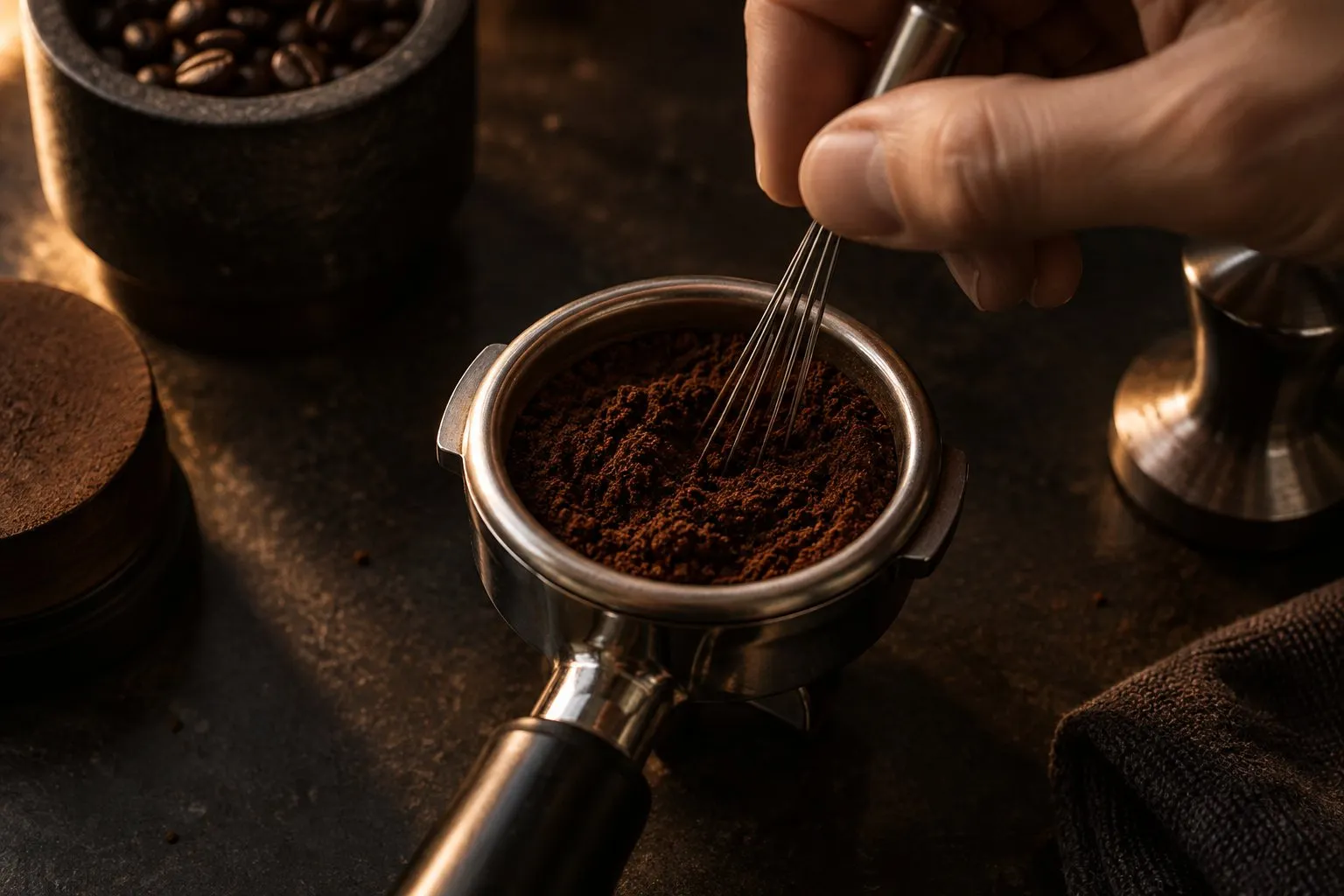 AccessoriesWhich espresso accessories are worth buying first: scale, tamper, pitcher, WDT tool and more, sorted by portafilter size, with what your machine already includes.
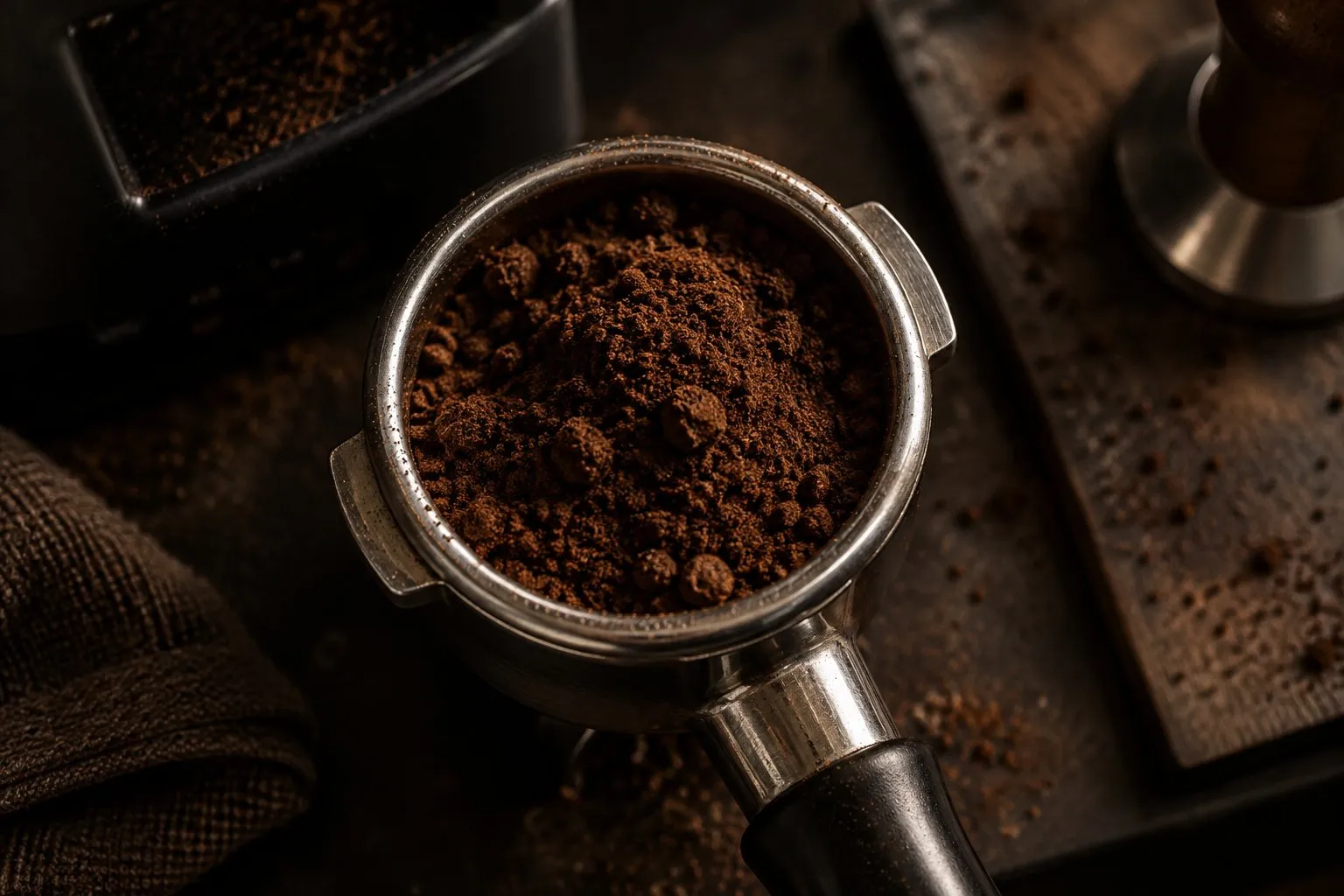 Puck prepEspresso puck prep in six steps: dry, weigh, stir, settle, tamp level, lock in. What channeling is, which tools have evidence, and what a wet puck means.
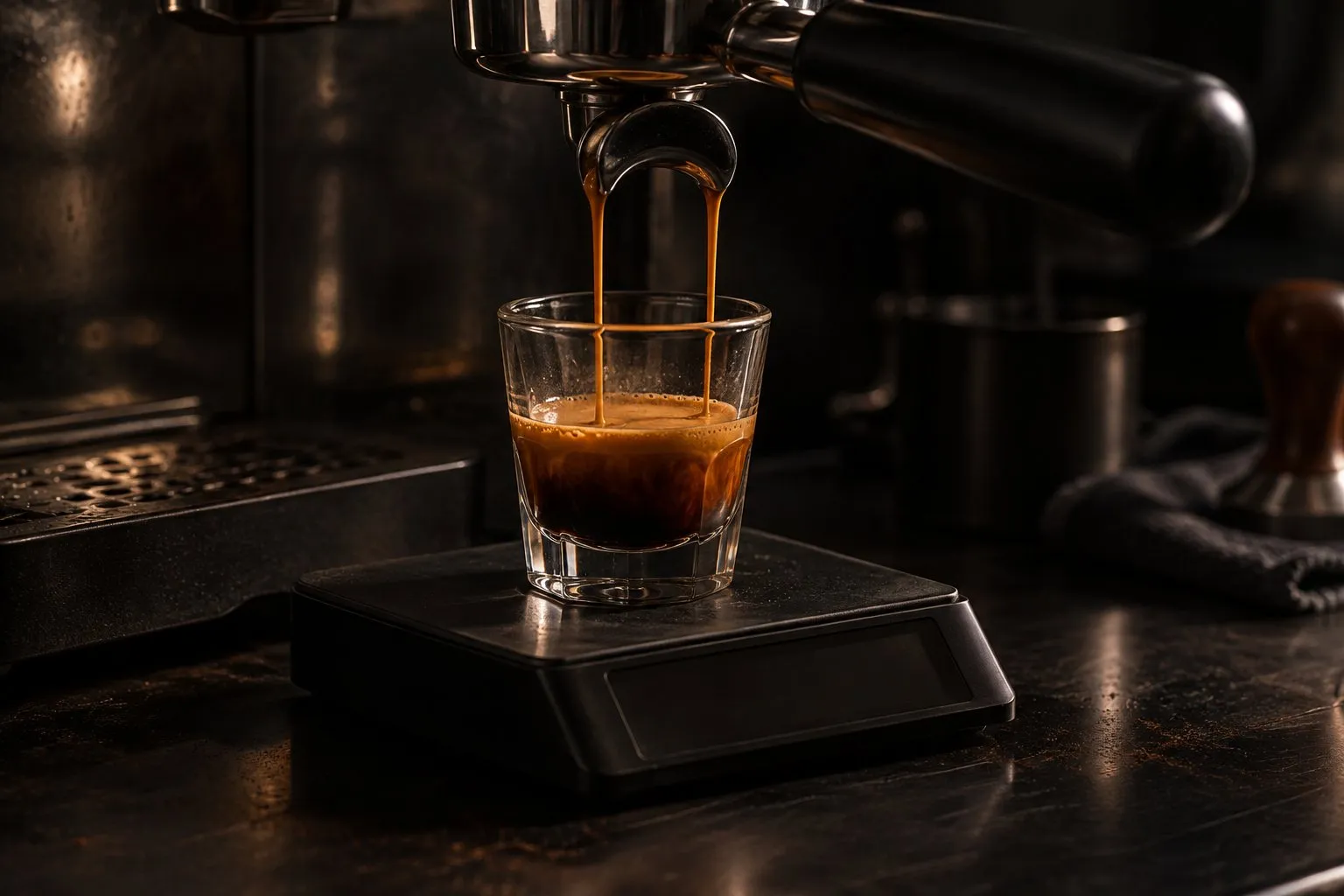 Dial in espressoHow to dial in espresso: fix the dose, set a yield, then change only the grind until time and taste line up. Steps, a symptom table and the exception to the rule.
- Espresso scaleWhat an espresso scale needs: 0.1 g steps, a timer and a size that fits your drip tray. Listed options, plus Acaia and Timemore dimensions from their own data.
- For beginnersThe beginner espresso machine to buy first, and in which order: machine, espresso-capable grinder, scale. Our pick is the Breville Bambino, with budget options.
semiautomaticespressomachine.com Editorial Team
Espresso gear & shot craft
We are the editorial team at semiautomaticespressomachine.com. We read maker spec sheets, manuals, standards and published research on espresso and turn them into plain-English buying advice, with sources on every page. We do not run lab tests, and we say so openly.
- Spec sheets & standards read
- Sources on every page
- No lab tests – stated openly
- Publisher details in the imprint