Barista Express vs Barista Express Impress: What Assisted Tamping Buys You
Take the Barista Express if you already weigh your shots and don't mind tamping by hand. Take the Impress if the tamp is the step you want to hand over. Both list a 54 mm portafilter, thermocoil heating with PID and 9 bar extraction, per Breville, so the real difference sits in the grinder and the puck.
Disclosure: This page contains affiliate links (marked with *). If you buy through them, we earn a small commission at no extra cost to you. As an Amazon Associate I earn from qualifying purchases. Learn more
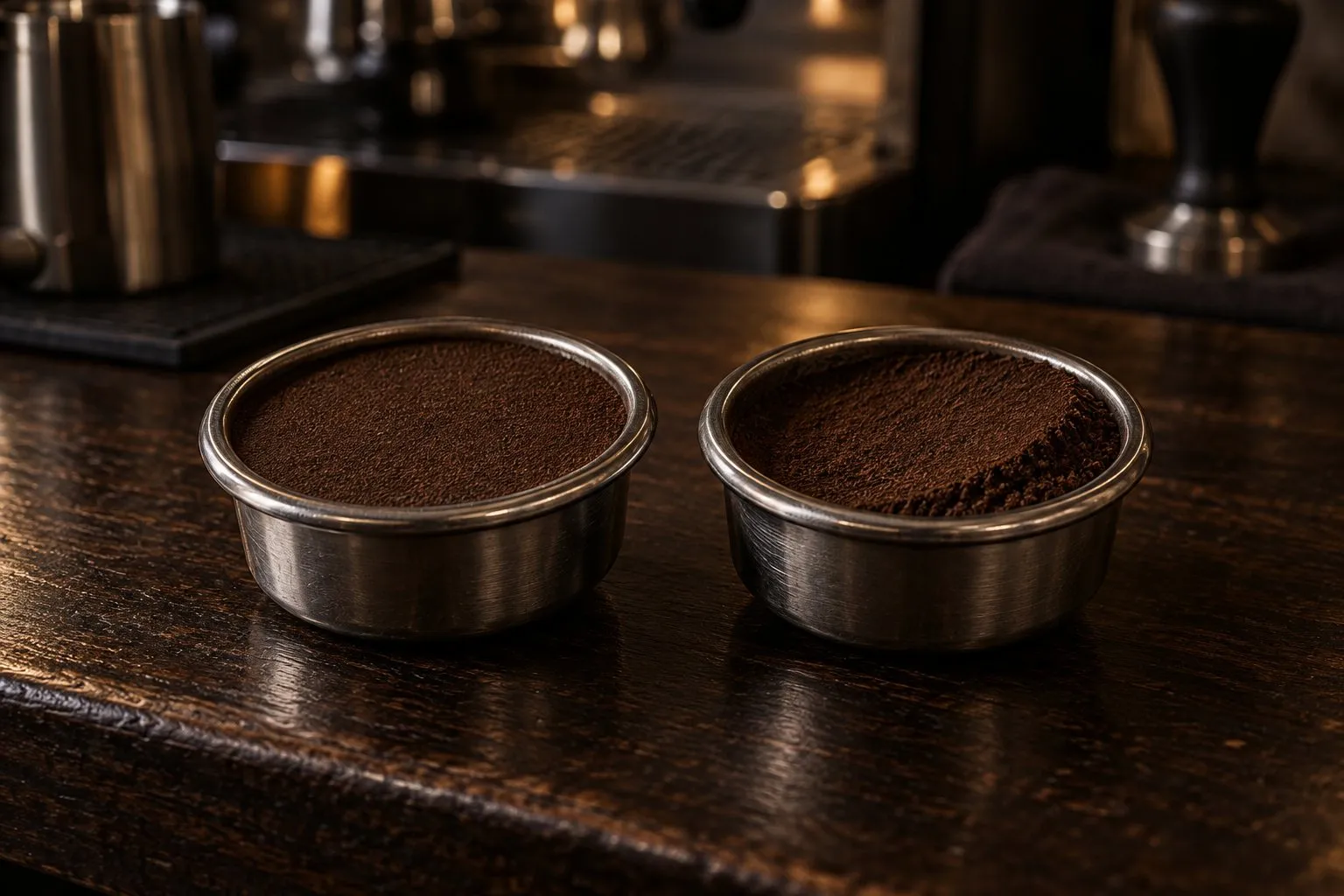
Choose the Barista Express for most setups: it lists the same 54 mm portafilter, PID and 9 bar extraction as the Impress, per Breville, and America's Test Kitchen named it best overall. Choose the Impress if you want a lever that tamps at a constant 22 lb and a machine that corrects its next dose. It also has 25 grind settings against 16.
On this page
The short verdict
On paper the brew side matches: thermocoil heating with PID, a 15 bar pump, 9 bar extraction and a 54 mm portafilter, all per Breville. So this isn't really a choice about shot hardware. It's a choice about who builds the puck.
If a scale already lives on your counter, the Barista Express* makes sense. You're paying attention at that step anyway, and a hand tamp is one more thing you control. The Impress* suits a machine shared between people, or a tamp that changes from one morning to the next. One label note: the Impress is an assisted machine, so it sits between semi-automatic and super-automatic.
Breville Barista Express
Machine and conical burr grinder in one body, with PID and a 54 mm portafilter.
Why here: The same listed brew specs as the Impress, a hand tamp for people who like that step, and America's Test Kitchen's best overall of July 2, 2025.
Best for: First-time buyers who want one box and no separate grinder to choose
- Integrated conical burr grinder with 16 settings (Breville)
- Thermocoil heating with PID temperature control (Breville)
- Named best overall in America's Test Kitchen's roundup of 2 July 2025
- A better grinder later means buying a separate one
- One thermocoil, not two boilers
- The price swings widely between sale days, so check it on the day
- Heating
- Thermocoil
- Pump, as stated
- 15 bar
- Brew pressure, as stated
- 9 bar
- Portafilter
- 54 mm
- PID
- Yes
- Built-in grinder
- Yes, 16 settings
- Milk
- Manual wand
- Price class
- Mid-range
Side by side
| Barista Express (BES870) | Barista Express Impress (BES876) | |
|---|---|---|
| Tamping | Integrated tamper, by hand | Lever, constant 22 lb with a 7° twist |
| Dosing | Auto grind and dose, with dose control | Calculated from the last grind, corrected after the tamp |
| Grind settings | 16 | 25 |
| Burrs | Conical, no size or material on the page | Conical, no size or material on the page |
| Heating | Thermocoil, 200°F, PID | Thermocoil, 200°F, PID |
| Pressure, as stated | 15 bar pump, 9 bar extraction | 15 bar pump, 9 bar extraction |
| Portafilter | 54 mm | 54 mm |
| Size (W x D x H) | 15.9 x 13.1 x 12.4 in | 16.6 x 14.4 x 12.2 in |
| Price class | Mid-range | Mid-range, the higher of the two |
| In the roundups we read | Best overall, America's Test Kitchen | Best with a built-in grinder, Serious Eats |
Everything but the last two rows comes from Breville's product pages. Price classes are our own wording, because we print no prices on this site.
What the lever does, and what it doesn't
Breville's US instruction book, BES876_USCM_IB_F26, walks through it. When grinding finishes, the Tamp light blinks. You push the lever to the end of its travel until the machine beeps, and it presses with what Breville calls a consistent amount of force. A slow push helps the look of the puck, and the book's tip is to tamp twice for a very polished one.
Then comes the part that interests people who weigh things. A gauge reads the level of the coffee after the tamp, with a middle bar as the target:
- Below the bar. The Dose button flashes “A Bit More”. You press it, the grinder adds some, and you tamp again.
- Above the bar. You trim the excess with the Razor tool, and the machine shortens the grind time for next time.
So the Impress corrects by the height of the bed, not by weight. The book also warns that a change of grind size moves the dose, and it gives 16 to 19 g as the range for the 2 cup basket. If you're chasing a specific number, a scale still has the last word. The lever makes the puck more repeatable, and it won't tell you whether your recipe is right. That part stays with dialing in.
Does a fixed force make a better shot? Breville describes it as consistency. Our tamping guide covers what force does and doesn't do, and puck prep covers the steps before it.
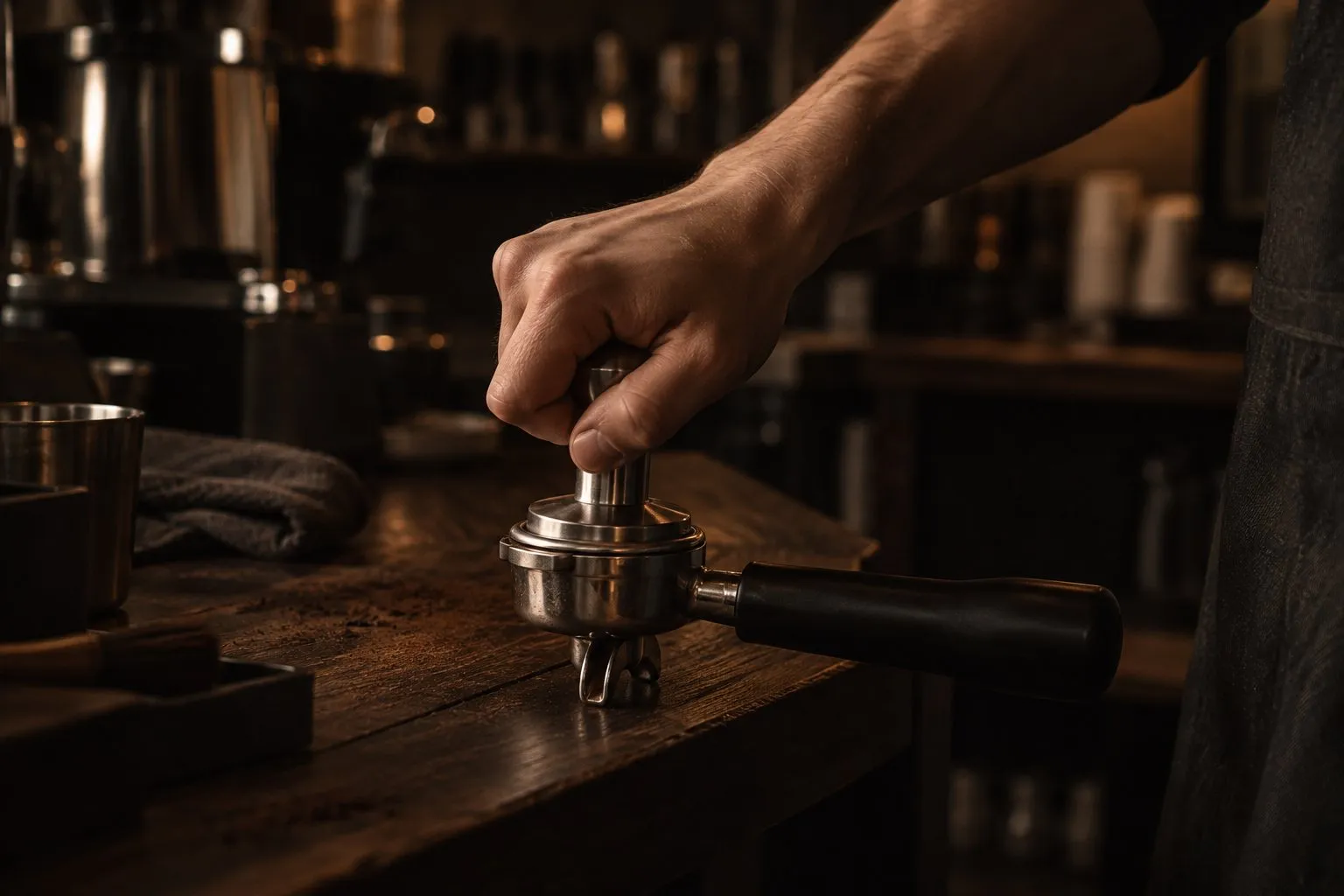
The grinder: 25 settings against 16
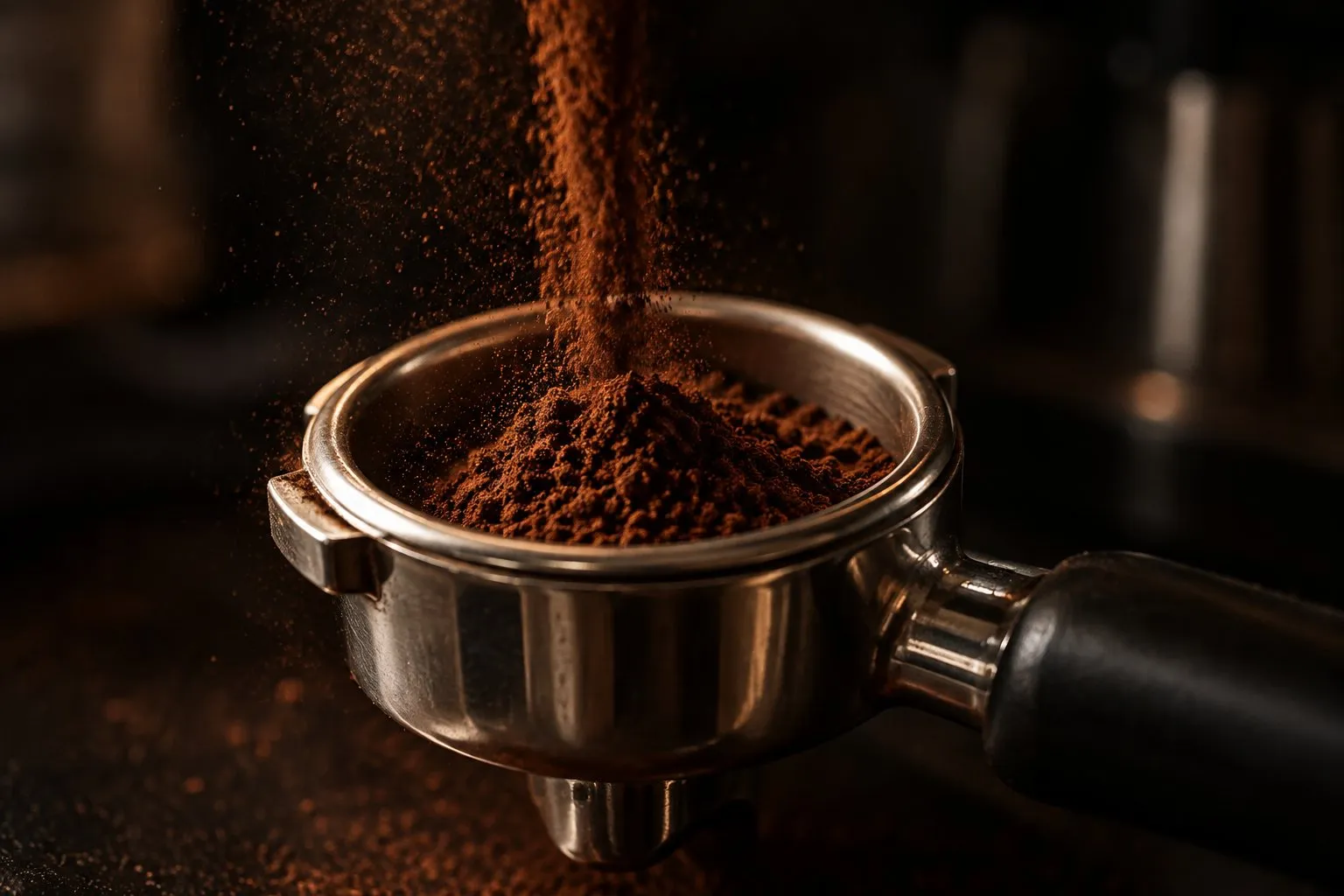
More steps, same limit
More settings give you finer adjustment between steps, but a count doesn't describe grind quality. Breville's pages give no burr size for either machine. Serious Eats, in a copy dated May 2, 2023, says the Impress's grinder lacks the precision and power of its favorite standalone grinders. And neither built-in grinder can be replaced on its own later.
If the grinder is what you care about, look at the separate route. For the Express against a Bambino and a Smart Grinder Pro, the sum runs like this. At full price the separate pair is cheaper; on sale they cost the same. Check both on the day. Serious Eats makes a similar point about the Impress, which it says costs more than some machine and grinder pairings on its list.
What the roundups say
Neither roundup we read compares these two directly, which is the awkward part of this question.
- America's Test Kitchen, July 2, 2025, covers the Express and not the Impress. It names the Express best overall and recorded a ready time of 48 seconds.
- Serious Eats, in a copy dated May 2, 2023, covers the Impress and not the Express. It recommends the Impress for beginners and for people who don't enjoy tinkering, because the dose and the tamp are the two hardest steps for a newcomer.
We run no tests, so we can't break the tie from our own cups. How we compare explains why. If you're still deciding whether to buy into this line at all, is the Barista Express worth it? takes that question on.
And the Barista Pro?
People also search for the Express against the Barista Pro*. Breville lists 30 grind settings with Baratza hardened steel burrs on the Pro, and ThermoJet heating with a 3 second heat-up. Its product page doesn't mention PID or the portafilter size. Its US instruction book, BES878_USCM_IB_Q26, lists electronic PID temperature control and a 54 mm stainless steel portafilter. Pick it if the short wait and the extra grind steps matter more to you than the tamping question.
| Our pick: built-in grinderBreville Barista Express | Barista Express Impress | Breville Barista Pro | |
|---|---|---|---|
| Heating | Thermocoil | Thermocoil | ThermoJet |
| Pump, as stated | 15 bar | 15 bar | 15 bar |
| Brew pressure, as stated | 9 bar | 9 bar | 9 bar |
| Portafilter | 54 mm | 54 mm | 54 mm, per the instruction book |
| PID | Yes | Yes | Yes, per the instruction book |
| Built-in grinder | Yes, 16 settings | Yes, 25 settings | Yes, 30 settings |
| Milk | Manual wand | Steam wand | Steam wand |
| Price class | Mid-range | Mid-range | Mid-range |
| Best for | First-time buyers who want one box and no separate grinder to choose | Buyers who want less tamping technique and accept a higher price class | Built-in-grinder buyers who want more grind steps and fast heat-up |
| On Amazon(paid link to Amazon, opens in a new tab)Ad · paid link · check price & delivery on Amazon | On Amazon(paid link to Amazon, opens in a new tab)Ad · paid link · check price & delivery on Amazon | On Amazon(paid link to Amazon, opens in a new tab)Ad · paid link · check price & delivery on Amazon |
Take the Express if, take the Impress if
If you weigh your shots and like doing the tamp yourself → Breville Barista Express
View(paid link to Amazon, opens in a new tab)Ad · paid link · check price & delivery on AmazonIf you want the machine America's Test Kitchen names best overall → Breville Barista Express
View(paid link to Amazon, opens in a new tab)Ad · paid link · check price & delivery on AmazonIf more than one person uses the machine and tamps differently → Barista Express Impress
View(paid link to Amazon, opens in a new tab)Ad · paid link · check price & delivery on AmazonIf you want a gauge that guides the dose after each tamp → Barista Express Impress
View(paid link to Amazon, opens in a new tab)Ad · paid link · check price & delivery on AmazonIf you care more about grind steps and a short heat-up → Breville Barista Pro
View(paid link to Amazon, opens in a new tab)Ad · paid link · check price & delivery on AmazonIf you would rather choose the grinder yourself
Each machine has more detail on its own page: the Barista Express and the Barista Express Impress. For rivals from other brands, see machines with a built-in grinder, or start again from what you drink.
Asked at the bar
Which is better, the Breville Barista Express or the Impress?
It depends on the step you want help with. The brew specs match on Breville's pages, so we recommend the Express unless the tamp is your weak spot. The Impress adds a lever that presses at a constant 22 lb, a dose gauge and 25 grind settings. We found no neutral head-to-head, and we run no tests ourselves.
Does the Impress do the tamping for you?
Partly. You still pull the lever down until the machine beeps, and the mechanism sets the force at 22 lb and adds a 7° twist, per Breville. The US instruction book says a slow, steady push improves the look of the puck and recommends tamping twice for a very polished one. So it removes the force decision, though you're still there for the step.
Is the Barista Express Impress still a semi-automatic?
It's an assisted machine, so it sits between semi-automatic and super-automatic. It helps with the dose and the tamp, while you still load the portafilter, lock it in and run the shot. A super-automatic also grinds, doses and tamps without your hands. The Express is a plain semi-automatic with a built-in grinder.
What is the difference between the Barista Express and the Barista Pro?
Mostly grinder and heating. Breville lists 30 grind settings with Baratza burrs and ThermoJet heating with a 3 second heat-up on the Pro, against 16 settings and a thermocoil on the Express. The Pro's product page doesn't mention PID or the portafilter size, while its US instruction book lists electronic PID and a 54 mm portafilter.
Do I still need a scale with the Impress?
If you care about grams, yes. The instruction book describes a gauge that reads the level of the coffee after the tamp, then adjusts the grind time for the next dose. That helps you land in the right zone, but it isn't a weight in grams, and the book warns that a change of grind size moves the dose.
Where this comes from
- Breville: BES870 Barista Express product page
- Breville: BES876 Barista Express Impress product page
- Breville: Barista Express Impress instruction book BES876_USCM_IB_F26 (US, Canada, Mexico)
- Breville: BES878 Barista Pro product page
- Breville: Barista Pro instruction book BES878_USCM_IB_Q26 (US, Canada, Mexico)
- America's Test Kitchen: espresso machines, July 2, 2025
- Serious Eats roundup, read through a Yahoo copy dated May 2, 2023
Next round
 Barista ExpressBreville Barista Express BES870XL: grinder, PID, 54 mm portafilter and care from Breville's own documents, and who should buy something else.
- Barista Express ImpressBreville Barista Express Impress BES876: how the tamp lever and dose correction work, specs from Breville's documents, daily care, and who should skip it.
 Is the Breville Barista Express Still Worth It? Specs and Newer RivalsIs the Breville Barista Express still worth it? What holds up, what its newer rivals add, who has actually tested it, and when a separate grinder is the better buy.
- How to tampHow to tamp espresso step by step: grip, level and when to stop. Breville's two tamping figures, and what one roaster's test of tamping force found.
- With grinderEspresso machines with a built-in grinder compared by spec sheet: Barista Express, Impress, Pro and Touch, plus Ninja, De'Longhi, KitchenAid, Gevi and CASABREWS.
semiautomaticespressomachine.com Editorial Team
Espresso gear & shot craft
We are the editorial team at semiautomaticespressomachine.com. We read maker spec sheets, manuals, standards and published research on espresso and turn them into plain-English buying advice, with sources on every page. We do not run lab tests, and we say so openly.
- Spec sheets & standards read
- Sources on every page
- No lab tests – stated openly
- Publisher details in the imprint