Latte vs Cappuccino: Volume, Foam and the Italian Cappuccino Spec
A cappuccino is the smaller, foamier drink and a latte is the larger, milkier one, and both start from espresso. Only the cappuccino has a formal spec: Italy's INEI certifies 25 ml of espresso with 100 ml of milk steamed to about 125 ml, in a cup of about 160 ml. We found no such standard for the latte, so its size is up to the café.
Disclosure: This page contains affiliate links (marked with *). If you buy through them, we earn a small commission at no extra cost to you. As an Amazon Associate I earn from qualifying purchases. Learn more

A cappuccino has less milk and more foam than a latte, so the coffee tastes stronger. Italy's INEI specifies 25 ml of espresso and 100 ml of milk steamed to about 125 ml at about 55°C, in a cup of about 160 ml. We found no standard for a latte. Breville tops one with about ½ inch of microfoam.
On this page
Most latte and cappuccino explainers give you a neat ratio of thirds and move on. We couldn't find a standard behind that, so we won't repeat it. What does exist is one real spec, for the cappuccino, and a handful of recipes from people who make these drinks for a living. They don't line up perfectly, and that's useful to know before you start measuring.
Latte and cappuccino side by side
| Latte | Cappuccino | |
|---|---|---|
| Formal standard | None found | INEI's Certified Italian Cappuccino |
| Coffee at Breville | About 19 g | About 19 g |
| Coffee and milk at Starbucks (home recipes) | 1 oz coffee, 1 cup whole milk | 2 oz coffee, 4 oz whole milk |
| Foam at Breville | About ½ inch of microfoam | More than a latte, no depth given |
| Foam at Starbucks | A light layer | About 50% milk, 50% froth |
| Milk temperature at Breville | About 140 to 150°F (60 to 65°C) | About 140 to 150°F (60 to 65°C) |
| Milk temperature at INEI | Not covered | About 55°C |
| Cup | Glass or cup, at Breville | About 160 ml white china, at INEI |
Read that table as a family of recipes. Foam and milk separate the two drinks every time. The coffee doesn't.

The tall glass is a latte. Beside it, a flat white, its smaller cousin.
The Italian cappuccino spec
Italy's Espresso National Institute, INEI, certified its Cappuccino Italiano in 2006. It's a spec for certified bars, not a law for your kitchen, but it's the only formal set of numbers we found.
- 25 ml
- Espresso, from a Certified Italian Espresso
- 100 ml
- Cold milk, 3 to 5°C, before steaming
- About 125 ml
- Volume of the milk after steaming
- About 55°C
- Milk temperature after steaming
- About 160 ml
- White china cup, filled to the brim
A few things stand out if you're used to café cappuccinos:
- It's small. The cup is about 160 ml, and INEI wants it full to the brim, with a dome on top. Those numbers are in milliliters because that's how INEI publishes them, and we don't convert them here.
- It's cooler. About 55°C sits under Breville's 60 to 65°C. Breville's recipes pair 55°C with 130°F, as its limit for non-dairy milk.
- The foam is fine. INEI asks for a tight mesh with very fine or no visible bubbles. So the stiff, dry cap some cafés serve isn't what this spec describes.
- The milk is specified. Fresh cow's milk, with at least 3.2% protein and 3.5% fat.
The look is specified too: white, with a brown edge of varying thickness in the classic version. That's the ring in the picture at the top of this page, which is a generated image of that look and not a certified drink.
What about the latte?
We found no standard for it, and it shows. Breville's recipe calls for one espresso shot and cold milk up to the bottom of the spout of the jug, with about ½ inch of foam, which it places between a flat white and a cappuccino. Starbucks' home recipe puts 1 cup of whole milk with 1 oz of coffee and a thin layer of foam on top. So any exact “latte ratio” you see belongs to one café or one website.
If a shorter, less foamy drink is what you're after, flat white vs latte covers that comparison, and macchiato vs latte and cortado vs latte cover the smaller drinks.
How to make a cappuccino at home
These steps follow Breville's cappuccino recipe. It takes a working shot and a few practice jugs of milk.
Pull the shot
Grind about 19 g, tamp level and brew into your cup. If you weigh your yield, dial in the shot first, because milk won't rescue a sour one.Fill the jug with cold milk
Start with cold milk at about a third of the jug's volume for one cup. Non-dairy milk works too.Purge and set the tip
Clear the wand, then place the tip about ½ inch into the milk and open the steam.Add air, then heat
After a few seconds, lower the jug slightly to take in air. Build the texture first. You want more air than for a latte. INEI's 100 ml growing to about 125 ml is a useful reference for how far to go.Stop at temperature
Aim for about 140 to 150°F (60 to 65°C) on Breville's numbers, or try INEI's lower figure. Keep non-dairy milk under 130°F (55°C).Swirl and pour
Purge and wipe the wand. Swirl the jug to mix the foam in, then pour slowly over the espresso. Breville adds a dusting of chocolate, and that part is up to you.
Steam and hot water can burn, so keep your hands clear of the wand and follow the manual for your machine.
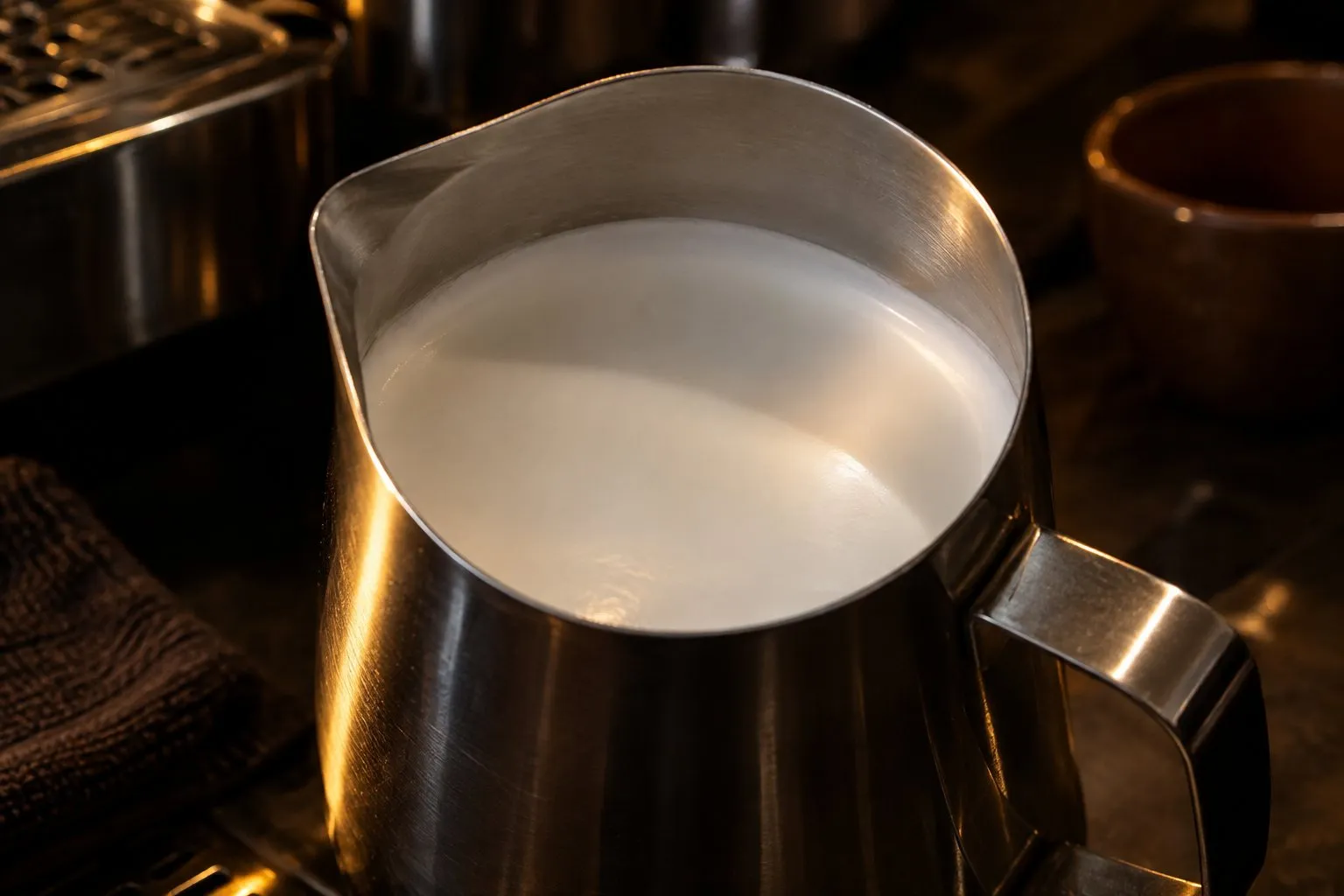
What the milk should look like
Glossy, almost like wet paint, with no bubbles you can pick out. For a latte you stop adding air early. For a cappuccino you keep going a little longer, and the texture should stay fine. Our steaming guide deals with the technique and with what to do about big bubbles.

Which machine suits these drinks
Either drink asks for a repeatable shot and steam you can control. A single boiler has to take turns between brewing and steaming, while a dual boiler can do both at once, and that only starts to count when you make several in a row. Semi-automatic machines for lattes and cappuccino goes through the choice.
If you'd rather not learn the wand first, the Breville Bambino Plus* textures milk by itself, with 3 temperatures and 3 texture levels, according to Breville. That also covers the “more foam” question, since you pick the level. It needs a separate espresso grinder. For a hand wand, a milk pitcher sized for your drink is the next purchase.
For the wider picture, the start page sorts machines by what you drink, and it leads to one recommendation for each kind of drinker.
Asked at the bar
What is the difference between a latte and a cappuccino?
The milk. A cappuccino has less steamed milk and a thicker layer of foam, and a latte has more milk and a thinner layer. Breville puts about ½ inch of microfoam on a latte and says a cappuccino has more. Both start from espresso. Only the cappuccino has a formal Italian spec, from INEI.
Is a cappuccino stronger than a latte?
It tastes stronger, because the coffee meets less milk. That's about flavor in the cup, and the shot may well be the same: Breville's recipes use about 19 g of coffee for each. Starbucks' home recipes differ, with 2 oz of coffee in its cappuccino and 1 oz in its latte, so this varies by who is making it.
Does a cappuccino have more foam than a latte?
Yes, in every source we read. Breville says a latte's foam sits between a flat white's and a cappuccino's. Starbucks' home recipe aims for a balance of 50% milk and 50% froth in its cappuccino, and a light layer on its latte. INEI wants a dome that fills the cup to the brim.
How do you make a cappuccino at home?
Pull a shot and steam cold milk with more air than for a latte. Breville starts with the jug a third full for one cup, purges the wand, sets the tip about ½ inch into the milk, then lowers the jug to add air before heating. Swirl the jug, pour slowly over the espresso, and add chocolate if you like.
Can I make both drinks on the same machine?
Yes. They ask the same things of a machine: a repeatable shot and steam you can control. The difference is how much air you add and how much milk you pour. A single boiler has to take turns between brewing and steaming, which matters more when you're making several drinks in a row.
Where this comes from
Next round
- For lattes and cappuccinoChoosing an espresso machine for cappuccino and lattes comes down to wand and routine. Bambino Plus, Dual Boiler and Silvia compared by spec sheet and manual.
- Flat white vs latteFlat white vs latte: less milk and a thin layer of microfoam against a larger, milkier drink. What sources agree on, where they differ, and how to steam for each.
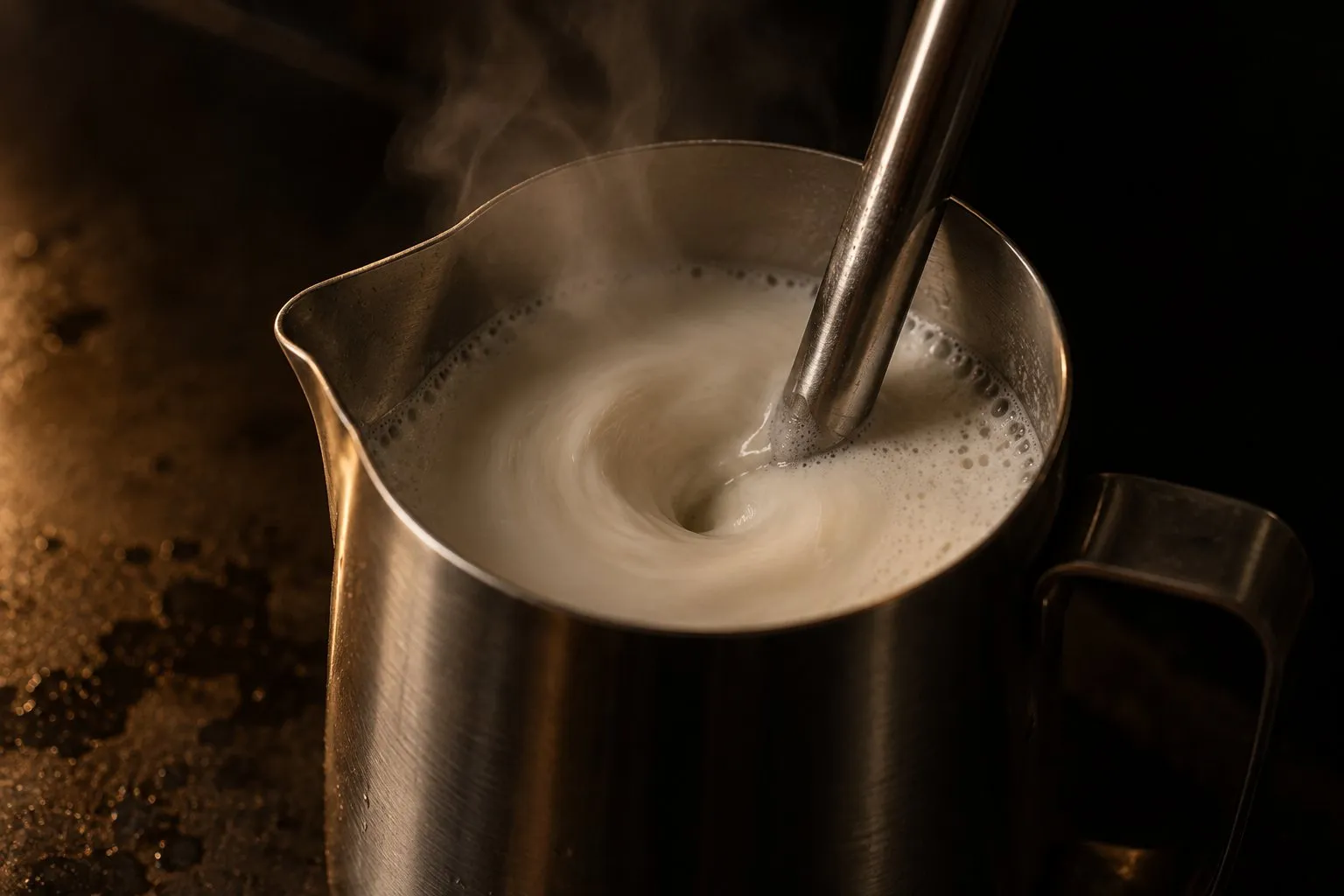 Steam milkHow to steam milk at home: purge, stretch 5 to 10 seconds, spin, stop near 140 to 145 °F. Steps, the temperatures sources disagree on, and fixes for big bubbles.
- MicrofoamMicrofoam is steamed milk with bubbles too small to see. How it differs from froth, how hot to steam it, why you get big bubbles, and which wands can make it.
- Macchiato vs latteMacchiato vs latte: an espresso macchiato is a shot with a spoonful of foam, a latte is mostly steamed milk. Recipes side by side, and what a latte macchiato is.
- Cortado vs latteCortado vs latte: equal parts espresso and steamed milk with minimal foam, against a milkier drink with foam on top. What sources agree on, and how to pour each.
semiautomaticespressomachine.com Editorial Team
Espresso gear & shot craft
We are the editorial team at semiautomaticespressomachine.com. We read maker spec sheets, manuals, standards and published research on espresso and turn them into plain-English buying advice, with sources on every page. We do not run lab tests, and we say so openly.
- Spec sheets & standards read
- Sources on every page
- No lab tests – stated openly
- Publisher details in the imprint