Cortado vs Latte: Equal Parts or Mostly Milk
A cortado is equal parts espresso and steamed milk, with very little foam, so the coffee stays up front. A latte is steamed milk poured over espresso with a thin layer of microfoam on top, so the milk leads. Same ingredients, very different cup.
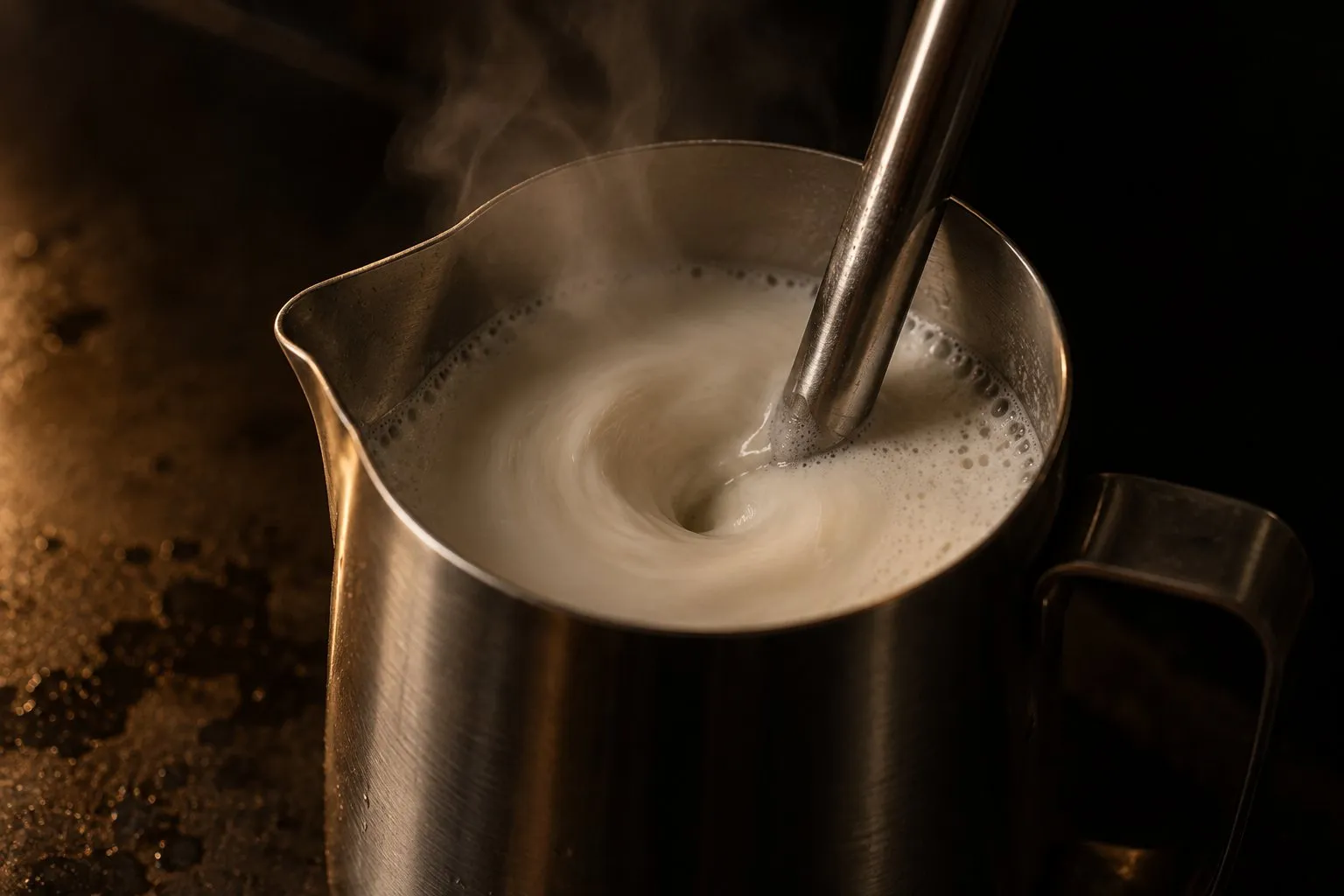
A cortado is about equal parts espresso and steamed milk, with minimal foam, and Sage describes a 4 oz drink in a short glass. A latte has much more milk and about ½ inch of foam in Breville's recipe. Pick the cortado to taste the coffee, and the latte if you want milk first.
On this page
If you already weigh your shots, this comparison is mostly about milk: how much goes in, and how much air it carries. The espresso can be exactly the same in both.


The two drinks side by side
| Cortado | Latte | |
|---|---|---|
| Espresso to milk | About equal parts (Starbucks, Sage, Dictionary.com) | Mostly milk; Breville's recipe gives no ratio |
| Milk texture | Smooth, slightly aerated, minimal foam (Sage) | Steamed milk with a thin layer of microfoam (Breville) |
| Foam on top | Very little | About ½ inch (Breville) |
| Size | About 4 oz in Sage's example | Not fixed; Breville fills the jug to the bottom of the spout |
| Usual vessel | A short Gibraltar glass, or a simple mug (Sage) | A larger cup or glass |
| What you taste | Intense espresso with a touch of cream (Sage) | Milk first, with coffee behind it |
We found no standards document for either drink. The figures above are what these recipes share, and your local café may do it differently.
What makes a cortado
The word does most of the explaining. Cortado comes from the Spanish cortar, to cut, and the milk cuts the intensity of the coffee. Sage traces the drink to Spain and describes a double shot of about 2 oz with 2 oz of steamed milk, in a 4.5 oz Gibraltar glass that lets you watch the two mix. Breville calls it “a miniature latte”, which is a handy shorthand as long as you remember the foam is missing too.
Recipes don't all land on exactly 1:1. Starbucks defines the drink as equal parts, then builds its caramel version from two shots, about ⅓ cup of whole milk and a flavored creamer. Flavored and sized versions are a house style, not a different definition.
What makes a latte
Breville's recipe describes a latte as steamed milk poured over a shot of espresso, with a thin layer of microfoam on top. It starts from a dose of about 19 g, fills the jug with cold milk up to the bottom of the spout, and heats it to around 140 to 150°F, or 60 to 65°C. The goal is about ½ inch of foam in the cup.
That extra milk changes what your shot has to do. A shot that tastes sharp on its own can sit nicely under a lot of milk, while a cortado shows you almost everything. So a new coffee is easier to judge in a cortado, or in the cup with no milk at all. If you want to compare shots properly, the espresso ratio page sets out what to weigh.
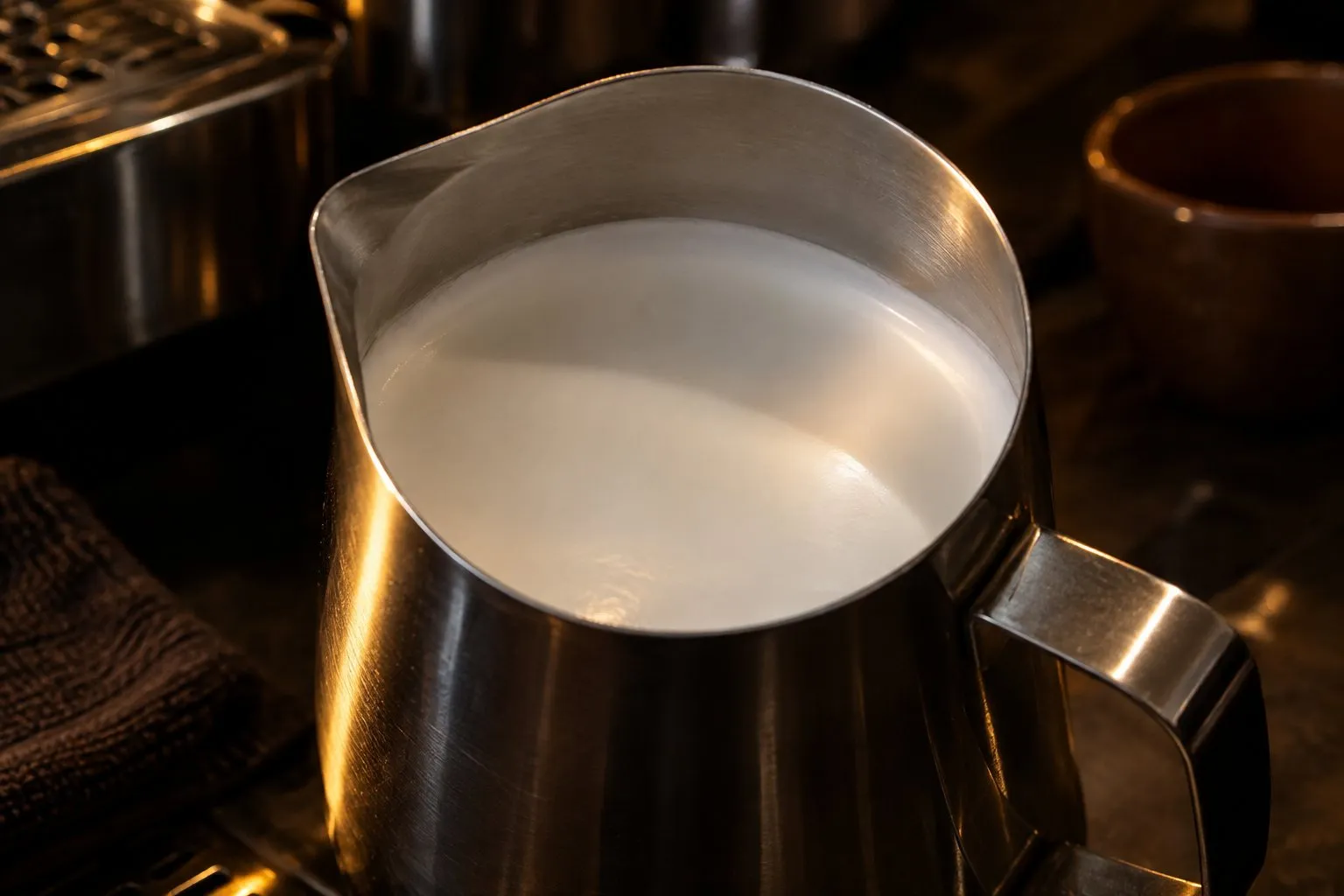
Same steam wand, less air
Both drinks start the same way: purge the wand, set the tip just under the surface, and heat to temperature. The difference is the air. For a latte you let in enough for about ½ inch of foam. For a cortado you let in only a little, so the milk stays glossy and thin. Our steaming guide walks through the wand work.
Making each at home
- Cortado. Pull your usual double shot into a small glass. The steam tip has to stay under the surface, so steam more milk than you need, keep the air phase short, and pour the same amount as your espresso. A scale on the counter makes equal parts easy to hit. A small milk pitcher helps with the small volume.
- Latte. Pull the same shot into a larger cup. Steam more milk with a longer air phase, then pour high at first and lower the jug as the cup fills, as Breville describes.
Steam and hot water can burn, so keep your hands clear of the wand and follow your machine's manual.
Which one should you make?
Make a cortado if you like the taste of your espresso and just want the edge taken off. Make a latte if you want a larger, gentler drink, or if you like pouring latte art. The foam on a cortado is too thin to give you much room for that.
Close relatives are worth a look as well. A flat white has less milk than a latte and a thin layer of microfoam, with shot type and size differing by café. Sage's own comparison puts it at 6 oz, which is one maker's example and not a norm. A macchiato goes further toward the coffee, and a cappuccino goes further toward foam.
If milk drinks are your main reason for buying a machine, our page on machines for lattes and cappuccino picks one for that job. The start page sorts every machine by what you drink.
Asked at the bar
Is a cortado stronger than a latte?
It tastes stronger, because far less milk meets the espresso. Sage describes intense espresso notes with a touch of creaminess. Taste is the only claim we make here. The number of shots in either drink varies between recipes, so a cortado from one café and a latte from another may hold different amounts of coffee.
What is the ratio of a cortado?
About 1:1 espresso to steamed milk. Starbucks calls it equal parts, Dictionary.com says an approximately equal amount, and Sage's example is 2 oz of espresso with 2 oz of milk. We found no standards document for it, so treat those figures as the shared recipe and not as a rule.
Does a cortado have foam?
Very little. Sage asks for a smooth, slightly aerated milk texture with minimal foam in one article and subtle microfoam in another. That is what separates it from a latte, where Breville aims for about ½ inch of foam on top. You still want the milk silky, not flat and scalded.
Is a cortado the same as a cortadito?
Dictionary.com lists cortado as another form of cortadito and defines it as an espresso topped with an approximately equal amount of steamed milk. Both words come from the Spanish cortar, to cut. Cafés can use the names differently, so ask what you are getting if the size matters to you.
Where this comes from
Next round
 Latte vs cappuccinoCappuccino vs latte: same shot, different milk. Italy's certified cappuccino recipe in numbers, what Breville and Starbucks do, and how to make a cappuccino at home.
- For lattes and cappuccinoChoosing an espresso machine for cappuccino and lattes comes down to wand and routine. Bambino Plus, Dual Boiler and Silvia compared by spec sheet and manual.
 Flat white vs latteFlat white vs latte: less milk and a thin layer of microfoam against a larger, milkier drink. What sources agree on, where they differ, and how to steam for each.
- Steam milkHow to steam milk at home: purge, stretch 5 to 10 seconds, spin, stop near 140 to 145 °F. Steps, the temperatures sources disagree on, and fixes for big bubbles.
- Macchiato vs latteMacchiato vs latte: an espresso macchiato is a shot with a spoonful of foam, a latte is mostly steamed milk. Recipes side by side, and what a latte macchiato is.
semiautomaticespressomachine.com Editorial Team
Espresso gear & shot craft
We are the editorial team at semiautomaticespressomachine.com. We read maker spec sheets, manuals, standards and published research on espresso and turn them into plain-English buying advice, with sources on every page. We do not run lab tests, and we say so openly.
- Spec sheets & standards read
- Sources on every page
- No lab tests – stated openly
- Publisher details in the imprint