Who Invented the Espresso Machine? Moriondo, Bezzera, Gaggia and the E61
Angelo Moriondo of Turin patented the earliest machine usually counted as an espresso machine in 1884. Luigi Bezzera and Desiderio Pavoni then turned the idea into a product in the early 1900s, Achille Gaggia's piston raised the pressure, and the Faema E61 of 1961 brought the pump. That last step is where the semi-automatic machine on your counter really begins.
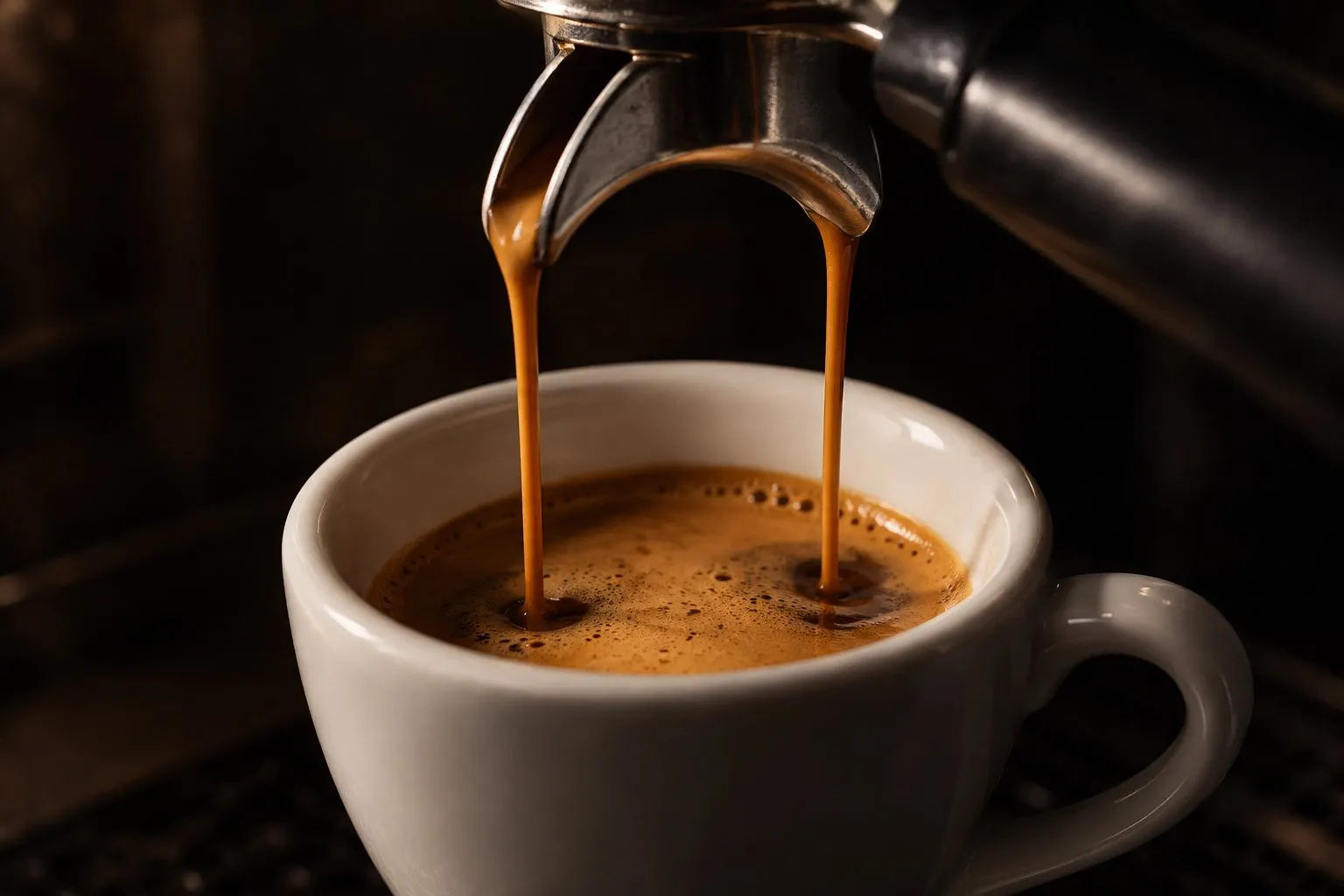
Angelo Moriondo patented the first machine usually called an espresso machine in Turin in 1884. Luigi Bezzera improved it around 1901, and Desiderio Pavoni produced it from 1905. Achille Gaggia filed piston patents in 1938 and 1947. The Faema E61 of 1961 used an electric pump at nine bars, and one historian calls it the first commercially successful semi-automatic.
On this page
Ask who invented the espresso machine and you'll get Moriondo. That's right as far as it goes, but it misses what you probably care about. The machine you weigh shots on owes more to a 1961 pump than to an 1884 patent, and the dates in between are messier than most timelines admit.
A word on sources. Much of this history comes from the companies involved, or from trade writers quoting them. We mark who says what. Where they disagree, we show both.
The timeline
| Year | What happened | Who says so |
|---|---|---|
| 1884 | Angelo Moriondo patents a machine in Turin | Gaggia; Perfect Daily Grind, citing Smithsonian Magazine |
| 1901 | Luigi Bezzera of Milan files or revises his design | Gaggia; Perfect Daily Grind (2018) |
| 1902–1903 | Bezzera's US patent: filed June 10, 1902, published April 28, 1903, assigned to Desiderio Pavoni | The patent |
| 1905 | Pavoni starts series production with the La Pavoni Ideale | Perfect Daily Grind (2018) |
| 1906 | Bezzera's Tipo Gigante shown at the Milan Trade Fair | Perfect Daily Grind (2025) |
| 1938 | Achille Gaggia files patent no. 365726, the “Lampo” piston | Gaggia |
| 1947 | Gaggia's second patent drives the piston with a lever | Gaggia |
| 1961 | The Faema E61 appears, with an electric pump at nine bars | Jonathan Morris |
| 1970s | La Marzocco's GS has separate boilers for steam and hot water | Perfect Daily Grind (2025) |
| Late 1980s | Digital temperature controllers arrive | Perfect Daily Grind (2025) |
Moriondo: the first patent
Moriondo gets the credit for the 1884 patent. He owned two cafés in central Turin, says Perfect Daily Grind's report on the MUMAC museum, and he developed several machines. It's a good reminder that the first person to patent a thing isn't always the one who changes how people drink. Gaggia's history credits the next name with taking the machine to business operators and the press.
Bezzera and Pavoni: the machine becomes a product
The US patent shows the shape of the idea in plain text. It describes a boiler feeding a delivery cock, which forces hot water or steam through a perforated diaphragm and a receptacle holding coffee for one cup. So each cup is brewed fresh. You can see the ancestor of a group head and a portafilter in that. What strikes us most is the assignment on that patent: to Desiderio Pavoni of Milan, in 1903. The man with the design and the man who would sell it were already linked on paper.
The sources tell this bit in different orders. Perfect Daily Grind's 2018 piece has Pavoni acquiring the patent and starting production in 1905. Its 2025 piece credits Bezzera's Tipo Gigante of 1906 as the first commercial machine. Both can be partly true, and we can't settle it from what we read.
These machines ran on steam pressure. Kent Bakke, the former La Marzocco CEO, tells Perfect Daily Grind they reached about 2 bar. So what they made wasn't what you'd call espresso today.
Gaggia: pressure from a piston
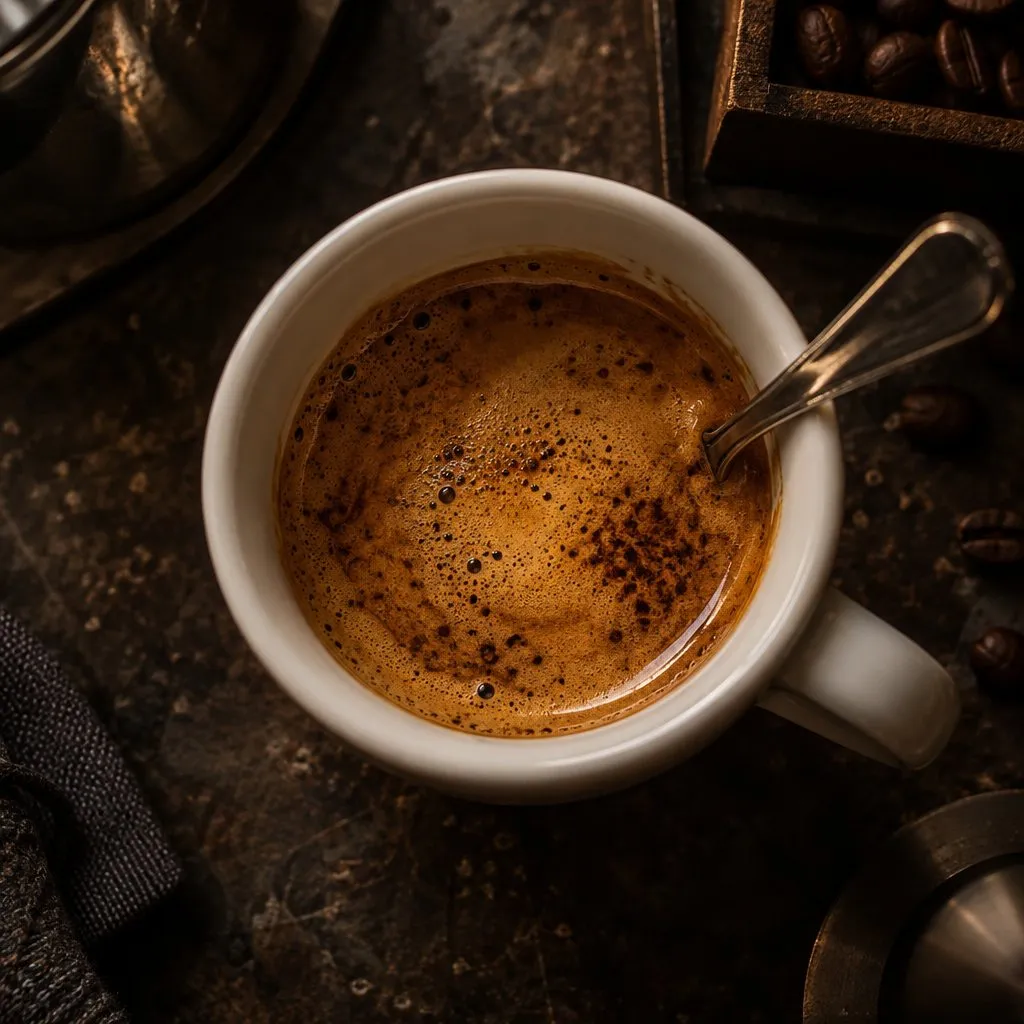
The moment crema shows up
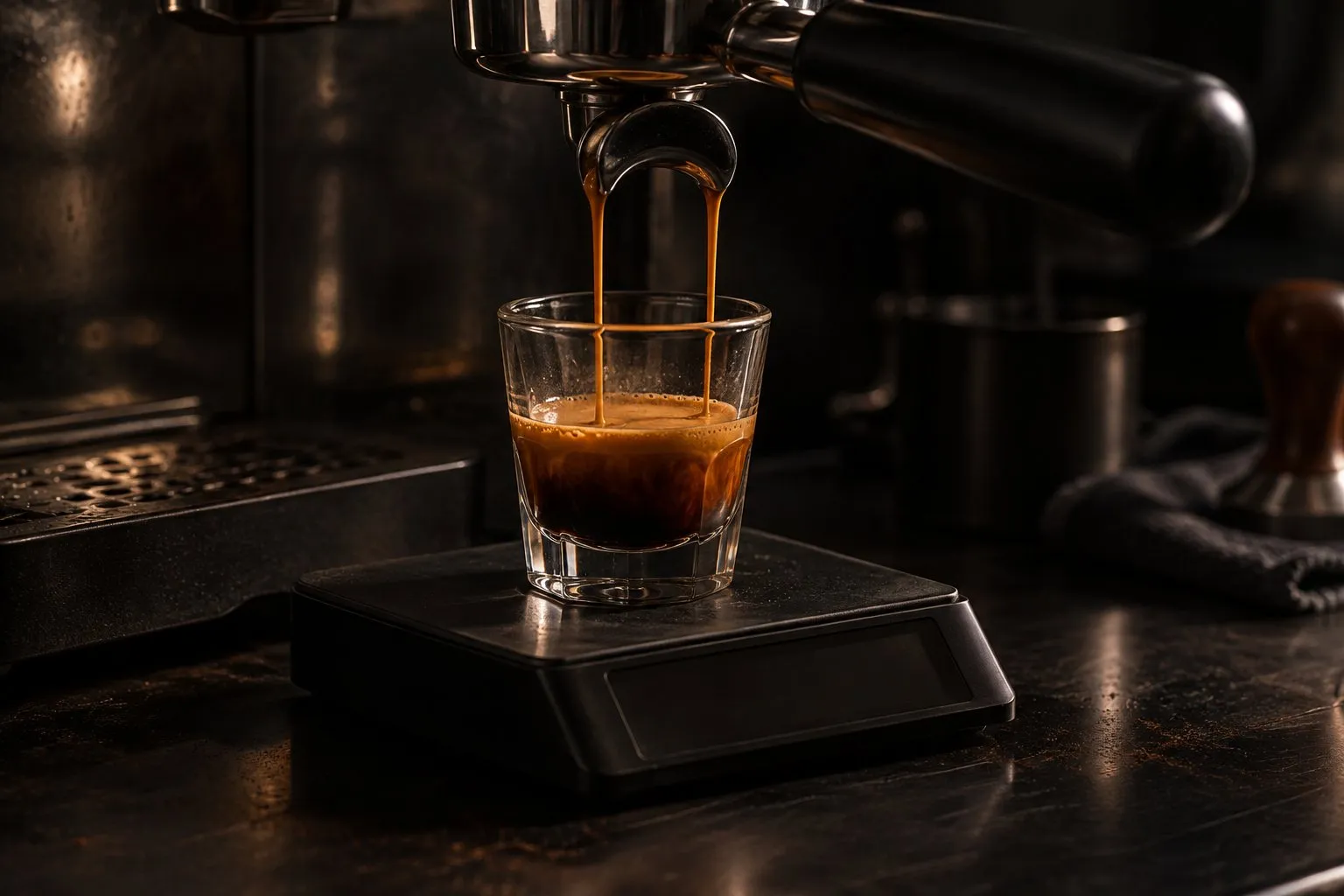
Gaggia's history dates the “Lampo” patent to 1938 and a lever-driven piston to 1947, and credits that piston with better extraction and a natural layer of crema. That's the maker's account, so take the heroics lightly. Crema shows CO2, so freshness and roast. It says little about flavor. The picture is a generated close-up, not a historic shot.
The dates shift depending on who you ask. Perfect Daily Grind's 2018 piece has Gaggia designing a lever machine in 1938 and selling the patent to Faema in 1948. Its 2025 piece places the first commercial lever machine in the 1950s, reaching 9 bar. Those aren't necessarily in conflict, since a patent, a design and a commercial product can be years apart. Our Gaggia overview picks up from there, and semi-automatic vs manual explains why lever machines still have their own category.
The E61: where the semi-automatic begins
This is the entry to remember. Writing for the American Historical Association's Perspectives on History, Jonathan Morris calls the Faema E61 of 1961 the “first commercially successful semi-automatic espresso machine”, and says it outsold every other coffee machine in Italy during the 1960s. His account has three changes:
- An electric pump replaced the manually operated lever.
- A heat exchanger inside the boiler warmed cold water drawn from an outside source. Earlier machines heated the brew water directly in the boiler, and this change allowed continuous delivery.
- A constant nine bars of pressure, which Morris describes as the standard parameter for Italian espresso today.
Those are the bones of today's definition. A semi-automatic is a pump-driven espresso machine in which you grind, dose and tamp the coffee yourself and start and stop the shot, while the machine supplies the water pressure and temperature. Our definition page goes further, and single and dual boilers explains what a heat exchanger does.
Perfect Daily Grind's report from MUMAC credits the design to Ernesto Valente. A US patent in Valente's name, filed in 1961 with an Italian priority date of 1960, describes a head that holds hot water in a chamber so the coffee can steep before full pressure arrives. That sounds a lot like the pre-infusion on modern machines. The patent doesn't mention the E61 by name, so we treat the link as likely and not as proven.
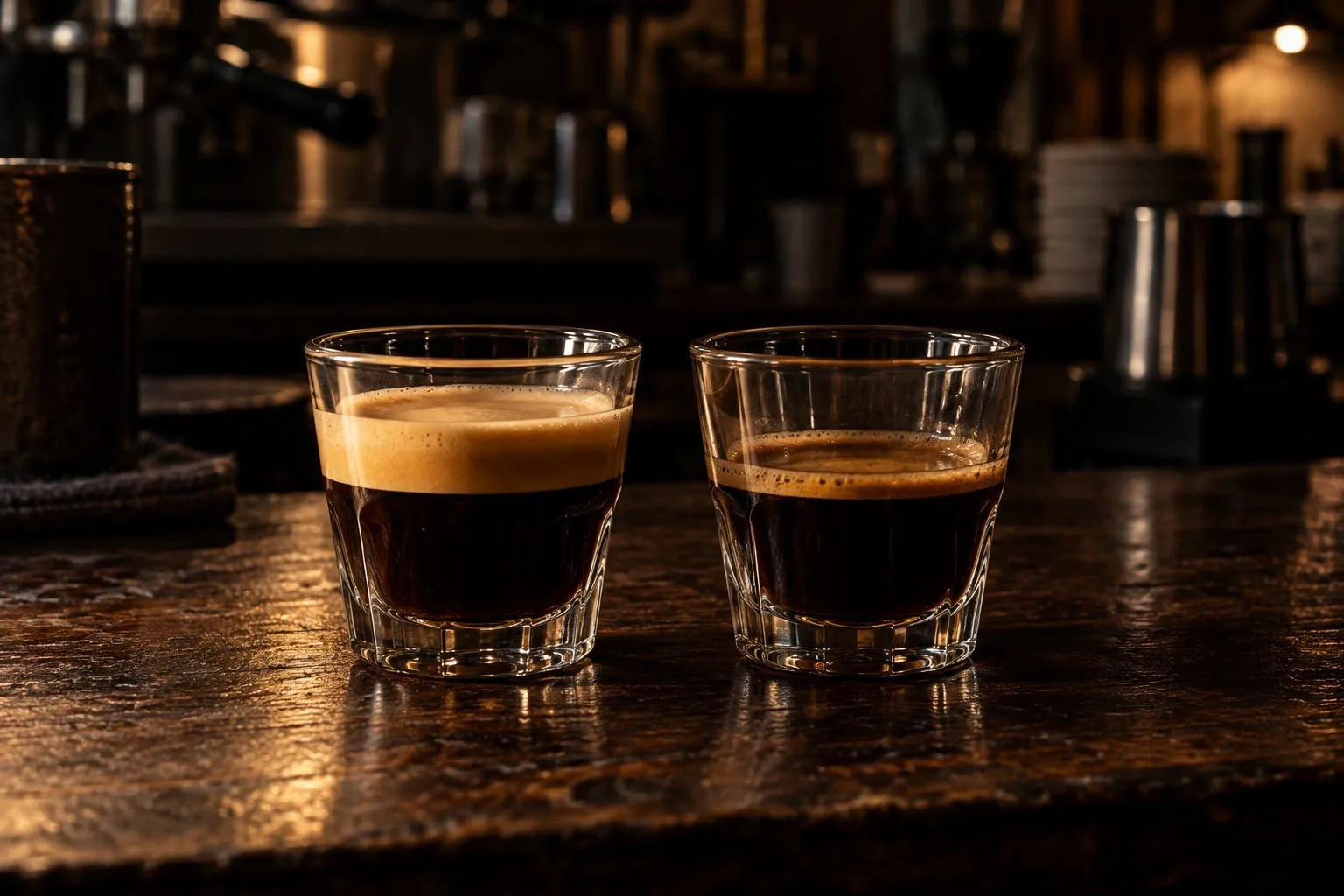
Nine bars, from a pump, since 1961.
The picture above is a generated scene of a bar after closing, not a historic photo. We have no period images on this site.
From the café to your counter
Two later steps explain most of what you pay for today. The La Marzocco GS, in the 1970s, had separate boilers for steam and hot water, according to Perfect Daily Grind. Dual boilers are that idea at home size. Digital temperature controllers, from the late 1980s, became common on most models, and that line leads to PID.
The standards came last. Italy's INEI specifies 9 bar ± 1 at the entry today, and that's why this site keeps repeating the number. The 15 or 20 bar on the box is what the pump can reach. Espresso is brewed at about 9 bar. Our page on the bar number has more.
What this means when you buy
Not much, directly, and that's fine. History won't choose a machine. But it does tell you what to pay attention to: stable pressure from a pump and stable temperature from a boiler. The rest is fit. If you've come for that part, our comparison of semi-automatic machines is the place to go, and the start page begins from what you drink.
Asked at the bar
Who invented the espresso machine?
Angelo Moriondo of Turin is usually credited, with a machine patented in 1884. Gaggia's history page and Perfect Daily Grind both name him. He wasn't the person who brought it to the trade, though: that credit goes to Luigi Bezzera and Desiderio Pavoni, in the early 1900s.
What was the first semi-automatic espresso machine?
The historian Jonathan Morris calls the Faema E61 of 1961 the first commercially successful semi-automatic espresso machine. Its electric pump replaced the manually operated lever. That wording leaves room for earlier attempts that didn't succeed commercially, so we use his phrasing and don't simply say “first”.
Did Gaggia invent crema?
Gaggia's own history page credits its 1947 lever piston with producing crema. That's a company telling its own story, though it's a widely repeated one. Today we'd add a caution: crema shows CO2, so freshness and roast. It says little about flavor. So a machine that made crema didn't by itself make better coffee.
Why is espresso brewed at 9 bar?
We found history, not a single decision. Perfect Daily Grind reports about 2 bar on early steam machines and 9 bar on Gaggia's commercial lever machine, and Morris reports a constant nine bars on the E61. Italy's INEI now specifies 9 bar ± 1 at the entry. The 15 or 20 bar on a box is a different number: what the pump can reach.
How is an E61 related to modern home machines?
The E61 name still appears on home machines. In our list, the Diletta Bello+ is sold with an E61 group, per its listing. We can't say how closely any modern group matches the 1961 original, because we didn't read a maker's technical comparison. Ask the seller if that detail matters to you.
Where this comes from
- US Patent 726,793: Luigi Bezzera, Coffee-making machine, published April 28, 1903
- US Patent 3,230,974: Ernesto Valente, Alternately seating valves, published January 25, 1966
- Jonathan Morris: The Faema E61 Espresso Machine, Perspectives on History, December 23, 2020
- Gaggia: History of coffee
- Perfect Daily Grind: history and evolution of espresso machines, April 21, 2025
- Perfect Daily Grind: history of the espresso machine at MUMAC, August 31, 2018
Next round
 Semi vs manualSemi-automatic vs manual espresso machines: in the trade, manual means a lever, but listings use it for pump machines. How to tell which you're buying.
- GaggiaGaggia espresso machines: the 1938 Lampo patent, how Classic, E24, Pro and Evo names relate on Amazon, what Gaggia's own pages state, and who should look elsewhere.
 What Is a Semi-Automatic Espresso Machine? What You Do and What the Machine DoesWhat semi-automatic means on an espresso machine: what you grind, dose, tamp and stop yourself, what the machine handles, and how to read confusing listing names.
- 15 Bar vs 20 Bar: Is the Bigger Number Better?Is a 20 bar espresso machine better than 15 bar? No: the box shows what the pump can reach, and espresso is brewed at about 9 bar. What to compare instead.
 What is cremaWhat crema is: foam made mostly of CO2 from roasting. What changes it, what it tells you about a shot, and why more crema or added robusta doesn't mean better.
- Prosumer machinesProsumer espresso machines on Amazon: what the word means, what E61, PID and rotary pumps do, which high-end machines actually ship, and our pick for most buyers.
semiautomaticespressomachine.com Editorial Team
Espresso gear & shot craft
We are the editorial team at semiautomaticespressomachine.com. We read maker spec sheets, manuals, standards and published research on espresso and turn them into plain-English buying advice, with sources on every page. We do not run lab tests, and we say so openly.
- Spec sheets & standards read
- Sources on every page
- No lab tests – stated openly
- Publisher details in the imprint