Espresso Puck Screens: Sizes, Thickness and Whether They Actually Help
A puck screen is a thin metal disc that sits on the tamped coffee, and whether it helps is still an open question. One detailed test found more even extraction, and a roaster's test found no gain in yield but better balance in a blind tasting. It's a cheap, optional thing to try once your routine is steady. Buy the size of your basket.
Disclosure: This page contains affiliate links (marked with *). If you buy through them, we earn a small commission at no extra cost to you. As an Amazon Associate I earn from qualifying purchases. Learn more
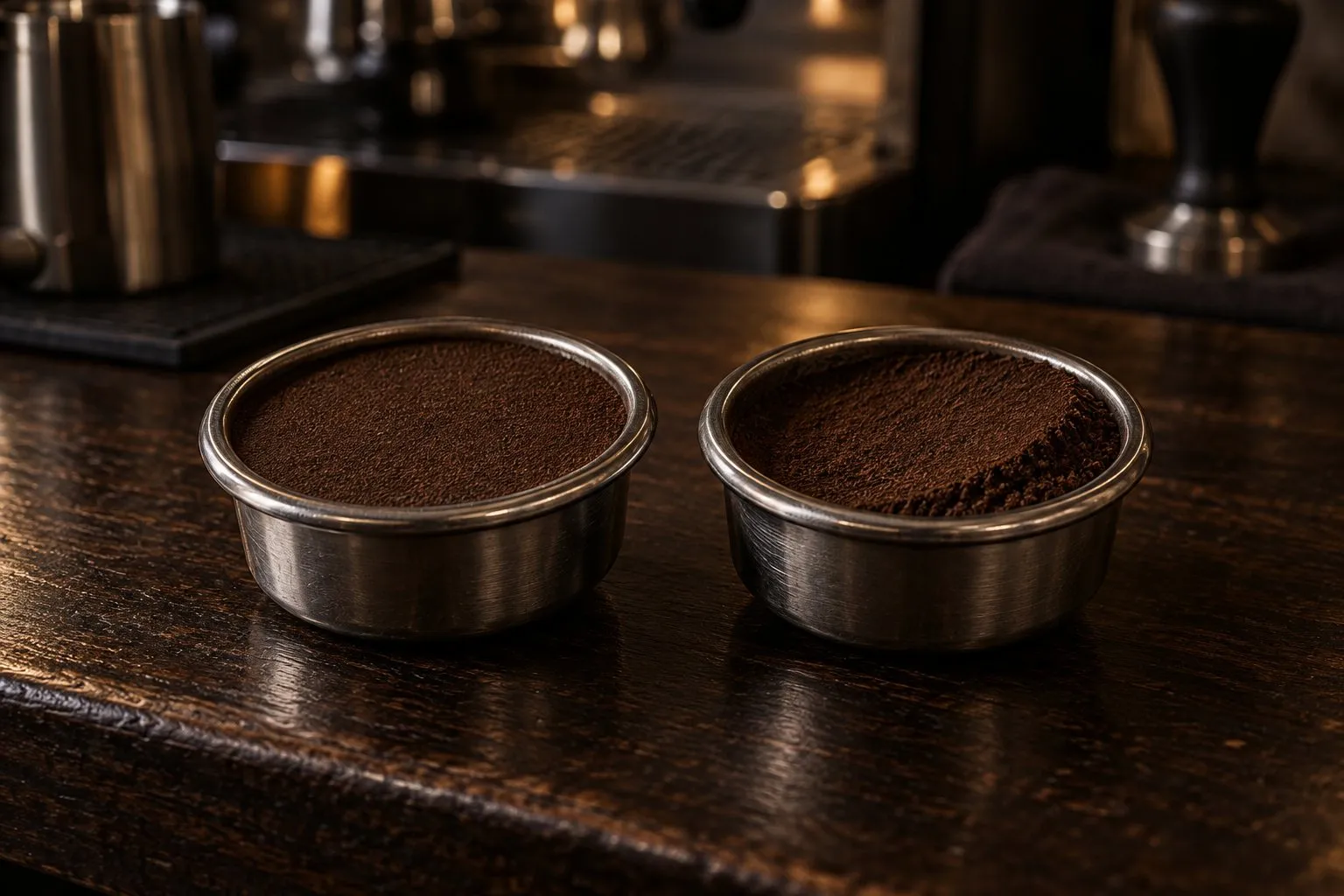
Try a puck screen only after your dose, grind and tamp are consistent. It sits on top of the tamped coffee, and the size has to match your basket. The evidence is thin and mixed: one test on a high-end machine found a gain in extraction yield, while another found none. So judge it by taste on your own machine.
On this page
Puck screens are an add-on for people who already weigh their shots. The sales pitch is even water, less channeling and a clean group head. We haven't pulled a single shot through one, so this page sticks to what others have measured, what the listings say, and what you can check at home. If you're still building your routine, puck prep is the better place to start.
Should you buy one?
If your dose, grind and tamp already repeat well
If your shots still vary from day to day
If you see clumps in the dose
If you don't weigh yet
Our recommendation is plain: a screen comes after the scale, and after your routine is steady. It's a cheap experiment, and you can walk away from it. We don't name a favorite, because all we hold on any puck screen is a seller's listing, and we can't vouch for a product on that.
If you have a 58 mm basket and want to try one, the listing in our data is the 58 mm, 0.2 mm 2-pack*. Its size, thickness and 316 stainless steel all come from the title.
What the tests found
| Ribes, 2021 | Nucleus, 2022 | |
|---|---|---|
| Setup | Decent DE1PRO, 19 g, 1:2, 20 g VST and Pullman baskets | Machine not named, 18 g, near 2:1 |
| Screen | BPLUS, thickness not stated | A metal screen, type not stated |
| Overall yield | 22% to 24% (VST), 21% to 24% (Pullman) | 21% without, 20.7% with |
| Other findings | Outer part of the puck rose from 17% to 22% (VST), 16% to 23% (Pullman) | Over a second faster on average, less spurting, more balanced in a blind tasting |
| Reported as | Averages of 3 to 5 measurements per point | Shot count not readable, table was an image |
Those numbers don't cancel each other out so much as they answer different questions. Ribes asked where in the puck the water does its work. He found the outer part of the puck well behind the center without a screen, and a screen closed much of that gap. His setup is about as far from a home machine as it gets, though: a prototype shower on a DE1PRO, a specific screen and a light polishing step used only in the screen-free condition. That last detail means the two runs weren't identical.
Nucleus asked whether the average went up, and it didn't. The difference was too small to matter, in the article's own words. Its tasters still preferred the shots with the screen. So one honest reading is that a screen can change how even the shot is without moving the average much.
Neither study is large or peer-reviewed, and neither used a small home machine. Decent also sells espresso machines, though the page itself doesn't sell a puck screen.
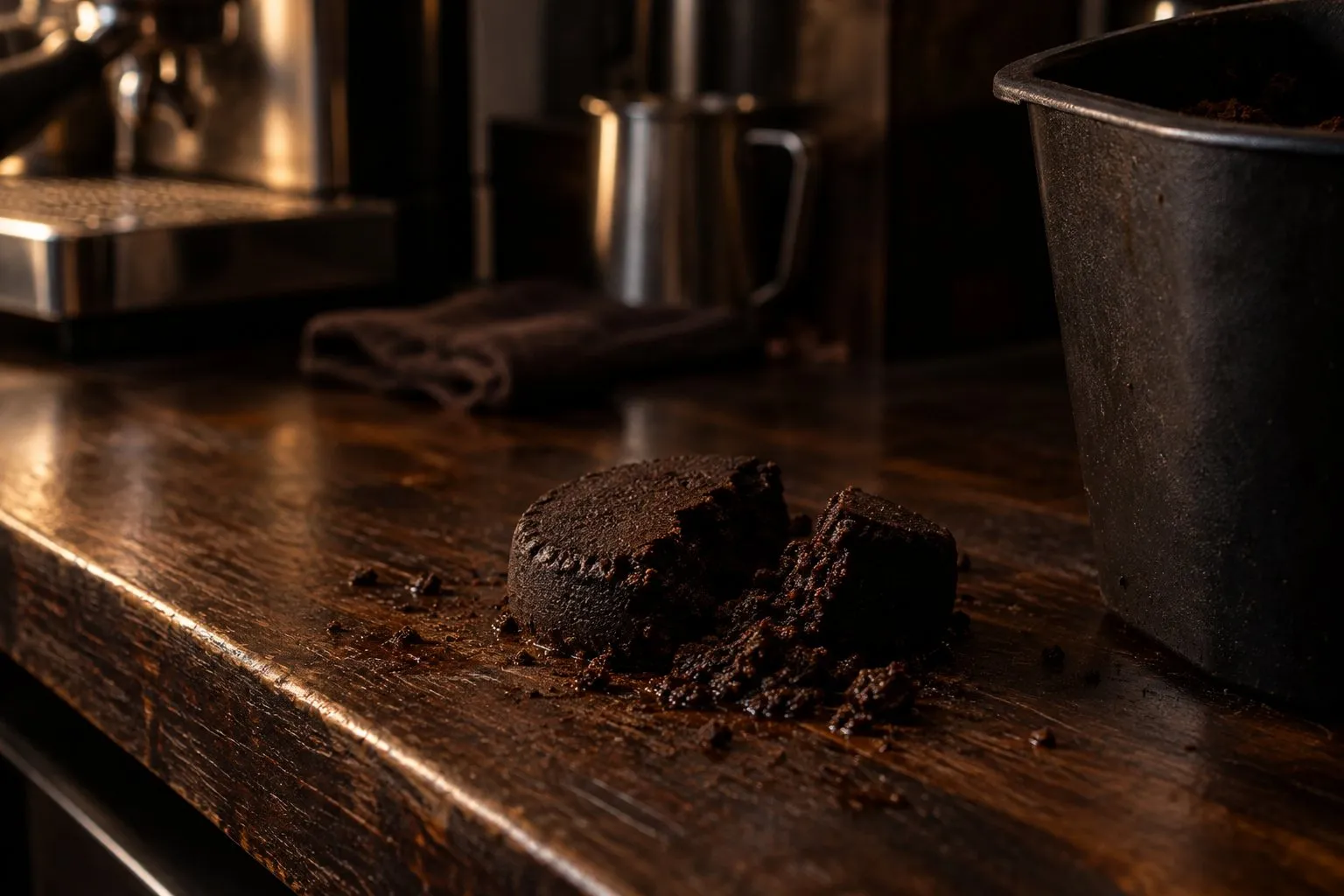
Less on the screen, maybe. Whether it reaches the cup is the part to test.
Sizing it
Screens are sold by diameter, and the diameter has to match your basket.
| Your machine | Portafilter size | Source |
|---|---|---|
| Breville Bambino, Bambino Plus, Barista Express | 54 mm | Breville |
| Breville Dual Boiler | 58 mm | Breville |
| Gaggia Classic | 58 mm | Gaggia |
| Rancilio Silvia | 58 mm | Per retailers |
| De'Longhi Dedica | Not stated on the product pages | Measure it |
A portafilter's nominal size and the inside of the basket aren't quite the same thing, and aftermarket baskets vary. So measure across the top of your own basket. A screen that's too wide won't sit flat, and one that's too small can tilt or let coffee push up around it. Portafilter sizes and espresso baskets go into the details.
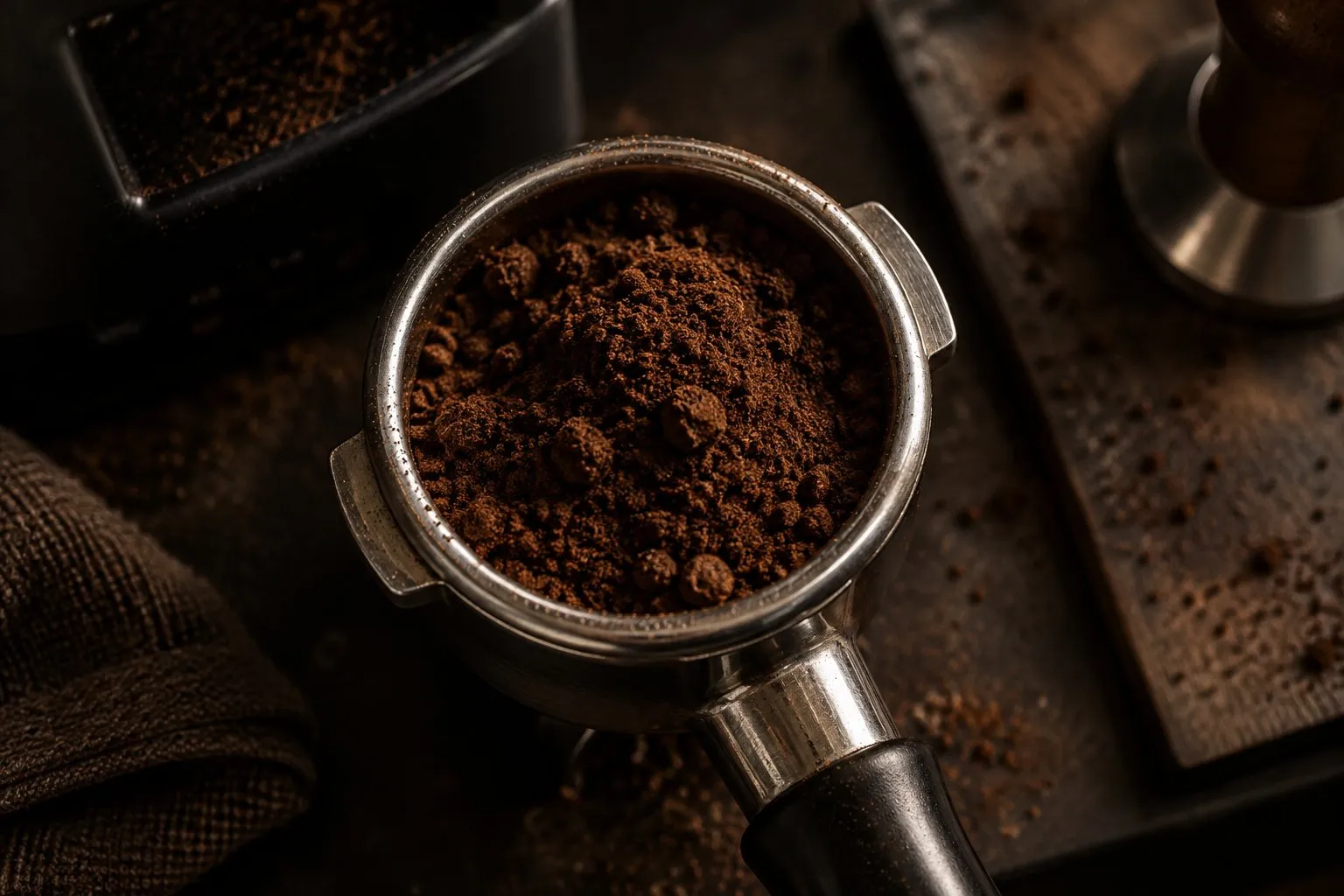
A screen sits on the coffee, and it can't fix what's under it
Clumps and a tilted bed happen before the screen goes in. So stir out the clumps and tamp level first. Put the screen on last, after the tamp.
Thickness and headspace
Headspace is the gap between the coffee and the machine's shower screen. A screen uses up some of it. How much depends on thickness, and listings don't all print that figure. The one in our data says 0.2 mm, per its title.
We found no maker or study that gives a best thickness. Ribes' 2019 work on spacers and shower screens does say that reducing headspace too far brings practical constraints such as contact with a puck screen. So here's a simple check. Lock in the portafilter with a screen on your usual dose, pull a shot, and then look at the top of the puck and the screen. A clear imprint of the machine's screw or shower screen means you're tight on space, so drop the dose a little or use a thinner screen.
How to try one fairly
Clean it the way you'd treat a basket: rinse it right after the shot, while the oils are still loose. Breville's general advice for baskets is to rinse under hot water straight after use. We found no maker's care advice specific to puck screens, so check what the seller says about soaking and cleaners.
Common mistakes
- Buying the size that's on sale. A 58 mm screen won't work in a 54 mm basket.
- Expecting it to fix a bad grind. A screen sits on top of the puck, and the grind still sets the flow. Start with your grinder.
- Changing your recipe at the same time. Then you can't tell what did what.
- Skipping the cleaning. A screen covered in old oil won't help anything, and it sits right over your next shot.
Bottom line
A puck screen is an optional, low-cost experiment for people whose routine is already steady. The evidence so far points to more even extraction in at least one careful setup, and mixed results on average yield. Buy your basket's size, try it fairly, and keep it if you like the cup. For everything else on the bar, see our accessories guide or the start page.
Asked at the bar
Do puck screens actually make espresso better?
Sometimes, and the evidence is limited. Stéphane Ribes measured more even extraction with a BPLUS screen on a Decent DE1PRO in 2021. Nucleus found no real yield change in 2022, though its tasters preferred the screened shots. We found no large or peer-reviewed study. So treat a screen as a low-stakes experiment on your own machine and judge the result in the cup.
What size puck screen do I need?
The size of your basket. Check your maker's portafilter size first, for example 54 mm on the Breville Bambino and Barista Express, or 58 mm on the Breville Dual Boiler. Then measure the inside of your basket, because nominal sizes and real baskets don't always match. The only listing in our data is 58 mm, which won't fit a 54 mm basket.
Does a puck screen go above or below the coffee?
On top of the tamped coffee, so it's the last thing to go in before you lock the portafilter. It sits between your puck and the machine's shower screen. Tamp first, then lay it on. Weigh your dose before the screen goes in, so the scale reads coffee only.
Does a puck screen change my dose?
It can, because the screen takes up a little of the space above the coffee. A paper hosted by Decent names contact with the screen as a practical limit when that space shrinks. If the screen touches the shower screen or leaves a mark on the puck, reduce your dose a little or use a thinner screen. Then taste and adjust the grind.
Where this comes from
- Stéphane Ribes, hosted by Decent Espresso: Effects of a puck screen on extraction (2021)
- Nucleus Coffee: Do espresso puck screens make a difference? (2022)
- Stéphane Ribes, hosted by Decent Espresso: spacer and shower screen experiments (2019)
- Breville: BES450 Bambino product page
- Breville: BES920 Dual Boiler product page
- Breville: Bambino BES450 instruction book (US and Canada)
Next round
- Puck prepEspresso puck prep in six steps: dry, weigh, stir, settle, tamp level, lock in. What channeling is, which tools have evidence, and what a wet puck means.
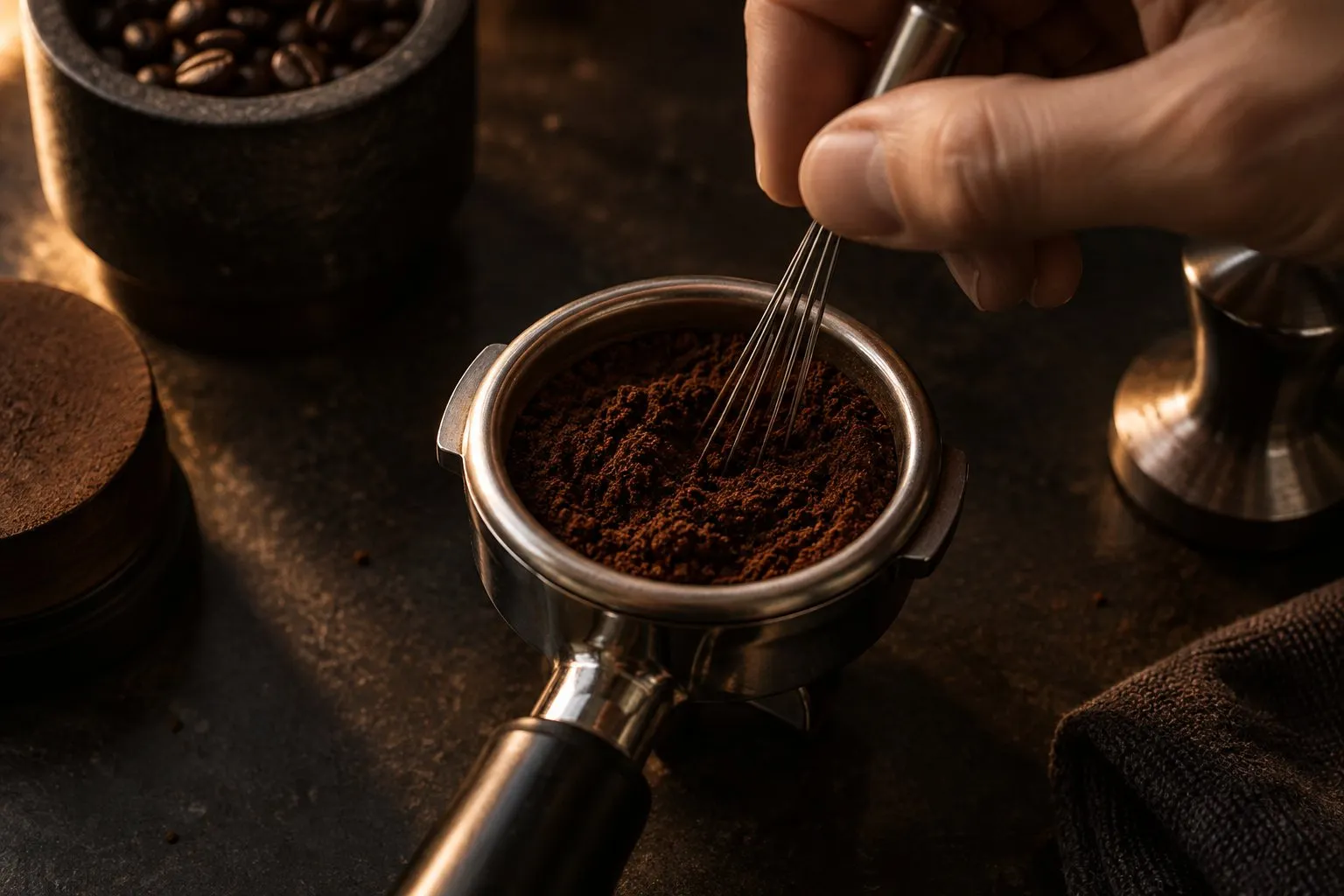 AccessoriesWhich espresso accessories are worth buying first: scale, tamper, pitcher, WDT tool and more, sorted by portafilter size, with what your machine already includes.
 Espresso basketsEspresso baskets explained: single wall vs dual wall (pressurized), which machines ship with which, what VST and IMS publish, and how to match a basket to your dose.
- TampersWhich espresso tamper fits your machine: 51, 53.3, 54 and 58 mm by model, what calibrated and spring-loaded tampers really do, and where the 30 lb figure comes from.
- WDT toolA WDT tool stirs clumps out of your grounds before you tamp. What it does, what thin needles get you, how it differs from a distributor, and which to buy.
semiautomaticespressomachine.com Editorial Team
Espresso gear & shot craft
We are the editorial team at semiautomaticespressomachine.com. We read maker spec sheets, manuals, standards and published research on espresso and turn them into plain-English buying advice, with sources on every page. We do not run lab tests, and we say so openly.
- Spec sheets & standards read
- Sources on every page
- No lab tests – stated openly
- Publisher details in the imprint